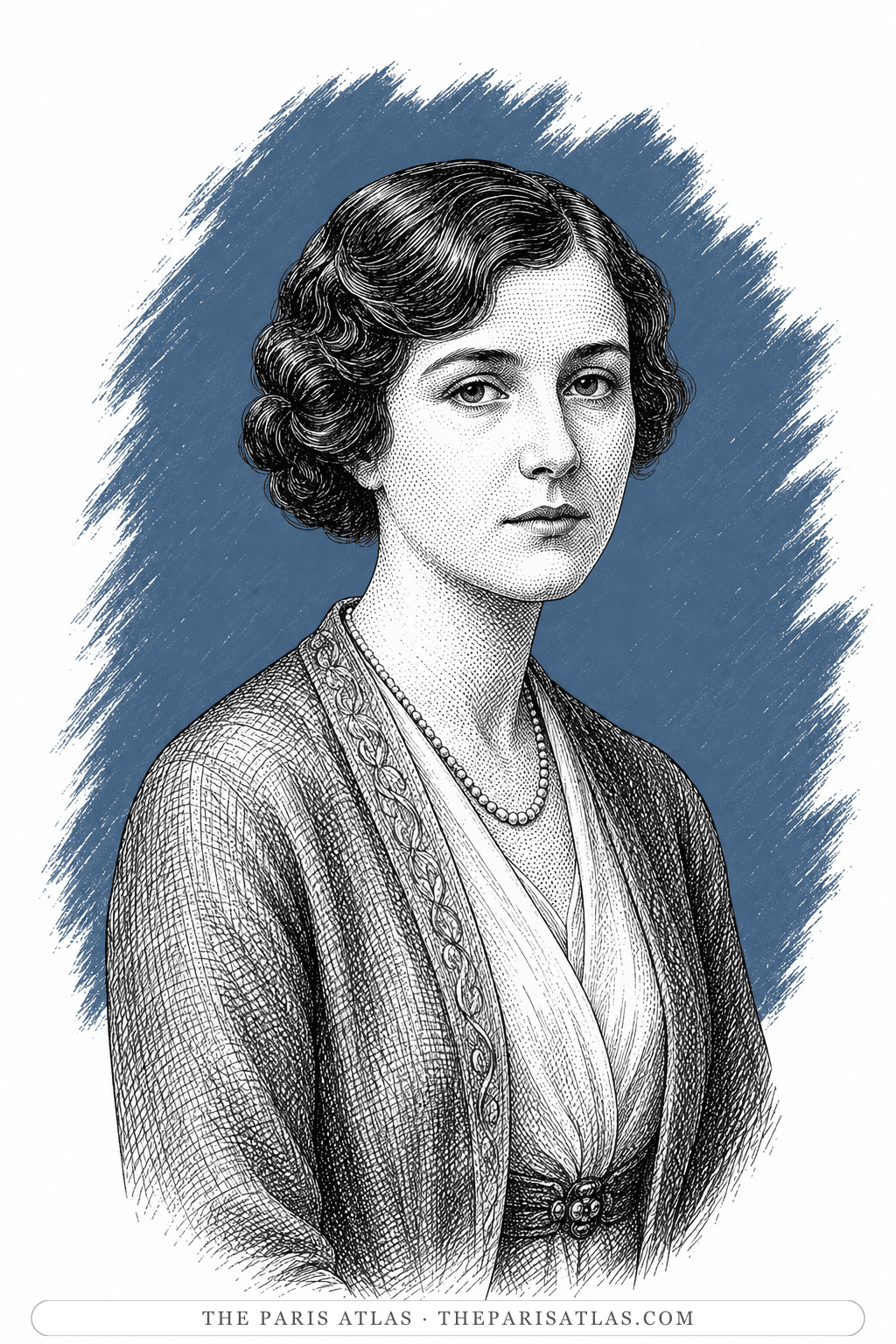
Irene Scheerer
The woman Dexter Green becomes engaged to in “Winter Dreams,” once he has decided he cannot have Judy Jones.
To marry Dexter Green, which she does not have to work at. She had two suitors and pleasantly relinquished them both when he formally asked her.
The book

At a glance
- Irene Scheerer — invented by F. Scott Fitzgerald
- One of the men who had always believed in Dexter
- Light-haired, sweet, honourable, and a little stout
- January; to be announced in June and married three months later
Who they are in the book
Spoiler-freeIrene Scheerer is a character in “Winter Dreams,” the story by the American writer F. Scott Fitzgerald that he called a first draft of the Gatsby idea. She is invented, and the story gives her about two pages. Dexter Green becomes engaged to her in January of the year he turns twenty-five, eighteen months after meeting Judy Jones; the engagement is to be announced in June and the wedding held three months after that.
How Irene Scheerer Is Portrayed
- How the story introduces her“Her name was Irene Scheerer, and her father was one of the men who had always believed in Dexter.” She is light-haired and sweet and honourable, and a little stout, and she had two suitors whom she pleasantly relinquished when Dexter formally asked her to marry him.
- Books and musicHe stays late at a dance and sits with her for an hour talking about books and music. He knows very little about either, but he is beginning to be master of his own time and has a rather priggish notion that the young and already fabulously successful Dexter Green ought to know more about such things.
- What going out with her feels likeIt gives him a sense of solidity: she is sturdily popular, and the story puts his own verdict on her in quotation marks, intensely “great.”
- The night of the headacheHe calls at the brownstone house one evening in the middle of May and her mother comes out of the living room to say that Irene has gone upstairs with a splitting headache and was made to go to bed. She had wanted to go with him. She will play golf with him in the morning. He talks for a moment and says good night, and walks back to the University Club alone.
- What Dexter thinks she isHe knows exactly what he is choosing. Irene, he tells himself, will be no more than a curtain spread behind him, a hand moving among gleaming tea-cups, a voice calling to children.
Her parents had befriended him. He gives serious hurt to all of them, is completely indifferent to what the city thinks of him for it, and, looking back from ten years' distance, finds he can remember almost none of it.
If you like All the Sad Young Men


If you like F. Scott Fitzgerald
Explore authors with a similar voice, perspective, and influence.

Ernest Hemingway
Fitzgerald vouched for him to Scribner's before they had met, then edited him better than he edited himself; the friendship's five rounds are chronicled in our journal.
View author
Henry Miller
The Brooklyn dropout who arrived in Paris broke at thirty-eight and wrote the exuberant, banned books that ended American censorship.
View author
Louis-Ferdinand Céline
The doctor of the Paris slums who wrote the century's blackest, funniest novel — and changed the sound of French prose.
View author