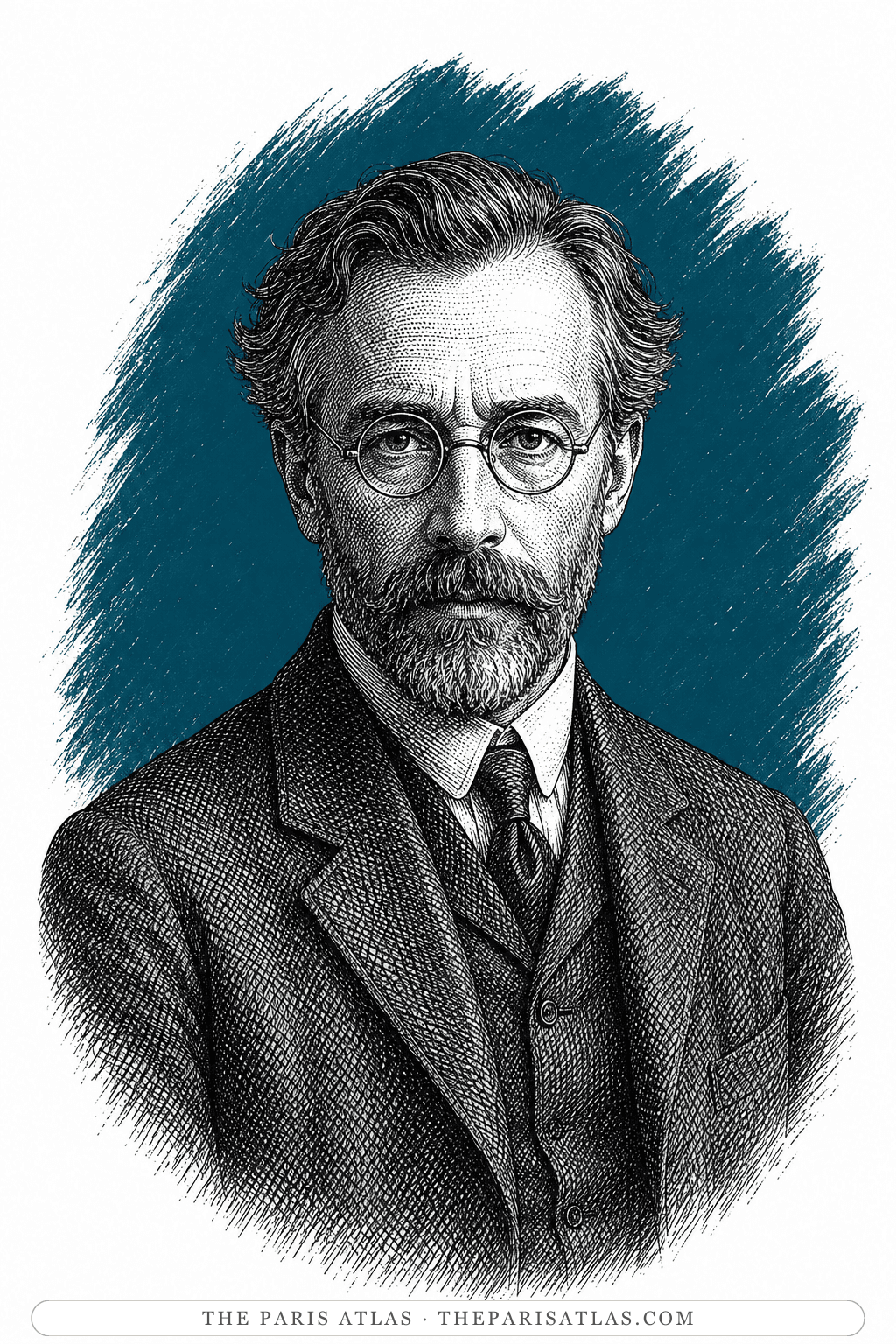
Doctor Moon
The shabby general practitioner Charles Hemple brings home to dinner in “The Adjuster.” He makes Luella Hemple stay, and the story never explains him.
To keep Luella Hemple where she is. He tells her she is not going out; he is the shadow in the hall she cannot get round when she tries to leave; and he sends her back down the corridor to tell the nurse she will take her husband for a drive.
The book

At a glance
- Doctor Moon — invented by F. Scott Fitzgerald
- Brought home to dinner by Charles Hemple, who introduces him as an old friend
- A general practitioner; not a specialist, and not a faddist of any sort
- Nothing. He says so four times.
- The story never mentions a fee, and Luella never asks him to consult with the specialists
- Nothing. It says outright that Luella could not guess the nature of his influence, and leaves it there.
Who they are in the book
Spoiler-freeDoctor Moon is a character in “The Adjuster,” a story by the American writer F. Scott Fitzgerald, first printed in Redbook in September 1925 and collected in All the Sad Young Men. He is invented. Charles Hemple brings him home to dinner in New York without warning his wife, introduces him as an old friend of his, and says he has asked him there because he wants Luella to have a talk with him.
What Doctor Moon does over the next two years is keep Luella Hemple in a house and a marriage she had decided to leave. He tells her she is not going out and she does not go out. He stands in the hall when she comes to the door with a suitcase, and she puts it down. He asks nothing of her, charges nothing, and repeats that he promises nothing. On that much the story is completely clear.
On everything else it is not. Luella cannot guess the nature of the influence he has over her, and the story uses those words and then declines to explain. He is not written as a fraud and not written as a real physician either. On his last visit she asks him outright who he is. His answer is four words long, and it does not tell her what he is.
How Doctor Moon Is Portrayed
- How he arrivesCharles brings him home unannounced, and Luella does not realise anybody else is in the room until her husband turns her round to face him. He is a little older than Charles: a round, pale, slightly lined face, a heavy, leisurely voice, and a tired placidity that comes off all of it, down to the three-year-old shine on his clothes.
- What he says he isAsked whether he specialises in children, he answers: “I'm not a specialist at all,” he said. “I'm about the last of my kind—a general practitioner.” Charles adds that he is the last in New York, anyhow.
- “I promise nothing”He says it four times across the story, and it is the nearest thing to terms that he offers. When Luella tells him coldly that she has no particular faith in psychoanalysis, he says neither has he: he has no particular faith in anything but himself, he is not a faddist of any sort, and he promises nothing.
- “I do not act as a free agent”Alone with her after dinner he tells her not to be afraid of him, and that this was forced upon him. Then he asks her to tell him about her trouble, very naturally — as though she were not a free agent either. He is not even looking at her while he says it.
- What happens when he asks her somethingThe words in Luella's mind, in her will and on her lips are that she will do no such thing. What she actually says amazes her: it comes out of her spontaneously, with apparently no co-operation of her own. It goes on happening. She gives way abruptly, as she always does when he talks to her, and it infuriates her that he claims to understand.
- He states things rather than predicting themShe tells him that in five minutes she is going out of the house to begin to be alive. He raises his head as if listening to something taking place a little distance away, and then answers her: “You're not going out,” he said after a moment; “I'm quite sure you're not going out.” She laughs and says she is. He disregards this.
- The clothesEvery time he appears his suit is more worn and shabby than it was. By the last visit he seems particularly weary, as though he could hardly move about at all, and his voice drops so low that she can scarcely hear the words.
- What the story will not tell youLuella dislikes him inordinately, with an illogical conviction that he is in some way to blame for her misfortune. She tells him once, flatly, that she hates him, and he answers that she may if she likes — he promised nothing, and he does the best he can. She never works out what he is. The story states this as a fact about her and then leaves it alone: the nature of the curious influence he exerted upon her, Luella could not guess.
He is in the apartment the evening Charles Hemple's mind gives way, and he is still coming through the two years of the illness. He is also there on the afternoon Luella packs a trunk to go. She gets as far as the hall and finds a shadow in it that stubbornly refuses to move. He tells her she is trying to leave herself behind and cannot, that the more she runs from herself the more she will have herself with her, and that she has not failed yet — she has only begun. She goes back.
On his last visit he tells her she does not need him any more, because she has grown up. He gives her the reason in the form of an agreement: children may sit in the audience without helping to make the play, but if they are still sitting there after they are grown, somebody has to work double time so that they can enjoy the light and glitter of the world. It is her turn now — to be the centre, to give security to young people and peace to her husband, to let the people who work for her depend on her, to cover up a few more troubles than she shows. “It is your turn to make the fire.”
Then she asks him the question she most wants answered, before it is too late. A line earlier the story has shown his round, pale face dissolving into two faces, a dozen, a score, until threescore Doctor Moons stand ranged like an infinite series of reflections, like months stretching into the vista of the past.
If you like All the Sad Young Men


If you like F. Scott Fitzgerald
Explore authors with a similar voice, perspective, and influence.

Ernest Hemingway
Fitzgerald vouched for him to Scribner's before they had met, then edited him better than he edited himself; the friendship's five rounds are chronicled in our journal.
View author
Henry Miller
The Brooklyn dropout who arrived in Paris broke at thirty-eight and wrote the exuberant, banned books that ended American censorship.
View author
Louis-Ferdinand Céline
The doctor of the Paris slums who wrote the century's blackest, funniest novel — and changed the sound of French prose.
View author