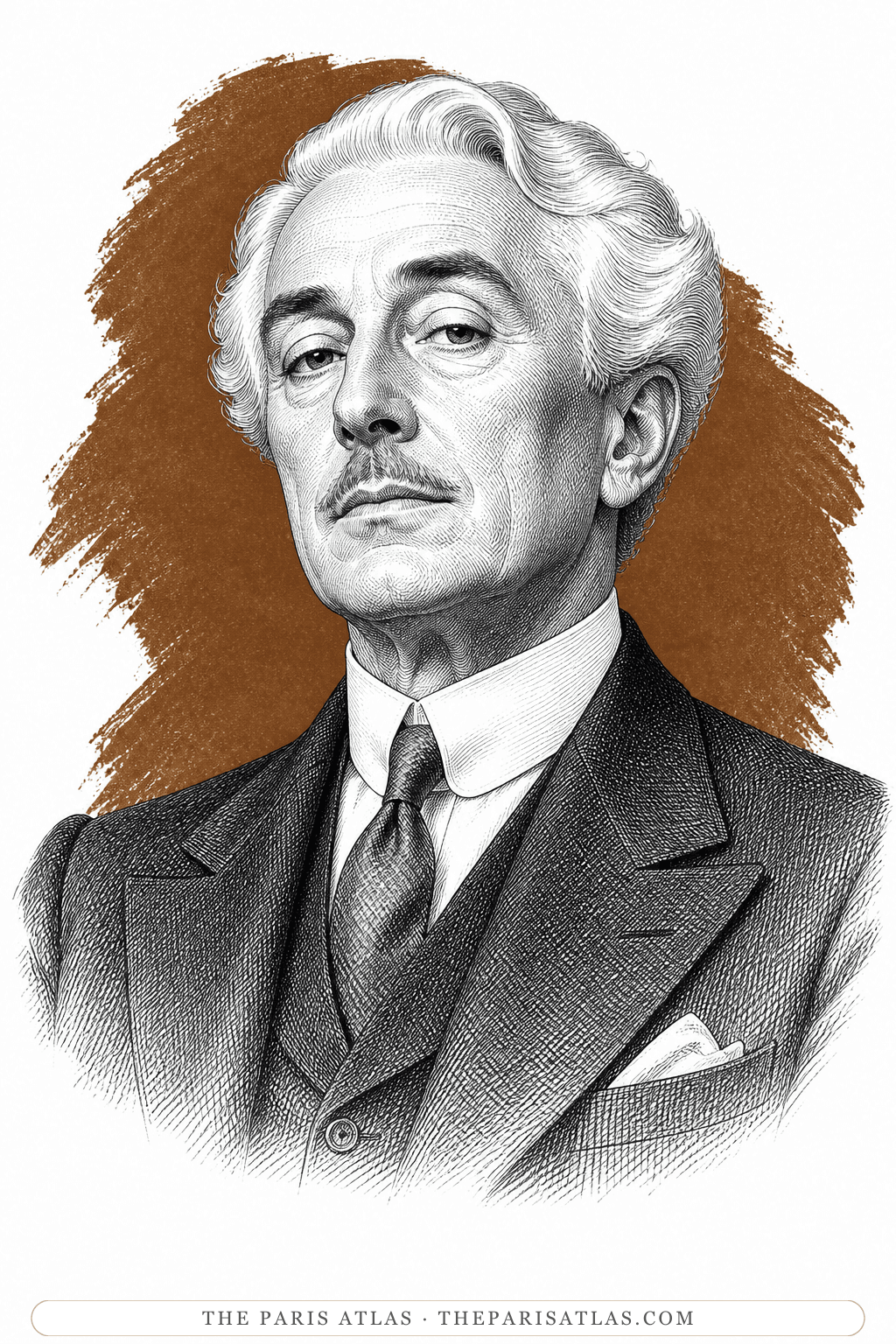
Stella's father
A famous stage actor in Warsaw, white-haired and still playing the lover, whose second wife finally divorces him. He is the reason his daughter cannot believe in love, and he never once works that out.
To be forgiven without having to admit anything — he sends his daughter to Laura with a message about being heartbroken and a denial he has already contradicted.
The book

At a glance
- Stella's father, in "Stella"
- Stage actor, famous in Warsaw
- Stella's mother, who left him, and Laura, who divorces him after ten years
- His silver toilet set, which she read every day as a barometer of his moods
Who they are in the book
Spoiler-freeStella's father belongs to the first of the three novellas in Winter of Artifice, the 1939 book by the French-born American writer Anaïs Nin. He is an actor who made his name in Warsaw, and he has stayed youthful and remained, as the book puts it, the lover of all women.
Stella grew up between her mother's poverty and his luxury, allowed one visit a week, and the story returns to those visits. It also brings her back to Warsaw as an adult, summoned by a telegram from Laura, his second wife, who is divorcing him after ten years.
The novella watches him lose everything and understand nothing. He asks his daughter to intercede, insists the accusation against him is false this time, worries about which maid he can still afford, and mourns a flower festival he will now miss because he is losing the car. He never once asks what he did.
This profile is drawn from the Swallow Press edition of 1948, read in the Internet Archive's scan of the book.
How Stella's father Is Portrayed
- Insulating eleganceMeeting her at the station he looks like a man who is not related to anyone. His clothes seem cut from a different material than other people's, and the pressed lines look as though they were never meant to be disturbed by human hands.
- The instruction to the lawyer in his own caseHe wants Stella to tell Laura he will spend the rest of his life making her happy, that he is heartbroken, and that nothing happened with the singer, who is in any case too fat. As he says it he takes out his silver cigarette case, spots a smudge on it, and polishes it with his handkerchief.
- "What proofs? She can't have proofs. I was careful. . . ."His daughter suggests that this once he might tell the truth, and that Laura may have evidence. At the word proof his head comes up, cool and alert, and he answers with the sentence that ends the conversation.
- The remark to the maidWatching a servant embroider a nightgown for Laura during one of her illnesses, he said he knew somebody it would look more beautiful on. The maid remembered it, and later helped assemble the evidence against him.
- Losing the houseTold the divorce is irrevocable, he asks to look at the house one last time, and then wonders aloud who will look after him if he gets ill, and whether he can still afford Lucille, who was the only person who knew how to press his summer suits. Walking away he mentions that without the car he will miss the flower festival at Montreux, which he was sure of winning this year.
- The cane and the cabOn one of the childhood visits he takes her into a cane shop, has the finest canes laid out, buys the most delicately carved one, empties his pocketbook and says he can still get her home in a taxi. Then he points out her shabby house to the driver with the new cane, and delivers her back to it.
- Collapsing on stageDuring the thousandth performance of a play called The Orphan he is sitting in an armchair speaking, and his arms drop and he goes stiff, all at once, like a broken marionette. The doctor calls it a heart attack. His daughter, pitying him, notices that he has fainted in front of a thousand people and that nobody ever saw his wives weep.
- "But I have you, Stella."Said after a silence, walking away from the house he has lost. She cannot say the thing she is thinking, which is that he killed her love as well.
If you like Winter of Artifice


If you like Anaïs Nin
Explore authors with a similar voice, perspective, and influence.

Henry Miller
The entangled careers of the Villa Seurat: she financed and prefaced his scandal, he detonated her prose — and each wrote the other into the century's record.
View author
Louis-Ferdinand Céline
The doctor of the Paris slums who wrote the century's blackest, funniest novel — and changed the sound of French prose.
View author
Martha Gellhorn
War correspondent who covered the Spanish Civil War, D-Day, and conflicts across five more decades; Hemingway's third wife, 1940–1945.
View author