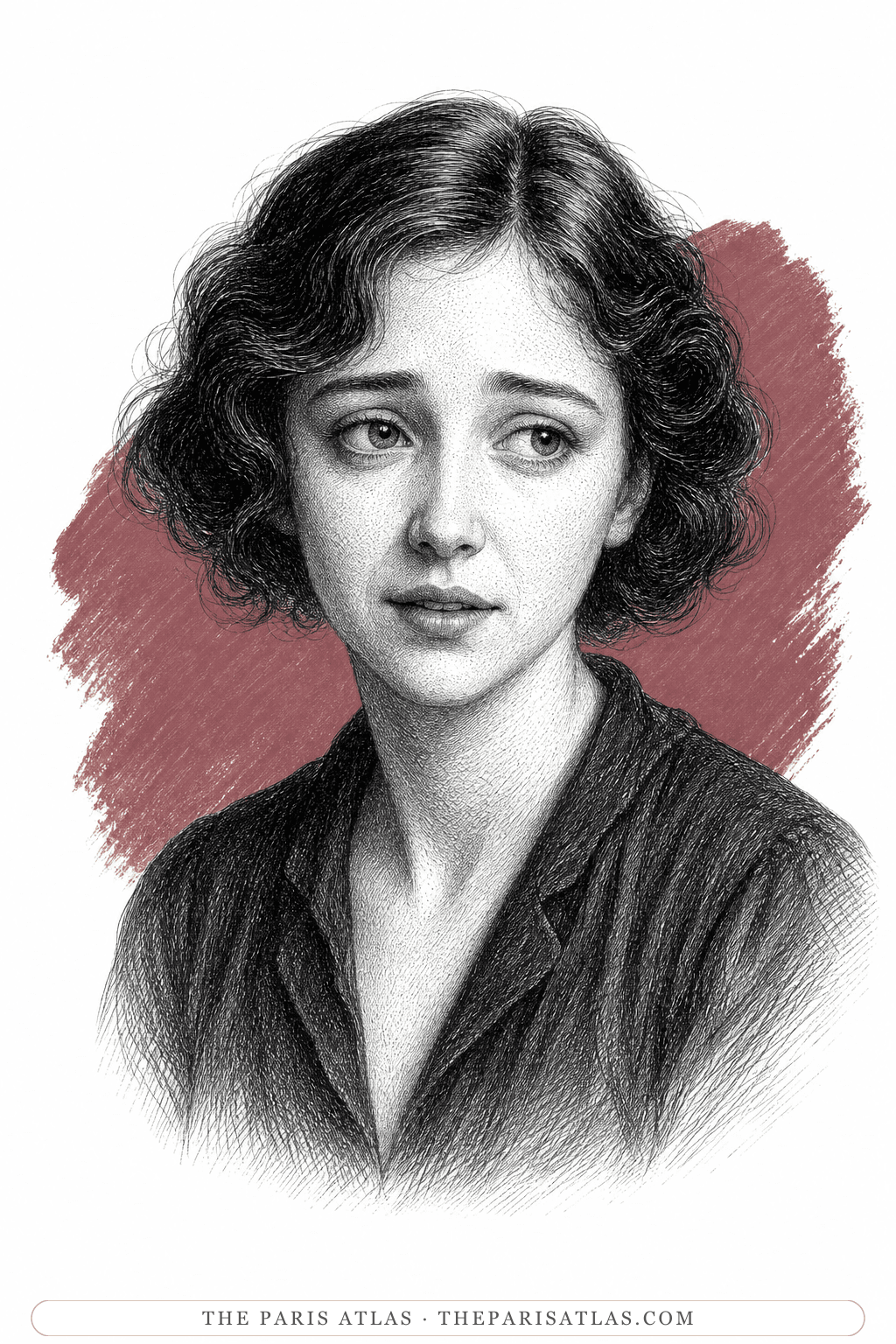
Stella
A film actress who cannot recognise herself on screen and is jealous of the woman she sees there. She is in love with a married man, and she treats every small refusal from him as proof that the love has failed.
To be given a part big enough to hold her, and a love with no gap in it — she asks for both, and turns down every role that contains only one piece of her.
The book

At a glance
- The central figure of "Stella", the first of the three novellas
- Screen actress. She refuses every part that contains only one aspect of her
- A celebrated stage actor in Warsaw, who left when she was a child
- Bruno, who is married, and Philip, who is not in love with her
Who they are in the book
Spoiler-freeStella is the heroine of the first of the three novellas printed in Winter of Artifice, published in 1939 by the French-born American writer Anaïs Nin. She is a film star. The story opens with her sitting in a dark room watching her own performance and failing to recognise the woman on the screen.
That is the whole engine of the piece. On film Stella is free, luminous and open, and audiences fall in love with her; in a room she is small, doubting and frightened, and she believes the screen version is a fraud. She has bought the bed, the mirrors, the perfume bottles and the rows of shoes that go with being a famous actress, and she cannot use any of them.
Her love affair is with Bruno, a married man who will not leave his household, and the story is about what her doubt does to it. Nin also takes Stella back into her childhood, to a father who was a celebrated actor in Warsaw, to a hand-me-down serge dress in front of a mirror, and to the point at which she decides that acting other people is the only way out of being herself.
This profile is drawn from the Swallow Press edition of 1948, read in the Internet Archive's scan of the book.
How Stella Is Portrayed
- Jealous of her own doubleWatching herself on screen she does not see an idealised version of a woman she knows. She sees a stranger who moves freely, gives everything away with her eyes, and is loved for it, and she is jealous of her. Afterwards the audience comes over to touch her and ask for her signature and she hangs her head.
- The bed she cannot sleep inShe buys an enormous white satin Movie Star bed, a room of mirrors, big perfume bottles, a white rug, a cupboard of hats. She sleeps badly in it until she works out that if she covers her head she is back in the small bed of her childhood.
- The hats and the shoesThe hats sit on their stands and are never taken down, because wearing one would require playing a part perfectly. The shoes were bought for dangerous and entrancing paths and stay on the shelf like museum pieces, while she wears the worn familiar ones to the studio.
- The snowflakeIn a love scene following a snowstorm scene, one flake of artificial snow stays on the wing of her nose and catches the light through the whole performance. It is the imperfection that moves the audience most. Nin remarks that if Stella had known about it she would have been crushed.
- Running at BrunoAfter a day by the sea she sees him coming and runs at him and leaps like a dancer. He is frightened she will crash into him and goes rigid, and she finds herself with her arms around a statue. Her body is not hurt at all.
- The word in the darkLying awake in the white bedroom she works at a word that has been rising all day, and when it comes out in her foreign accent the middle syllable sounds like a cry of pain. She is asking herself whether she is a masochist. She knows only the dictionary meaning and cannot get any further alone.
- The blue serge dressAt fourteen she is told in front of her class that she is gifted at acting, and the joy is killed on the spot by what she is wearing: a shrunken, worn dark blue dress made over from a cousin's. She decides she can only step out of the dress by becoming somebody else, and she becomes Marguerite, Melisande, La Dame aux Camélias.
- Beating the telephone with a concertoKnowing Bruno will ring, she puts a long concerto on the phonograph and climbs the stairs one step at a time, higher with each ring, until the trombone and the flute between them have drowned it out.
- The fried potatoIn the most pompous restaurant in the city she reaches out and takes a fried potato off a tray a waiter is carrying past. Nin lists it with the other things about her that stayed a child's: eating avidly as if the food might be forbidden, liking her face washed of make-up, no coquetry at all.
- The building with two doorsCaught between Bruno seeing her home and Philip waiting at her flat, she has the taxi stop at a random apartment house, tells the doorman a man has been following her, and gets the lift boys to take her down through the cellar and out the other side. Bruno spends the time walking up and down in the snow outside.
If you like Winter of Artifice


If you like Anaïs Nin
Explore authors with a similar voice, perspective, and influence.
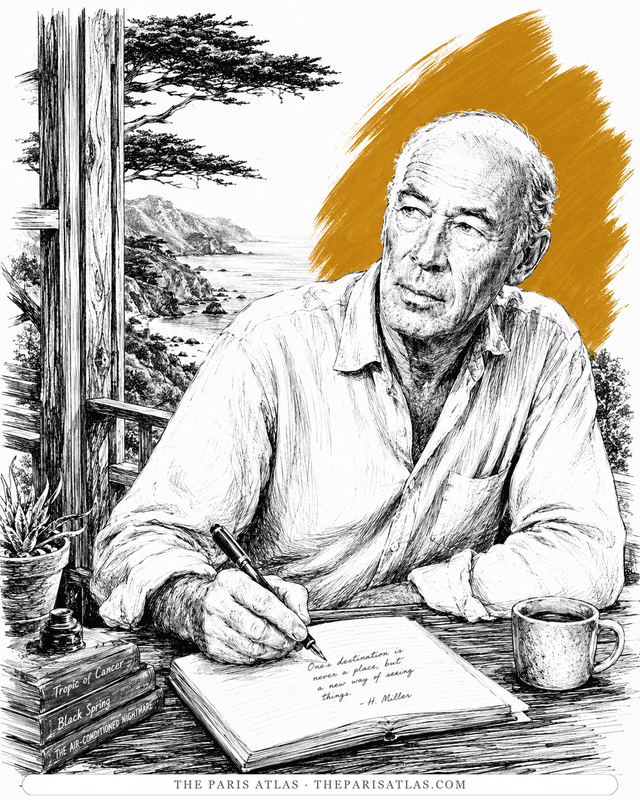
Henry Miller
The entangled careers of the Villa Seurat: she financed and prefaced his scandal, he detonated her prose — and each wrote the other into the century's record.
View author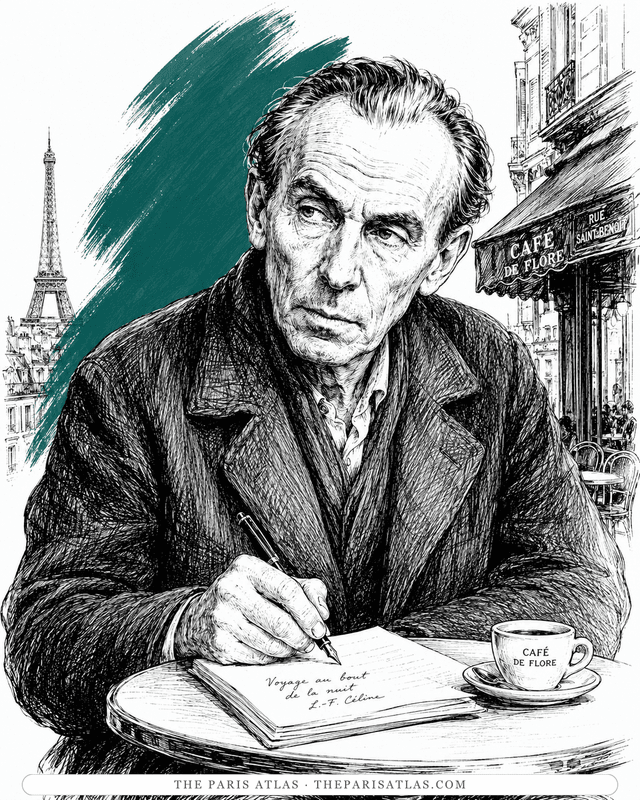
Louis-Ferdinand Céline
The doctor of the Paris slums who wrote the century's blackest, funniest novel — and changed the sound of French prose.
View author
Martha Gellhorn
War correspondent who covered the Spanish Civil War, D-Day, and conflicts across five more decades; Hemingway's third wife, 1940–1945.
View author