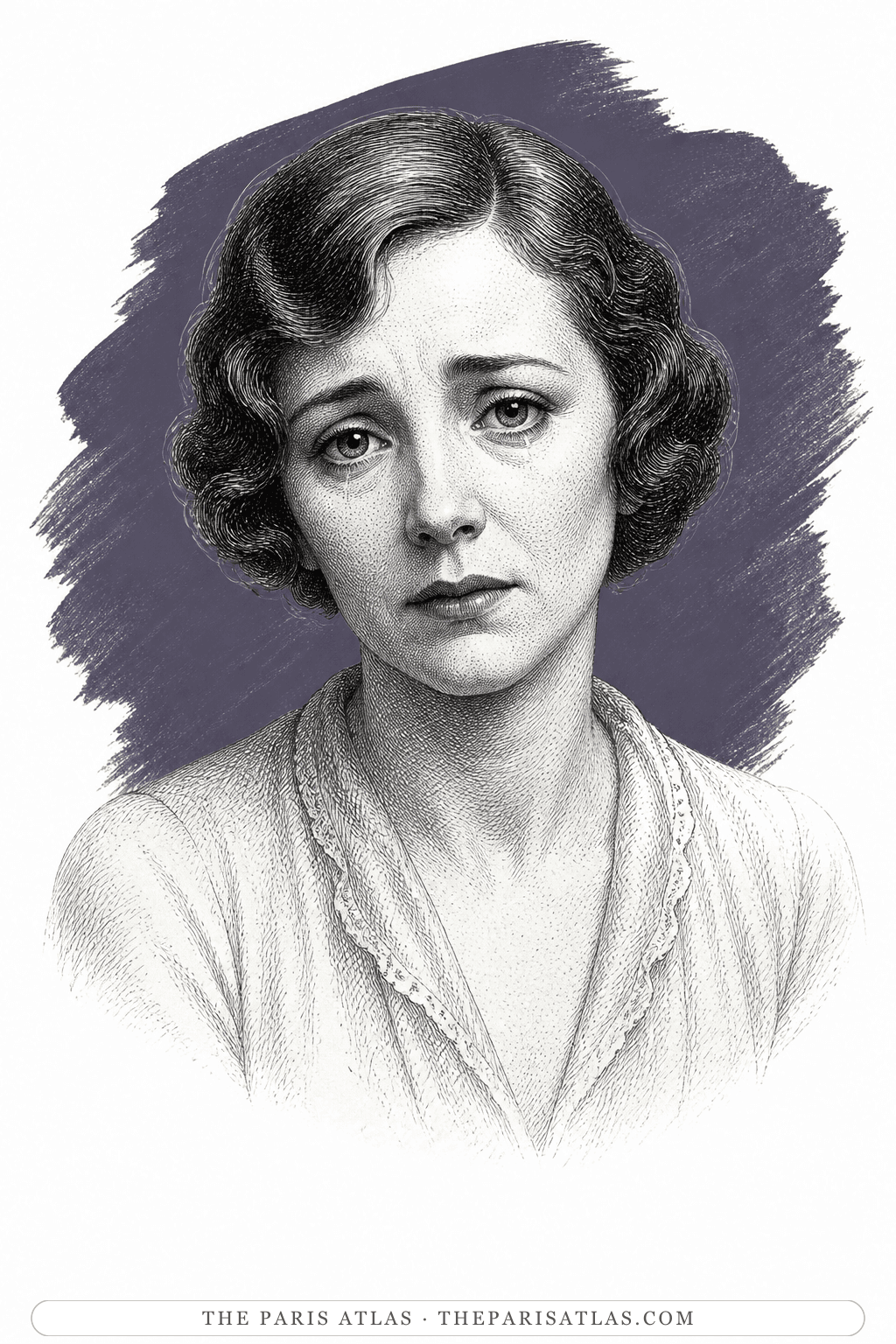
Laura
The second wife of Stella's father, who forgave him for ten years and then stopped. Her account of the marriage is the clearest and least sentimental speech in the book.
To be seen once, by the man she has been carrying — which is what she says he never did, and why she says she cannot go back.
The book

At a glance
- The second wife of Stella's father, in "Stella"
- Ten years, after being one of his students
- At twelve, on a weekly visit, and mistook her for another little girl
- The father in the title novella also has a wife named Laura. They are not the same woman
Who they are in the book
Spoiler-freeLaura is the second wife of Stella's father in the first of the three novellas printed in Winter of Artifice, the 1939 book by the French-born American writer Anaïs Nin. She was one of his students when she replaced Stella's mother, and she has been married to him for ten years when the story begins.
Stella first met her as a child of twelve and thought she was another little girl — someone dressed and coiffed as a woman, laughing and believing everything. She did not manage to hate her, and understood even then that Laura was the one in danger.
The novella brings her back as the person who has finally had enough, and gives her the long speech that explains why. It is precise about what she can and cannot forgive, and it is the passage that tells the reader what kind of man they have been watching.
This profile is drawn from the Swallow Press edition of 1948, read in the Internet Archive's scan of the book. The name recurs later in the volume: the father of the title novella also has a wife called Laura, a different woman in a different story.
How Laura Is Portrayed
- The telegramThe story turns on eight words sent to Stella: "Come immediately. I am divorcing your father." A later letter adds that he is threatening to kill himself, and that she does not believe it. Neither does Stella.
- A child playing the motherSmall and childlike, she looks to Stella like someone who took on a maternal role as a game and found it beyond her strength, and who has been playing it for ten years anyway.
- The wound in her eyesStella had always known her by her believing eyes. Receiving her this time, the same eyes are lacerated and look about to dissolve, and Stella knows before speaking that the errand is hopeless.
- What she will not forgiveNot the other women. She says it was never his infidelities that made her ill, it was his indelicacies: mistresses installed near her, taunts about her failure to make friends with them, annoyance on his face when she was sick. She says he was not unfaithful so much as absent.
- The charge of actingThe thing she names last is the worst: that he covered selfish acts in a coat of altruism, embroidered the role of ideal being so thoroughly that she always felt she was living with a man who was performing, and that he is performing still.
- "Only a mother forgives everything."She explains that she made him the child and herself the mother, which is why she forgave him for a decade — and adds that he never gave her even the affection a child gives its mother.
- The houseThe house is hers. She asks him not to come into it again, tells him to make a list of what is his, and says she will have it sent on. While he takes his last look at it from the street, she is weeping quietly indoors.
- "buy her stockings."Stella has come as a go-between with mended stockings on. Laura notices, and whispers three words to the father about it — which is the last kindness in the story and the reason Stella becomes conscious of them.
If you like Winter of Artifice


If you like Anaïs Nin
Explore authors with a similar voice, perspective, and influence.

Henry Miller
The entangled careers of the Villa Seurat: she financed and prefaced his scandal, he detonated her prose — and each wrote the other into the century's record.
View author
Louis-Ferdinand Céline
The doctor of the Paris slums who wrote the century's blackest, funniest novel — and changed the sound of French prose.
View author
Martha Gellhorn
War correspondent who covered the Spanish Civil War, D-Day, and conflicts across five more decades; Hemingway's third wife, 1940–1945.
View author