The daughter
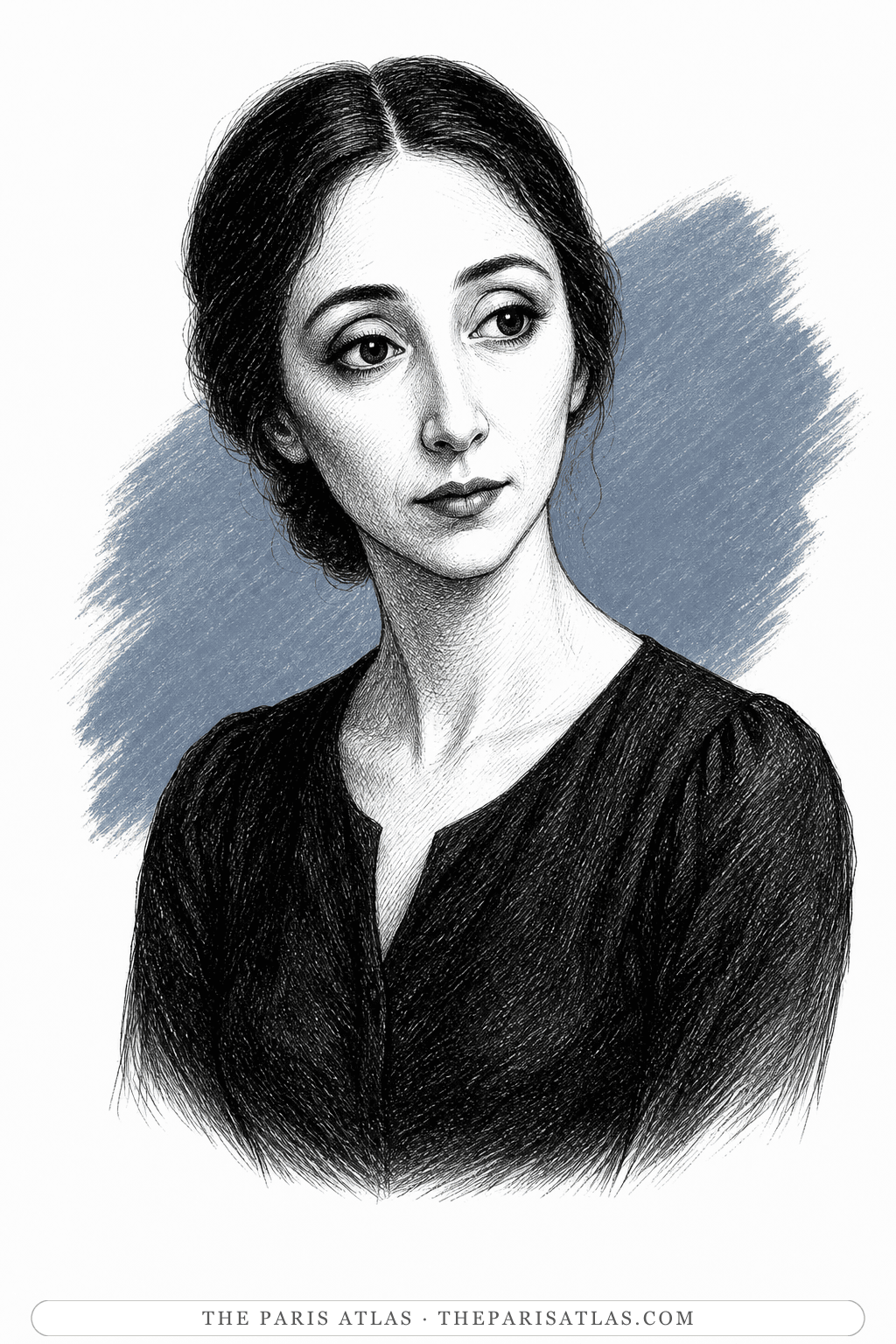
The woman at the center of the title novella. She has waited twenty years for the father who walked out when she was a child, and the book is the few months in which she finally gets him back. She is never named.
To have her father say that he loves her, and to stop being afraid of him — she states both, in that order, on the morning she is waiting for him to arrive.
The book

At a glance
- The central figure of the title novella, and never named
- A grown woman. Her father left when she was a child and twenty years have passed
- A diary she has kept since she was eleven, begun as a letter to him
- Paris, and a hotel in the south of France where they spend a holiday together
- Anaïs Nin · 1903–1977 · Neuilly-sur-Seine, then New York and Paris
Who they are in the book
Spoiler-freeThe title novella of Winter of Artifice is about a woman meeting her father again after twenty years apart. Nin never gives her a name. She is "she" for the whole story, and the reader knows her by what she remembers: a villa by the sea, a father who did not seem pleased to see his children arrive, a crossing to New York with wicker baskets and a cage of birds, and a diary begun on that crossing and addressed to the man who was not on the ship.
She is a writer, and the diary is the point. She started it at eleven as a letter meant to bring him home, kept writing it when he did not come, and went on filling it for twenty years. By the time he walks back through her door she is a grown woman with a career and lovers of her own, and she has spent the years looking for him in other men — in pianists, in doctors, in anyone with blue eyes or grey hair or an adventurous life.
The reunion begins as mutual admiration and turns into something harder to name. Nin writes the attraction between them plainly enough that it cannot be missed and elliptically enough that it is never a scene: a chapter titled "The mystical bride of her father," a page of orchestral prose where the music and the sex are the same sentence, and a passage where she looks at his bare foot and finds it is her own. What ends the story is not a rupture but a diagnosis. She works out that she is not in love with her father and has not been for years, and that what she has been obeying is a pattern.
This profile is drawn from the Swallow Press edition of 1948, read in the Internet Archive's scan of the book — the three-novelette version, which prints "Stella", "Winter of Artifice" and "The Voice".
How The daughter Is Portrayed
- The glass ship in the bowlShe keeps a glass bowl with a glass fish and a glass ship in it, and has always read the ship as the one that carried her away from him. On the day he arrives she leans back against the mantelpiece, pushes the bowl into the wall, and it cracks. The water runs out across the floor and the ship goes over on its side.
- Clinging to his coatThe last time she saw him she was a child and he was leaving for a concert tour. She threw herself at him and begged him not to go. Her mother had to prise her fingers out of his clothes. He hesitated, then walked off quickly without looking back. Nin says the gesture repeated itself for the rest of her life.
- The diary as a letterShe began writing it on the ship to New York, meaning to send it to him so he would know what he had done and come back. It became the opposite: a place she hid, wrote the truth in, and would not show anyone. She wrote in it that she would only marry her double.
- Taking communionAs a girl she went to church and swallowed the wafer thinking about her father rather than God. She aimed at saintliness, she says, in order to hide the love she was actually keeping.
- Recognising his footDriving in the south of France, he takes off a shoe that is hurting him, and she looks at his bare foot and sees her own — the same size, the same colour, the same blue veins, the same look of never having walked anywhere. She thinks that she knows the foot completely, and that she does not love it.
- Being called an AmazonHer father inspects her books, her clothes and her house and tells her she is an Amazon and a force. She goes to the mirror and finds a woman who is underweight and so light that a caricaturist once drew her floating up to the ceiling. She works out that when people say you are, they mean I want you to be.
- The life she built to be unlike hisShe realises she has spent years seeking out everything he could not stand — the failures, the people who stutter, the ugly, the weak, chaos instead of logic, sordid streets and soiled sheets — not out of taste but to put distance between them. It took her years of it, she says, to lose him.
- Telling him she does not believe himNear the end she stops accepting his stories about the women he did not sleep with. She tells him she is not a child and cannot believe them, and adds that being unable to deceive your own daughter is no disgrace. He goes pale and accuses her of demolishing everything.
- The coat of a dead loveNin's last account of the reunion is that she was still holding on to a coat that was not warm, and a body that was not human. The love had died some time before and she had gone on obeying the shape of it.
The break comes without a scene. He returns to Paris and to the salon life she cannot stand, she tells him she cannot believe his stories, and he is offended rather than shaken. Then she understands that the quarrel is not with her — he is arguing with her mother, and with his own guilt, through her. She writes that she stopped loving her father a long time ago and that what remained afterwards was slavery to a pattern. The last line of the section is that she is holding the coat of a dead love.
Nin drew the reunion from her own life. Her father, the Cuban pianist and composer Joaquín Nin, left the family in 1913, and she saw him again as an adult in 1933. Her own account of what happened between them was cut from the diary published in her lifetime and appeared only in 1992, in Incest. The novella is the earlier, transformed use of the same material, and it is not that account: what the fiction gives is a mutual seduction conducted in talk, a chapter called "The mystical bride of her father", and a father who says he cannot marry her.
If you like Winter of Artifice


If you like Anaïs Nin
Explore authors with a similar voice, perspective, and influence.
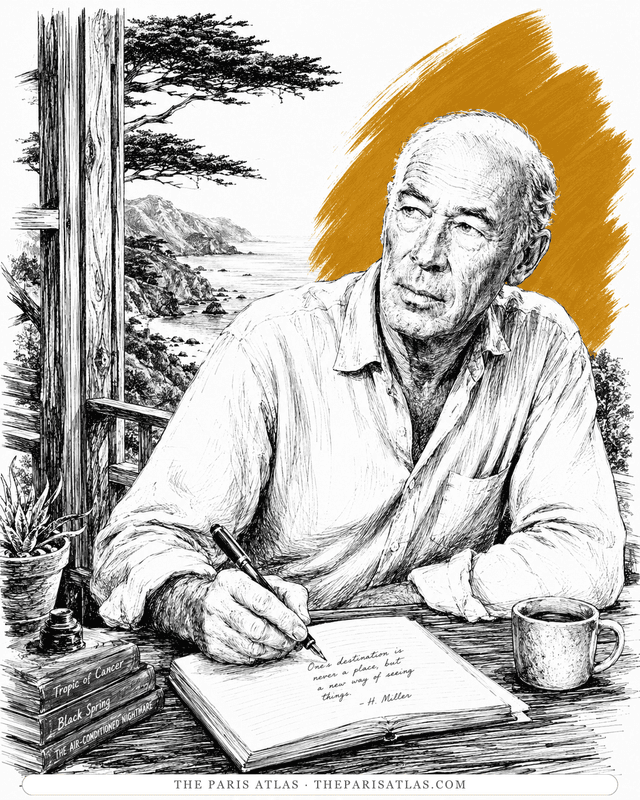
Henry Miller
The entangled careers of the Villa Seurat: she financed and prefaced his scandal, he detonated her prose — and each wrote the other into the century's record.
View author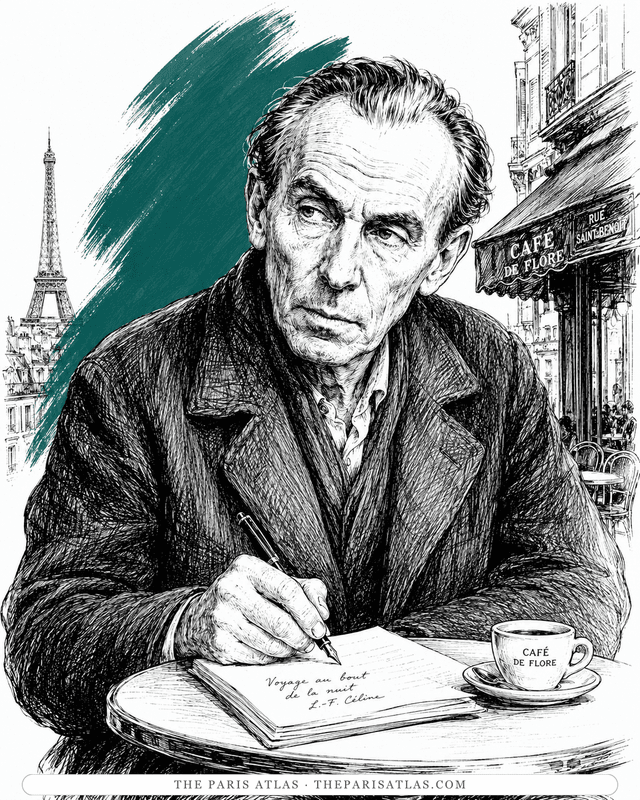
Louis-Ferdinand Céline
The doctor of the Paris slums who wrote the century's blackest, funniest novel — and changed the sound of French prose.
View author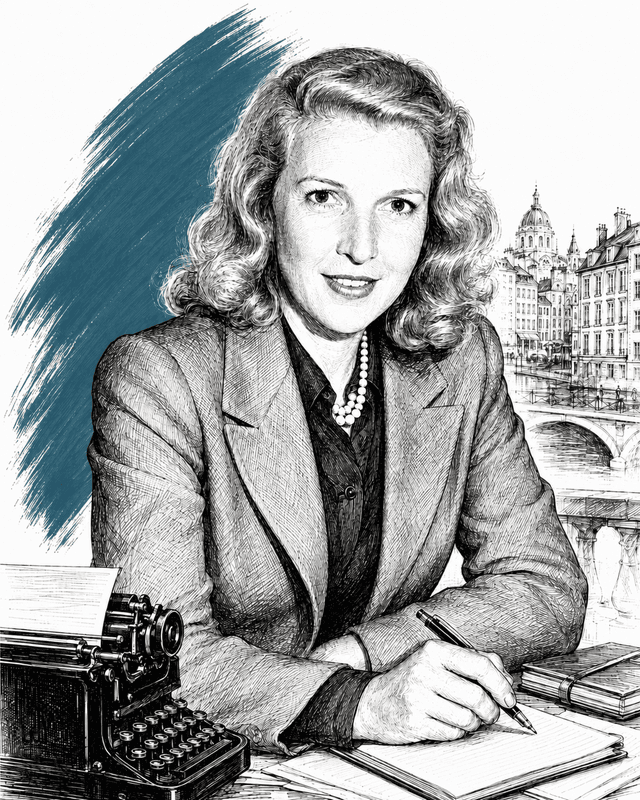
Martha Gellhorn
War correspondent who covered the Spanish Civil War, D-Day, and conflicts across five more decades; Hemingway's third wife, 1940–1945.
View author