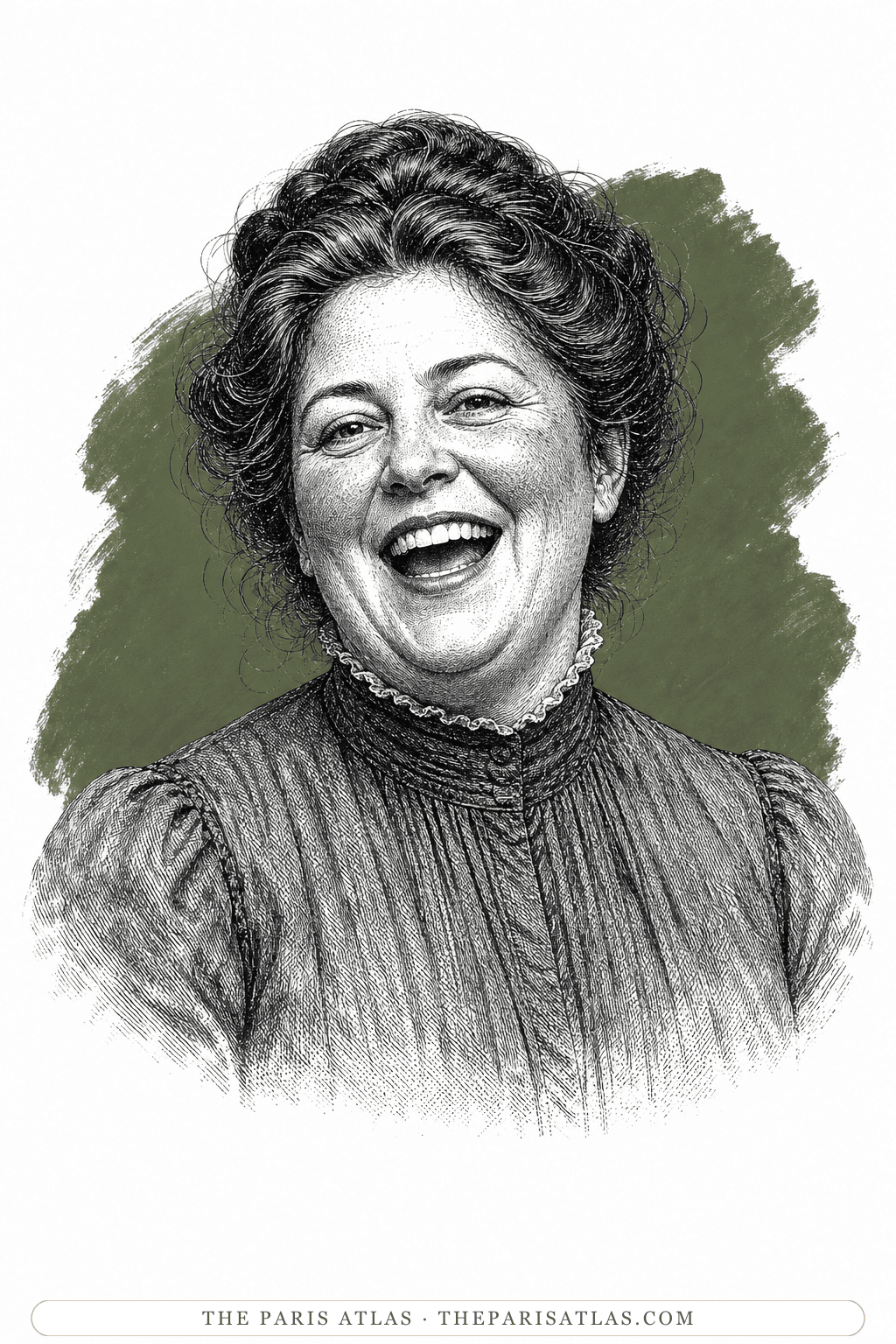
The mother
The wife left behind in the title novella, and the parent who actually raised the children. A singer with a loud laugh who took three children to New York with no money and sang in a church for pennies. She is never named either.
To be at the center of her husband's life rather than one item in it — the novella says she allowed him great freedom and that it was never the freedom that killed her feeling.
The book

At a glance
- The wife the father left, in the title novella. Never named
- A singer. She gave singing lessons in the front room in New York
- The daughter and two younger brothers
- Barcelona to New York, in a thunderstorm, with wicker baskets, a cage of birds and no money
Who they are in the book
Spoiler-freeThe mother is the third figure in the title novella of Winter of Artifice, published in 1939 by the French-born American writer Anaïs Nin. The story is about a daughter reunited with the father who walked out on the family twenty years earlier. The mother is the one he walked out on, and the one who then did the work.
She is a trained singer. She got her three children out of Europe and into New York with wicker baskets, a cage of birds, a violin case and no money, and she kept them by giving singing lessons in the front room and taking whatever else she could find. Nin draws her as everything the father is not: red-cheeked, hungry, loud, natural, and permanently at war with him even after he has gone.
That war runs through the daughter. The mother taught the children a version of their father — selfish, neglectful, irresponsible, in love with luxury — and treated every trace of him in them as a fault. The daughter's paleness, her rages, her imagination and her lying were all filed under the same heading. It is one of the two portraits of the father the daughter carries into the reunion, and the story is partly about which of them was accurate.
This profile is drawn from the Swallow Press edition of 1948, read in the Internet Archive's scan of the book.
How The mother Is Portrayed
- The parent who was realThe daughter remembers the father appearing at doors as a gust of wind, luminous and mysterious. The mother is the opposite and the contrast is the point: healthy red cheeks, an appetite, and a frank natural laugh.
- The quarrel that terrified the childrenOne scene of such violence that the daughter thought her father would kill her mother, and screamed until the adults were alarmed enough to stop. Afterwards there were a few days of quiet, which she describes as a truce and a pretence.
- Where the money wentThere was none in the house except for books and music, a fur-lined coat, the cologne the father sprinkled on his handkerchiefs, and the silk shirts he required for concert tours. A doctor in Berlin said the sickly child should be taken back to her native climate; there was no money for that.
- The songsThe daughter could not bear to hear her mother sing, because she seemed to choose only the ones that were about him — "Ever since the day", "Some day he'll come". When her mother sang she exhausted herself sobbing.
- Singing for penniesNew York was cold, hostile and indifferent, and they were immigrants and were made to feel it. She was fighting for the children every day, and on Christmas Eve she sang at the church to earn a little money.
- "Mauvaise graine, va!"What she shouted at the children when she was angry — bad seed. The seed she meant was their father's, and the great crime in the household was resembling him.
- Filing every fault under his nameEvery temper, every tragic outburst, even the daughter's paleness reminded her of him and was condemned for it. The younger brother's rages, the daughter's exaggerations and lies and imagination — all of it, she said, came from him.
- The janitor and the snowThe daughter was so frightened of the New York cold that she could not leave the house, and her mother had to ask the building's Black janitor to drag her the short distance to school. He lent her his woollen gloves and slapped her back to warm her up.
- "J'ai pardonné"Walking to her father's house years later, the daughter remembers her mother singing Schumann's "I have forgiven" more movingly than anything else in her repertoire. She never forgave him.
- Speaking through her daughterIn the final quarrel the daughter stops recognising her own voice. She is saying what her mother used to say — that as a human being he is a failure — and her father hears it, and answers it, and tells her to go on and say the rest of it too.
If you like Winter of Artifice


If you like Anaïs Nin
Explore authors with a similar voice, perspective, and influence.

Henry Miller
The entangled careers of the Villa Seurat: she financed and prefaced his scandal, he detonated her prose — and each wrote the other into the century's record.
View author
Louis-Ferdinand Céline
The doctor of the Paris slums who wrote the century's blackest, funniest novel — and changed the sound of French prose.
View author
Martha Gellhorn
War correspondent who covered the Spanish Civil War, D-Day, and conflicts across five more decades; Hemingway's third wife, 1940–1945.
View author