King Arthur
The king of Camelot, a brave and decent man who believes completely in rank. Hank takes him on a journey in disguise to see how his people live.
He wants to be a good king without giving up any of what a king is owed.
The book
A Connecticut Yankee in King Arthur's Court
Mark Twain
Who they are in the book
Spoiler-freeArthur is kind to Hank and courageous in danger, but he has never questioned the laws of his kingdom. The journey in disguise tests him. He shows great bravery, and he still cannot get over being sold for less than Hank.
How King Arthur Is Portrayed
- Bargaining for the sunIn Chapter VI he begs Hank to spare the sun and offers him anything he asks. Hank makes him perpetual minister.
- Learning to walk like a peasantIn Chapter XXVIII Hank drills him in how a freeman stands and speaks. The king keeps holding himself like a king.
- The smallpox hutIn Chapter XXIX he climbs into a loft and carries down a fifteen-year-old girl dying of smallpox. Hank calls it heroism at its loftiest.
- Sold for seven dollarsIn Chapter XXXIV he is auctioned as a slave for seven dollars, and Hank for nine. In Chapter XXXV he keeps arguing that in a fair market he would have fetched twenty-five.
- At the gallowsIn Chapter XXXVIII he is blindfolded and led under the rope in London. Launcelot's knights arrive on bicycles just in time.
- The last battleIn Chapter XLII Clarence reads the account of Arthur's final fight with Mordred. Arthur runs Mordred through with a spear and is struck on the head in return.
If you like A Connecticut Yankee in King Arthur's Court


If you like Mark Twain
Explore authors with a similar voice, perspective, and influence.

Louis-Ferdinand Céline
The doctor of the Paris slums who wrote the century's blackest, funniest novel — and changed the sound of French prose.
View author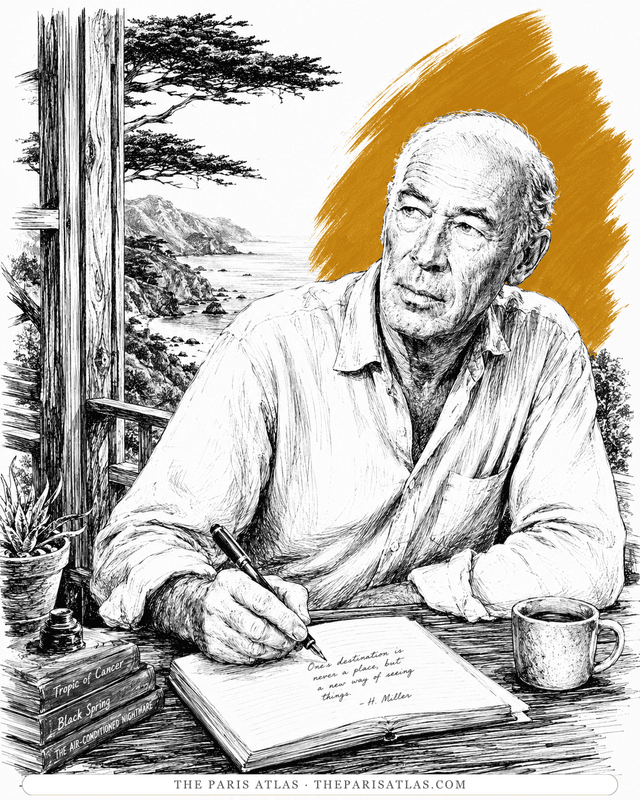
Henry Miller
The Brooklyn dropout who arrived in Paris broke at thirty-eight and wrote the exuberant, banned books that ended American censorship.
View author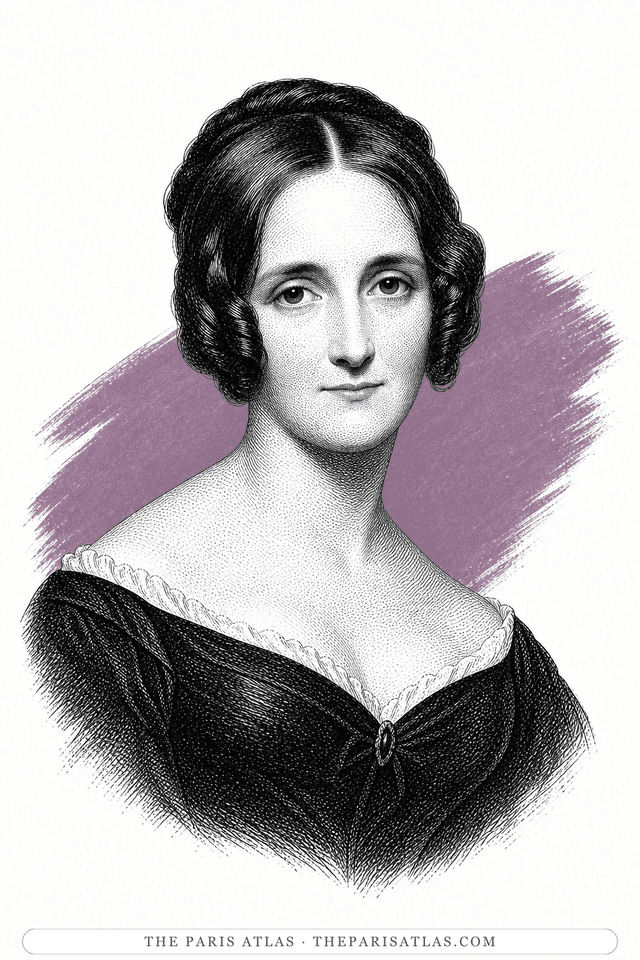
Mary Shelley
The author of Frankenstein, who first saw Paris at sixteen as a runaway. In the summer of 1814 she crossed from England to Calais with the poet Percy Bysshe Shelley and her stepsister Claire Clairmont, spent a week trapped in an expensive Paris hotel with no money, then bought a donkey and walked south-east across a France still wrecked by the Napoleonic wars. That journey became her first published book. Two years later, on a lake in Switzerland, she began her second.
View author