Hank Morgan, The Boss
A head superintendent from a Hartford arms factory, knocked back to the year 528. Clever, boastful, generous and ruthless by turns.
He wants to turn Arthur's England into a modern republic with factories, schools and a free press, and to be admired for doing it.
The book
A Connecticut Yankee in King Arthur's Court
Mark Twain
Who they are in the book
Spoiler-freeHank tells the whole story in his own voice, in the slang of an American workman of the 1880s. He believes in schools, newspapers, machines and elections, and he cannot understand why the people of Camelot love their king and their Church. His plans are often kind and his methods are often brutal.
How Hank Morgan, The Boss Is Portrayed
- A Yankee of the YankeesIn the frame story he says he was born in Hartford, the son of a blacksmith, and learned to make guns, revolvers, boilers and engines. He calls himself practical and nearly barren of sentiment.
- Bridgeport or CamelotIn the frame story he asks the knight leading him whether the town ahead is Bridgeport. The knight says it is Camelot.
- Using the eclipseIn Chapter VI, chained to the stake, he threatens to blot out the sun. When the eclipse begins he bargains for the post of perpetual minister and one per cent of any new revenue.
- Becoming The BossIn Chapter VIII a blacksmith gives him the title that the whole kingdom soon uses. He is pleased because it was chosen by the people rather than given by the king.
- Seeing slaves on the roadIn Chapter XXI he watches a chained slave gang pass and wants to free them at once. He decides to wait and abolish slavery completely later.
- A revolver in the listsIn Chapter XXXIX he meets Sir Sagramor in a tournament and shoots him dead with a dragoon revolver. The shot leaves the hole in the chain mail that the guide at Warwick Castle points out centuries later.
- Married to SandyIn Chapter XLI he says he married Sandy only because a New Englander could not leave the arrangement as it was, and that within a year he worshipped her.
Hank Morgan, The Boss quotes
I am an American. I was born and reared in Hartford, in the State of Connecticut—anyway, just over the river, in the country.
“Bridgeport?” said I, pointing. “Camelot,” said he.
There were two “Reigns of Terror,” if we would but remember it and consider it; the one wrought murder in hot passion, the other in heartless cold blood; the one lasted mere months, the other had lasted a thousand years
After the Battle of the Sand Belt, Hank is stabbed by a wounded knight he tries to help. Merlin puts him to sleep for thirteen centuries. He wakes in the nineteenth century and dies at Warwick, calling for Sandy and their daughter.
If you like A Connecticut Yankee in King Arthur's Court


If you like Mark Twain
Explore authors with a similar voice, perspective, and influence.

Louis-Ferdinand Céline
The doctor of the Paris slums who wrote the century's blackest, funniest novel — and changed the sound of French prose.
View author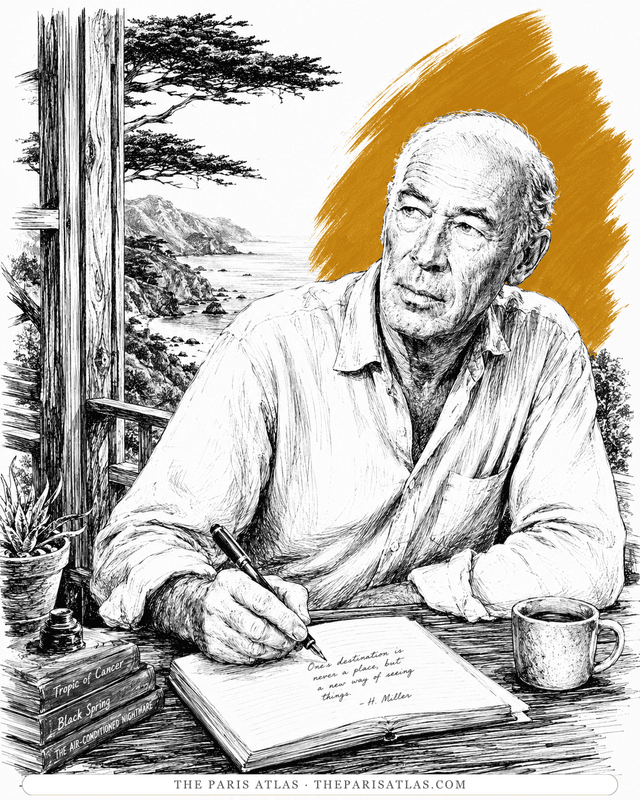
Henry Miller
The Brooklyn dropout who arrived in Paris broke at thirty-eight and wrote the exuberant, banned books that ended American censorship.
View author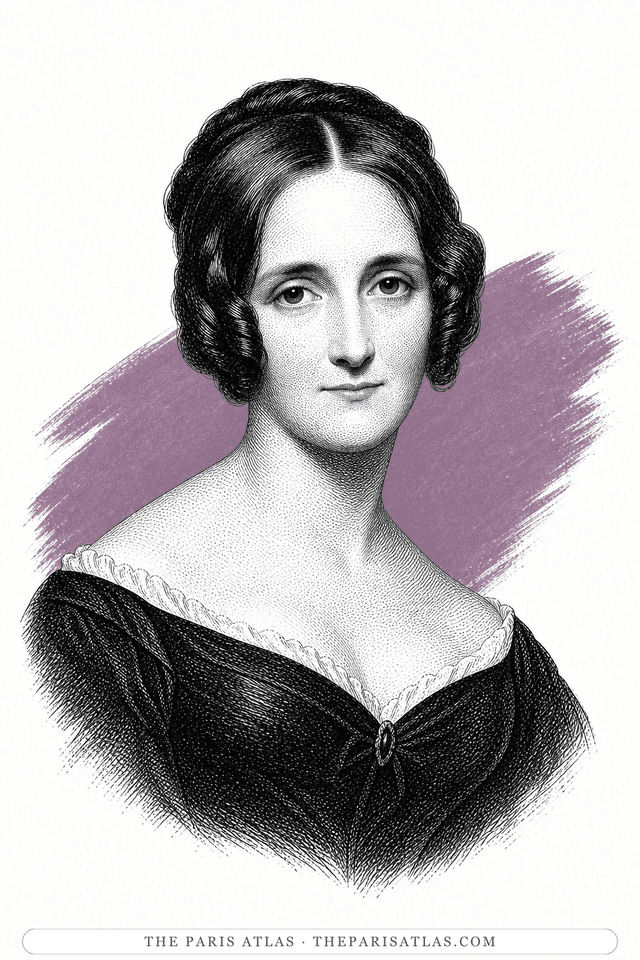
Mary Shelley
The author of Frankenstein, who first saw Paris at sixteen as a runaway. In the summer of 1814 she crossed from England to Calais with the poet Percy Bysshe Shelley and her stepsister Claire Clairmont, spent a week trapped in an expensive Paris hotel with no money, then bought a donkey and walked south-east across a France still wrecked by the Napoleonic wars. That journey became her first published book. Two years later, on a lake in Switzerland, she began her second.
View author