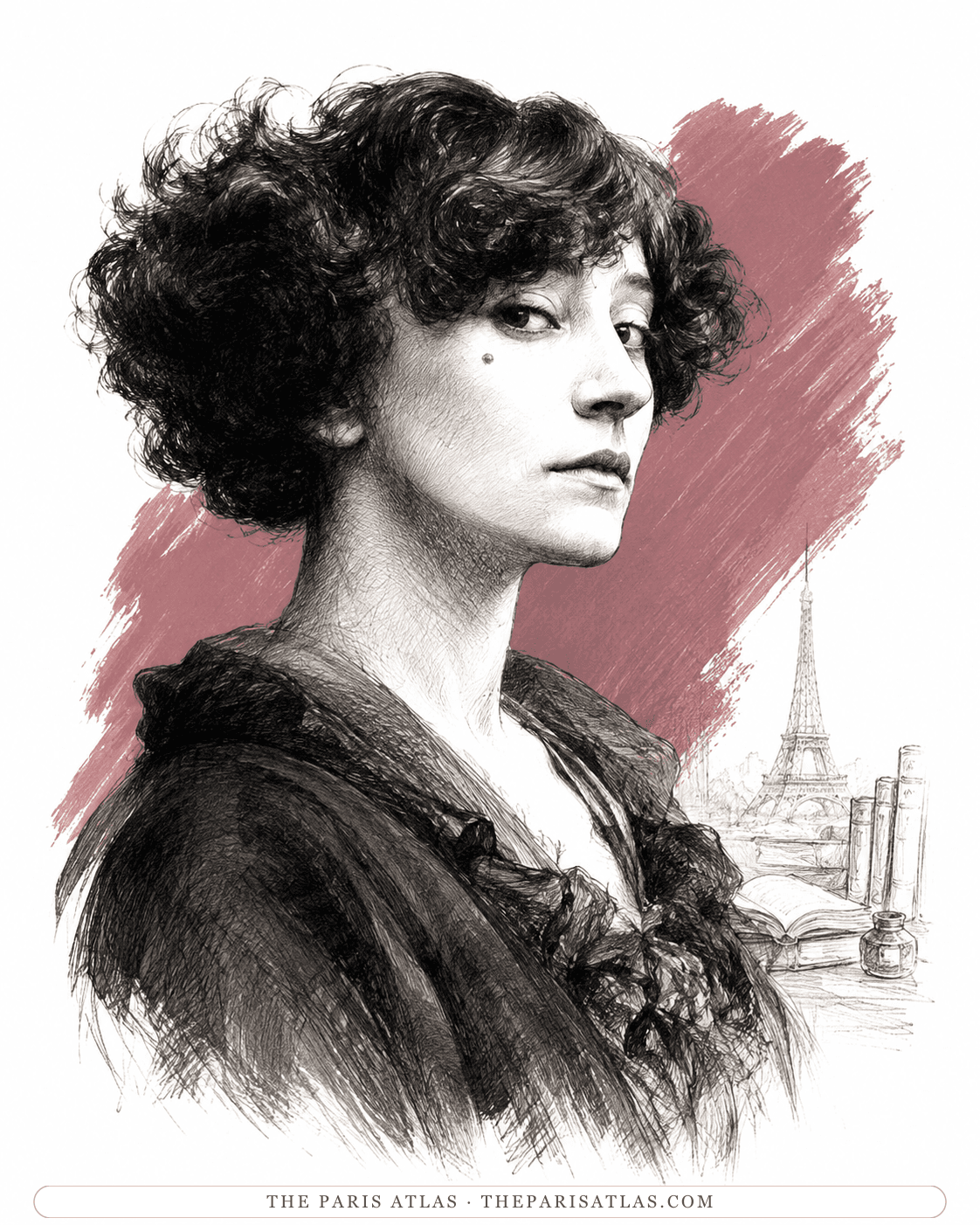


Four Seasons
by Colette
Twelve fashionable chronicles that follow the turning year — a private printing for a patron's friends, later folded into Journey for Myself.
- 1925
About Colette
The story, briefly
Spoiler-freeFour Seasons is a small collection of Colette's prose, published in 1925. Its twelve pieces follow the year and its churn — dress, taste, invitations, travel, femininity, the passing look of things — as seasonal, fashionable chronicles written in step with the calendar. The material first appeared in Vogue across 1924–25. The book was not a trade edition but a private printing made for a patron and his friends, and its twelve texts were soon absorbed into the enlarged 1928 version of Journey for Myself. (What's inside is described below.)
The story, in more detail
The pieces are chronicles of the year seen through the lens of appearance and fashion: what the season brings, what people wear and do, how taste and mood shift as the calendar turns. Colette had written them for Vogue, and they carry the ease and worldliness of magazine writing at its best, alert to surface without being shallow about it.
Its life on the shelf is unusual. Four Seasons was not published as an ordinary book; it was a private printing produced at the expense of Philippe Ortiz for his circle of friends. That makes the original a limited, occasional object rather than a trade edition — a point worth keeping when the title turns up in a bibliography.
The twelve pieces did not stay separate for long. Colette folded them into the heavily enlarged 1928 state of Le Voyage égoïste, or Journey for Myself, where they now mostly live. Four Seasons is best understood as a brief, elegant way-station on the road to that reworked book.
What's inside
There is no plot. The book gathers twelve short chronicles that follow the turning year — dress, taste, invitations, travel, and the passing appearance of things — written in step with the seasons. The pieces first appeared in Vogue across 1924 and 1925.
Its form matters to its identity: Four Seasons was a private printing made for a patron and his friends rather than a trade book, and its twelve pieces were soon absorbed into the enlarged 1928 version of Journey for Myself, where they now mostly reside.
Themes and analysis
The year changes its clothes
In “Élégance, économie,” as collected in 1928, Valentine defends a winter outfit by its versatility: one combination can take her through lunch, dancing, the theater and dinner without requiring a complete change. What first looks like submission to fashion also answers a wish to be ready for unpredictable invitations. Colette then complicates that economy through the short haircut that promises freedom but demands repeated visits to the hairdresser. The passage makes appearance a practical negotiation with time and effort, while teasing the hope that any fashionable solution could settle those demands once and for all.
Invitations and departures
“Voyages” begins with a friend's efficient invitation and answers it with refusal. The proposed driver is capable, knowledgeable and punctual; those virtues are precisely what leave too little room for wandering. Against the fixed itinerary, the speaker values roadside smells, uncertain glimpses and an unhurried night outdoors. Her own car is carefully supplied, so this freedom is not the absence of preparation. Preparation serves an open journey rather than a schedule. The packed valise can therefore suggest a tension central to the piece: possessing the means to travel is different from allowing a place to interrupt one's progress.
Why we recommend it
Fashion and the calendar
Elegant magazine chronicles that follow the year through dress, taste, and the passing look of things.
A limited, occasional object
Printed privately for a patron's friends, the original is a rarity rather than a trade book.
A way-station to a bigger book
Its pieces were absorbed into the reworked Journey for Myself, which is where most readers meet them.
What this book explores
Bring it to book club
- The chronicles follow fashion and the seasons. Is Colette shallow about surfaces here, or precise about them?
- The book was a private printing, then absorbed into another. Does a work's format change its standing for you?
- How do these seasonal pieces read differently on their own than folded into Journey for Myself?
Timeline
1924
The pieces appear in Vogue across 1924–25.
1925
Quatre Saisons is printed privately for Philippe Ortiz and his friends.
1928
The twelve pieces are absorbed into the enlarged Le Voyage égoïste suivi de Quatre saisons.
Book editions
Hardcover
- Hardcover
- 1925
Hardcover
- Hardcover
- 1928
Reader reviews
Readers may also like

Everyday Adventures
The near-contemporary chronicle collection, close in its worldly attention to daily life.
Read our take
Break of Day
Colette's nearby book in which the turning of a season becomes a way of thinking about a life.
Read our takeFour Seasons: frequently asked questions
Who wrote Four Seasons?
Colette. Quatre Saisons was published in 1925, a small collection of twelve chronicles first written for Vogue.
What is the book about?
It follows the turning year through dress, taste, travel, and the passing appearance of things — seasonal, fashionable chronicles written in step with the calendar.
Was it published as an ordinary book?
No. It was a private printing produced at the expense of Philippe Ortiz for his friends, not a trade edition.
How does it relate to Journey for Myself?
Its twelve pieces were absorbed into the enlarged 1928 version of Le Voyage égoïste (Journey for Myself), where they now mostly live.
Is Four Seasons available in English?
There is no securely verified standalone English edition of the book.
If you like Colette
Explore authors with a similar voice, perspective, and influence.
Henry Miller
The Brooklyn dropout who arrived in Paris broke at thirty-eight and wrote the exuberant, banned books that ended American censorship.
View author
Louis-Ferdinand Céline
The doctor of the Paris slums who wrote the century's blackest, funniest novel — and changed the sound of French prose.
View author
Martha Gellhorn
War correspondent who covered the Spanish Civil War, D-Day, and conflicts across five more decades; Hemingway's third wife, 1940–1945.
View author
References
References
The sources below include the primary text, editions, scholarship, archival materials, and other records that informed this page. They document Four Seasons, its publication, and its place in literary history.


1Four Seasons
NovelColette, 1925Used forThe primary text represented by this page, used for descriptions of the work’s contents and for any quoted passages shown here.
2Le Voyage égoïste suivi de Quatre saisons — Ferenczi 1928 edition
WebsiteWikisourceUsed forSelected Valentine and haircut passages of Élégance, économie, beginning p. 75, in the publicly indexed French transcription, and complete Voyages, pp. 83–88, in the Quatre-Saisons sequence collected with Le Voyage égoïste (Ferenczi 1928). No collation with the private 1925 printing or original Vogue publication; symbolic illustrations remain interpretations.
3Colette — bibliography of original editions
WebsiteSociété des amis de ColetteUsed forThe Société des amis de Colette bibliography verifies the original edition's publisher and publication date.
4Société des amis de Colette — Chronology
WebsiteUsed forUsed to place Four Seasons within Colette's published work and verify its bibliographic context.

5Bibliothèque nationale de France — The Worlds of Colette
Exhibition catalogueUsed forUsed for independent biographical, archival, or historical context surrounding Colette's career and the period in which Four Seasons appeared.
6Library of Congress — Colette resource guide
WebsiteUsed forUsed to cross-check authorship, chronology, and the work's place in Colette's wider catalogue.
7Bibliothèque nationale de France — Colette: online resources
WebsiteUsed forUsed to verify Colette's bibliography and place Four Seasons within the broader chronology of Colette's career.
i
Why these sources are here
The primary text is the baseline reference for every book page. Additional references document publication history, interpretation, and historical context where that evidence is available.
 Explore more resources