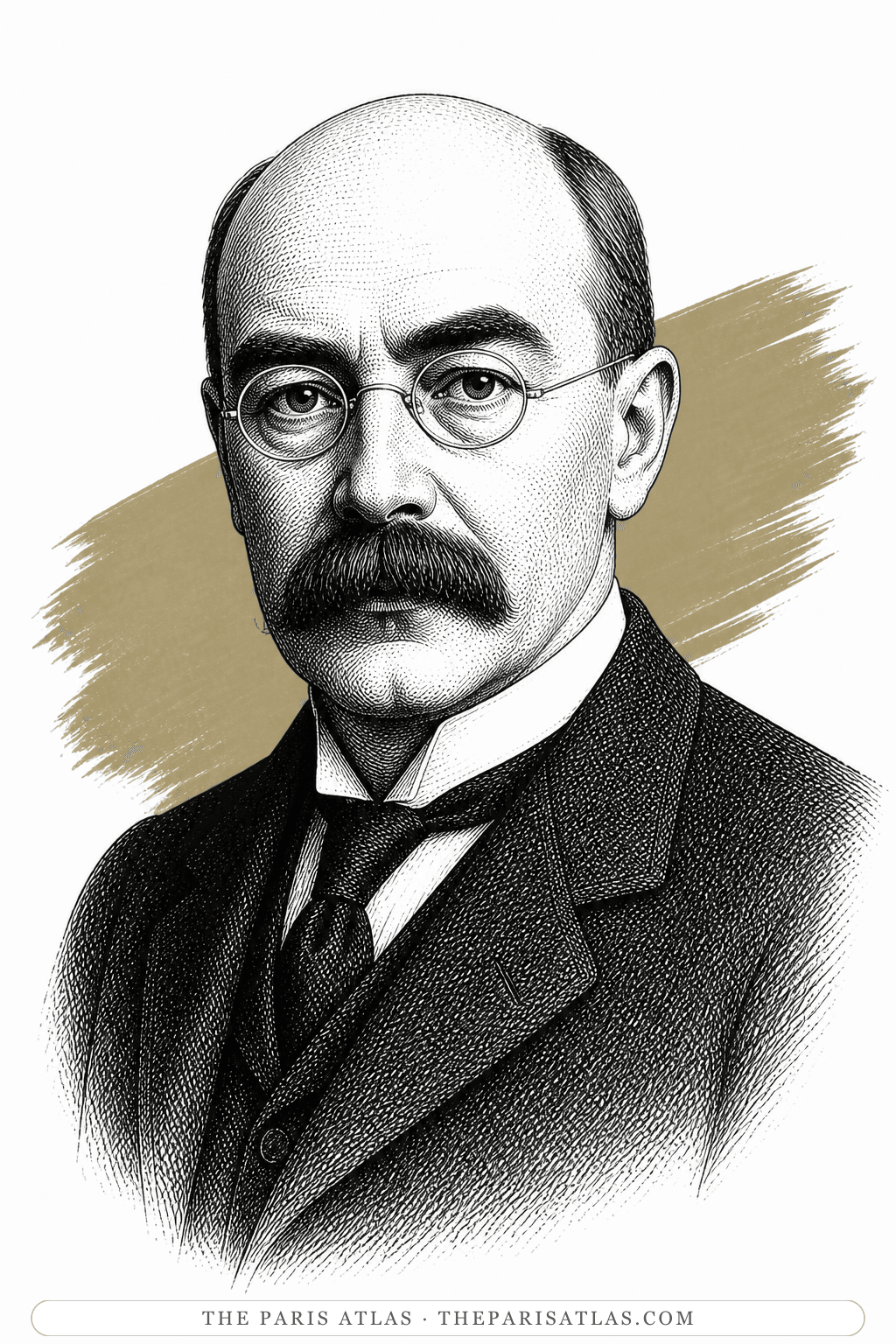
How the Whale got his Throat
A whale swallows a shipwrecked sailor, who cuts up his raft and leaves it in the whale's throat as a grating.
Just So Stories
Rudyard Kipling
Twelve bedtime stories about how the camel got his hump and the elephant his trunk, told to "O my Best Beloved" and drawn by Kipling himself.
Rudyard Kipling's Just So Stories came out in 1902, with his own drawings. The book has twelve stories, and most explain how an animal got the way it is: the whale's small throat, the camel's hump, the rhinoceros's baggy skin, the leopard's spots, the elephant's trunk. Two more tell how a cave-girl called Taffy and her father invented writing, and two are about a cat who walks by himself and a butterfly who stamps. Several may have begun as tales Kipling told his own children, and the narrator keeps talking to a listener he calls "O my Best Beloved". A poem follows every story.
The first stories were printed in magazines for American children before they were a book. "How the Camel got his Hump" appeared in St Nicholas Magazine in January 1898.[1] "The Elephant's Child" followed in the Ladies' Home Journal in April 1900, and "How the Leopard got his Spots" in October 1901.[2][3] Macmillan collected them in London in 1902, with Kipling's own illustrations, and Doubleday, Page published them in New York the same year.[4]
Kipling had been collecting ideas for a long time. In November 1892 he wrote to Mary Mapes Dodge, the editor of St Nicholas, with a list of animal stories he might write, a camel among them.[1] Some of the stories were suggested by a small boy. Nelson Doubleday, the son of Kipling's American publisher, wrote to him with a list of animals, including the leopard and the elephant. He asked for a royalty of a cent a copy, and his father later said he got it for twenty years.[3]
The book also carries a loss. Kipling's eldest child, Josephine, died in March 1899. According to Carrie Kipling's diary, "The Elephant's Child" was the first creative writing he did afterwards, in August 1899.[2] Taffy, the little girl of the two stories about writing, is followed in the poem "Merrow Down" by a father who comes alone to find her. The Kipling Society's notes read those last lines as his grief for Josephine.[3]
The first stories are animal origins. A whale eats every fish in the sea, then swallows a shipwrecked sailor who builds a grating in his throat, so whales can only eat small fish ever after. A camel who says nothing but "Humph!" and will not work is given a hump by a Djinn. A rhinoceros steals a cake, and the cake-crumbs in his skin make it itch and fold.[5]
In "The Elephant's Child", a young elephant full of "'satiable curtiosity" asks what the crocodile has for dinner. He is spanked by all his relations and finally goes to the Limpopo River to find out. In "How the Leopard got his Spots", a leopard and an Ethiopian hunter change their colouring to hide in the forest. Other stories explain the kangaroo's legs and the armadillo, a hedgehog and a tortoise who learn each other's tricks.[5]
Two stories are about Taffy and her father Tegumai, a family of cave-people on the river Wey. In one, Taffy draws a picture message that goes badly wrong. In the next, the two of them invent the alphabet. "The Crab that Played with the Sea" explains the tides. "The Cat that Walked by Himself" tells how the dog, the horse and the cow were tamed while the cat made his own bargain. "The Butterfly that Stamped" is set in the court of King Solomon.[5]
The book is written for a listener. The narrator stops to explain words, repeats his phrases like a refrain, and keeps turning to "O my Best Beloved". The Elephant's Child goes to "the great grey-green, greasy Limpopo River, all set about with fever-trees", and the phrase comes back again and again. Rosalind Meyer, writing in the Kipling Journal, singled out the run of comic comparisons in the Leopard story, like a mustard-plaster on a sack of coals.
Kipling drew the pictures himself, and wrote long captions under them that are part of the fun. The Kipling Society's notes point out that the scripts on the drawing of the wise baboon imitate Coptic, hieroglyphs, cuneiform and Hebrew. None of the lettering spells anything in the scripts it imitates.
"How the Leopard got his Spots" is about two hunters, a leopard and an Ethiopian, who change their colouring to hide in a shady forest. The Ethiopian turns his skin black and uses his fingertips to print the leopard's spots. As first published, the story ends with the Ethiopian using a racial slur about himself when the leopard asks why he did not go spotty too. The slur is there in the 1902 New York edition.
Many editions for children now print a different line. The Kipling Society says that for works it recommends to young readers, it follows recent publishers in editing the word out. Its own online text has the Ethiopian say "plain black's best for me". Anyone reading the book aloud should check which text they have.
The stories reached French children quickly. Robert d'Humières and Louis Fabulet, who had already translated The Jungle Book, turned them into Histoires comme ça pour les petits, published in Paris by Delagrave. The copy the Bibliothèque nationale de France holds from 1903 is already marked as the fourth edition, with Kipling's own drawings. Delagrave was still reprinting the same translation after the Second World War.
Go to the banks of the great grey-green, greasy Limpopo River, all set about with fever-trees, and find out.
I keep six honest serving-men: / (They taught me all I knew) / Their names are What and Where and When / And How and Why and Who.
I am the Cat who walks by himself, and all places are alike to me.
The refrains, the long made-up words and the running jokes work best spoken. Kipling first told the stories to his own children.
The story of the elephant who asks too many questions is the best known in the book.
The book is illustrated by the author, with captions that talk to the reader as much as the stories do.
The complete text is in the public domain, and Project Gutenberg has it as ebook 2781.
A young elephant full of "'satiable curtiosity", spanked by every relation for asking questions. Comes home from the Limpopo with a trunk.
Lives in the middle of a Howling Desert, refuses all work and answers everything with "Humph!" The Djinn of All Deserts gives him a hump to work on.
The wildest of the wild animals. Makes his own bargain with the Woman in the Cave, and still walks by himself.
A cave-girl who lives by the river Wey with her father, Tegumai. Between them they invent the letter and the alphabet.
Once a plain sandy colour on the High Veldt. Gets his spots from the fingertips of his hunting partner, the Ethiopian.
Eats every fish in the sea, then swallows a shipwrecked Mariner of infinite resource and sagacity, and regrets it.
A whale swallows a shipwrecked sailor, who cuts up his raft and leaves it in the whale's throat as a grating.
An idle camel who only says "Humph!" gets a hump from the Djinn of All Deserts. First printed in St Nicholas Magazine, January 1898.
A rhinoceros eats a man's cake, and cake-crumbs in his skin make it itch forever.
A leopard and an Ethiopian hunter change their colouring to hunt in the forest. First printed in the Ladies' Home Journal, October 1901.
A young elephant asks what the crocodile has for dinner and comes home with a trunk. First printed in the Ladies' Home Journal, April 1900. Followed by the poem "I keep six honest serving-men".
A proud kangaroo is chased across Australia by a dingo until his legs grow long.
A hedgehog and a tortoise on the Amazon learn each other's tricks to escape a jaguar.
Taffy sends a picture message to her mother, and nobody reads it the way she meant.
Taffy and her father Tegumai invent letters from the shapes of sounds. Followed by the poem "Merrow Down".
Why the sea goes in and out twice a day.
The dog, the horse and the cow are tamed, but the cat strikes his own bargain with the Woman.
King Solomon, his wife Balkis and a boastful butterfly.
1892
In November, Kipling writes to Mary Mapes Dodge, editor of St Nicholas Magazine, listing ideas for animal stories, a camel among them.
1898
"How the Camel got his Hump" appears in St Nicholas Magazine in January.
1899
Josephine Kipling, the eldest of the three children, dies in March. In August, Kipling writes "The Elephant's Child".
1900
"The Elephant's Child" appears in the Ladies' Home Journal in April.
1901
"How the Leopard got his Spots" appears in the Ladies' Home Journal in October.
1902
Macmillan publishes Just So Stories in London, illustrated by Kipling, and Doubleday, Page publishes it in New York.
1903
Histoires comme ça pour les petits, translated by Robert d'Humières and Louis Fabulet, is on its fourth edition in Paris with the publisher Delagrave.


The Jungle Book
Rudyard Kipling
Kipling's earlier animal stories, written for older children and much darker.
Read our takeRewards and Fairies
Rudyard Kipling
His later stories for children, where the history of England is told to a brother and sister in Sussex.
Read our takeKim
Rudyard Kipling
The novel he published the year before, written over the same years as many of these stories.
Read our takeThe Man Who Would Be King
Rudyard Kipling
The other end of his range: an early story for adults about two men who set out to rule a country.
Read our takeTwelve short stories for young children by Rudyard Kipling, published in 1902. Most explain how an animal got its shape, like the camel's hump or the elephant's trunk. Kipling drew the illustrations himself.
Kipling did. He drew the pictures for the 1902 edition himself and wrote long captions under them, often a paragraph or more. Editions without his drawings lose those captions.
"The Elephant's Child". Kolokolo Bird tells the young elephant to go to "the great grey-green, greasy Limpopo River, all set about with fever-trees" to find out what the crocodile has for dinner.
From Just So Stories. The poem follows "The Elephant's Child", and its six serving-men are What, Where, When, How, Why and Who.
Yes, in one story. As first published, "How the Leopard got his Spots" ends with the Ethiopian using a racial slur about himself. Many children's editions now change the line, as the Kipling Society's own text does.
The narrator never says. The critic Roger Lancelyn Green traced some of the stories to tales Kipling told his own children. His daughter Josephine died in 1899, while the book was being written, and the Kipling Society reads the poem "Merrow Down" as his grief for her.
Explore authors with a similar voice, perspective, and influence.
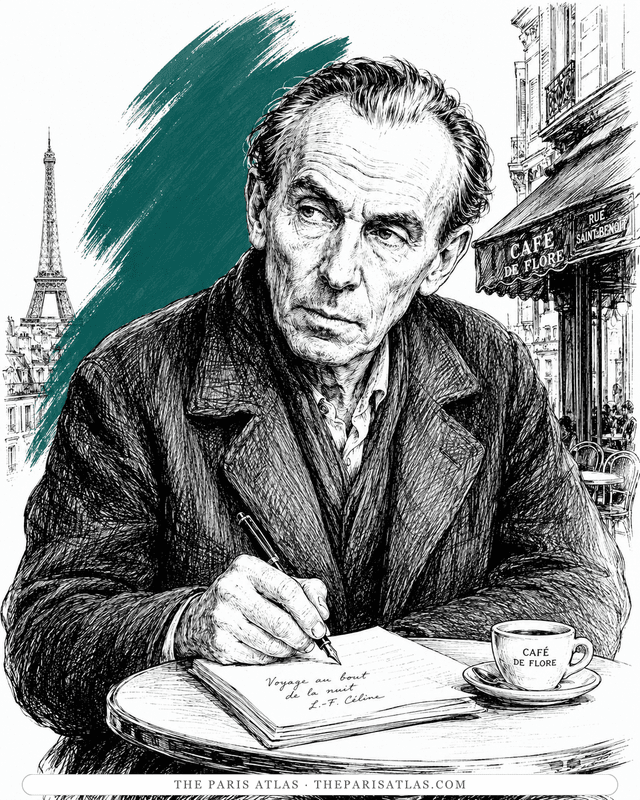
The doctor of the Paris slums who wrote the century's blackest, funniest novel — and changed the sound of French prose.
View author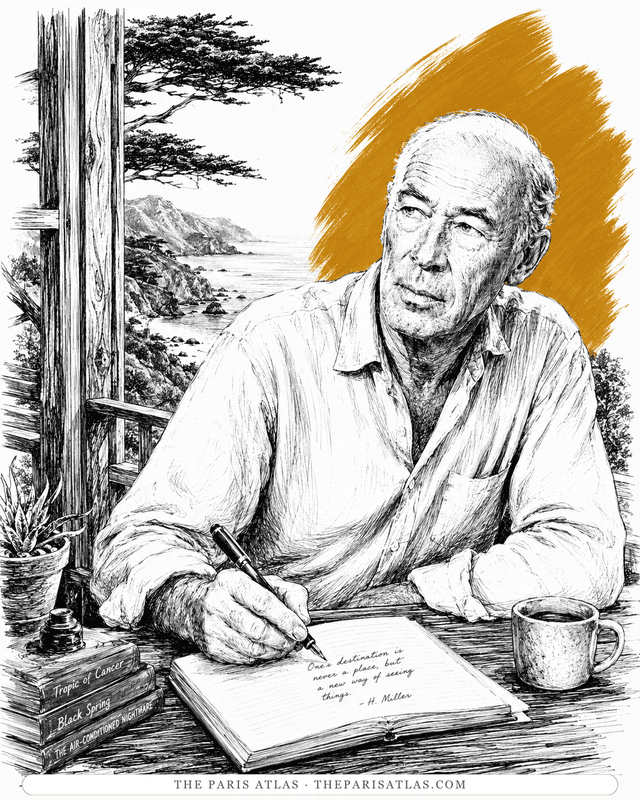
The Brooklyn dropout who arrived in Paris broke at thirty-eight and wrote the exuberant, banned books that ended American censorship.
View author
American novelist and composer whose expatriate fiction explores dislocation, unstable intimacy, fatalism, and North Africa.
View authorThe sources below include the primary text, editions, scholarship, archival materials, and other records that informed this page. They document Just So Stories, its publication, and its place in literary history.

Catalogue records for the 1902 London and New York editions and the modern ISBNs.
A scan of the 1902 New York edition, which confirms the wording of the Leopard story as first published in book form.
How the Kipling Society handles the slur in texts it recommends for children.

The Bibliothèque nationale de France record of the Paris translation.
The primary text represented by this page, used for descriptions of the work’s contents and for any quoted passages shown here.
The primary text is the baseline reference for every book page. Additional references document publication history, interpretation, and historical context where that evidence is available.
 Explore more resources