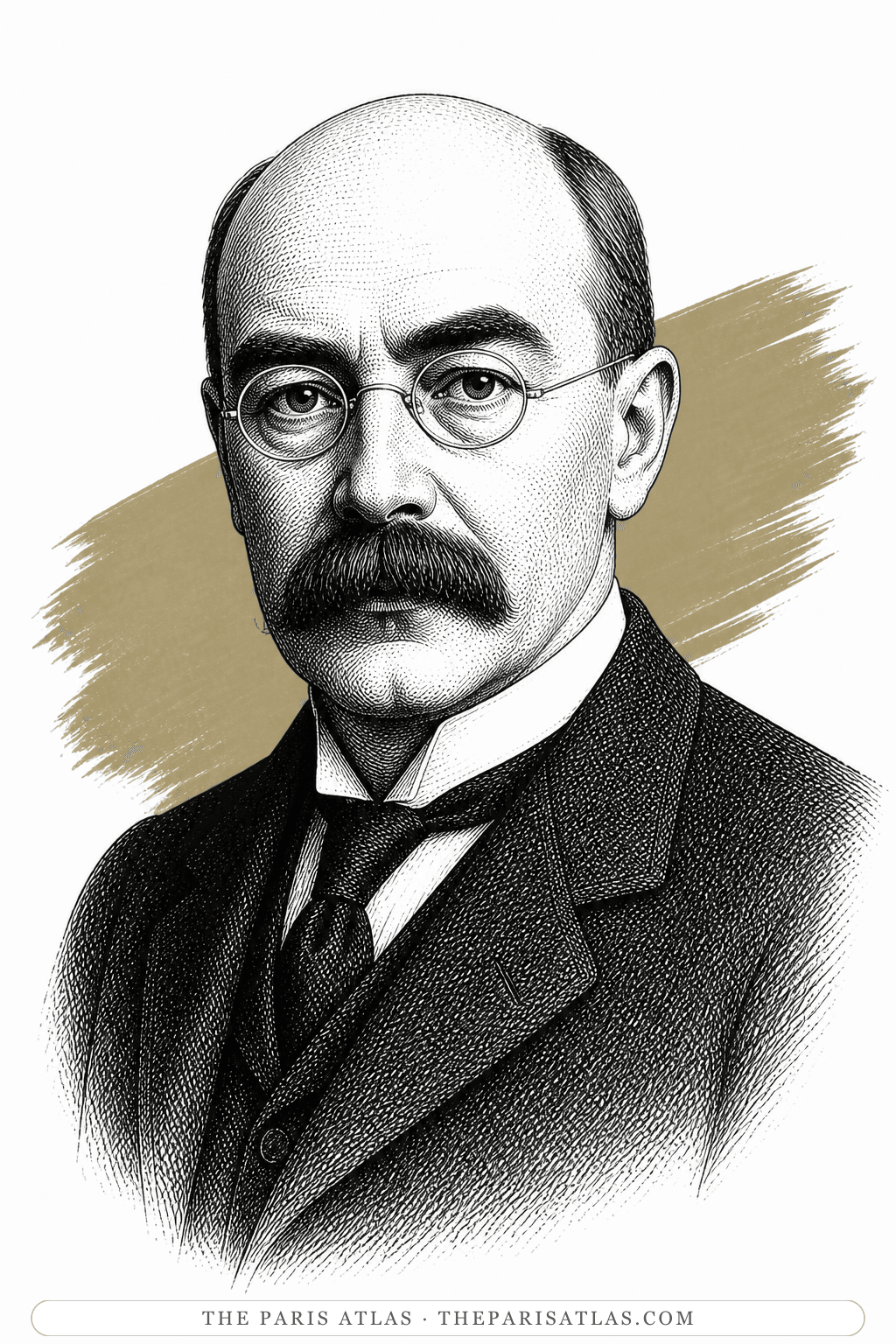
Kim
Rudyard Kipling
Kim
Kipling's great novel of India, thirteen years later, where the Great Game is played for the empire rather than against it.
Read our takeThe Man Who Would Be King
Rudyard Kipling
Two drifters sign a contract to become kings of Kafiristan, and one of them comes back two years later with the other's head in a bag.
Rudyard Kipling wrote The Man Who Would Be King in India as a young newspaperman, and it first appeared in 1888 in a cheap railway-bookstall volume, The Phantom 'Rickshaw and Other Eerie Tales. The narrator runs a newspaper office. Two British drifters, Daniel Dravot and Peachey Carnehan, ask him for maps and books, sign a contract to give up drink and women, and set out for Kafiristan, a remote mountain country in the Hindu Kush, to make themselves kings. Two years later Carnehan crawls back into the office, crippled, and tells what happened. The story is about fourteen thousand words long, and has often been printed on its own.
The story first appeared in The Phantom 'Rickshaw and Other Eerie Tales, volume five of the Indian Railway Library, published by Wheeler of Allahabad in 1888. The story was collected again in Wee Willie Winkie and Other Stories in 1895.[1] American publishers soon printed it alone as a small book. Brentano's in New York and Henry Altemus in Philadelphia both did so in 1898, and Doubleday and McClure in 1899.[2] The Project Gutenberg text is taken from the Brentano's edition.[3]
Kipling had been made a Freemason at a lodge in Lahore on 5 April 1886.[4] He later wrote that the lodge was where he met Muslims, Hindus, Sikhs and a Jewish community priest on equal terms.[5] Freemasonry runs all through the story, from its opening motto to the secret sign that saves Dravot and Carnehan in the mountains. The biographer David Gilmour traces the story to Kipling's meeting with a Freemason whose name is not known.[1]
Real adventurers had tried something similar. Josiah Harlan, an American, was a soldier, spy and governor in the Punjab and Afghanistan from 1828 to 1841, and claimed the title Prince of Ghor. The Kipling Society's notes suggest his story had become part of Masonic lore on the North-West Frontier. Kafiristan itself was conquered by Afghanistan in 1895, its people were forced to convert to Islam, and it was renamed Nuristan.[1]
The narrator, a newspaperman, meets a vagabond in an intermediate-class railway carriage. The man asks him to take a message to a red-bearded friend at Marwar Junction, and asks it in the name of Freemasonry. The narrator delivers it. Later the two men turn up at his newspaper office at night. They are Peachey Taliaferro Carnehan and Daniel Dravot, who say they have been soldiers, sailors, printers, photographers and street-preachers, among other things.[3]
They have decided that India is too small for them. They mean to go to Kafiristan, which Dravot places in the top right-hand corner of Afghanistan, and make themselves kings: the country has thirty-two idols, and they will be the thirty-third. They borrow the narrator's maps and books and show him their Contrack: they will not touch drink or women until the job is done. The next day Dravot sets off dressed as a mad priest, with Carnehan as his servant and twenty Martini rifles hidden in the camel bags.[3]
Two years later Carnehan crawls into the office, bent double and ragged, and tells the story. They crossed the mountains, drilled the villagers with their rifles, and won a string of little wars. When the priests saw Dravot make a Masonic sign carved on an ancient stone, they took him for a god and a son of Alexander the Great. Dravot was crowned King. He began planning a nation, then an empire, and decided he needed a queen.[3]
The girl chosen for Dravot is terrified that marrying a god will kill her. When he tries to kiss her she bites his neck, and the people see blood. The priests cry out that he is neither god nor devil but a man, and the army turns on the two Englishmen. Billy Fish, a local chief who stays loyal to them, has his throat cut. Dravot is marched onto a rope bridge over a gorge, asks Carnehan to forgive him, and is cut down into the river. Carnehan is crucified between two pine trees and survives a night on the cross.
Carnehan takes out a horsehair bag and shakes onto the table Dravot's dried head, still wearing the gold crown. That noon the narrator finds him crawling along the road singing a hymn and takes him to the asylum. Two days later the superintendent says Carnehan died of sunstroke, and that nothing was found on him. The head and the crown are gone. "And there the matter rests."
Most of the story is Carnehan talking, and the narrator only listens. The frame matters because the teller is broken. Carnehan slips between "I" and "Peachey", and at one point talks about himself as a man who died out there in the cold. Charles Carrington, Kipling's authorised biographer, said the picture-and-frame method was nowhere more effective. Kingsley Amis thought the frame fooled critics into mistaking it for depth.
Few Kipling stories divide readers more. J. M. Barrie called it the most audacious thing in fiction, and Lord Birkenhead ranked it among Kipling's three best stories. Amis called it grossly overrated, a silly prank that ends in a deserved disaster.
Dravot's plans grow the way an empire's do. First he wants a nation, then an empire. He will count two million people and raise an army to strike at Russia when it moves on India. He will send for twelve Englishmen to help him govern, and one day hand his crown to Queen Victoria on his knees and be made a knight. In the same speech he decides that the hill people are really English, and makes the point with a racial slur for the people of India.
Critics have read the story as a warning about empire itself. Edmund Wilson called it a parable of what might happen to the English if they lost their moral authority. Shamsul Islam argued that Kipling knew the empire was not eternal. Marie Roberts called it a Masonic fable that is also a parody of colonisation.
The narrator is no outsider to any of this. On the first page he explains that the intermediate class of railway carriage is for Eurasians and for Indians, which on a long night journey is nasty. The Kipling Society prints a warning on Kipling texts that contain the slur Dravot uses.
The story reached Paris as the title piece of a collection, L'Homme qui voulut être roi, published by the Société du Mercure de France in 1901. Louis Fabulet and Robert d'Humières translated it, as they had translated The Jungle Book for the same publisher two years before.
John Huston made the story into a film starring Sean Connery, Michael Caine and Christopher Plummer, who plays Kipling. Norman Page's Kipling companion, quoted by the Kipling Society, calls it a successful version of the story.
Brother to a Prince and fellow to a beggar if he be found worthy.
It isn't so easy being a King as it looks.
I won't make a Nation. I'll make an Empire!
The first half is a rollicking caper. The second half is a disaster told by a man who barely survived it.
The head, the crown, the hymn on the road and the flat last line. Few short stories end with more force.
In a few thousand words two men conquer a people, plan to give them to the Queen and are destroyed. Critics from Edmund Wilson onward have read it as a warning.
The story can be read in an evening, and the complete text is in the public domain as Project Gutenberg ebook 8147.
A huge red-bearded drifter and former soldier who becomes King of Kafiristan. Is taken for a god and a son of Alexander, and then wants a wife.
Dravot's partner, the more cautious of the two. Serves as commander of the army, begs Dravot not to marry, and is the one who comes back.
The unnamed editor of a newspaper in British India, and a Freemason. Lends the two men his maps and hears the end of their story.
A chief of Bashkai whom the two men name after a friend in India. Stays loyal when everyone else turns, and is killed for it.
1886
Kipling is made a Freemason at a lodge in Lahore.
1888
The story is published in The Phantom 'Rickshaw and Other Eerie Tales, volume five of the Indian Railway Library, by Wheeler of Allahabad.
1895
The story is collected in Wee Willie Winkie and Other Stories. The same year Afghanistan conquers its part of Kafiristan and renames it Nuristan.
1898
Brentano's in New York and Henry Altemus in Philadelphia publish the story as a book on its own.
1901
L'Homme qui voulut être roi, translated by Louis Fabulet and Robert d'Humières, is published in Paris by the Société du Mercure de France.


Kim
Rudyard Kipling
Kipling's great novel of India, thirteen years later, where the Great Game is played for the empire rather than against it.
Read our takeThe Jungle Book
Rudyard Kipling
Another Kipling story about someone who is taken for more than a man, and the price of it.
Read our take
George Orwell's novel of a white man's life in colonial Burma, with none of Kipling's romance.
Read our take
Orwell's 1942 essay on Kipling, on what his view of empire gets right and wrong.
Read our takeTwo British drifters, Daniel Dravot and Peachey Carnehan, set out to make themselves kings of Kafiristan, a remote mountain country. They succeed, Dravot is taken for a god, and everything falls apart when he tries to take a wife.
No. The Man Who Would Be King is a long short story of about fourteen thousand words. The story first appeared in 1888 in The Phantom 'Rickshaw and Other Eerie Tales, and has often been printed on its own.
In the Hindu Kush mountains between Afghanistan and what is now Pakistan. The part under Afghan rule was conquered in 1895 and renamed Nuristan. The Kalash people of the Chitral valleys, on the Pakistani side, still keep their old religion.
Everything. The narrator helps Carnehan because both are Freemasons, and Dravot is taken for a god because he knows a Masonic sign carved on an ancient stone. Kipling himself had become a Freemason in Lahore in 1886.
No, but real adventurers tried similar things. The Kipling Society's notes point to Josiah Harlan, an American who fought and spied in Afghanistan and the Punjab and claimed the title Prince of Ghor.
In 1901, as the title story of L'Homme qui voulut être roi, translated by Louis Fabulet and Robert d'Humières and published in Paris by the Société du Mercure de France.
Explore authors with a similar voice, perspective, and influence.
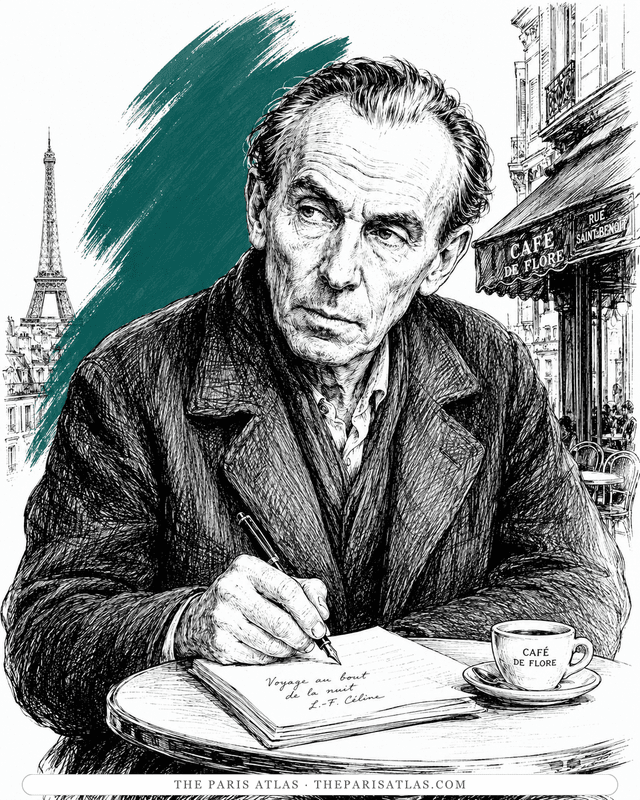
The doctor of the Paris slums who wrote the century's blackest, funniest novel — and changed the sound of French prose.
View author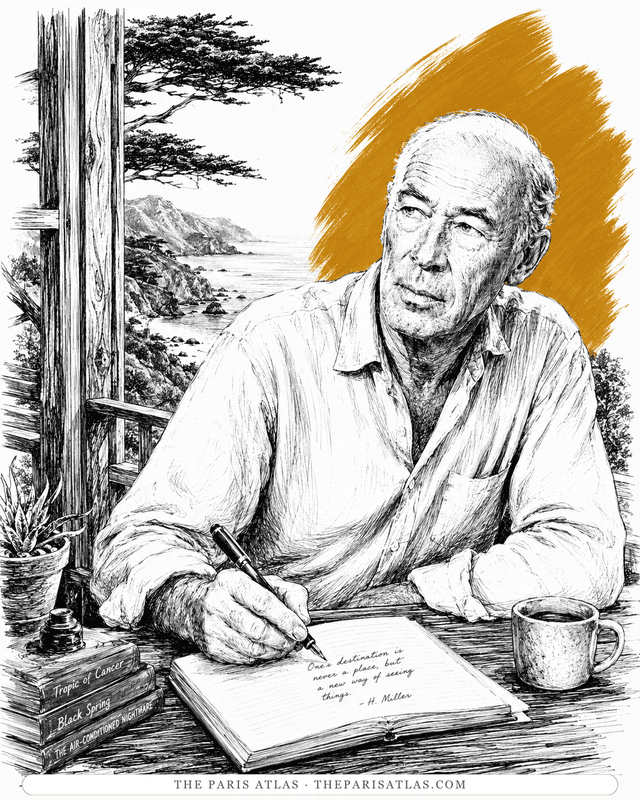
The Brooklyn dropout who arrived in Paris broke at thirty-eight and wrote the exuberant, banned books that ended American censorship.
View author
American novelist and composer whose expatriate fiction explores dislocation, unstable intimacy, fatalism, and North Africa.
View authorThe sources below include the primary text, editions, scholarship, archival materials, and other records that informed this page. They document The Man Who Would Be King, its publication, and its place in literary history.

Catalogue records for the stand-alone editions of 1898 and 1899 and the modern ISBNs.
Records Kipling's initiation in Lahore on 5 April 1886, correcting the 1885 date repeated in his memoir and Karlin's introduction.
Daniel Karlin on the lodge as a meeting place across religious and social divisions; the initiation date is checked against the Society's Kim notes.
How the Kipling Society handles the racial language in Kipling's texts.

The Bibliothèque nationale de France record of the Paris translation.
The same translators' Jungle Book for the same Paris publisher, two years earlier.
Catalogue records for The Phantom 'Rickshaw, the story's first home.
The primary text represented by this page, used for descriptions of the work’s contents and for any quoted passages shown here.
The primary text is the baseline reference for every book page. Additional references document publication history, interpretation, and historical context where that evidence is available.
 Explore more resources