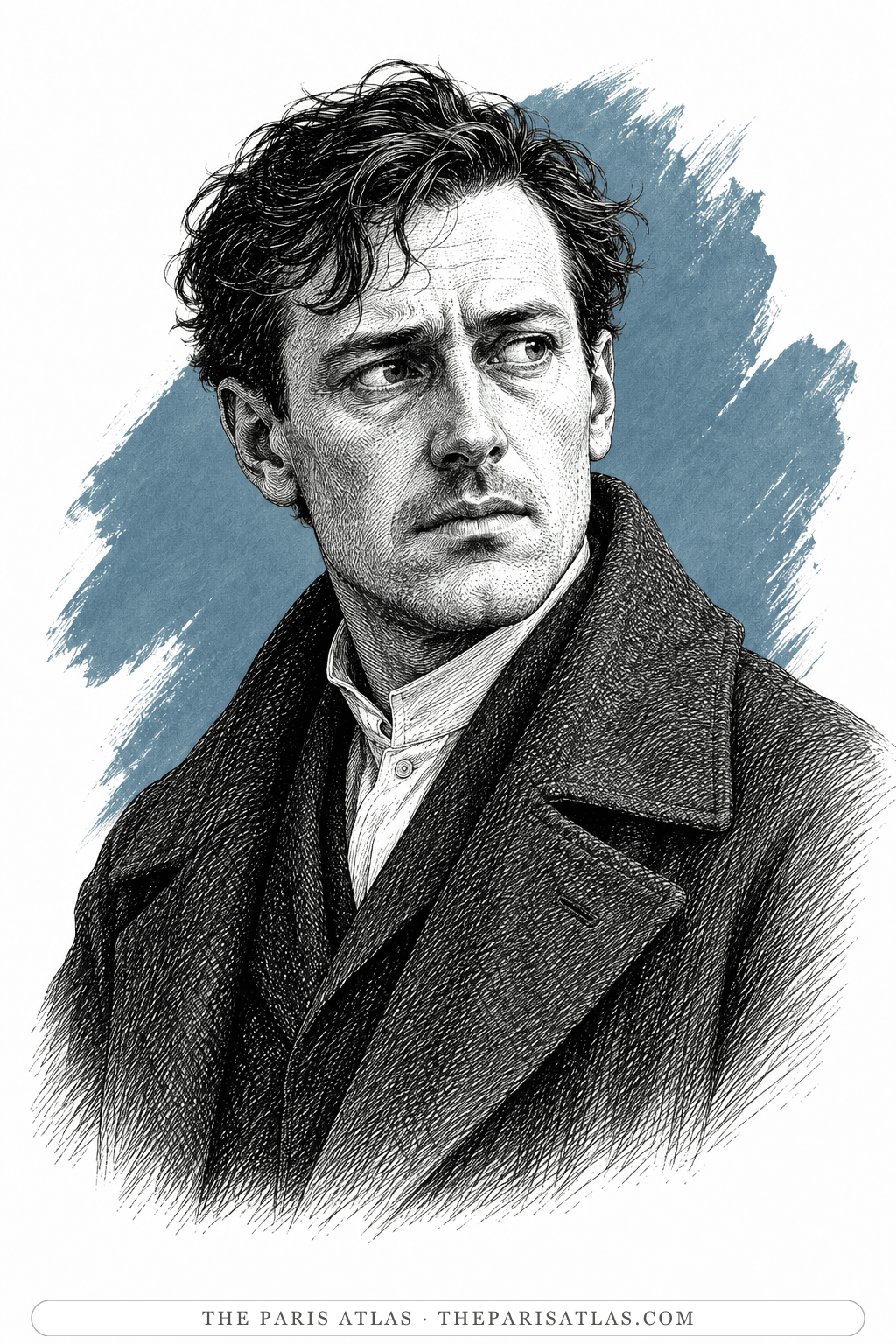
K.
The fictional stranger who calls himself a land surveyor and insists on a recognized place in the village.
He wants his claim to employment and residence recognized, and treats access to Klamm as essential to achieving it.
The book

Who they are in the book
Spoiler-freeK. argues, improvises and persists, but his account of each encounter is shaped by what he wants from it. Physical fatigue repeatedly interrupts his confident calculations.
How K. Is Portrayed
- Claiming a position at the innIn Chapter I, K. answers a demand for permission to stay by declaring himself the expected land surveyor. The telephone first contradicts and then seems to support him. His standing depends immediately on messages he cannot control.
- Walking without getting closerIn Chapter I, the main road appears to lead toward the castle but never reaches it. K. exhausts himself in the snow. A simple attempt to reach the officials leaves him needing shelter and rest.
- Joining courtship to a requestIn Chapters III–IV, K. becomes Frieda’s lover, then insists on seeing Klamm before they marry. Affection and his pursuit of access develop together, leaving Frieda and the landlady reasons to question his intentions.
- Defending the meaning of a letterIn Chapter V, the superintendent treats Klamm’s letter as a private communication that does not establish a surveying appointment. K. objects that this interpretation empties it of meaning. He wants an enforceable right, not merely favorable attention.
- Refusing a possible departureIn Chapter XIII, Frieda proposes that they leave for France or Spain. K. refuses to abandon the village. His decision makes clear that gaining a place there has become a goal he will not exchange for companionship elsewhere.
- Waiting while an official sleepsIn Chapter XVII, K. joins clients waiting outside the Herrenhof at night. Admitted at last, he helps a servant look into Erlanger’s room and learns that the secretary is sleeping. Getting indoors still does not produce a hearing.
If you like The Castle


If you like Franz Kafka
Explore authors with a similar voice, perspective, and influence.
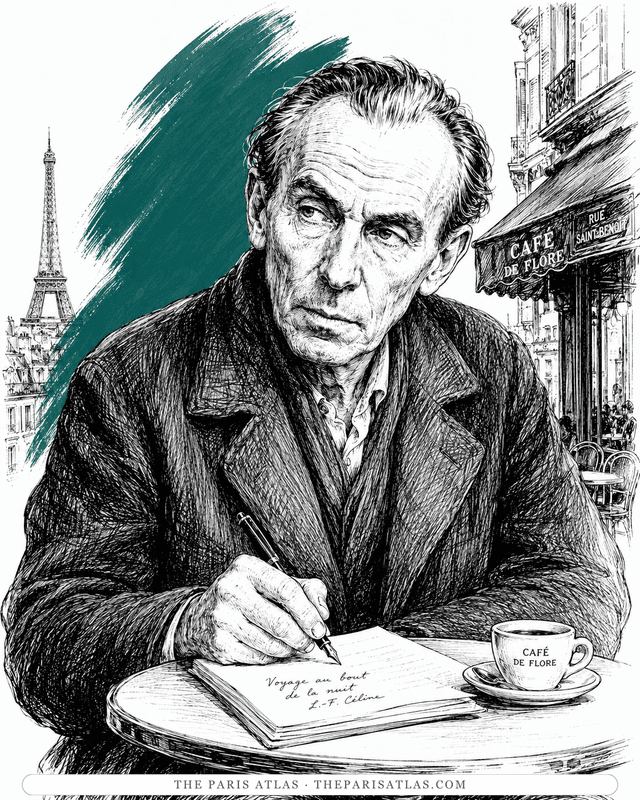
Louis-Ferdinand Céline
The doctor of the Paris slums who wrote the century's blackest, funniest novel — and changed the sound of French prose.
View author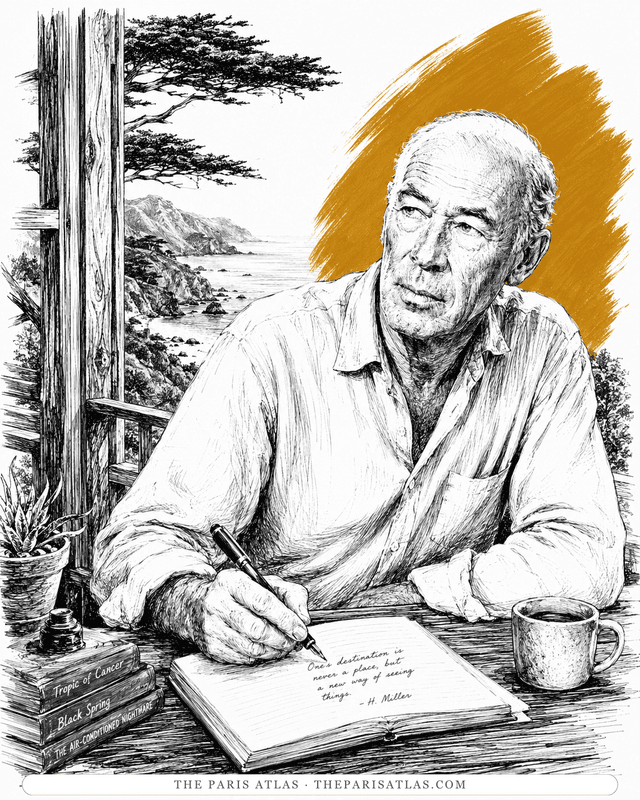
Henry Miller
The Brooklyn dropout who arrived in Paris broke at thirty-eight and wrote the exuberant, banned books that ended American censorship.
View author
Paul Bowles
American novelist and composer whose expatriate fiction explores dislocation, unstable intimacy, fatalism, and North Africa.
View author