The Great Gatsby quotes
87 quotes from The Great Gatsby by F. Scott Fitzgerald, each verified verbatim against the text and located in the book. Page 3 of 4.

About F. Scott Fitzgerald
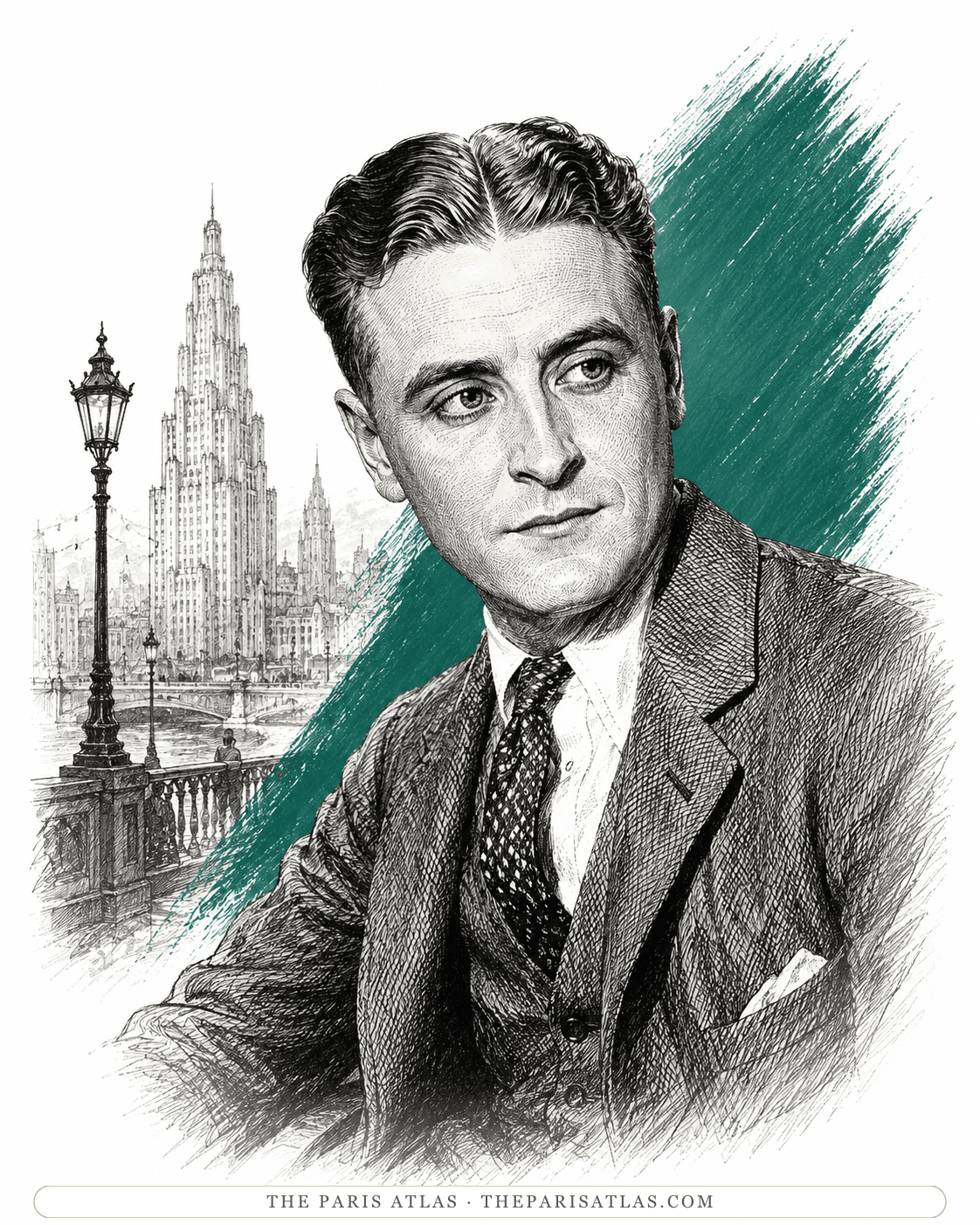
At the enchanted metropolitan twilight I felt a haunting loneliness sometimes, and felt it in others—poor young clerks who loitered in front of windows waiting until it was time for a solitary restaurant dinner—young clerks in the dusk, wasting the most poignant moments of night and life.
“Anything can happen now that we’ve slid over this bridge,” I thought; “anything at all …”
It never occurred to me that one man could start to play with the faith of fifty million people—with the single-mindedness of a burglar blowing a safe.
I think that voice held him most, with its fluctuating, feverish warmth, because it couldn’t be over-dreamed—that voice was a deathless song.
I’d like to just get one of those pink clouds and put you in it and push you around.
I was thirty. Before me stretched the portentous, menacing road of a new decade.
I found myself on Gatsby’s side, and alone.
I’m p-paralysed with happiness.
Everybody thinks so—the most advanced people. And I know. I’ve been everywhere and seen everything and done everything.
Sophisticated—God, I’m sophisticated!
I suppose the latest thing is to sit back and let Mr. Nobody from Nowhere make love to your wife.
You always have a green light that burns all night at the end of your dock.
The poor son-of-a-bitch.
No—Gatsby turned out all right at the end; it is what preyed on Gatsby, what foul dust floated in the wake of his dreams that temporarily closed out my interest in the abortive sorrows and short-winded elations of men.
Her face was sad and lovely with bright things in it, bright eyes and a bright passionate mouth, but there was an excitement in her voice that men who had cared for her found difficult to forget: a singing compulsion, a whispered “Listen,” a promise that she had done gay, exciting things just a while since and that there were gay, exciting things hovering in the next hour.
Involuntarily I glanced seaward—and distinguished nothing except a single green light, minute and far away, that might have been the end of a dock.
The eyes of Doctor T. J. Eckleburg are blue and gigantic—their retinas are one yard high. They look out of no face, but, instead, from a pair of enormous yellow spectacles which pass over a nonexistent nose.
He had waited five years and bought a mansion where he dispensed starlight to casual moths—so that he could “come over” some afternoon to a stranger’s garden.
So he invented just the sort of Jay Gatsby that a seventeen-year-old boy would be likely to invent, and to this conception he was faithful to the end.
I’m going to fix everything just the way it was before. She’ll see.
Your wife doesn’t love you. She’s never loved you. She loves me.
He knew that Daisy was extraordinary, but he didn’t realize just how extraordinary a “nice” girl could be. She vanished into her rich house, into her rich, full life, leaving Gatsby—nothing. He felt married to her, that was all.
In any case, it was just personal.
I’ve always been glad I said that. It was the only compliment I ever gave him, because I disapproved of him from beginning to end.
A new world, material without being real, where poor ghosts, breathing dreams like air, drifted fortuitously about … like that ashen, fantastic figure gliding toward him through the amorphous trees.
Newsletter
Join our newsletter
New stories about art, literature and famous places around the world.