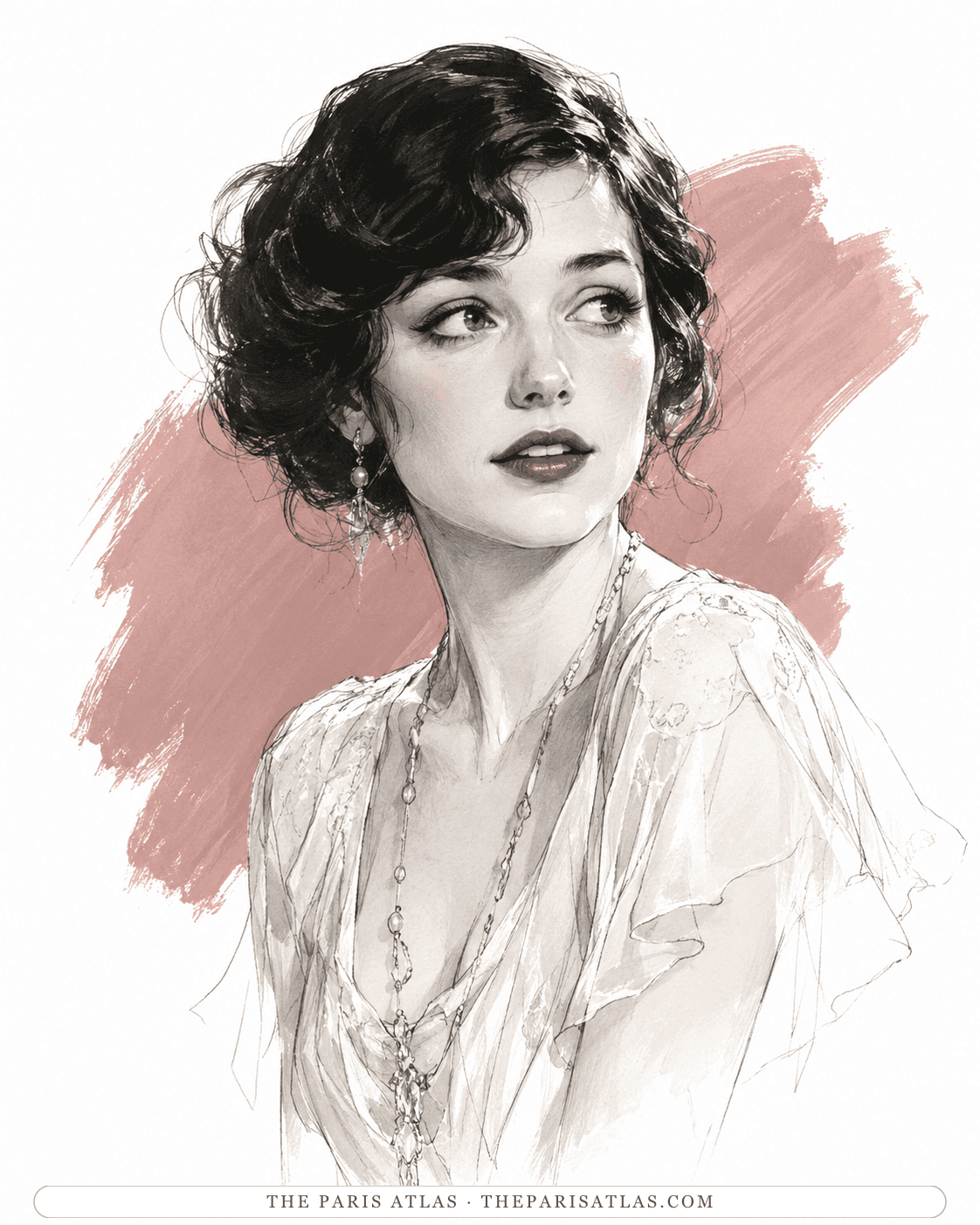
Daisy Buchanan
Tom Buchanan's wife and Nick's cousin. Gatsby has been in love with her for five years.
Something to fill the afternoon, and the thirty years after it. "What'll we do with ourselves this afternoon?" she asks, "and the day after that, and the next thirty years?"
The book

At a glance
- Daisy Buchanan, née Fay, of Louisville — Tom's wife, Nick's second cousin once removed
- A red-and-white Georgian Colonial on East Egg, overlooking the bay
- Tom Buchanan, June 1919, in Louisville — a hundred guests in four private cars
- Pammy, three years old
- A string of pearls valued at three hundred and fifty thousand dollars
- Louisville, 1917, when he was a lieutenant at Camp Taylor
- Ginevra King · 1898–1980 · Lake Forest, Illinois
Who they are in the book
Spoiler-freeDaisy Buchanan was Daisy Fay of Louisville, the most popular of the young girls there, in a white roadster and a white dress, with officers from Camp Taylor telephoning the house all day. In 1917 she fell in love with one of them, a lieutenant named Jay Gatsby. In June 1919 she married Tom Buchanan of Chicago, who came down with a hundred people in four private cars and gave her a pearl necklace valued at three hundred and fifty thousand dollars.
By 1922 she has a house on East Egg, a three-year-old daughter, and a husband whose affairs she knows about. Nick, her second cousin, finds her charming and insincere in roughly equal measure. What Gatsby wants from her is a sentence — that she never loved Tom — and the novel is largely the question of whether anyone could say it.
How Daisy Buchanan Is Portrayed
- The voiceNick describes it as low and thrilling, the kind of voice the ear follows up and down, carrying a promise that she had done gay, exciting things just a while since and that there were more hovering in the next hour. Men who had cared for her found it difficult to forget.
- What Gatsby hears in itGatsby names it in four words, late and flatly: “Her voice is full of money.” Nick says he had never understood before.
- The beautiful little foolShe tells Nick what she said when her daughter was born. She woke from the ether, asked the nurse whether it was a boy or a girl, was told a girl, turned her head away and wept. “All right, I'm glad it's a girl. And I hope she'll be a fool — that's the best thing a girl can be in this world, a beautiful little fool.”
- “Sophisticated — God, I'm sophisticated!”Said with what Nick calls thrilling scorn, after telling him she has been everywhere and seen everything and done everything. The instant her voice stops he feels the basic insincerity of all of it, and suspects the evening was a trick to extract some emotion from him.
- The letter in the bathtubJordan Baker was a bridesmaid, and tells the story: half an hour before the bridal dinner she found Daisy drunk on the bed with a bottle of Sauterne in one hand and a letter in the other, telling them to take the pearls back downstairs and say Daisy's changed her mind. She would not let go of the letter. She took it into the cold bath, where it came to pieces like snow. Half an hour later the pearls were around her neck.
- The shirtsShown Gatsby's house, she puts her head into a pile of his shirts — sheer linen, thick silk, fine flannel, stripes and scrolls and plaids — and cries stormily. “They're such beautiful shirts. It makes me sad because I've never seen such — such beautiful shirts before.”
Daisy Buchanan quotes
I’m glad it’s a girl. And I hope she’ll be a fool—that’s the best thing a girl can be in this world, a beautiful little fool.
Her voice is full of money.
What’ll we do with ourselves this afternoon? And the day after that, and the next thirty years?
In the Plaza suite she cannot say the sentence. She tells Gatsby she loved Tom too, and that asking too much is what ruins it. Driving home in Gatsby's yellow car she ; Gatsby takes the blame, and she lets him. That night Nick watches Tom and Daisy through the pantry window over cold fried chicken, conferring. She sends no message and no flowers, does not come to the funeral, and by the time Nick calls she and Tom have left, with no address and no date of return.
Ginevra King was Fitzgerald's first love: a Chicago banker's daughter from Lake Forest, a schoolgirl at Westover when they met in January 1915, sixteen to his eighteen. The romance ran two years by letter and collapsed in 1917, and he used her again and again — Isabelle Borgé in This Side of Paradise, Judy Jones in “Winter Dreams,” and Daisy. In 1918 she married William H. Mitchell, the Chicago investment broker and polo player behind Tom Buchanan. She and Fitzgerald met once more, in Hollywood in 1937. She divorced Mitchell in 1939, married John T. Pirie Jr. of Carson Pirie Scott in 1942, and died in 1980 at eighty-two. Fitzgerald had her letters typed into a bound transcript and kept it.
If you like The Great Gatsby


If you like F. Scott Fitzgerald
Explore authors with a similar voice, perspective, and influence.
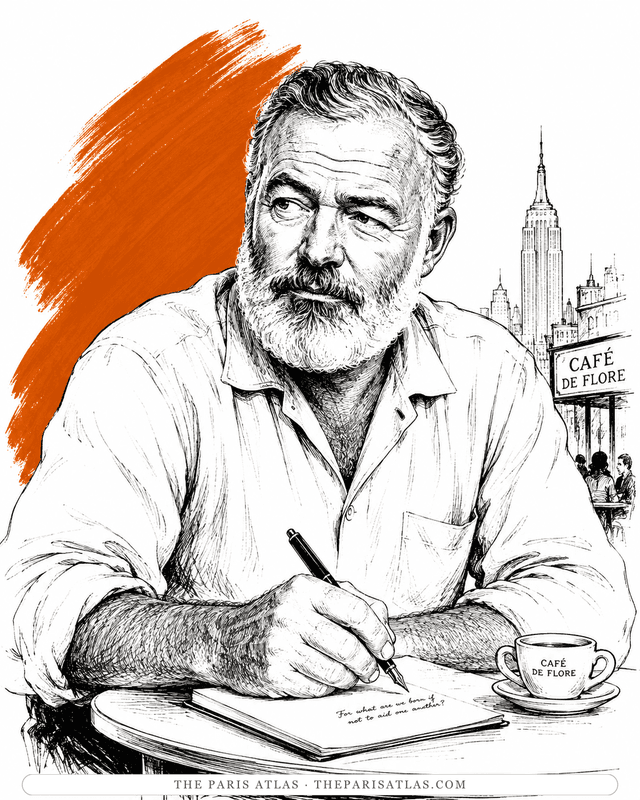
Ernest Hemingway
Fitzgerald vouched for him to Scribner's before they had met, then edited him better than he edited himself; the friendship's five rounds are chronicled in our journal.
View author
Henry Miller
The Brooklyn dropout who arrived in Paris broke at thirty-eight and wrote the exuberant, banned books that ended American censorship.
View author
Louis-Ferdinand Céline
The doctor of the Paris slums who wrote the century's blackest, funniest novel — and changed the sound of French prose.
View author