Owl Eyes
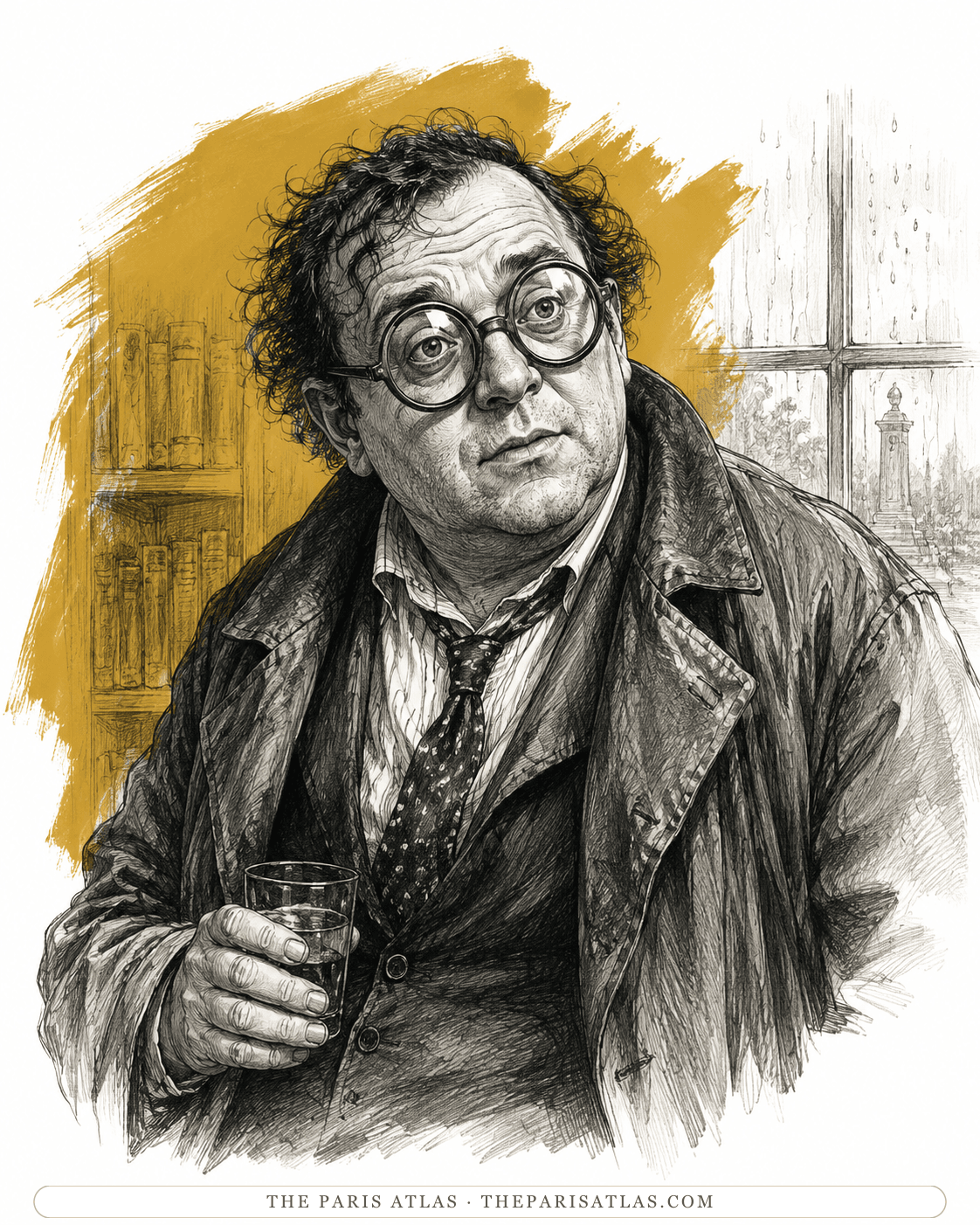
A drunk guest Nick meets in Gatsby's library. He is one of only three people who come to the funeral.
To find out for himself. At one of Gatsby's parties he pulls a book down from the library shelves to prove the volumes are real books with pages, and not the cardboard dummies he had expected.
The book

At a glance
- Unnamed — “the man with owl-eyed glasses,” stout and middle-aged
- Gatsby's library, the wrecked coupé in the drive, and the graveside
- The books are real, pages and everything
- One of three mourners, with Nick and Gatsby's father
Who they are in the book
Spoiler-freeNick never learns his name. He is a stout, middle-aged man in enormous owl-eyed spectacles, met first in Gatsby's library at a party, and he appears three times: once drunk among the books, once beside a wrecked car, and once in the rain at the cemetery.
He does the one thing nobody else at the parties bothers to do, which is check. The books are real, and he is the only guest who thought to find out.
How Owl Eyes Is Portrayed
- The librarySitting somewhat drunk on the edge of a great table, staring with unsteady concentration at the shelves. He wheels around when Nick and Jordan come in, examines Jordan from head to foot, and demands to know what they think.
- “Absolutely real”He has already ascertained it, and takes their scepticism for granted. “Absolutely real — have pages and everything. I thought they'd be a nice durable cardboard.” Later, from the drive, Nick could have sworn he heard the owl-eyed man break into ghostly laughter in there.
- The wheel in the ditchA coupé comes out of Gatsby's drive and loses a wheel; he climbs out and disclaims all of it. “I know nothing whatever about mechanics.” Pressed on how it happened: “I know very little about driving — next to nothing.” Told he oughtn't drive at night if he's a poor driver, he objects indignantly that he wasn't even trying.
- The cemeteryHe arrives late, splashing over the soggy ground, three months after the library and with no explanation of how he heard. The rain pours down his thick glasses and he takes them off to wipe them. When somebody murmurs “Blessed are the dead that the rain falls on,” he says “Amen to that,” in a brave voice. At the gate he tells Nick he couldn't get to the house — and is astonished to hear that nobody else could either, when they used to go there by the hundreds.
Nobody comes to the funeral. Owl Eyes comes to the funeral — a man Nick met once, at a party, three months earlier, and whose name he never learns. He is at the gate afterwards, working out what the size of those parties actually meant.
If you like The Great Gatsby


If you like F. Scott Fitzgerald
Explore authors with a similar voice, perspective, and influence.
Ernest Hemingway
Fitzgerald vouched for him to Scribner's before they had met, then edited him better than he edited himself; the friendship's five rounds are chronicled in our journal.
View author
Henry Miller
The Brooklyn dropout who arrived in Paris broke at thirty-eight and wrote the exuberant, banned books that ended American censorship.
View author
Louis-Ferdinand Céline
The doctor of the Paris slums who wrote the century's blackest, funniest novel — and changed the sound of French prose.
View author