Michaelis
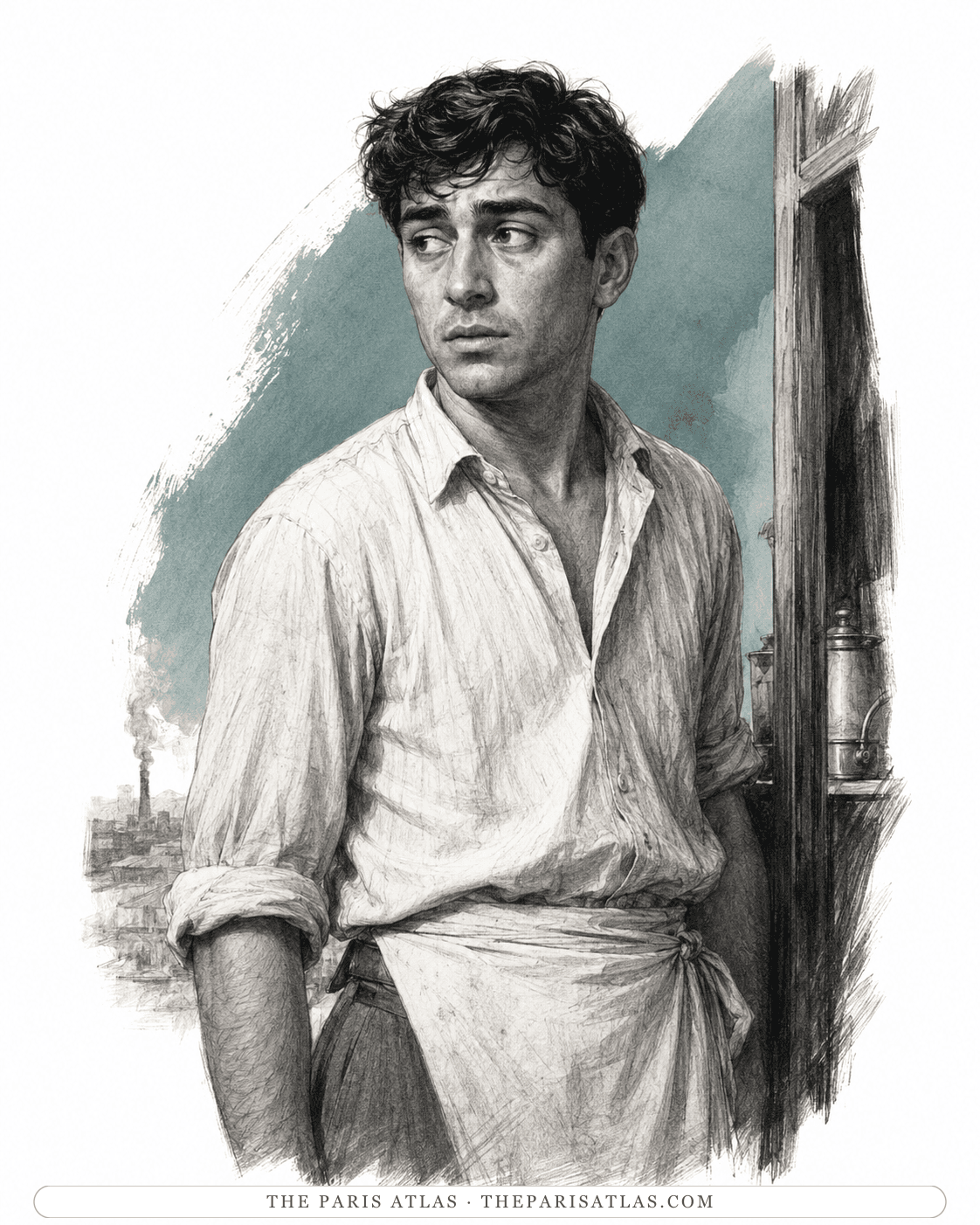
He runs the coffee shop next to Wilson's garage, and has been Wilson's neighbour for four years.
To get his neighbour George Wilson through the night, and not to be left doing it alone. The other men who came to sit with Wilson drift home one by one, and Michaelis is the one still there at dawn.
The book

At a glance
- Michaelis — proprietor of the coffee joint beside Wilson's garage; the coroner's principal witness
- “The young Greek” at first mention, Mavro Michaelis at the second
- George and Myrtle Wilson, four years
- First to reach Myrtle, with the driver of the car going the other way; then in the garage office until six in the morning
Who they are in the book
Spoiler-freeMichaelis runs the coffee joint next door to Wilson's garage in the valley of ashes. Nick calls him the young Greek at first mention and gives him a first name, Mavro, only in passing. He is the closest thing George Wilson has to a friend, on the strength of four years of proximity.
He is also the book's principal witness. He is on the road when Myrtle runs into it, reaches her along with the driver of the other car, and then spends the whole night in the garage office trying to keep Wilson talking. Everything the police and the newspapers later decide about that night rests on what he tells them.
How Michaelis Is Portrayed
- The neighbourHe advises Wilson to go to bed; Wilson says he'd miss a lot of business. A racket breaks out overhead and Wilson explains calmly that he has his wife locked in up there. Michaelis is astonished — four years next door, and Wilson had never seemed faintly capable of such a statement.
- The nightHe offers to telephone a friend for him and cannot find one: he is almost sure Wilson has no friend, because there was not enough of him for his wife. So he stays himself, until six in the morning, when he is worn out and grateful for the sound of a car stopping outside.
- The dog leashLooking for something to say, he opens the nearest drawer and finds a small, expensive dog-leash of leather and braided silver. He sees nothing odd in it, and gives Wilson a dozen reasons why his wife might have bought it. Wilson does not answer any of them.
- “That's an advertisement”Wilson presses his face to the rear window and says God sees everything. Standing behind him, Michaelis sees with a shock what he is looking at, and tells him what it is: the eyes of Doctor T. J. Eckleburg, pale and enormous out of the dissolving night. Wilson stays at the glass a long time, nodding into the twilight.
His testimony at the inquest is what brings Wilson's suspicions of his wife to light — and it is also, in the end, what lets the case close quietly. With Catherine swearing that her sister had never seen Gatsby, Wilson is reduced to a man “deranged by grief” so that the matter can rest in its simplest form. Michaelis had told the first policeman that the death car was light green. He was never sure of the colour.
If you like The Great Gatsby


If you like F. Scott Fitzgerald
Explore authors with a similar voice, perspective, and influence.
Ernest Hemingway
Fitzgerald vouched for him to Scribner's before they had met, then edited him better than he edited himself; the friendship's five rounds are chronicled in our journal.
View author
Henry Miller
The Brooklyn dropout who arrived in Paris broke at thirty-eight and wrote the exuberant, banned books that ended American censorship.
View author
Louis-Ferdinand Céline
The doctor of the Paris slums who wrote the century's blackest, funniest novel — and changed the sound of French prose.
View author