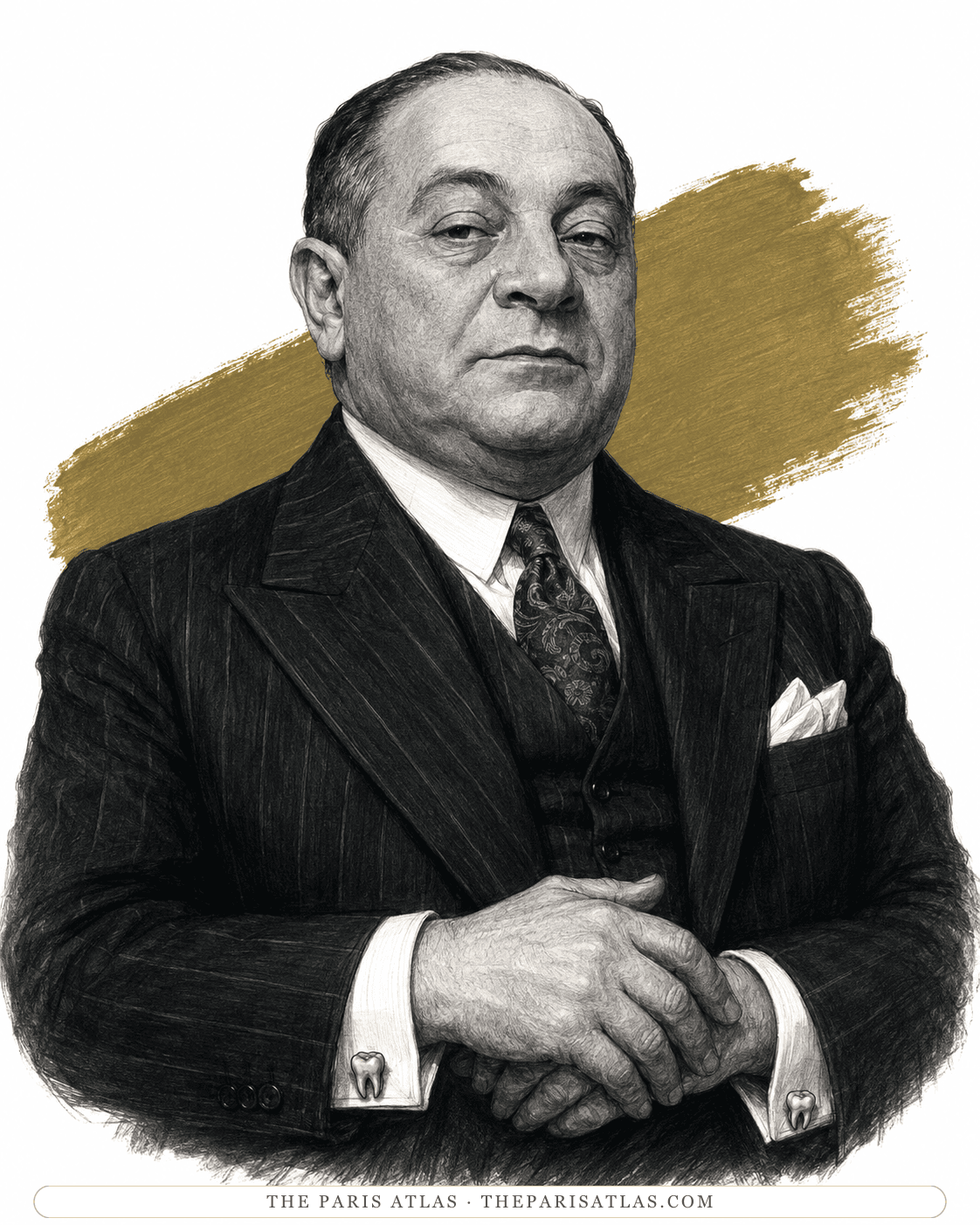
Meyer Wolfshiem
Gatsby's business partner, and a gambler. Gatsby says he is the man who fixed the 1919 World's Series.
Men he can use. He says he found Gatsby broke and hungry after the war and made him, having decided at once that a well-presented young man with an Oxford education would be useful to him.
The book

At a glance
- Meyer Wolfshiem — gambler, and Gatsby's business associate since just after the war
- A Forty-second Street cellar restaurant, and an office up a flight of stairs off Broadway
- Human molars, by his own description
- Fixing the 1919 World's Series, by Gatsby's flat account
- A man of fine breeding, and an Oggsford man — the kind you'd take home to your mother and sister
- Arnold Rothstein, the gambler known as the Brain · 1882–1928 · New York City
Who they are in the book
Spoiler-freeMeyer Wolfshiem is Gatsby's business associate, and the only answer the novel gives to where the money came from. Nick meets him once, at lunch in a well-fanned Forty-second Street cellar, and again after everything is over. Fitzgerald draws him in caricature, down to the accent Nick transcribes as “gonnegtion,” and gives him two pieces of information that turn out to matter more than anything else at the table.
The first is that he takes Nick for a man looking for a business connection, which tells you what Gatsby's lunches are usually for. The second is his own history: a murder outside a hotel in 1912 that he tells as a fond story about old friends. Gatsby supplies the rest on the drive home, in one sentence, without emphasis.
How Meyer Wolfshiem Is Portrayed
- The cuff buttonsHe notices Nick looking at them and identifies them himself: “Finest specimens of human molars.”
- “Gonnegtion”Directly after a story about a shooting: “I understand you're looking for a business gonnegtion.” Gatsby answers for Nick that this isn't the man. Wolfshiem, disappointed: “I beg your pardon, I had a wrong man.”
- The old MetropoleFilled with faces dead and gone, he says, and with friends gone now forever. Then the story of the night they shot Rosy Rosenthal there — the waiter with a funny look, somebody wanting a word outside, and Wolfshiem pulling him down into his chair: “Let the bastards come in here if they want you, Rosy, but don't you, so help me, move outside this room.”
- “Sure he went”Rosy went anyway. He turned around in the door and said don't let that waiter take away my coffee, then went out on the sidewalk, and they shot him three times and drove away. Nick recalls that four men were electrocuted for it. Wolfshiem corrects him: “Five, with Becker.”
- “Oggsford College”His account of Gatsby's education, delivered as a character reference: he went to Oggsford College in England, one of the most famous colleges in the world. It is also how Wolfshiem knew he could use him.
- What he actually isNick asks whether the man is an actor, or a dentist. Gatsby: “Meyer Wolfshiem? No, he's a gambler.” Then, coolly: “He's the man who fixed the World's Series back in 1919.” It had never occurred to Nick that one man could start to play with the faith of fifty million people.
After the shooting, Wolfshiem's name is not in the phone book and his answer to Nick's letter is a refusal: he is tied up in important business and cannot get mixed up in this thing now, with an addendum asking to be told about the funeral, and noting that he does not know the family at all. Nick goes to the office anyway and gets the origin story: a young major just out of the army, so hard up he was still wearing his uniform because he couldn't buy clothes, walking into a poolroom on Forty-third Street and asking for a job. “Start him! I made him. I raised him up out of nothing, right out of the gutter.” Then, with his eyes filling: “I can't do it — I can't get mixed up in it.” Nick wonders whether the partnership had included the 1919 transaction, and leaves.
The gambler behind him is Arnold Rothstein, who financed much of New York's bootlegging and gambling and was widely held to have bankrolled the fix of the 1919 World's Series, which he denied to the end. The murder Wolfshiem tells as an anecdote was real too: Herman “Beansy” Rosenthal was shot outside the Metropole Hotel in July 1912 after informing on police corruption, and four gunmen and the police lieutenant Charles Becker were electrocuted for it — Wolfshiem's “Five, with Becker” is a count of executions. Rothstein was shot at the Park Central Hotel in November 1928, three years after the novel appeared, and died two days later having refused to name the man who did it. Nobody was ever convicted.
If you like The Great Gatsby


If you like F. Scott Fitzgerald
Explore authors with a similar voice, perspective, and influence.
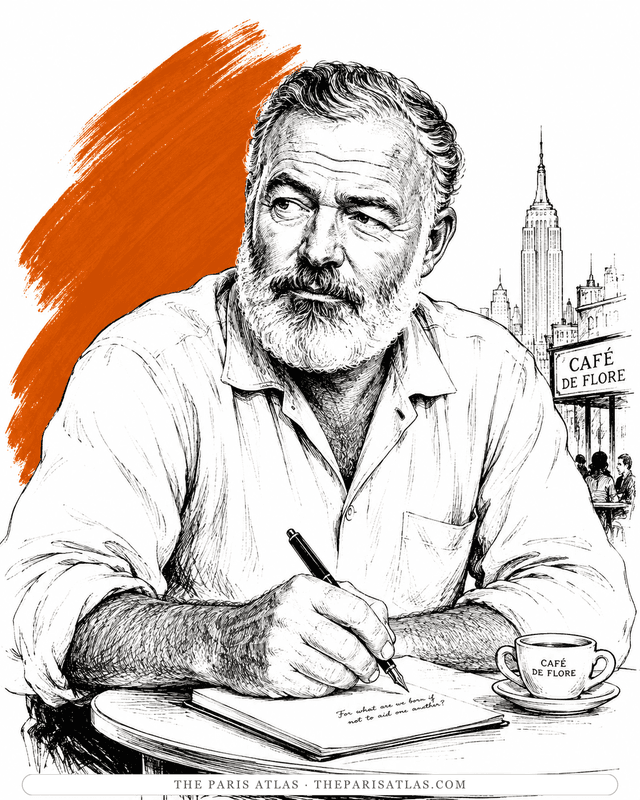
Ernest Hemingway
Fitzgerald vouched for him to Scribner's before they had met, then edited him better than he edited himself; the friendship's five rounds are chronicled in our journal.
View author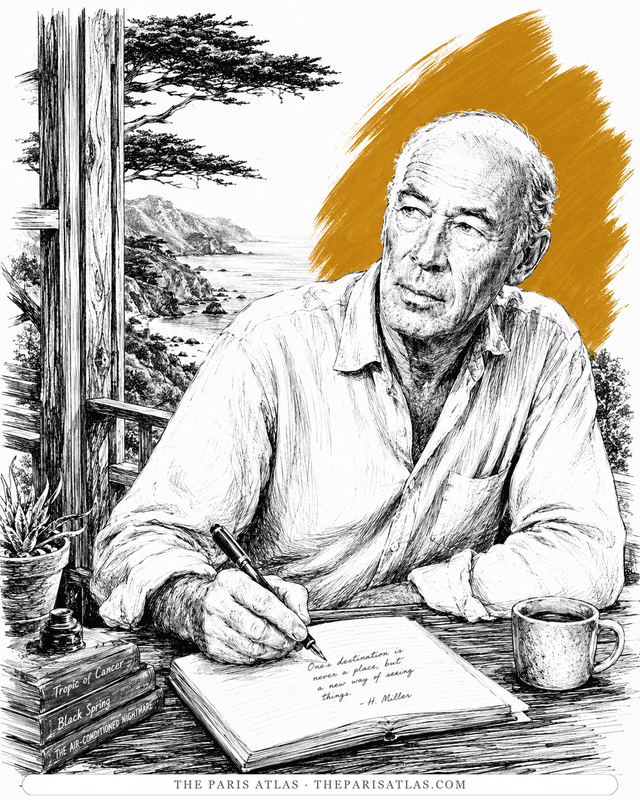
Henry Miller
The Brooklyn dropout who arrived in Paris broke at thirty-eight and wrote the exuberant, banned books that ended American censorship.
View author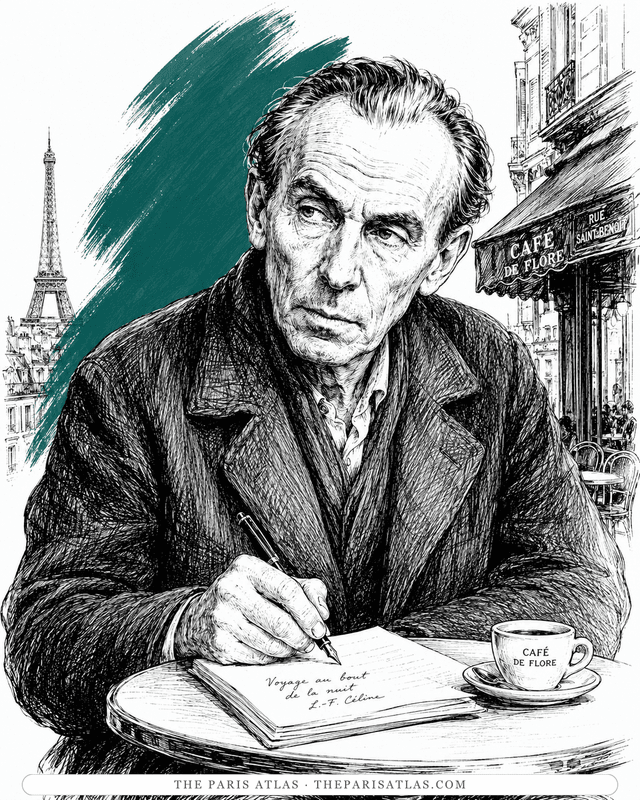
Louis-Ferdinand Céline
The doctor of the Paris slums who wrote the century's blackest, funniest novel — and changed the sound of French prose.
View author