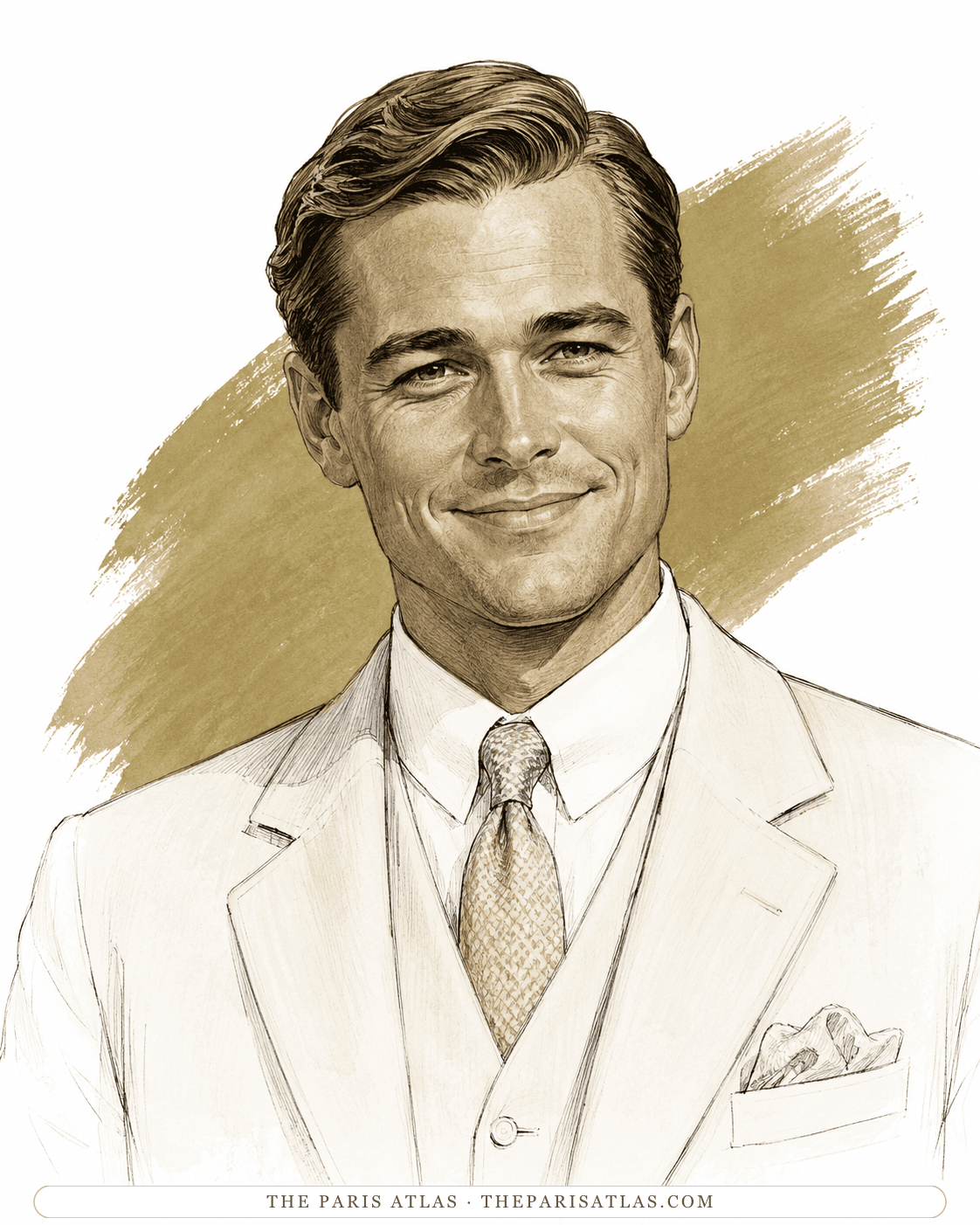
Jay Gatsby
He throws the biggest parties on Long Island. He built all of it to win back Daisy Buchanan, who lives across the bay.
Daisy Buchanan, and the version of himself she believed in five years ago, before she married someone else. Asked whether anyone can repeat the past, he answers that of course you can.
The book

At a glance
- The host of the West Egg parties — a year or two over thirty
- James Gatz, on a North Dakota farm; renamed himself at seventeen
- A mansion on West Egg, Long Island, across the bay from the Buchanans
- An Oxford man from a wealthy Middle Western family, all dead
- Unexplained; Tom's investigation points to drugstores selling grain alcohol, and to the gambler Meyer Wolfshiem
- Major, decorated by several Allied governments, Montenegro included
- Max von Gerlach (born Max Stork Gerlach) · 1885–1958 · Berlin
Who they are in the book
Spoiler-freeJay Gatsby was born James Gatz on a North Dakota farm and renamed himself at seventeen, on the afternoon he rowed out to warn a millionaire's yacht off a Lake Superior shoal. By the summer of 1922 he owns a mansion on West Egg, Long Island, and throws parties that hundreds attend without being invited. He tells people he is an Oxford man, that his family are all dead, and that he inherited money from the Middle West, by which he means San Francisco.
He wants one thing, and Nick Carraway is how he gets it: an introduction to Daisy Buchanan, whom he loved as a young officer five years earlier and who now lives across the bay. The house, the parties, the car, and the shirts were assembled for her before she knew he existed. Where the money came from is the novel's other question, and Tom Buchanan is the one who answers it.
How Jay Gatsby Is Portrayed
- The smileNick spends part of an evening talking to him without realizing whose party it is. The smile has a quality of eternal reassurance in it and seems to believe in you as you would like to believe in yourself. Then it goes out, and Nick is looking at an elegant young roughneck, a year or two over thirty.
- “Old sport”He calls almost everyone old sport — the phrase appears forty-one times in the novel. Nick notes that his elaborate formality of speech just missed being absurd, and that he picks his words with care.
- The houseA factual imitation of some Hôtel de Ville in Normandy, with a tower on one side, a marble swimming pool, and more than forty acres of lawn and garden. The ivy on it is thin and new.
- The carRich cream colour, bright with nickel, monstrous in length, fitted with hat boxes and supper boxes and tool boxes. Passengers sit behind several layers of glass in what Nick calls a green leather conservatory.
- The war record, which is trueHe tells Nick he took his machine-gun battalion into the Argonne, was promoted to major, and was decorated by every Allied government, and produces the Montenegrin medal engraved “Major Jay Gatsby, For Valour Extraordinary.” Nick assumes he is lying. Later the narrative confirms it: after the Argonne he got his majority and the command of the divisional machine-guns.
- Oxford, five monthsTom asks him directly whether he is an Oxford man. “Not exactly” — he was sent there for five months in 1919, by an army arrangement after the armistice, which is why he says he cannot call himself one. This is also true.
Jay Gatsby quotes
“I wouldn’t ask too much of her,” I ventured. “You can’t repeat the past.” “Can’t repeat the past?” he cried incredulously. “Why of course you can!”
Her voice is full of money.
You always have a green light that burns all night at the end of your dock.
Gatsby takes the blame for Myrtle Wilson's death , and stands outside the Buchanans' house waiting for a signal that never comes. The next afternoon George Wilson walks up to the pool and shoots him, then himself. Almost nobody comes to the funeral — not Daisy, not the hundreds who came to the parties. Only Nick, one guest from the library, and Gatsby's father, who arrives from Minnesota carrying his son's boyhood copy of Hopalong Cassidy. On the flyleaf is a schedule dated September 12, 1906: rise from bed at six, dumbbell exercise and wall-scaling, “practise elocution, poise and how to attain it,” and a list of General Resolves that ends “No more smokeing or chewing.”
Fitzgerald never named a model, and Gatsby is partly himself. But one man kept turning up. Max von Gerlach was born in Berlin in 1885, served as an ordnance officer in the war after applying for a major's commission and receiving a lieutenant's, and ran speakeasies in Manhattan for the gambler Arnold Rothstein. He threw large parties, was said never to wear the same shirt twice, and told people he had been to Oxford and was related to the Kaiser. He knew the Fitzgeralds in the Great Neck years, and a surviving note to Scott asks, “How are you and the family, old sport?” Zelda Fitzgerald said afterward that a bootlegger neighbour named von Gerlach was behind the character, and the German scholar Horst Kruse spent years in census and immigration records reconstructing the life. Prohibition ended, the money went, and in 1939 Gerlach shot himself in the head and survived, blind. He died at Bellevue Hospital in 1958 and was buried in a pine casket at Long Island National Cemetery.
If you like The Great Gatsby


If you like F. Scott Fitzgerald
Explore authors with a similar voice, perspective, and influence.
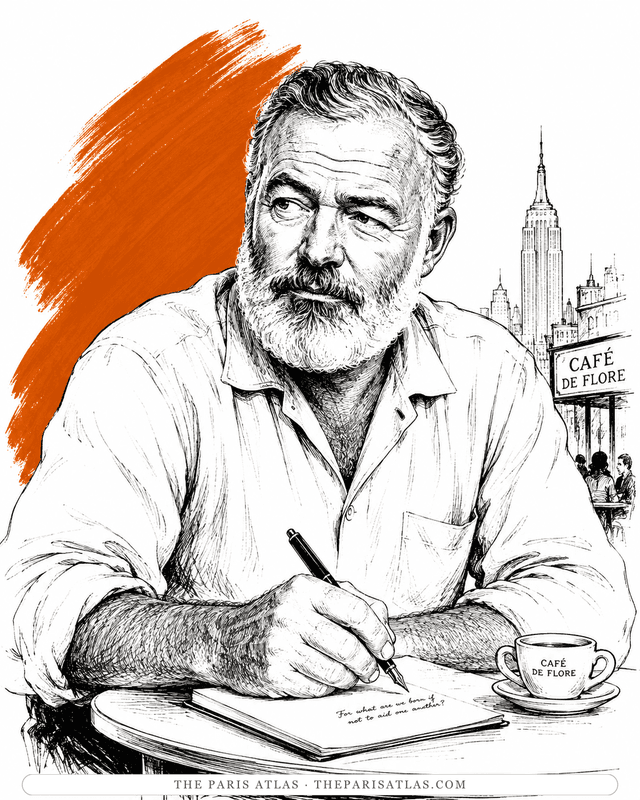
Ernest Hemingway
Fitzgerald vouched for him to Scribner's before they had met, then edited him better than he edited himself; the friendship's five rounds are chronicled in our journal.
View author
Henry Miller
The Brooklyn dropout who arrived in Paris broke at thirty-eight and wrote the exuberant, banned books that ended American censorship.
View author
Louis-Ferdinand Céline
The doctor of the Paris slums who wrote the century's blackest, funniest novel — and changed the sound of French prose.
View author