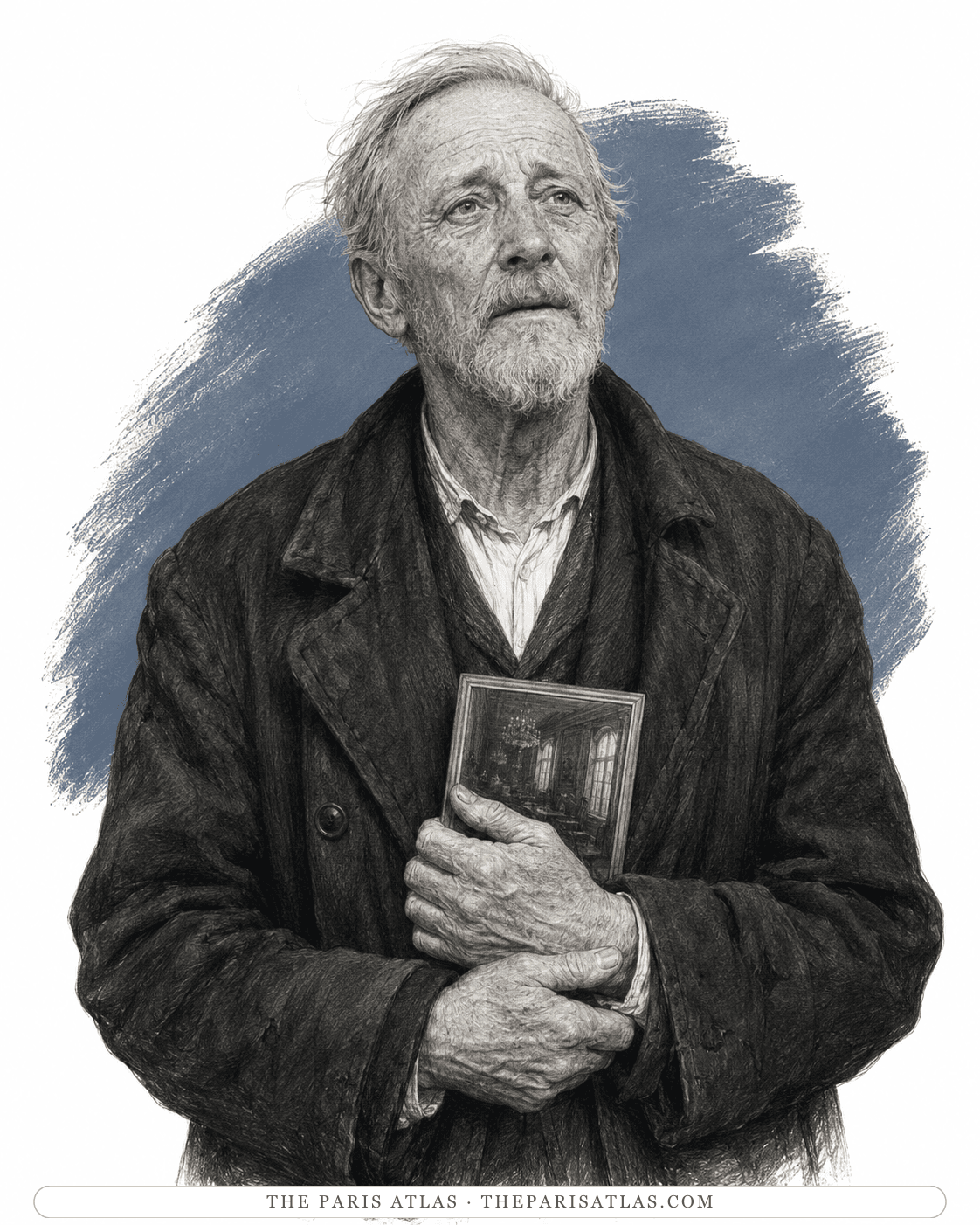
Henry C. Gatz
Gatsby's father. He comes from Minnesota for the funeral, carrying a photograph of his son's house.
For people to know what his son would have become. He says the boy would have been a great man who helped build up the country, and he carries a daily timetable of self-improvement that Gatsby wrote in the back of a boyhood adventure book.
The book

At a glance
- Henry C. Gatz — Gatsby's father, up from a town in Minnesota
- James Gatz; he had not seen him in two years
- A photograph of the house, and a boyhood copy of Hopalong Cassidy
- The Chicago newspaper — Nick had no way to reach him
Who they are in the book
Spoiler-freeA telegram signed Henry C. Gatz arrives from a town in Minnesota on the third day, saying only that the sender is leaving immediately and asking that the funeral be postponed. He read about it in the Chicago newspaper; Nick had no idea how to reach him.
He is a solemn old man, very helpless and dismayed, bundled into a long cheap ulster against the warm September day. He knew his son as James Gatz, has not seen him in two years, and has spent the interval being proud of him at a distance, on the evidence of one photograph.
How Henry C. Gatz Is Portrayed
- The arrivalHis eyes leak continuously with excitement, and he pulls so incessantly at his sparse grey beard that Nick has difficulty getting his coat off. He is on the point of collapse, will not eat, and spills the glass of milk out of his trembling hand. Of the killing he says only: “It was a madman. He must have been mad.”
- The photographHe takes out his wallet with trembling fingers to show a photograph of the house, cracked in the corners and dirty with many hands, and points out every detail eagerly, seeking admiration. He has shown it so often that Nick thinks it is more real to him now than the house he is standing in.
- The scheduleFrom his pocket, a ragged old copy of Hopalong Cassidy, opened at the back cover: the word schedule, the date September 12, 1906, and the hours under it. He reads each item aloud and looks up eagerly, reluctant to close the book — Nick thinks he rather expected the list to be copied down for his own use.
- “Jimmy was bound to get ahead”His reading of the whole thing. His son always had some resolves like this, was always great for improving his mind, and once told his father he ate like a hog, for which his father beat him. They were broke up when he ran off from home, but he sees now there was a reason for it.
He waits with Nick for other cars that do not come, blinking anxiously and speaking of the rain in a worried, uncertain way, until the Lutheran minister has been held for half an hour and it is plain nobody is coming. What he wants at the graveside is not an accounting but a son who was going to be somebody, and the flyleaf is his proof. Nick lets him have it, which is the kindest thing anyone does in the last chapter.
If you like The Great Gatsby


If you like F. Scott Fitzgerald
Explore authors with a similar voice, perspective, and influence.
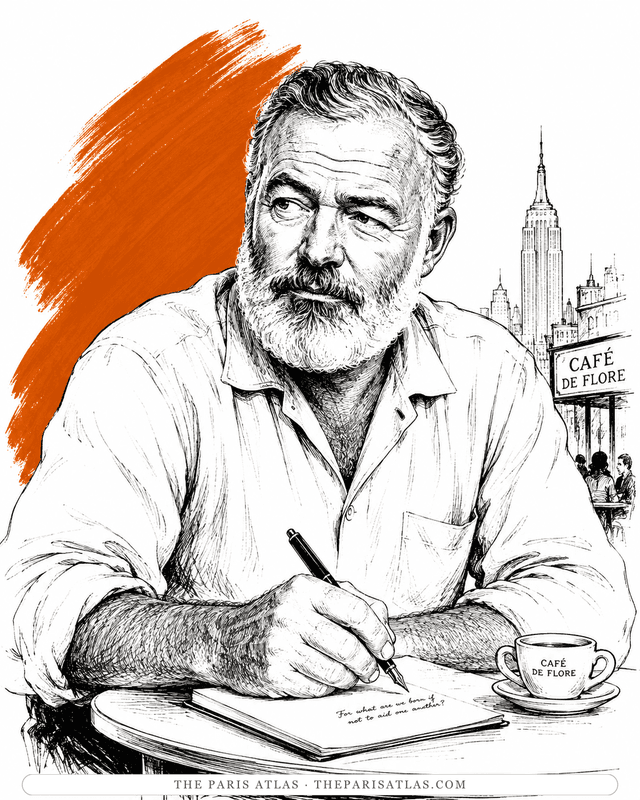
Ernest Hemingway
Fitzgerald vouched for him to Scribner's before they had met, then edited him better than he edited himself; the friendship's five rounds are chronicled in our journal.
View author
Henry Miller
The Brooklyn dropout who arrived in Paris broke at thirty-eight and wrote the exuberant, banned books that ended American censorship.
View author
Louis-Ferdinand Céline
The doctor of the Paris slums who wrote the century's blackest, funniest novel — and changed the sound of French prose.
View author