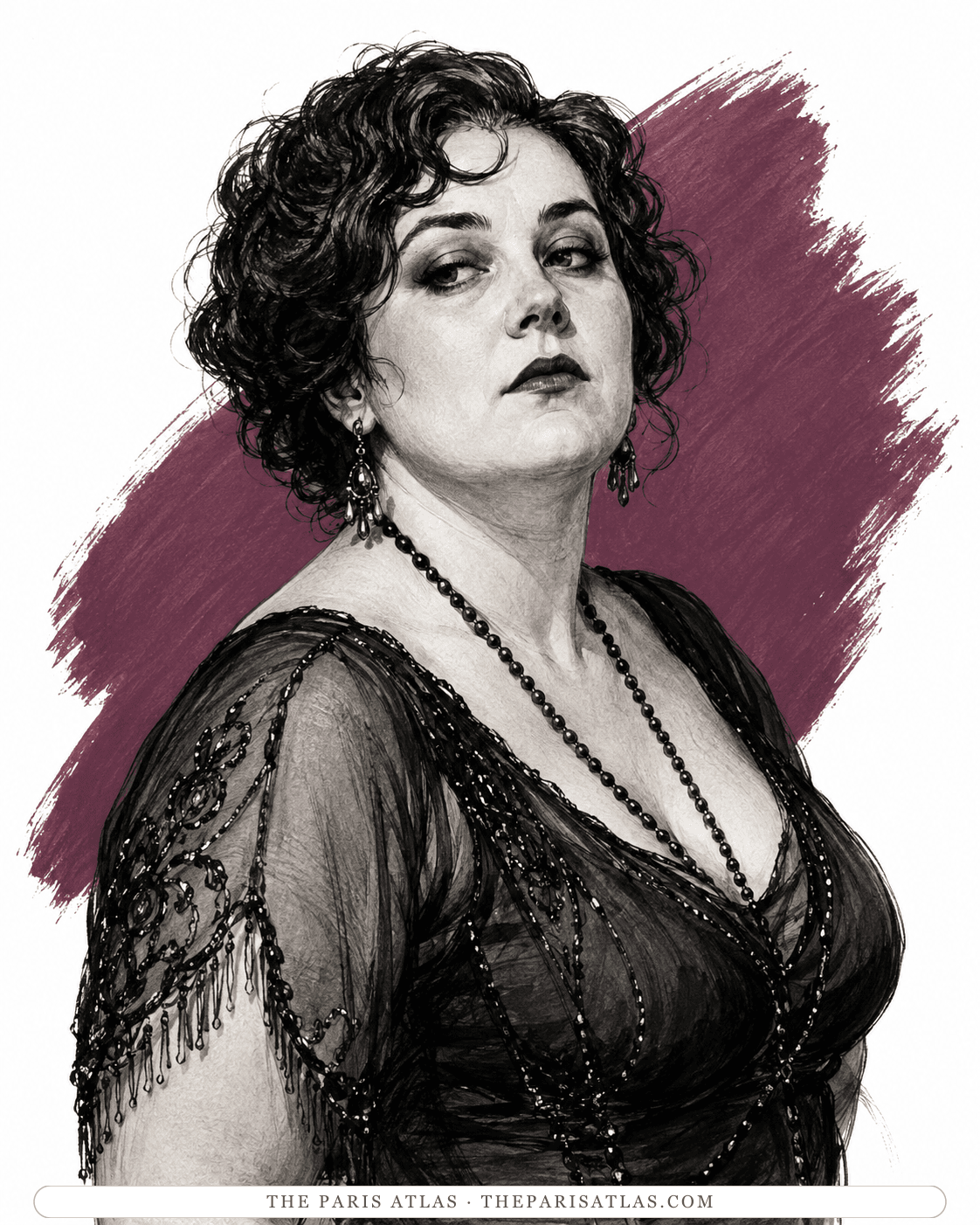
Myrtle Wilson
Tom Buchanan's mistress. She is married to a garage keeper out on the ash heaps, and Tom keeps a flat for her in the city.
Out of her marriage, and up in the world. She married her husband, George Wilson, because she took him for a gentleman who knew something about breeding, and says she knew at once it was a mistake: he was not fit to lick her shoe.
The book

At a glance
- Myrtle Wilson, middle thirties — George Wilson's wife, Tom Buchanan's mistress
- Over the garage in the valley of ashes, halfway between West Egg and New York
- A flat on 158th Street that Tom pays for
- Catherine — slender and worldly, about thirty, eyebrows plucked and drawn on again at a rakish angle
- Town Tattle, the Broadway scandal magazines, and Simon Called Peter
Who they are in the book
Spoiler-freeMyrtle Wilson lives over her husband's garage in the valley of ashes, the industrial waste ground on the road between West Egg and New York, under the faded eyes of the Doctor T. J. Eckleburg billboard. George Wilson repairs cars and buys and sells them, badly. Myrtle has been Tom Buchanan's mistress long enough to have a flat on 158th Street, a wardrobe kept in it, and a set of friends who come over for the afternoon.
The novel gives her more physical life than anyone else in it. She is in the middle thirties and faintly stout, and Nick — who finds nothing beautiful in her face — describes an immediately perceptible vitality, as if the nerves of her body were continually smouldering. She is also the only person in the book who says Daisy's name to Tom's face.
How Myrtle Wilson Is Portrayed
- First seenA thickish figure blocking the light in the garage office doorway, in a spotted dress of dark blue crêpe-de-chine. She smiles slowly, walks through her husband as if he were a ghost, and shakes hands with Tom looking him flush in the eye.
- Three dresses in one afternoonThe crêpe-de-chine at the garage, a brown figured muslin for the train, and an elaborate afternoon dress of cream-coloured chiffon at the flat. Nick notes that the personality changes with the chiffon: the vitality of the garage converts into hauteur, and as she expands the room grows smaller around her.
- The trainShe tells the story of meeting Tom on the two facing seats that are always the last ones left. He had on a dress suit and patent leather shoes, and all she could think, over and over, was “You can't live forever.”
- The shoppingTown Tattle and a moving-picture magazine at the newsstand, cold cream and a small flask of perfume in the drugstore, four taxicabs waved off before she picks a lavender one, and ten dollars to a man on the street for a puppy of no determinable breed she has decided is a police dog.
- The flat158th Street, one slice in a long white cake of apartment houses. Tapestried furniture too large for the rooms, old copies of Town Tattle and the small scandal magazines of Broadway, a copy of Simon Called Peter, and over the mantel an over-enlarged photograph that turns out at close range to be a hen sitting on a blurred rock.
- Daisy's nameShe shouts it at Tom — “Daisy! Daisy! Daisy!” — and says she will say it whenever she wants to. He breaks her nose with his open hand. Her sister Catherine scolds and consoles, and somebody spreads a copy of Town Tattle over the tapestry.
Myrtle Wilson quotes
All I kept thinking about, over and over, was ‘You can’t live forever; you can’t live forever.’
I married him because I thought he was a gentleman. I thought he knew something about breeding, but he wasn’t fit to lick my shoe.
Myrtle dies in the middle of the book's last act. George has worked out that she has someone and has locked her upstairs, meaning to take her west; when the yellow car comes along the road she runs out into it, . Michaelis and the driver of the other car reach her first, and find her mouth wide open and ripped a little at the corners and her left breast swinging loose like a flap; by the time Nick arrives her husband is holding the doorposts of his office and saying “Oh, my God” over and over. Tom, arriving after, tells George the car was Gatsby's, and George goes to West Egg with a revolver.
There is no documented real person behind Myrtle. She and George are Fitzgerald's invention, and the valley of ashes is drawn from the Corona ash dumps in Queens, which the Long Island road ran past on the way into the city.
If you like The Great Gatsby


If you like F. Scott Fitzgerald
Explore authors with a similar voice, perspective, and influence.
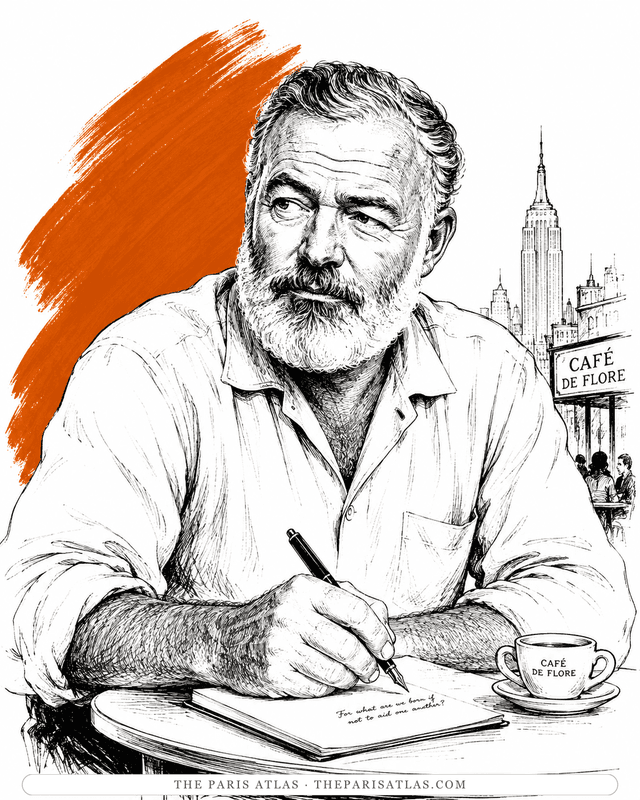
Ernest Hemingway
Fitzgerald vouched for him to Scribner's before they had met, then edited him better than he edited himself; the friendship's five rounds are chronicled in our journal.
View author
Henry Miller
The Brooklyn dropout who arrived in Paris broke at thirty-eight and wrote the exuberant, banned books that ended American censorship.
View author
Louis-Ferdinand Céline
The doctor of the Paris slums who wrote the century's blackest, funniest novel — and changed the sound of French prose.
View author