
Father Rank
The local priest who understands the difference between naming a grave act and claiming to know a person’s final relationship with God.
To bring people toward honest repentance without pretending that he can pass God’s final judgment on them.
The book

At a glance
- Catholic priest in the colony
- Priest known to Henry and Louise Scobie
- Challenges Louise’s certainty about Scobie’s soul
Who they are in the book
Spoiler-freeFather Rank is a Catholic priest in the colony and part of the small social world around the Scobies. He can be talkative and ordinary rather than solemn. That makes his final clarity more powerful: wisdom comes from someone the other characters may have underestimated.
He understands the rules Scobie is breaking. Confession requires a real intention to leave the affair, and receiving Communion while knowingly refusing that change is gravely wrong in Scobie’s faith. Father Rank does not make those requirements disappear to comfort him.
At the same time, Father Rank refuses to turn rules into a claim of total knowledge. A priest hears confessed failures, not every act of love or courage in a life. After Scobie’s suicide, he reminds Louise that neither she nor the Church can see the whole of one human heart or set the limit of divine mercy.
How Father Rank Is Portrayed
- Social and talkativeFather Rank participates in ordinary colony conversation and can seem more like a familiar neighbor than a distant authority.
- Clear about confessionHe does not treat naming a sin as enough. A person asking absolution must sincerely intend to change the action being confessed.
- Rejects easy labelsThe phrase “bad Catholic” tells him very little because a label cannot explain belief, fear, failure, love, or responsibility.
- Angry at despairHe pushes back when Louise treats Scobie’s suicide as proof that prayer and mercy are pointless.
- Knows the limits of his officeHe can describe the Church’s moral rules, but he does not claim that priestly knowledge exposes the full truth of a soul.
- Sees love inside failureFather Rank believes Scobie loved God even though his actions contradicted that love. The statement explains the tragedy without erasing the harm.
After Scobie’s suicide, Louise wants Father Rank to confirm that Scobie’s broken rules settle his fate. He refuses. The Church knows its moral rules, he argues, but it cannot see everything that happens inside a single person.
Father Rank says he believes Scobie truly loved God. That belief does not declare Scobie innocent or certainly saved. It blocks the opposite certainty: no surviving character has the knowledge to announce that despair has defeated mercy forever.
If you like The Heart of the Matter


If you like Graham Greene
Explore authors with a similar voice, perspective, and influence.
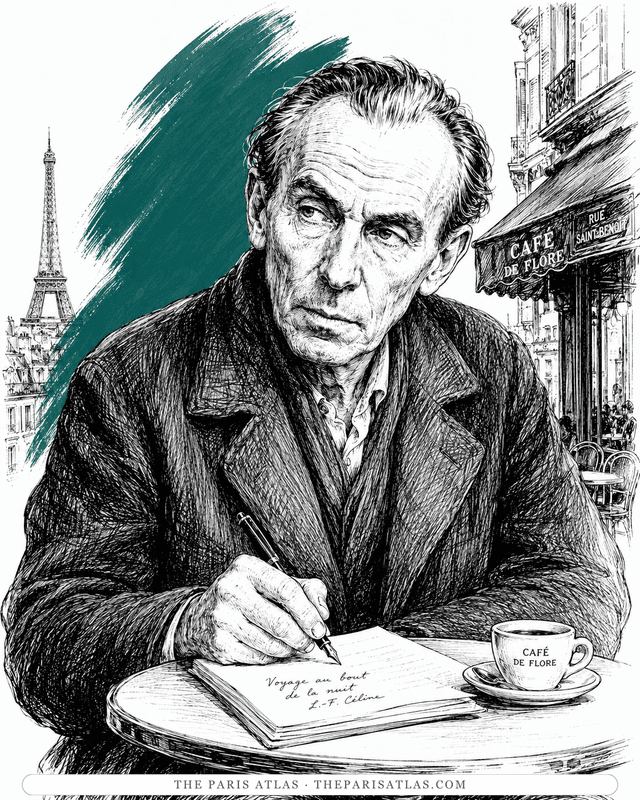
Louis-Ferdinand Céline
The doctor of the Paris slums who wrote the century's blackest, funniest novel — and changed the sound of French prose.
View author
Paul Bowles
American novelist and composer whose expatriate fiction explores dislocation, unstable intimacy, fatalism, and North Africa.
View author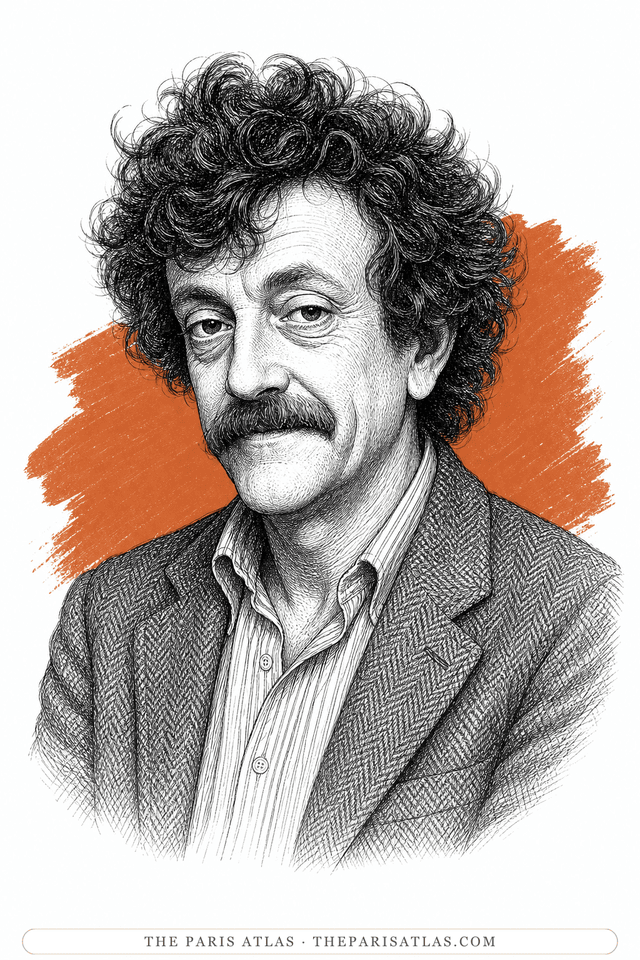
Kurt Vonnegut
American novelist whose fiction combines satire, science fiction, and the experience of surviving the bombing of Dresden.
View author