The Paris AtlasCharting the artists, works, and places worth returning to.

The Prince and the Pauper

A Tale for Young People of All Ages

by Mark Twain

A beggar boy and the Prince of Wales swap clothes for a joke, and a palace guard throws the real prince out into the streets of Tudor London.

Published
1881
Pages
342
Setting
London, England
Era
Shelf rating
4.2

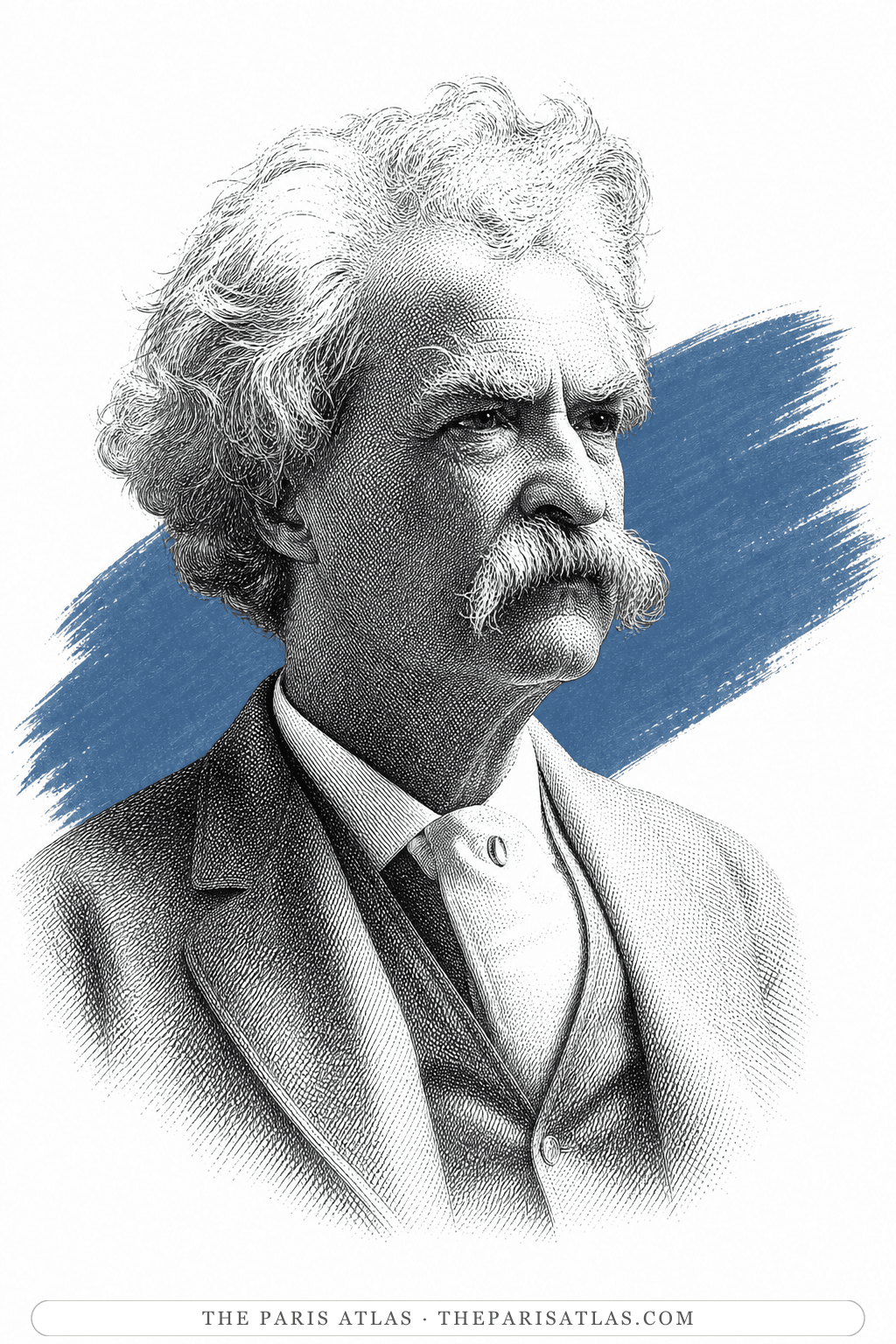
About Mark Twain

Illustrated portrait of Mark Twain
Mark Twain

5 books shelved

The story, briefly

Spoiler-free

Mark Twain's 1881 novel is set in London at the end of Henry VIII's reign. Tom Canty, a beggar boy from a slum called Offal Court, and Edward, the Prince of Wales, look exactly alike. They swap clothes for fun inside the palace, and a guard throws the real prince out into the street. Edward wanders England in rags, protected by a penniless soldier named Miles Hendon, and sees the cruelty of his father's laws for himself. Tom, taken for a prince who has gone mad, has to learn to behave like a king. Twain dedicated the book to his daughters Susy and Clara. The book came out in England, Canada, Germany and the United States in December 1881.

The story, in more detail

The book opens with a short note in which Twain says he is setting down a tale handed from father to son for three hundred years. The story may be history, he writes, or only a legend. Perhaps it happened and perhaps not, but it could have happened. Twain told his friend William Dean Howells that the plot begins at nine in the morning on 27 January 1547. He wanted readers to feel how harsh the laws were by making the king himself suffer some of them.[1][2]

Twain began the book in the summer of 1877 at Quarry Farm near Elmira, New York, where the family spent its summers. According to his biographer Albert Bigelow Paine, the idea came from a children's book he found there, Charlotte M. Yonge's The Prince and the Page, in which a nobleman lives for years disguised as a blind beggar. Twain decided to disguise a prince as a beggar and a beggar as a prince. He first thought of using the Prince of Wales of his own day, the future Edward VII, but could not make it seem real in modern London.[2]

He wrote about four hundred pages that summer and put the manuscript away for more than three years. He picked it up again in Hartford in the winter of 1879 to 1880, after a long stay in Europe that included a spring in Paris. Each afternoon or evening he read the new chapter aloud to his wife Olivia and their daughters Susy and Clara. He told Howells that his wife, who usually damned his work with faint praise, could not get enough of this one.[2]

The full plot

What happens, beginning to end — the ending included. Open when you're ready.

Tom Canty lives in one room of a crowded house in Offal Court, off Pudding Lane near London Bridge. His father John is a thief and his grandmother a beggar, and both beat him. An old priest, Father Andrew, teaches him to read and a little Latin, and fills his head with stories of princes. Tom starts playing prince with the other boys, who form a pretend royal court around him.[1]

One day Tom wanders to the palace at Westminster and presses his face to the gate. A soldier drags him away and throws him into the crowd. Edward, the Prince of Wales, sees it and brings Tom inside. The boys trade clothes and find in the mirror that nobody could tell them apart. Edward notices the bruise on Tom's hand, hides an object from the table, and runs out to punish the guard. Dressed in rags, he is thrown into the road and chased away by the crowd.[1]

Edward is mocked and set upon by dogs at Christ's Hospital, a charity home for poor boys, and then dragged off to Offal Court by John Canty, who takes him for his son. In the scuffle John Canty strikes Father Andrew, who dies of the blow, and the family flees. Meanwhile the court decides that Tom is the prince gone mad. Henry VIII dies, and Tom is proclaimed king at a banquet in the Guildhall. His first order is that the Duke of Norfolk shall not be executed.[1]

Outside the Guildhall a soldier named Miles Hendon saves Edward from a mob and takes him in, thinking him a mad boy. John Canty's gang lures Edward away again, and the beggars and thieves they travel with crown him in mockery as Foo-foo the First. He escapes and is taken in by a mad hermit, who ties him up and means to kill him. The gang carries him off again, and a young thief called Hugo leaves him holding a stolen pig. Hendon finds him just as the constable arrives. The two go to Hendon Hall in Kent, where Miles finds that his younger brother Hugh has taken his inheritance and married Lady Edith, the woman Miles loved.[1]
How it ends — spoilers aheadThe final movement, ending included. Open when you're ready.

Hugh has Miles and Edward thrown into prison. There Edward sees two Baptist women, who have been kind to him, burned at the stake. Miles is sentenced to two hours in the stocks, and when Edward protests, Miles takes the boy's whipping on his own back. Edward touches his shoulders with the whip and makes him an earl. On coronation day Edward slips into Westminster Abbey and interrupts the ceremony just before the crown is placed on Tom's head.

The lords test Edward by asking where the missing Great Seal is. He cannot remember until Tom reminds him of the moment he left the room. The Seal is found inside a piece of armour on the wall. Tom admits he has been using it to crack nuts. Edward is crowned, makes Hendon Earl of Kent with the right to sit in the king's presence, and names Tom the King's Ward. Hugh flees abroad and dies, and Miles marries Edith. Twain ends by saying that the reign of Edward VI was a merciful one for those harsh times.

Themes and analysis

These readings discuss events throughout the book, including its ending.

Twain's notes: where the cruel laws come from

Twain printed notes at the back of the book to show that the cruelties were real. Most come from two sources. One is David Hume's History of England. The other is Blue Laws, True and False, J. Hammond Trumbull's book about the so-called blue laws of early Connecticut. One of Trumbull's points, quoted by Twain, is that when the Connecticut colonists wrote their first laws, stealing anything worth more than twelve pence was already a hanging crime in England.

Several scenes are built straight from the notes. Tom pardons a woman and her little daughter accused of raising a storm by pulling off their stockings. Twain's note says a woman and her nine-year-old daughter were hanged in Huntingdon for exactly that. The old lawyer Edward meets in prison has lost his ears for writing a pamphlet. The note shows that his sentence is copied from the case of William Prynne, a barrister punished long after Edward's time.

Twain is also honest about what he made up. He says the whipping boy, who takes the prince's beatings for him, is borrowed from the reigns of James I and Charles II. Another note admits that the law making a beggar into a slave, which Edward promises to end in Chapter XVII, did not yet exist. The law was passed in Edward's own reign. Twain adds that someone so humane could never have suggested it.

A mother's test and a denial in the street

Twain gives Tom one habit that nobody can fake. Ever since gunpowder exploded in his face as a small child, Tom has thrown his hand up before his eyes when startled, with the palm turned outward. In Chapter X his mother wakes the boy she thinks is Tom three times in the night with a candle and a knock on the floor. Each time he makes no such movement, and she begins to suspect he is not her son. She still cannot bring herself to give him up.

The same gesture comes back in Chapter XXXI. Tom is riding through Cheapside in the procession before his coronation, throwing coins to the crowd. He sees his mother, and his hand flies up, palm outward. She pushes through the guards and hugs his leg, and he says he does not know her. A guard throws her back into the crowd. For the rest of the procession Tom hears nothing but those words in his head, and the ride stops being a pleasure.

From the Clemens library to Broadway

At Christmas 1884, Twain came home to Hartford from a lecture tour to find a surprise. His wife Olivia had turned the book into a play, and the neighbourhood children performed it for him at the house of their neighbour George Warner. Susy played the prince, Daisy Warner played Tom Canty, and Clara played Lady Jane Grey. The play was repeated, and Twain himself took the part of Miles Hendon. Susy wrote in her childhood biography of her father that he could have been an actor as well as an author.

The first professional version came five years later. Abby Sage Richardson wrote the play, the producer Daniel Frohman cast the child actress Elsie Leslie as both Tom and Edward, and David Belasco staged it. The play opened at the Park Theater in Philadelphia on Christmas Eve 1889 and then moved to the Broadway Theater in New York. Paine says the play did well but not brilliantly. With one child playing both boys, the strongest scenes had to be cut.

The book in France

The Prince and the Pauper reached French readers within two years. In 1883 H. Oudin of Poitiers published Le Prince et le pauvre, translated and introduced by Paul Largilière, in a three-franc series of novels, travel and history. In 1886 the Paris firm of H. Lecène and H. Oudin brought out an illustrated edition in its Nouvelle bibliothèque illustrée de vulgarisation, a popular series. The national library in Paris holds Lecène and Oudin printings from 1886 through 1894.

France also turns up inside the book. Chapter XIV takes its title from the French royal cry Le Roi est mort, vive le Roi, meaning the king is dead, long live the king. Miles Hendon wins his right to sit before the king by citing an old story in which King John's champion made a French champion run away. And a chapter Twain cut from the novel, the whipping boy's story, found a later home. Paine says Twain reused it in Personal Recollections of Joan of Arc, for the scene where Joan's father rides a bull to a funeral.

Quotes from The Prince and the Pauper

Quoted verbatim from the text, each line verified against its source.

It may have happened, it may not have happened: but it COULD have happened.
Mark Twain, The Prince and the Pauper (1881)
The world is made wrong; kings should go to school to their own laws, at times, and so learn mercy.
Edward · Edward in Mark Twain's The Prince and the Pauper (1881)
Then shall the king’s law be law of mercy, from this day, and never more be law of blood!
Tom Canty · Tom Canty in Mark Twain's The Prince and the Pauper (1881)

All 7 The Prince and the Pauper quotes →

Why we recommend it

  1. Two boys trade places

    Tom and Edward swap clothes in Chapter III and find in the mirror that nobody could tell them apart. Each then has to live the other's life.

  2. Twain shows his sources

    Notes at the back tie the burnings, brandings and hangings to Hume's History of England and J. Hammond Trumbull's study of early laws, and admit where Twain bent the dates.

  3. A king who learns from his own laws

    Edward sees two kind women burned and a farmer branded as a slave. He says kings should go to school to their own laws and so learn mercy.

  4. Written for two listeners

    Twain read each chapter aloud to his daughters Susy and Clara as he wrote it, and dedicated the finished book to them.

What this book explores

The people in its pages

Edward VI, Henry VIII, the Earl of Hertford and the Duke of Norfolk were real people, used freely. Tom Canty, his family, Miles Hendon and the Hendons of Hendon Hall are Twain's inventions. The guides below include the ending.

  • Tom Canty

    A beggar boy from Offal Court who dreams of princes, trades places with one, and finds himself king of England.

  • Edward, Prince of Wales

    Henry VIII's son and heir, thrown out of his own palace in beggar's rags. He learns what his father's laws do to ordinary people.

  • Miles Hendon

    A ragged soldier back from years in a foreign prison, who protects Edward while believing he is only a mad boy.

  • John Canty

    Tom's father, a drunken thief who beats his children. He kills Father Andrew and drags Edward through the underworld under a false name.

  • Tom's mother

    A starving woman who saves scraps for her son and is beaten for it. She is the first to suspect that the boy in Offal Court is not Tom.

  • The Earl of Hertford

    Edward's uncle, who covers for the mad prince at court and becomes Lord Protector. Tom makes him a duke.

  • Humphrey Marlow

    The prince's whipping boy, beaten whenever the prince does badly at his lessons. He quietly teaches Tom what a prince should know.

  • Hugh Hendon

    Miles's younger brother, who got him banished, took the family estate and forced Lady Edith to marry him.

  • Lady Edith

    The cousin Miles loved, now married to Hugh. She denies knowing Miles because Hugh has threatened to have him killed.

  • The hermit

    A monk driven out when Henry VIII closed the monasteries. He believes he is an archangel and tries to kill Edward to punish his father.

Bring it to book club

  • Tom enjoys being king more and more, until he denies his mother in the street. What changes in him at that moment?
  • Edward learns more about his kingdom in a few weeks as a beggar than in his whole life as a prince. Which scene teaches him the most?
  • Miles Hendon never believes Edward is the king until the end. Why does he protect him anyway?
  • Twain's notes insist that the cruel laws were real. Does knowing that change how you read the book?
  • Tom uses the Great Seal of England to crack nuts. What is the joke saying about power and its symbols?
  • The book was written for Twain's daughters. What makes it a children's book, and what does not?

A complete discussion guide is on our editorial calendar. Join the letter to hear when it ships.

Timeline

  1. 1877

    At Quarry Farm near Elmira, Twain reads Charlotte M. Yonge's The Prince and the Page and writes about four hundred pages of his own story.

  2. 1879–1880

    After a long stay in Europe that included a spring in Paris, Twain takes the manuscript up again in Hartford and reads it chapter by chapter to his family.

  3. November 1881

    Twain travels to Montreal to secure Canadian copyright before publication.

  4. December 1881

    The novel is published in England, Canada, Germany and the United States, dedicated to Susy and Clara Clemens.

  5. 1883

    H. Oudin of Poitiers publishes Paul Largilière's French translation, Le Prince et le pauvre.

  6. Christmas 1884

    Olivia Clemens stages her own adaptation with the neighbourhood children in Hartford. Susy plays the prince.

  7. 1886

    H. Lecène and H. Oudin publish an illustrated French edition in Paris.

  8. 24 December 1889

    Abby Sage Richardson's stage version opens at the Park Theater in Philadelphia, with Elsie Leslie playing both boys.

  9. 2011

    The University of California Press publishes the Mark Twain Library paperback edited by Victor Fischer.

Book editions

Hardcover
Hardcover
Dawson Brothers
1881
Canadian edition, Montreal. Twain travelled to Canada in November 1881 to secure Canadian copyright before publication. Pre-ISBN.
Hardcover
Hardcover
James R. Osgood and Company
1882
First American edition, Boston, 411 pages. The title page is dated 1882 and the copyright 1881; Paine records publication in December 1881. Pre-ISBN.
Hardcover
Hardcover
Chatto & Windus
1882
London edition. The library copy scanned by the New York Public Library is dated 1882. Pre-ISBN.
Paperback edition cover
Paperback
University of California Press
2011
ISBN-13
9780520270015
Selected edition in the Mark Twain Library, published April 2011, 342 pages, edited by Victor Fischer with a foreword by Michael Barry Frank. The edition has 191 illustrations by Frank T. Merrill, John J. Harley and L. S. Ipsen. Chapter references follow the Gutenberg transcription.
Paperback edition cover
Paperback
Penguin Classics
1997
ISBN-13
9780140436693
Published 1 December 1997, 224 pages, with an introduction by Jerry Griswold.
Ebook
Ebook
Project Gutenberg
Free transcription, ebook 1837, including Twain's notes. The quotations were checked against it.

Reader reviews

Loading reviews…

The Prince and the Pauper: frequently asked questions

What is The Prince and the Pauper about?

Two boys who look exactly alike, a London beggar and the Prince of Wales, swap clothes for fun. The prince is thrown out of the palace and wanders England as a beggar, while the beggar boy has to act as prince and then as king.

Is The Prince and the Pauper a true story?

No, though parts of it are real. Edward VI, Henry VIII and the harsh laws existed. The swap and most of the characters are invented. Twain opens by saying the story may be only a legend, but it could have happened.

Where did Twain get the idea?

From Charlotte M. Yonge's children's book The Prince and the Page, which he read at Quarry Farm in 1877. In her story a nobleman hides for years as a blind beggar. Twain decided to swap a prince and a beggar both ways.

Who was the book written for?

Twain read each new chapter aloud to his daughters Susy and Clara, and dedicated the book to them as good-mannered and agreeable children. The subtitle calls it a tale for young people of all ages.

Does the book have a Paris connection?

Mostly through its French readers. A French translation appeared in 1883, and a Paris illustrated edition in 1886 was reprinted many times. Twain took the manuscript up again in 1879 after a spring spent in Paris.

Was the book made into a play?

Yes. Twain's wife Olivia adapted it for the family and neighbourhood children at Christmas 1884. Abby Sage Richardson's professional version opened in Philadelphia on Christmas Eve 1889, with Elsie Leslie playing both boys.

Which edition has this ISBN?

ISBN 9780520270015 is the University of California Press paperback in the Mark Twain Library, published in April 2011. The edition has 342 pages, was edited by Victor Fischer, and has 191 illustrations by Frank T. Merrill, John J. Harley and L. S. Ipsen.

If you like Mark Twain

Explore authors with a similar voice, perspective, and influence.

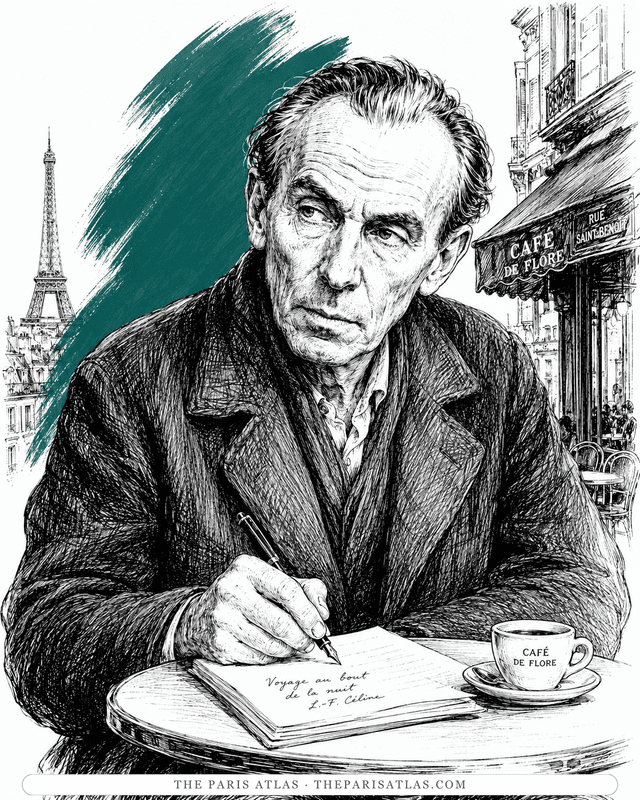
  • Illustrated portrait of Louis-Ferdinand Céline

    Louis-Ferdinand Céline

    The doctor of the Paris slums who wrote the century's blackest, funniest novel — and changed the sound of French prose.

    View author
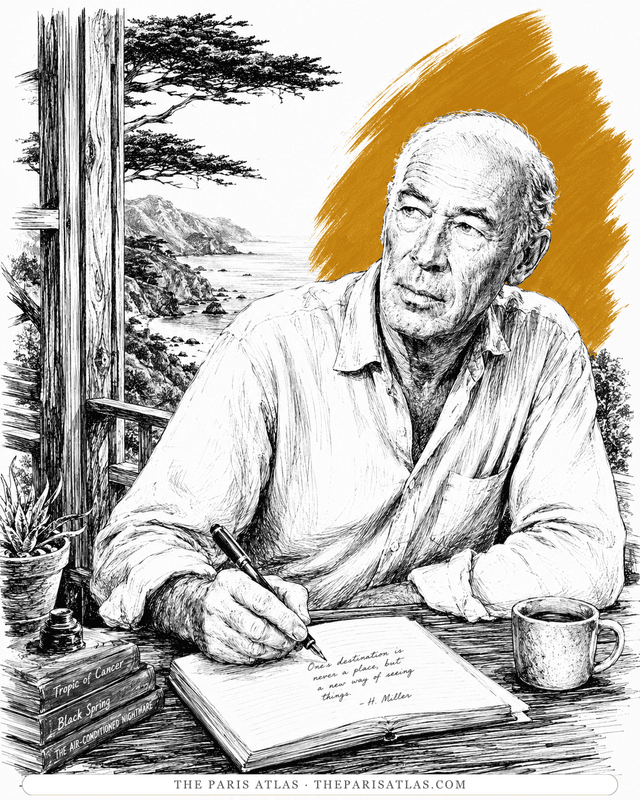
  • Illustrated portrait of Henry Miller

    Henry Miller

    The Brooklyn dropout who arrived in Paris broke at thirty-eight and wrote the exuberant, banned books that ended American censorship.

    View author
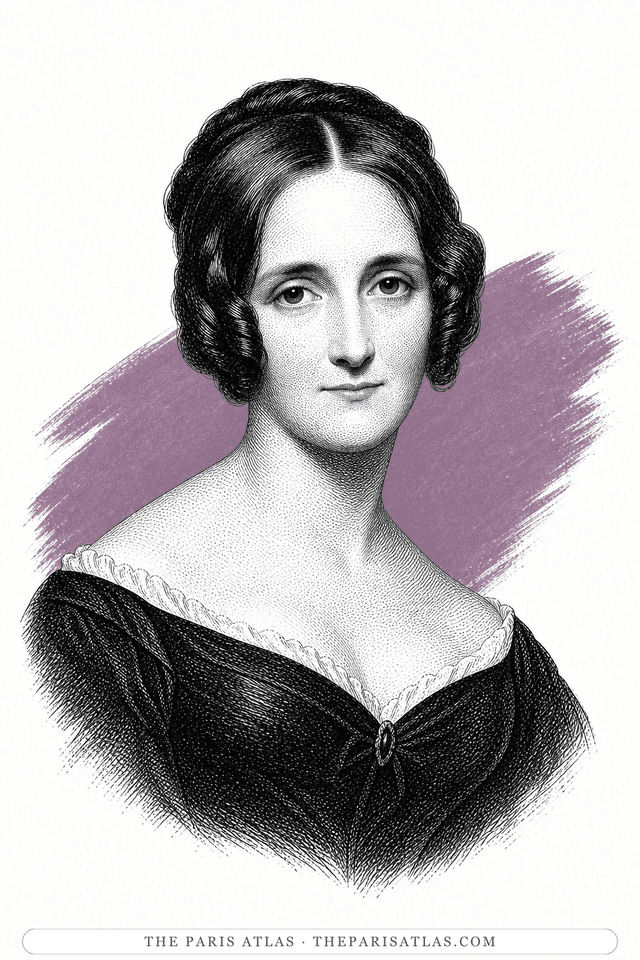
  • Illustrated portrait of Mary Shelley

    Mary Shelley

    The author of Frankenstein, who first saw Paris at sixteen as a runaway. In the summer of 1814 she crossed from England to Calais with the poet Percy Bysshe Shelley and her stepsister Claire Clairmont, spent a week trapped in an expensive Paris hotel with no money, then bought a donkey and walked south-east across a France still wrecked by the Napoleonic wars. That journey became her first published book. Two years later, on a lake in Switzerland, she began her second.

    View author
References

References

The sources below include the primary text, editions, scholarship, archival materials, and other records that informed this page. They document The Prince and the Pauper, its publication, and its place in literary history.

  1. 1abcdeThe Prince and the Pauper: primary text with Mark Twain's notes, Project Gutenberg ebook 1837

    Novel
    Project Gutenberg transcription, 1881
    Used for

    Primary text for the plot, the character guides, the quotations and Twain's own notes on his sources.

    View source
  2. 2abcMark Twain: A Biography. The Personal and Literary Life of Samuel Langhorne Clemens (Project Gutenberg ebook 2988)

    Biography
    Harper & Brothers, New York, 1912
    Used for

    How the book began and was finished, the family readings, the Canadian trip, publication, the home theatricals and the 1889 stage version.

    View source
  3. 3The Prince and the Pauper: A Tale for Young People of All Ages, Canadian edition (University of Toronto copy, digitized)

    Novel
    Dawson Brothers, Montreal, 1881
    Used for

    Library record of the 1881 Montreal edition.

    View source
  4. 4The Prince and the Pauper: A Tale for Young People of All Ages, first American edition (New York Public Library copy, digitized)

    Novel
    James R. Osgood and Company, Boston, 1882
    Used for

    Library record of the first American edition, with its 1882 title page, 1881 copyright and 411 pages.

    View source
  5. 5Le Prince et le pauvre, translated with a preface by Paul Largilière (Poitiers: H. Oudin, 1883) — catalogue record

    Official record
    Bibliothèque nationale de France, 1883
    Used for

    Catalogue record for Paul Largilière's 1883 French translation.

    View source
  6. 6Le Prince et le pauvre (Paris: H. Lecène et H. Oudin, Nouvelle bibliothèque illustrée de vulgarisation, 1886) — catalogue record

    Official record
    Bibliothèque nationale de France, 1886
    Used for

    Catalogue record for the 1886 Paris illustrated edition.

    View source
  1. 7Le Prince et le pauvre (Paris: Lecène et Oudin, 1894) — catalogue record

    Official record
    Bibliothèque nationale de France, 1894
    Used for

    Catalogue record for a later Lecène and Oudin printing, 1894.

    View source
  2. 8The Prince and the Pauper — Mark Twain Library paperback, ISBN 9780520270015

    Website
    University of California Press
    Used for

    Selected ISBN, publication month, page count, editor and illustration count.

    View source
  3. 9The Prince and the Pauper — Open Library edition records (work OL53994W)

    Website
    Open Library, Internet Archive
    Used for

    Library record confirming ISBN 9780520270015 as the 2011 University of California Press edition.

    View source
  4. 10The Prince and the Pauper, introduction by Jerry Griswold — Penguin Classics, ISBN 9780140436693

    Website
    Penguin Random House, 1997
    Used for

    ISBN, date, page count and introduction of the Penguin Classics edition.

    View source
  5. 11The Prince and the Pauper

    Novel
    Mark Twain, 1881
    Used for

    The primary text represented by this page, used for descriptions of the work’s contents and for any quoted passages shown here.

i
Why these sources are here

The primary text is the baseline reference for every book page. Additional references document publication history, interpretation, and historical context where that evidence is available.

Explore more resources