The Hemingway Daiquiri: What It Is and Where It Came From
Ernest Hemingway’s documented daiquiri belongs to Havana, not Paris. Here is what the drink contains, how the Papa Doble differs from today’s Hemingway Special, and which parts of the story are evidence rather than barroom legend.
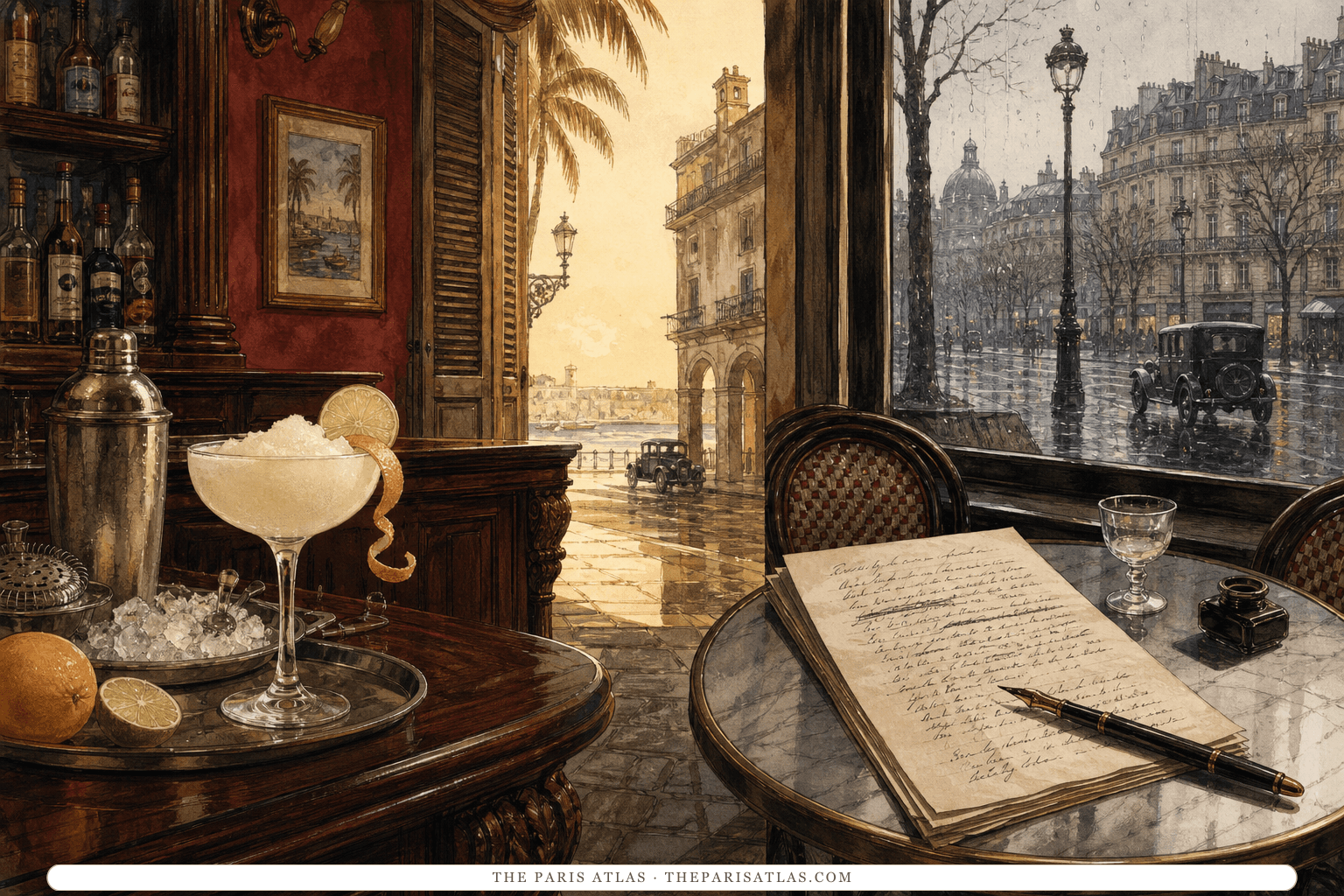
The short answer: a Hemingway daiquiri is a tart rum cocktail associated with Ernest Hemingway, the American novelist and journalist, and El Floridita bar in Havana, Cuba. The modern version combines rum, grapefruit juice, maraschino liqueur, and fresh lime. It is also called the Hemingway Special. The older Papa Doble story describes a different order: a daiquiri with less or no added sugar and more rum.[1][2]
Those names are often treated as exact synonyms, but the surviving record is less tidy. El Floridita already served several numbered daiquiris. Hemingway asked for a stronger, less sweet variation. Later recipes joined his name to grapefruit and maraschino. A useful history must therefore separate the basic daiquiri, the Papa Doble, and the standardized drink now called the Hemingway Special.[3]
The three drinks people mean
A classic daiquiri is rum, fresh lime juice, and sugar, shaken with ice and strained. The International Bartenders Association’s current recipe uses 60 millilitres of white Cuban rum, 20 millilitres of lime juice, and two bar spoons of superfine sugar. It is a short sour cocktail, not automatically a frozen drink.
Papa Doble means “Papa double.” Papa was Hemingway’s familiar nickname, and doble referred to the stronger order linked with him. The common origin story says he wanted less sugar and more rum after tasting a daiquiri at El Floridita. That description is more stable than any one ingredient list. It should not be presented as if Hemingway signed a final recipe card.[2]
The modern Hemingway Special has a clearer reference recipe. The International Bartenders Association specifies 60 millilitres of rum, 40 millilitres of grapefruit juice, 15 millilitres of maraschino liqueur, and 15 millilitres of fresh lime. It is shaken with ice and strained into a large cocktail glass. Maraschino is a cherry liqueur, not the red syrup from a jar of cocktail cherries.[1]
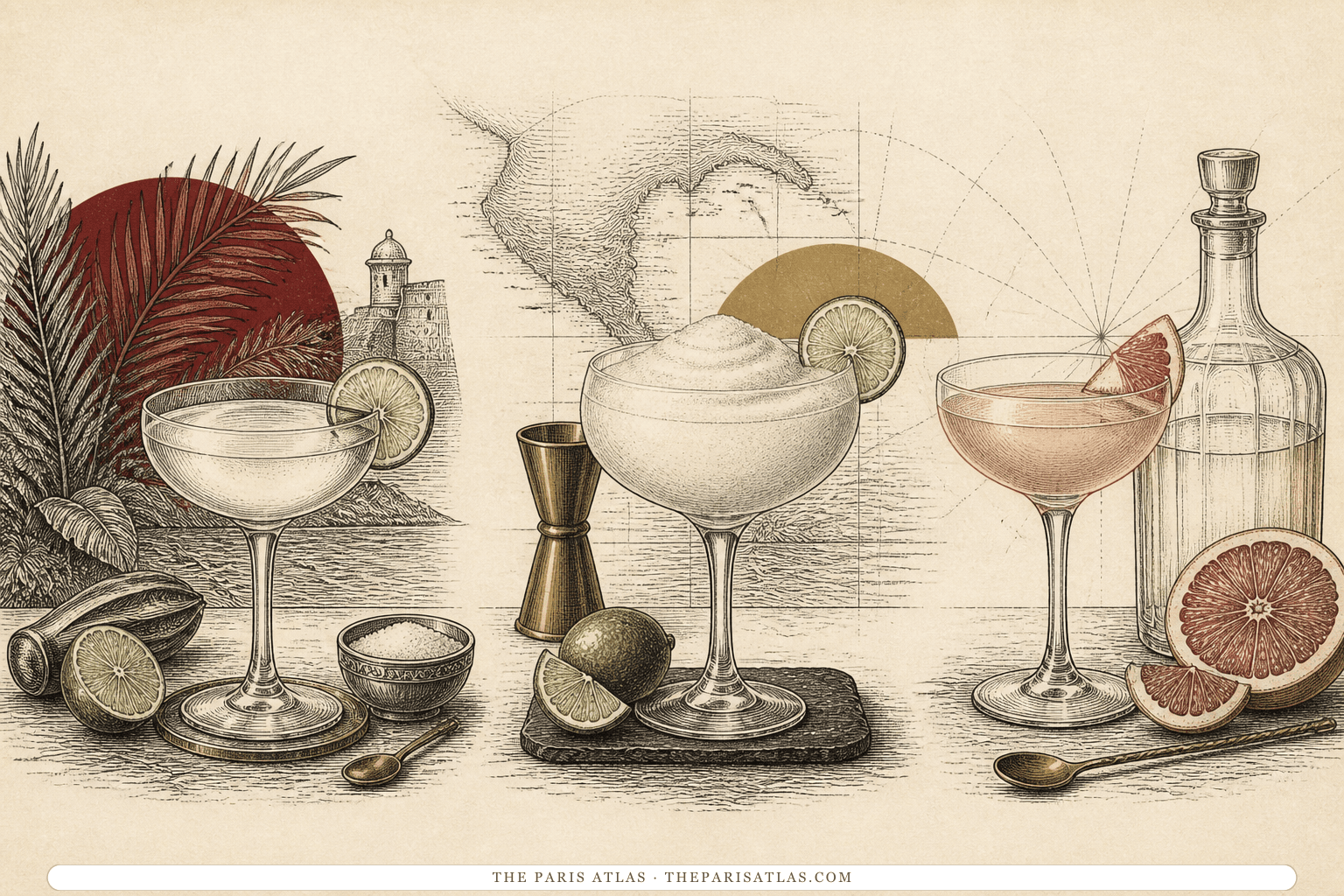
Order by ingredients, not by legend: bars use “Hemingway daiquiri,” “Papa Doble,” and “Hemingway Special” for recipes that can differ substantially.
Who made Hemingway’s daiquiri
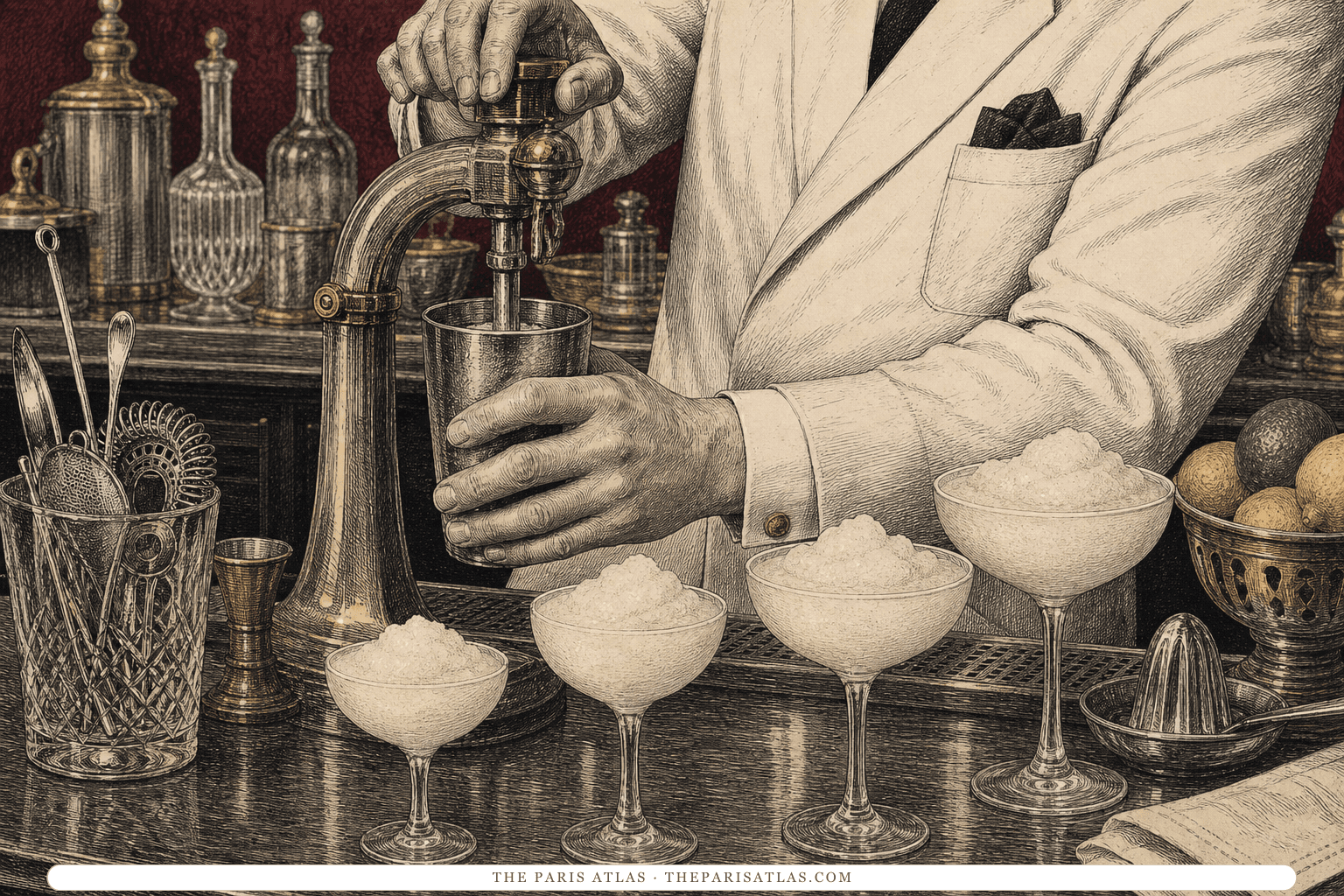
Constantino “Constante” Ribalaigua Vert was the Cuban bartender and proprietor who made El Floridita famous for its daiquiris. He was born in Catalonia, moved to Cuba as a child, learned bartending from his father, and eventually ran the Havana bar. His own 1930s recipe book, Cocktails: Bar La Florida, documents a family of numbered daiquiris rather than one timeless house formula.[3][2]
This matters because Ribalaigua was not simply following a celebrity’s instructions. He was an influential professional bartender with an established daiquiri program. Hemingway’s preferred order became one variation inside that larger body of work. Calling the cocktail Hemingway’s “invention” erases the bartender who developed and served it.
What is firmly documented
Hemingway’s connection to El Floridita is not a doubtful celebrity anecdote. Photographs show him at the bar. The Finca Vigía Foundation, which works with the Ernest Hemingway museum and archive at his Cuban home, identifies El Floridita as his favourite Havana bar and the grapefruit daiquiri as his favourite drink. His fiction also preserves the association.[4]

Islands in the Stream, Ernest Hemingway’s posthumously published novel, places the painter Thomas Hudson at El Floridita drinking frozen daiquiris. The scene describes the drinks arriving from a mixer and uses their coldness, texture, and hidden strength as part of Hudson’s attempt to manage grief. Hemingway wrote the underlying manuscript, but his widow Mary Hemingway and his publisher assembled the unfinished book after his death. It is strong evidence for the bar and drink in his imagination, not a finished memoir or recipe manual.
The exact restroom story—the claim that Hemingway entered El Floridita only to use the toilet, sampled another customer’s drink, and immediately requested less sugar and double rum—is widely repeated but rests on later retellings. The broad relationship is well supported. The scene-by-scene origin story should be labelled as tradition rather than contemporary proof.[2]
The famous mojito line is not reliable
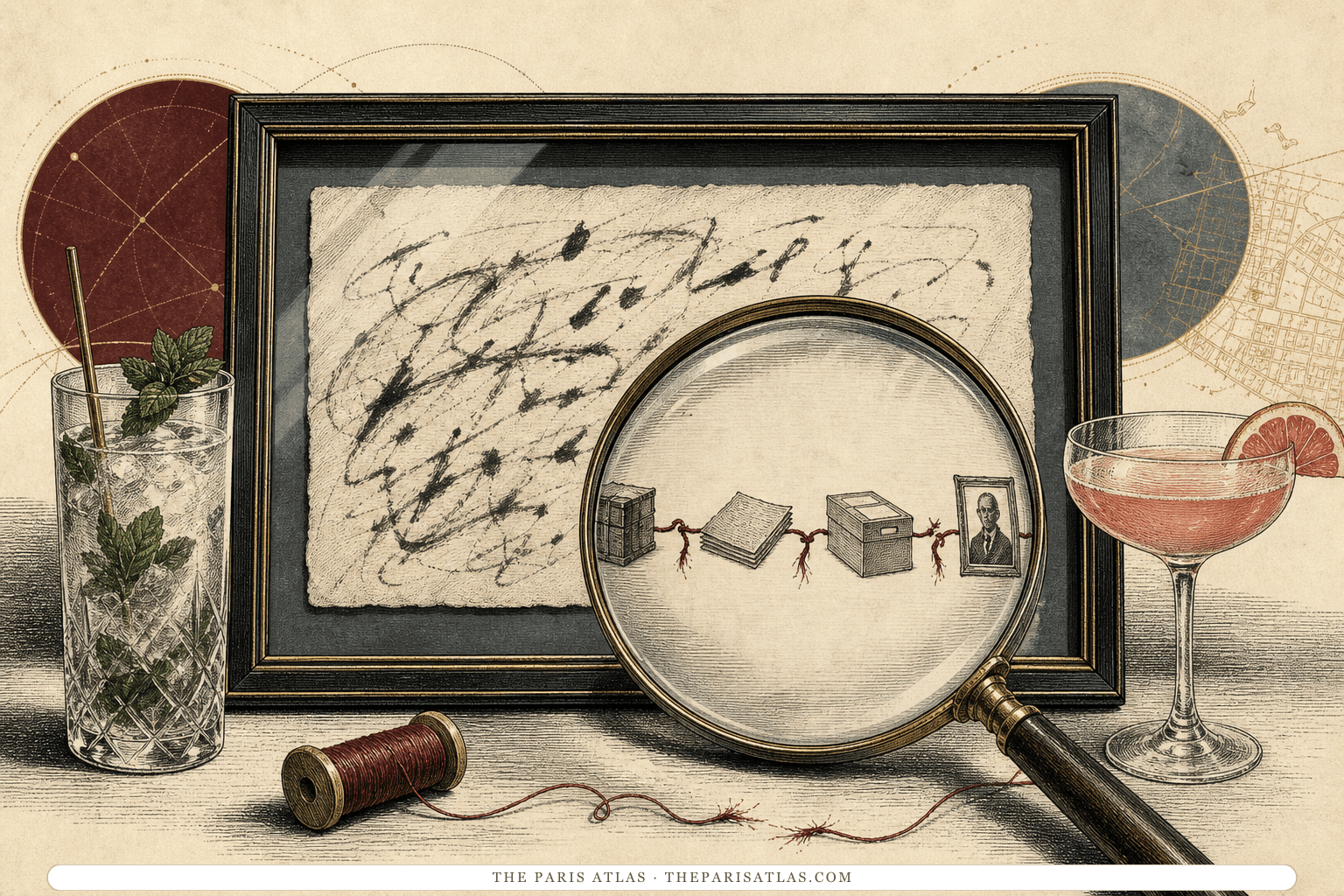
A framed inscription at La Bodeguita del Medio in Havana is often quoted as Hemingway saying that his mojito belonged there and his daiquiri belonged at El Floridita. The daiquiri half fits a documented habit. The inscription as a whole does not have reliable provenance.
Philip Greene, a cocktail historian and Hemingway researcher, traced the story to Fernando Campoamor, a Cuban journalist who knew Hemingway. Campoamor said that the line began as a joke devised to help La Bodeguita’s business and that a graphic artist imitated Hemingway’s handwriting. Greene also found no supporting appearance of La Bodeguita or the mojito in Hemingway’s prose, letters, or standard biographies. The inscription is therefore not a verified Hemingway quotation.
What Paris has to do with the story
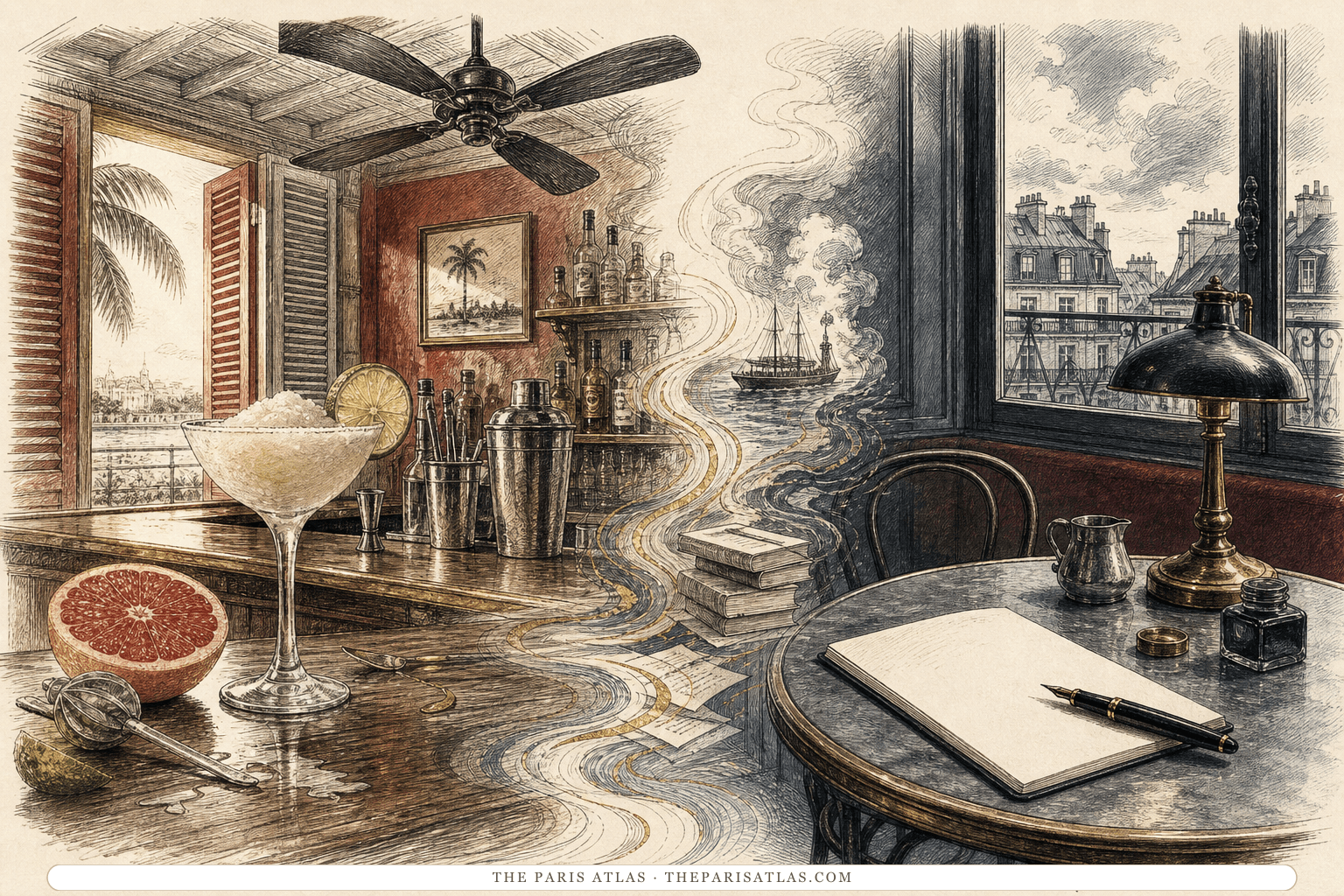
The Hemingway daiquiri was not invented in Paris. Hemingway’s Paris years from 1921 to 1928 came earlier and established the public image that later attached itself to bars around the world: the young foreign correspondent working in cafés, the novelist among other expatriate writers, and the careful observer who made food and drink part of a scene.
At La Closerie des Lilas, a café and brasserie in Montparnasse, Hemingway worked on The Sun Also Rises. The 1926 novel sends Jake Barnes, Lady Brett Ashley, and their friends through Paris cafés drinking brandy, whisky and soda, beer, wine, and Pernod. Alcohol is part of their social routine and their avoidance, not a collection of signature recipes.
The present Bar Hemingway at the Ritz Paris opened under that name in 1994, thirty-three years after Hemingway died. The room was formerly Le Petit Bar. Hemingway genuinely knew the Ritz and drank there with the American novelist F. Scott Fitzgerald and the writer and artist Zelda Fitzgerald, but today’s bar is a tribute, not the birthplace of his daiquiri. Its documented house creation is Colin Field’s Serendipity cocktail.
That distinction is worth keeping. Hemingway’s drinking legend now collapses several cities and decades into one marketable character called “Papa.” The record becomes clearer when each place keeps its own part: working cafés and the Ritz in Paris; the daiquiri and El Floridita in Havana.
How to make it
The modern Hemingway Special has a stable published recipe. Use the International Bartenders Association proportions, work from fresh juice, and remember that this is a standardised bar recipe from decades after Hemingway’s death — a reference for making a good drink, not a claim about any single glass he was handed at El Floridita.[1]
The Hemingway Daiquiri Recipe
Typically called “the Hemingway Special” behind the bar. The proportions below follow the International Bartenders Association reference recipe — a good clean version to work from, and easy to adjust to taste.[1]
Makes one drink. Serve in a large chilled coupe or cocktail glass. Prep time is under two minutes if the juice is already squeezed.
- 60 millilitres (2 fl oz) light Cuban-style white rum[1]
- 40 millilitres (1⅓ fl oz) fresh pink or ruby grapefruit juice
- 15 millilitres (½ fl oz) maraschino liqueur — the clear cherry liqueur made by Luxardo or Maraska, not the red syrup from a jar of cocktail cherries
- 15 millilitres (½ fl oz) fresh lime juice
- Plenty of cracked ice
- No added sugar
Chill the coupe in the freezer while you build the drink. Combine the rum, grapefruit juice, maraschino, and lime in a shaker over cracked ice. Shake hard for about ten seconds, long enough for the outside of the shaker to frost. Double-strain into the coupe. Serve without garnish — the drink is bone dry by design, and adding sugar, syrup, or a candied cherry produces a different cocktail.
Rum choice matters. Havana Club 3 Años is the reference where Cuban rum is available; where it is not, a young Puerto Rican or Nicaraguan white rum keeps the drink dry. The frozen frappé version served at El Floridita blends the ingredients with crushed ice into a slush, poured back into the coupe — the same recipe, a slushier texture. Islands in the Stream is describing the frappé version.[2]
The Papa Doble variation
Hemingway’s stronger, drier order — “Papa double” — doubles the rum and cuts the sweetness. A common working recipe is 120 millilitres of white rum, the juice of two limes, the juice of half a grapefruit, and six drops of maraschino, blended with crushed ice into a frappé. Constantino Ribalaigua’s own record of these variations at El Floridita was as consistent as any bar recipe from the 1930s, which is to say not very. Treat any single recipe billed as the definitive Papa Doble with the skepticism its name deserves.[3]
The drink is not a small one: 60 millilitres of spirit plus 15 millilitres of liqueur is a full pour, and the citrus and cold temperature can make the alcohol less obvious. The historical association is not a reason to copy stories about high consumption. A smaller serving, or a non-alcoholic grapefruit-and-lime sour, keeps the flavour contrast without treating excess as literary authenticity.
Sources and further reading
The primary cocktail source is Constantino Ribalaigua Vert’s 1935 Cocktails: Bar La Florida, preserved in the Exposition Universelle des Vins et Spiritueux digital collection. The International Bartenders Association supplies current reference recipes for both the classic Daiquiri and the Hemingway Special. Islands in the Stream supplies Hemingway’s best-known fictional El Floridita scene, with the warning that the novel was assembled and published in 1970 after his death.
The Finca Vigía Foundation records the link among Hemingway, El Floridita, and the grapefruit daiquiri. Philip Greene’s 2015 investigation explains why the La Bodeguita mojito inscription should not be treated as authentic. The Ritz Paris and La Closerie des Lilas provide the venue histories used to keep the later Havana drink separate from Hemingway’s earlier Paris life.




 View source