
Karl Rossmann
The fictional teenage migrant from Prague who seeks work, recognition and a place he can keep.
He wants steady employment and fair recognition of his conduct, without depending indefinitely on someone else’s goodwill.
The book

Who they are in the book
Spoiler-freeKarl is eager to learn and quick to defend someone he thinks has been wronged. He also calculates how to make a favorable impression, and sometimes mistakes an offer of help for lasting security.
How Karl Rossmann Is Portrayed
- Speaking for the stokerIn The Stoker, PDF pages 8–12, Karl addresses the ship’s officers on the worker’s behalf and tries to organize his complaint. He believes in the man’s case before it has been fairly heard. Advocacy reveals both his sympathy and his confidence in his own judgment.
- Questioning the uncle’s decisionIn A Country House near New York, PDF pages 45–47, Karl receives a letter ending his uncle’s protection. He challenges the messenger’s handling of the deadline. Trying to reason through the instructions cannot restore the relationship on which his security depended.
- Valuing the photograph above his luggageIn The Road to Ramses, PDF pages 62–63, Karl offers his entire suitcase for the return of his parents’ photograph. It is not recovered in this encounter. The offer makes a small connection to home more valuable than the belongings he can replace.
- Accepting a modest beginningIn Hotel Occidental, PDF pages 64–65, Karl admits how little practical training he has and accepts the head cook’s offer of elevator work. He sets aside any pride in his schooling because the position seems to offer a way forward.
- Losing control of his explanationIn The Robinson Affair, PDF pages 79–85 and 92–95, Karl tries to manage a drunken visitor without disturbing the hotel. His unauthorized absence grows into accusations of theft and misconduct. Answers meant to explain the incident are treated as further reasons to distrust him.
- Taking the theater’s promise seriouslyIn The Nature Theater of Oklahoma, PDF pages 134–145, Karl answers an advertisement that welcomes everyone and is hired for technical work. The train journey with Giacomo gives him relief and anticipation, though neither arrival nor lasting security is shown.
If you like Amerika


If you like Franz Kafka
Explore authors with a similar voice, perspective, and influence.
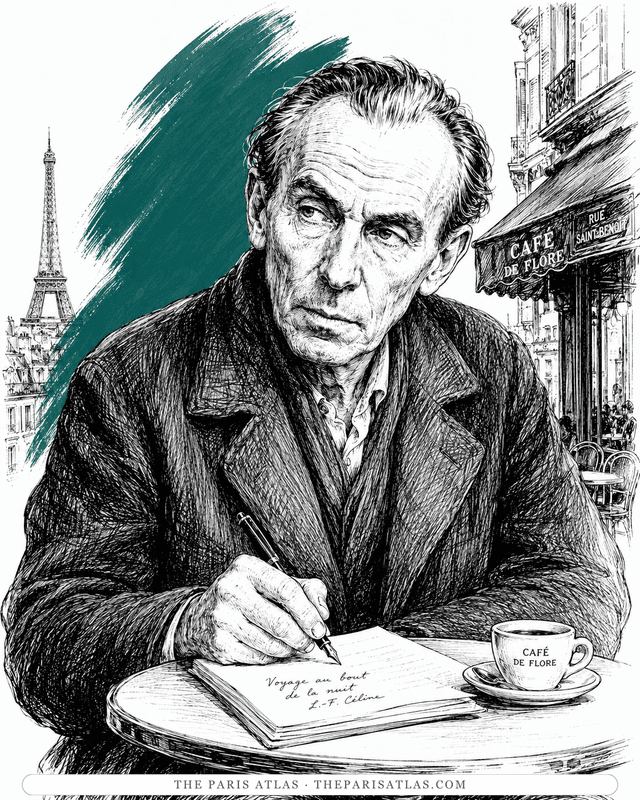
Louis-Ferdinand Céline
The doctor of the Paris slums who wrote the century's blackest, funniest novel — and changed the sound of French prose.
View author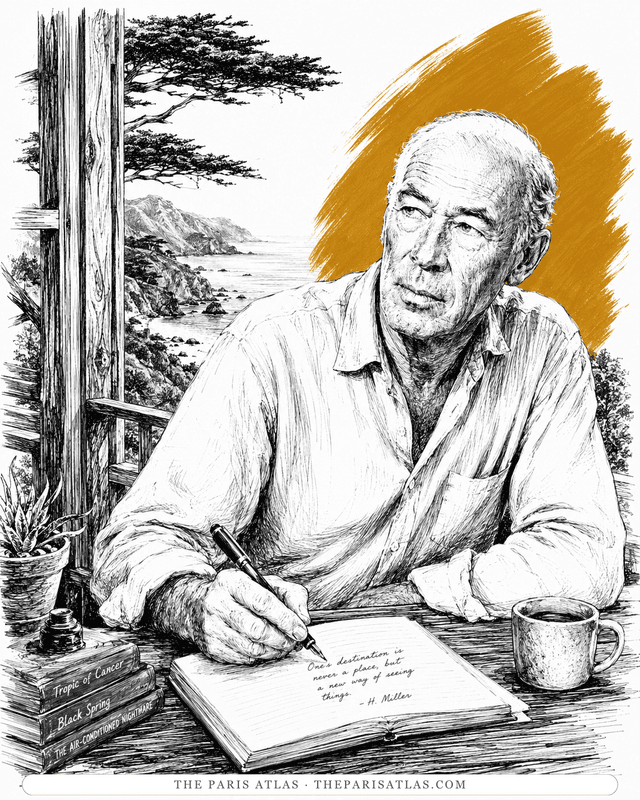
Henry Miller
The Brooklyn dropout who arrived in Paris broke at thirty-eight and wrote the exuberant, banned books that ended American censorship.
View author
Paul Bowles
American novelist and composer whose expatriate fiction explores dislocation, unstable intimacy, fatalism, and North Africa.
View author