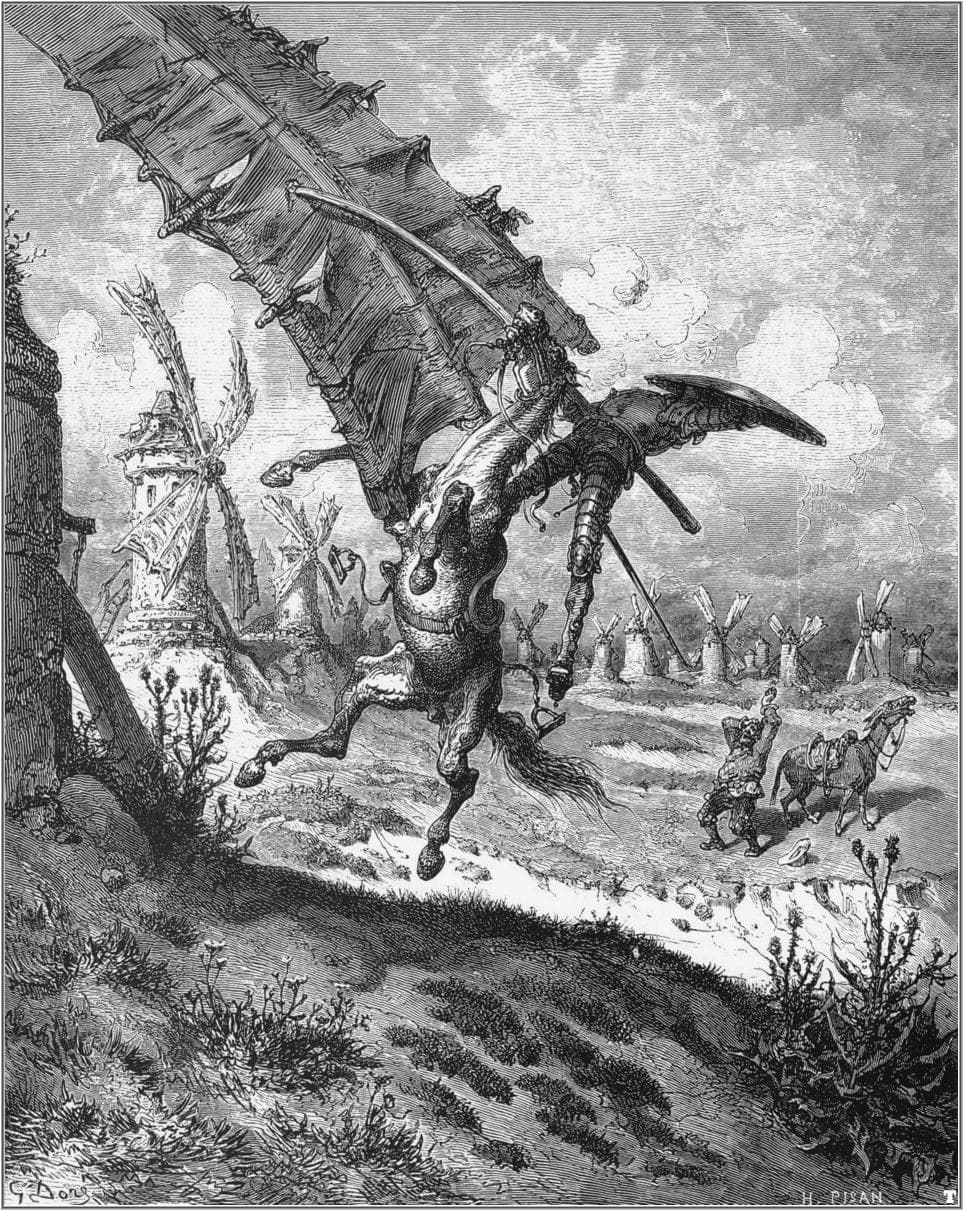
Don Quixote — the Doré illustrations
by Gustave Doré
The two-volume folio Don Quixote that Hachette published in 1863, with 370 Doré illustrations. Its gaunt knight, round squire and tilting windmills became the standard visual identity of Cervantes's novel.
- 1863
- Wood engravings after Doré's drawings
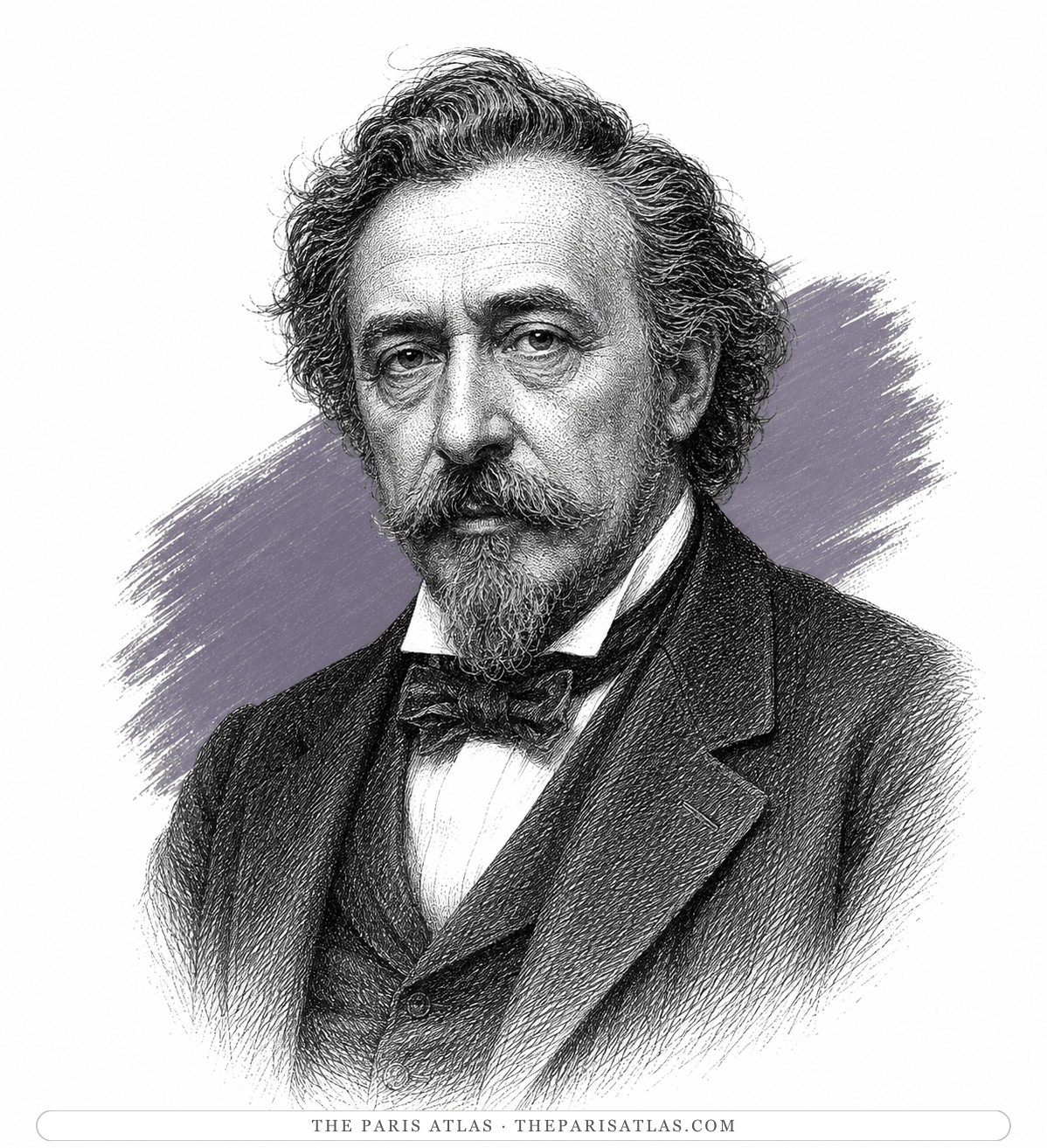
About Gustave Doré
The 1863 Hachette folio
After the triumph of the Inferno, Hachette put Doré onto Cervantes. The two-volume folio of 1863 carried 370 illustrations — full-page plates and vignettes woven through the text — and appeared in translation across Europe within a few years.
Doré had travelled in Spain, and the plates carry that landscape: sierra passes, roadside inns, village squares and dusty plains that gave northern European readers their picture of La Mancha.
The knight everyone now sees
Doré settled the visual identity of the two central characters: Don Quixote as a long vertical line — gaunt, armoured, chin raised — and Sancho Panza as a resigned horizontal one beside him. The windmill charge, the attack on the sheep, the vigil over the armour and the deathbed all took the compositions later illustrators, stage designers and filmmakers would reuse.
The plate of Don Quixote in his library, surrounded by a cyclone of imagined knights and monsters rising from his books, became one of the most reproduced images Doré ever made: the reader consumed by reading.
Close reading
Reading the work, detail by detail
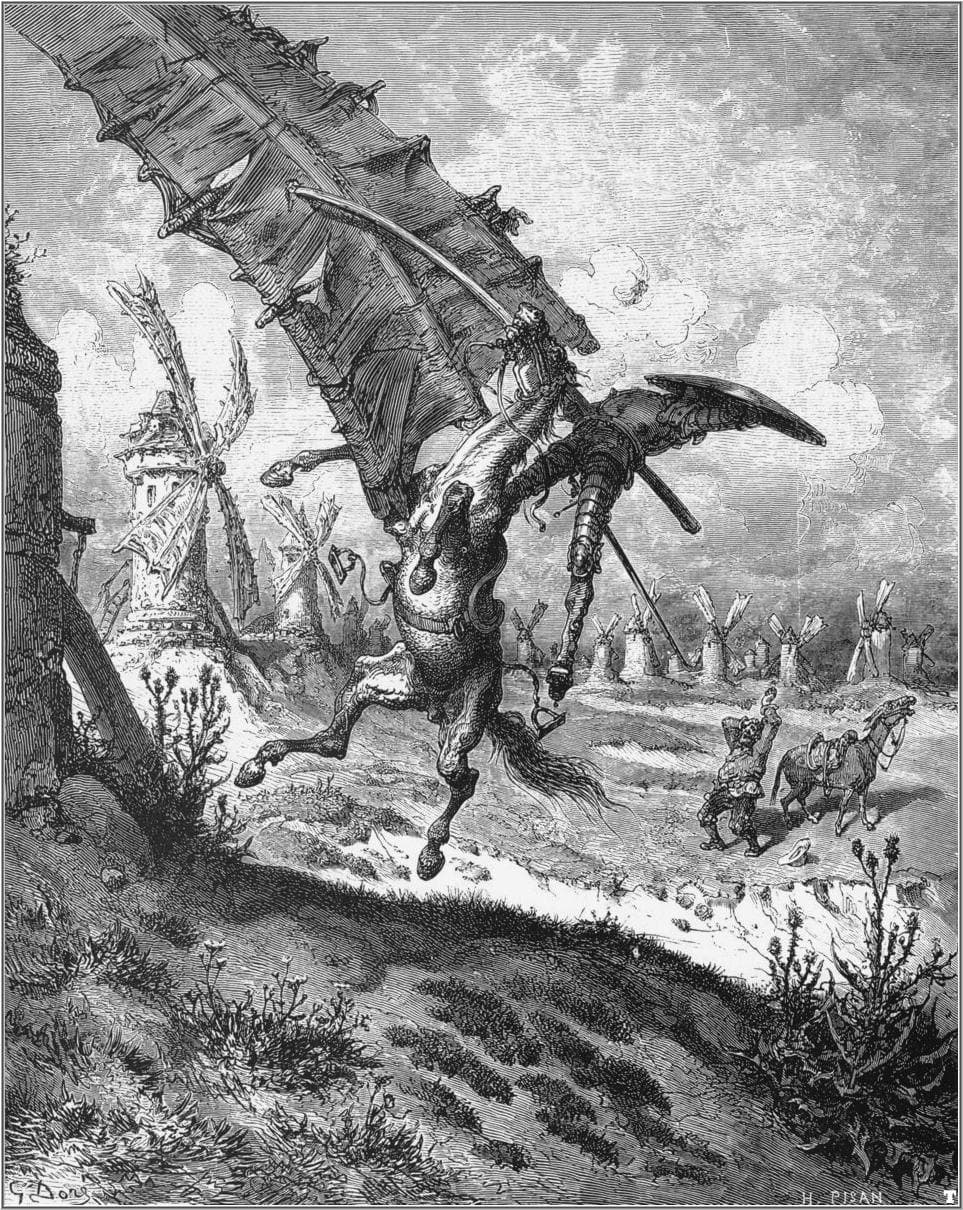
Doré's windmill charge fixes the contrast that made his Don Quixote so influential: a long, determined knight moving into a landscape that refuses his interpretation. The crops show fantasy, physical imbalance, and witness held in one scene.
1.Knight and horse commit to the same impossible diagonal
Lance, rider, and horse project forward as one precarious line. The thin vertical body Doré established for the knight becomes an instrument of conviction with almost no physical weight behind it.
2.The windmill remains stubbornly ordinary
The mill is large, solid, and legible as machinery. Doré does not paint the giant Quixote imagines; the comedy and danger depend on keeping reality plainly visible to everyone except the charging knight.
3.Sancho occupies the helpless witness position
Placed apart from the main diagonal, Sancho can see the action without stopping it. His smaller, steadier silhouette gives the viewer a place inside the scene's common sense.
4.The horse carries the cost of the fantasy
The horse's stretched body and planted legs make the attack feel physically difficult. Don Quixote's idea may be heroic, but Doré lets the animal show the weight and awkwardness of carrying it out.
5.The lance points before the rider can arrive
The lance creates a rigid line between knight and windmill. It converts an empty interval into a promised collision and makes the viewer anticipate the failure before it happens.
6.The enormous sky makes the charge look smaller
Most of the surrounding space is indifferent air and cloud. Against that scale, the knight's determined charge becomes both brave and absurd: a private drama taking place in a landscape that does not answer it.
Where to see it
A viewing location has not yet been listed for this work.
Frequently asked questions
When were Doré's Don Quixote illustrations published?
In 1863, in a two-volume folio from Hachette in Paris, with 370 illustrations. Translated editions carrying the same plates followed quickly across Europe and in England.
How many illustrations did Doré make for Don Quixote?
370 — a mix of full-page plates and smaller vignettes set into the text. The count is characteristic of Doré, who worked at a volume no other illustrator of the century matched.
What is the most famous Doré Don Quixote image?
Two compete. The charge at the windmills fixed how that scene has been pictured ever since. The library plate, showing Don Quixote reading while knights, giants and monsters swirl out of his books, has become shorthand for the novel itself.
Did Doré's plates change how people imagine Don Quixote?
Yes, permanently. The gaunt vertical knight and the round, earthbound Sancho Panza that most adaptations still use are Doré's inventions of 1863; later artists as different as Picasso drew Don Quixote and Sancho Panza against the memory of his plates.
Where can I see the Doré Don Quixote?
The plates are in the public domain and circulate in modern editions and online scans; rare-book libraries hold the 1863 folio, and original volumes appear on the collectors' market.
More by Gustave Doré
If you like Gustave Doré
Explore painters from the same movements and circles.
Tarsila do Amaral
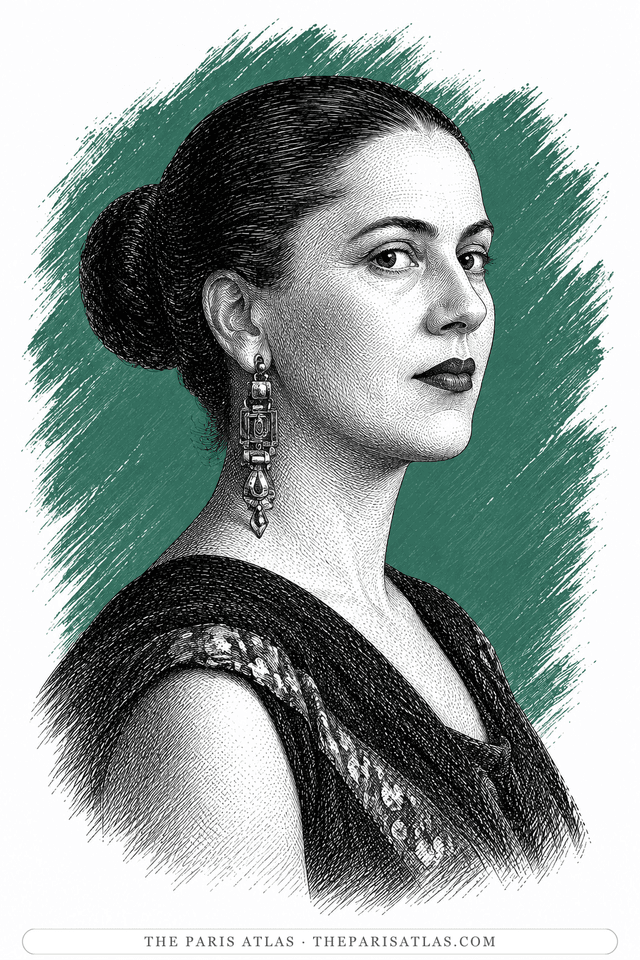
Brazilian painter who spent the 1920s moving between São Paulo and Paris, studied Cubism under André Lhote, Albert Gleizes and Fernand Léger, and used what she learned to paint Brazilian towns, railways, plants and bodies. Her 1928 painting Abaporu prompted the manifesto that gave the Anthropophagic movement its name.
View artist
Arman
French-American artist, lifelong friend of Yves Klein, and a founder of New Realism.
View artist
Jean Arp
Strasbourg-born sculptor and poet — Hans in German, Jean in French, both all his life — who co-founded Dada at the Cabaret Voltaire in 1916, composed collages by dropping torn paper 'according to the laws of chance', and settled at Meudon outside Paris in a house his wife Sophie Taeuber-Arp designed.
View artist
In images
References
The sources below include collection records, catalogues, scholarly research, and primary materials that informed this page. They document Don Quixote — the Doré illustrations, its making, and its place in cultural history.


1Gustave Doré
WebsiteWikipediaUsed forWeb source consulted for documented facts and historical context presented on the Don Quixote — the Doré illustrations page.
2Gustave Doré — Encyclopaedia Britannica
WebsiteEncyclopaedia BritannicaUsed forWeb source consulted for documented facts and historical context presented on the Don Quixote — the Doré illustrations page.
3La vie de Gustave Doré : une chronologie
WebsiteBnF EssentielsUsed forWeb source consulted for documented facts and historical context presented on the Don Quixote — the Doré illustrations page.
4Gustave Doré (1832–1883): Master of Imagination — exhibition
WebsiteMusée d'OrsayUsed forWeb source consulted for documented facts and historical context presented on the Don Quixote — the Doré illustrations page.
These references provide the documented foundation for this work's history and interpretation. Claim-level citations remain attached to the specific claims they support.
 Explore more resources