
The Long Hours
The near-contemporary wartime book, sharing this one's plain observation of public life.
Read our take
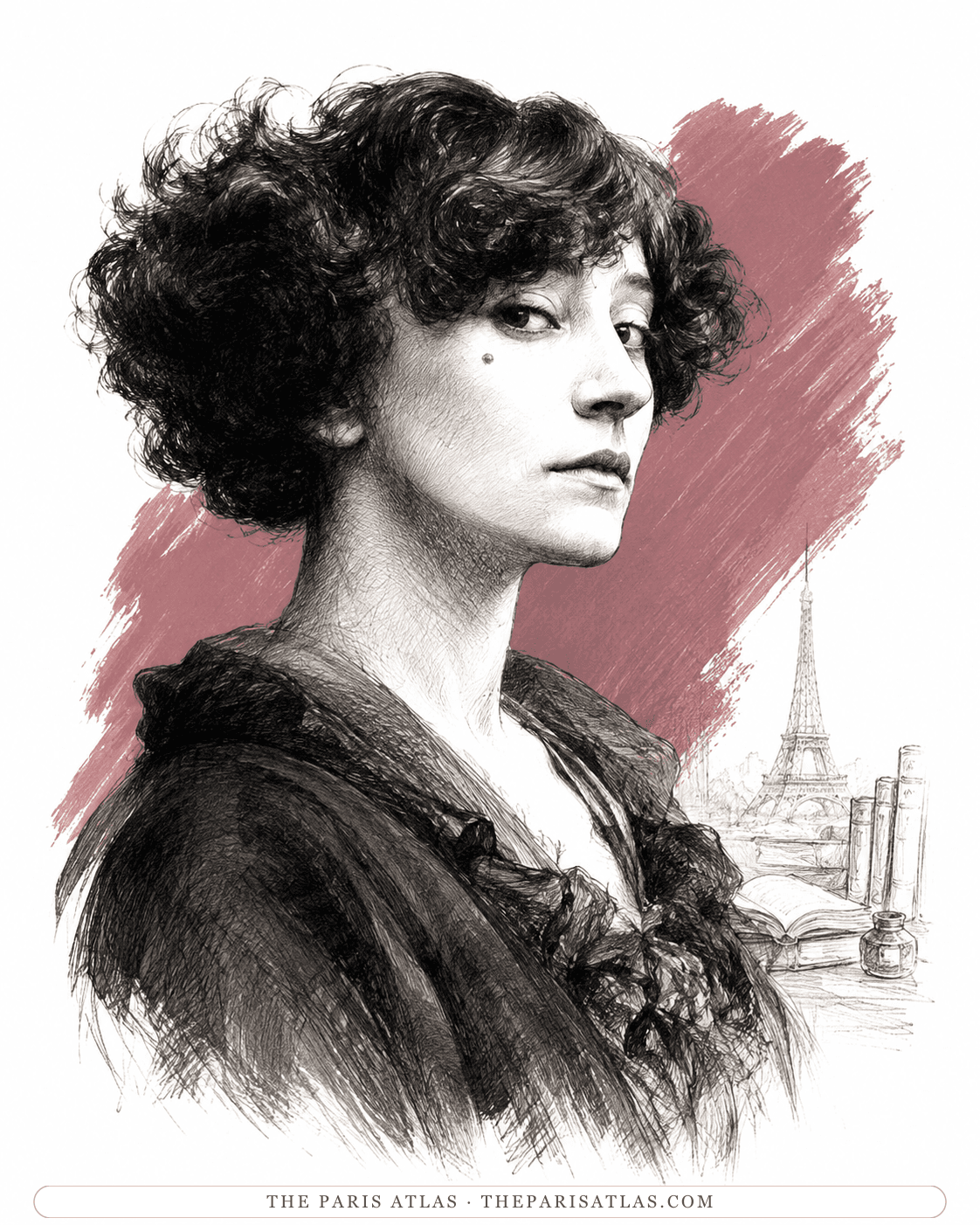
by Colette
Short chronicles of the street and the throng — Colette watching the anonymous life of the city pass.
In the Crowd is a collection of Colette's chronicles, published in 1918. Its French title, Dans la foule, names its subject: the anonymous life of the city seen from within the crowd — passing faces, social types, the flux of the street. The pieces continue the art of the newspaper chronicle Colette had been refining, with a stronger turn toward the public, urban, and impersonal. It is one of her less famous books, in part because it was never reissued on its own. (What's inside is described below.)
The book gathers sixteen short pieces, all new when it appeared, and its interest is the throng — the movement of people through the city, the momentary faces and habits a watchful writer can catch in passing. Where Colette's memory-writing turns inward, these chronicles turn outward, to the anonymous social world and the small comedy and pathos of the crowd.
Its relative obscurity is partly a matter of its publishing history. Unlike some neighboring collections, In the Crowd was never reissued as a separate commercial volume, though it was later reprinted intact within Colette's collected works. That is one reason it is less read than the books around it, and one reason a full account of Colette needs it.
It belongs with the wartime and post-war chronicles — The Long Hours and The Lighted Room — in which Colette was working out the observational manner that her later, more famous books would carry.
There is no plot. The book collects sixteen short chronicles, all previously unpublished, on the life of the crowd — passing faces, social types, and the flux of the city street. Colette watches the anonymous public world and catches its momentary figures, with the eye of a practiced newspaper chronicler.
The emphasis falls on the outward and the impersonal rather than on memory or the self. The book was never reissued as a separate volume, though it survives intact within Colette's collected works, which is part of why it is less known than the collections around it.
In “La Fin d’un Tour de France,” waiting spectators are swept into the race's noisy motor procession. The riders themselves remain almost silent, seeming less like rivals than prey pursued by the entourage. Colette includes her own car in the dangerous appetite for speed, so observation offers no innocent position outside the spectacle. The crowd's enthusiasm also obstructs the cyclists it celebrates. At the finish, the winner's distant legs seem tiny beside the mechanical storm they have set in motion. That reversal returns attention to bodily effort after the escort has threatened to swallow it.
In “Les voilà, les voilà !,” the narrator cannot see the approaching royal visitors, but she can observe her neighbors changing. Mockery gives way to cheers and tears; afterward, a critical remark about the queen's hat helps restore an appearance of composure. Public feeling is shown through these small reversals rather than reduced to one anonymous mass. The evening scene extends that interest: stalled cars become places for conversation and temporary familiarity. Even imperfect illuminations cannot exhaust the spectacle, because the people watching have become its most revealing subject.
Colette turns her attention outward to the crowd, catching the momentary faces and habits of the street.
Never separately reissued, it is one of the collections most readers miss.
It shows the observational manner Colette was refining before her more famous books.
1910–1915
Colette’s regular contributions to Le Matin supply the journalistic material from which the collection is selected.
1918
Dans la foule is published by Crès — sixteen chronicles of the city crowd, never separately reissued.
1949
The sixteen-piece collection is reprinted intact in Volume IV of the Le Fleuron collected works.
The near-contemporary wartime book, sharing this one's plain observation of public life.
Read our take

Colette's later chronicles of the city, meeting the next war from a fixed vantage.
Read our takeColette. Dans la foule was published in 1918, a collection of her chronicles about the life of the city crowd.
It gathers sixteen short chronicles on the anonymous public world — passing faces, social types, and the flux of the street — seen from within the crowd.
No. It is a collection of short chronicles without a continuous plot.
It was never reissued as a separate commercial volume, surviving intact only within Colette's collected works, so it is read less than the collections around it.
There is no securely verified standalone English edition of the book.
Explore authors with a similar voice, perspective, and influence.

The Brooklyn dropout who arrived in Paris broke at thirty-eight and wrote the exuberant, banned books that ended American censorship.
View author
The doctor of the Paris slums who wrote the century's blackest, funniest novel — and changed the sound of French prose.
View author
War correspondent who covered the Spanish Civil War, D-Day, and conflicts across five more decades; Hemingway's third wife, 1940–1945.
View authorThe sources below include the primary text, editions, scholarship, archival materials, and other records that informed this page. They document In the Crowd, its publication, and its place in literary history.


The primary text represented by this page, used for descriptions of the work’s contents and for any quoted passages shown here.
Complete La Fin d’un Tour de France, pp. 83–90, and contents confirming Les voilà ! les voilà ! in the Crès 1918 collection. The latter reading uses the separately cited later collected transcription; no edition collation, whole-volume or independent event verification.
Publicly indexed primary passages covering the waiting spectators, royal procession and evening illuminations, in the later Flammarion 1970 transcription, pp. 181–185. Collection membership independently checked in the 1918 Dans la foule contents. Not a collation with the 1918 text or a claim of complete source inspection.
The Société des amis de Colette bibliography verifies the original edition's publisher and publication date.
Used to place In the Crowd within Colette's published work and verify its bibliographic context.

Used for independent biographical, archival, or historical context surrounding Colette's career and the period in which In the Crowd appeared.
Used to cross-check authorship, chronology, and the work's place in Colette's wider catalogue.
Used to verify Colette's bibliography and place In the Crowd within the broader chronology of Colette's career.
Publication and revision history used for the timeline.
The primary text is the baseline reference for every book page. Additional references document publication history, interpretation, and historical context where that evidence is available.
 Explore more resources