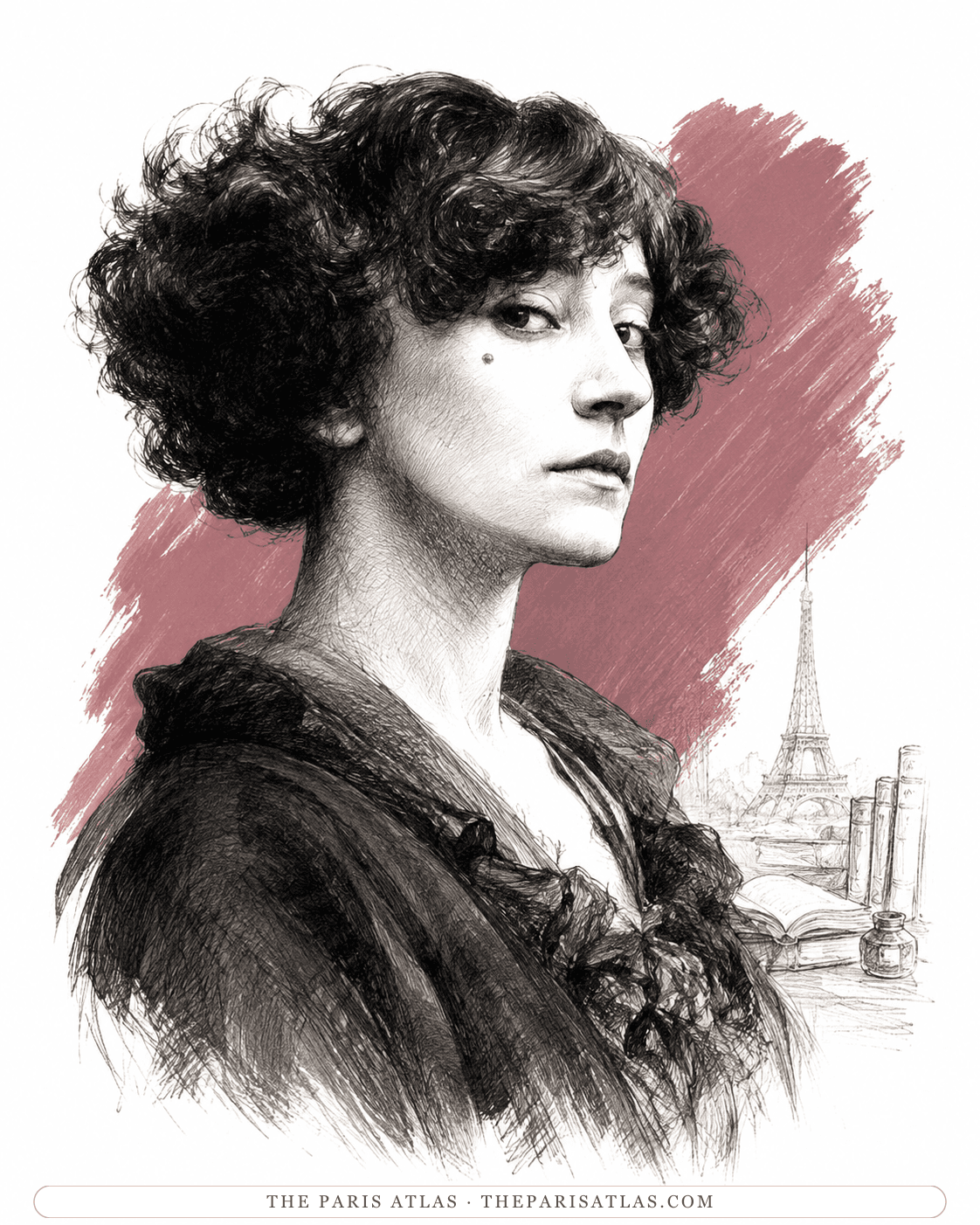


The Lighted Room
by Colette
Chronicles across a single year — wartime hardship and the urge to reclaim ordinary life, with the child Bel-Gazou at the edges.
- 1921
About Colette
The story, briefly
Spoiler-freeThe Lighted Room is a collection of Colette's chronicles, published in 1921. Its French title, La Chambre éclairée, gives the book its image: a room of light from which the writer watches and remembers. The thirty-one pieces move across a notional year, from midsummer to spring, and hold together the difficulty of wartime and just-postwar life and the strong wish to reclaim ordinary living from it. Among them are some of the first pieces about Colette's young daughter, called Bel-Gazou. (What's inside is described below.)
The story, in more detail
The book is a chronicle in the seasonal sense: its pieces are loosely arranged to run through a year, from late June around to spring, so that weather, festivals, and the turning light give shape to a collection with no plot. Its mood is double — the hardship and anxiety of the war years are present, but so is a determined reaching back toward pleasure, ordinary comfort, and the small reclaimed satisfactions of daily life.
It is also, quietly, a book of the household. Several pieces turn on Colette's small daughter, Colette de Jouvenel, whom she called Bel-Gazou — a child telling a story to her doll, a child at the cinema — and these are among the tenderest things in the collection. Around them sit ghosts, animals, letters, and the ordinary business of a Paris getting back to life.
The Lighted Room belongs with Colette's other chronicles of the late 1910s and early 1920s, In the Crowd and The Long Hours, and several of its pieces were later moved into other books — a reminder of how freely she rearranged her short prose across her career.
What's inside
There is no plot. The book collects thirty-one short chronicles, loosely arranged to run across a single year from midsummer to spring. The pieces hold two moods together: the hardship of the war and just-postwar years, and a strong wish to reclaim ordinary pleasure and daily life from it.
Among the chronicles are some of the earliest pieces about Colette's young daughter, Bel-Gazou — a child telling a story to her doll, a child at the cinema — set beside pieces on ghosts, animals, and the small business of a city returning to life. Several of the pieces were later moved into other Colette books.
Themes and analysis
The last hour of daylight
The title chronicle begins with Bel-Gazou singing about the shortage of fuel and candles while she herself is drenched in sunshine. Her exuberance makes the complaint oddly joyful, but the household's problem remains real. Moving the reading table onto the balcony prolongs usable daylight through a small adjustment of furniture and habits. As the book's page changes from the pink of sunset to blue, time becomes something the narrator can see passing across her reading. The scene holds pleasure and scarcity together: close attention extends the day without pretending that its light can be kept indefinitely.
Listening outside the door
Darkness troubles the narrator because of a known absence, not an imagined ghost: the familiar footstep she waits for will not sound on the floorboards. Bel-Gazou, by contrast, moves confidently through the house and fills her dark bedroom with songs, fragments of English and improvised speech. Listening outside the closed door, the mother describes that voice through images of sparks, shining water and crystal. The title's light is thus remade in sound. The child does not remove the absence, but her independent, unseen play gives the waiting listener another form of company before she accepts the night.
Why we recommend it
A year of ordinary life
The seasonal arrangement turns a set of chronicles into a quiet record of a city and a household coming back to life.
The first of Bel-Gazou
Some of the earliest and tenderest pieces about Colette's daughter appear here.
Hardship and pleasure together
The book holds the shadow of the war beside a determined reaching back toward daily comfort.
What this book explores
Bring it to book club
- The pieces are arranged to run across a year. How does the seasonal shape change a book with no plot?
- The Bel-Gazou pieces sit among war-shadowed chronicles. What does the child add to the book's mood?
- Several pieces were later moved into other books. What does that tell you about how Colette built her collections?
Timeline
1921
La Chambre éclairée is published by Édouard-Joseph — chronicles across a year, with the first pieces about Bel-Gazou.
1923
Stock’s Rêverie du Nouvel An regroups several pieces from the collection with Convalescence.
1948
Colette revises the collection for the Le Fleuron collected works, reducing it to fourteen pieces.
Book editions
Hardcover
- Hardcover
- 1921
Paperback
- Paperback
Ebook
- Ebook
Reader reviews
Readers may also like

The Long Hours
The wartime album whose concerns carry into this book's mix of hardship and recovery.
Read our take
Journey for Myself
The self-portrait book that later took up several of this collection's pieces.
Read our takeThe Lighted Room: frequently asked questions
Who wrote The Lighted Room?
Colette. La Chambre éclairée was published in 1921, a collection of her chronicles.
What is the book about?
It gathers thirty-one chronicles arranged across a single year, holding together the hardship of the war years and the wish to reclaim ordinary life, with early pieces about Colette's daughter, Bel-Gazou.
Is it a novel?
No. It is a collection of short chronicles without a continuous plot, loosely shaped by the turning of the seasons.
Who is Bel-Gazou?
Bel-Gazou was Colette's pet name for her daughter, Colette de Jouvenel. Some of the first pieces Colette wrote about her appear in this book.
Is The Lighted Room available in English?
There is no securely verified standalone English edition of the book.
If you like Colette
Explore authors with a similar voice, perspective, and influence.

Henry Miller
The Brooklyn dropout who arrived in Paris broke at thirty-eight and wrote the exuberant, banned books that ended American censorship.
View author
Louis-Ferdinand Céline
The doctor of the Paris slums who wrote the century's blackest, funniest novel — and changed the sound of French prose.
View author
Martha Gellhorn
War correspondent who covered the Spanish Civil War, D-Day, and conflicts across five more decades; Hemingway's third wife, 1940–1945.
View author
References
References
The sources below include the primary text, editions, scholarship, archival materials, and other records that informed this page. They document The Lighted Room, its publication, and its place in literary history.


1The Lighted Room
NovelColette, 1921Used forThe primary text represented by this page, used for descriptions of the work’s contents and for any quoted passages shown here.
2La Chambre éclairée — title chronicle, Édouard-Joseph text
WebsiteWikisourceUsed forFrench primary text: the complete title chronicle, pp. 9–14. The transcription labels its Édouard-Joseph edition 1920; used for close reading, not to resolve the existing page's 1921 publication date or compare editions.
3Colette — bibliography of original editions
WebsiteSociété des amis de ColetteUsed forThe Société des amis de Colette bibliography verifies the original edition's publisher and publication date.
4Société des amis de Colette — Chronology
WebsiteUsed forUsed to place The Lighted Room within Colette's published work and verify its bibliographic context.

5Bibliothèque nationale de France — The Worlds of Colette
Exhibition catalogueUsed forUsed for independent biographical, archival, or historical context surrounding Colette's career and the period in which The Lighted Room appeared.
6Library of Congress — Colette resource guide
WebsiteUsed forUsed to cross-check authorship, chronology, and the work's place in Colette's wider catalogue.
7Bibliothèque nationale de France — Colette: online resources
WebsiteUsed forUsed to verify Colette's bibliography and place The Lighted Room within the broader chronology of Colette's career.
8Colette — publication history of the lighted room
WebsiteSociété des amis de ColetteUsed forPublication and revision history used for the timeline.
i
Why these sources are here
The primary text is the baseline reference for every book page. Additional references document publication history, interpretation, and historical context where that evidence is available.
 Explore more resources