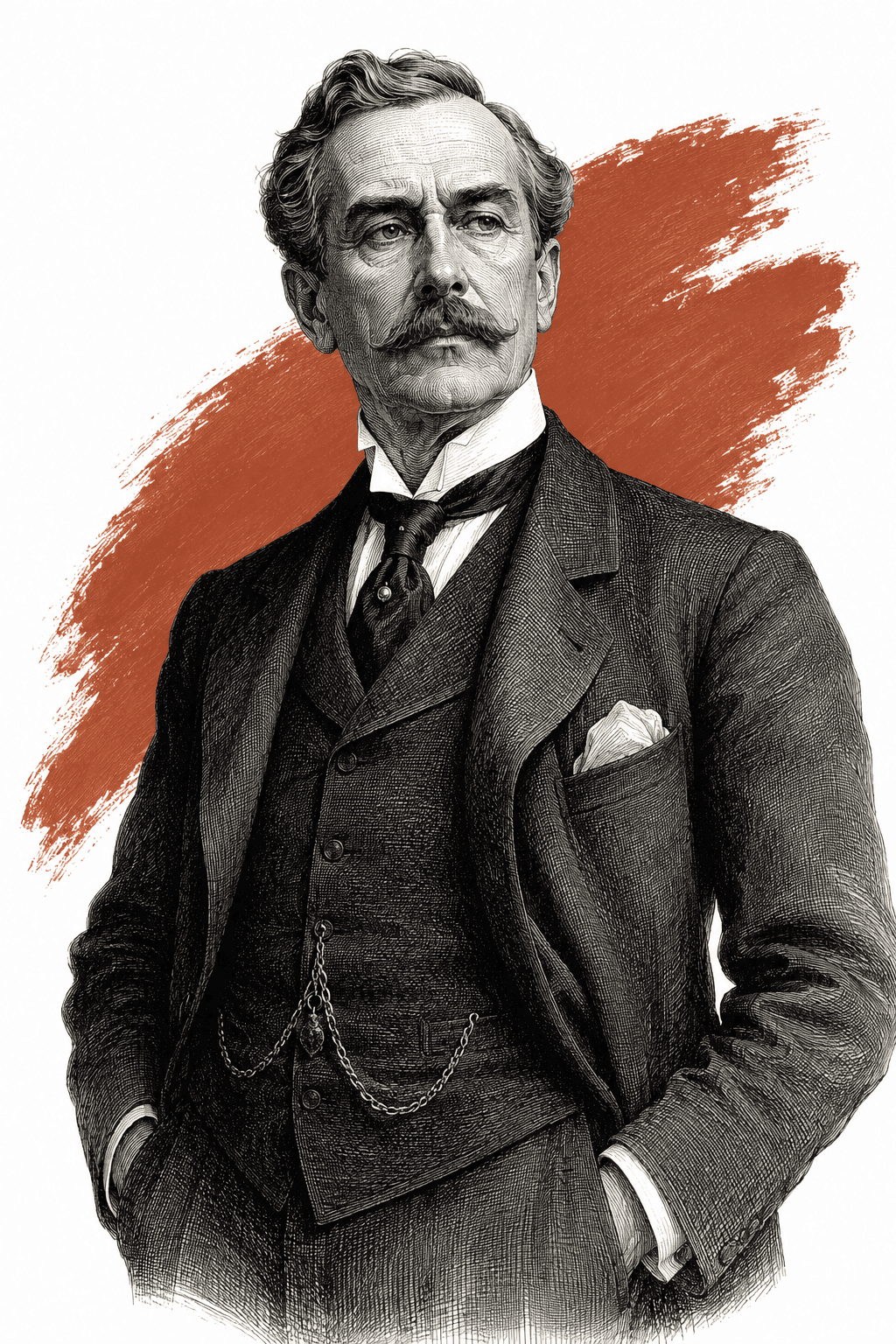
Léon de Carneilhan
Julie's brother and the country refuge she rides toward — the family and land she still belongs to when Paris fails her.
To keep his horses and owe nothing to anyone. Colette says outright that when he walks home at night he is going towards the thing he loves most in the world, which is the sound of his mares calling to him.
The book

At a glance
- Julie's elder brother, Count de Carneilhan
- Saint-Cloud, west of Paris — a yard, the stables, a ground-floor office and a bedroom above it
- Horses, ducks and suckling pigs, all of it sold up in the course of the book
- A captain, and, in his sister's phrase, a very dry leftover of one
- Hirondelle, nineteen and his own; Tullia, ugly, gentle and flea-bitten; La-Grosse. Gayant is the small man who works for him
- Their father still breaks colts at Carneilhan, the family house in the south-west. Léon is a bachelor and confides in nobody
Who they are in the book
Spoiler-freeLéon de Carneilhan is the elder brother of Julie de Carneilhan, the heroine of Colette's 1941 novel. He is a count with no money, an army captain who never rose any further, and he keeps horses, ducks and suckling pigs on a small place at Saint-Cloud on the western edge of Paris. He is the first person in the book to speak, and he opens the plot by walking into his sister's flat to tell her that her second husband has collapsed and may be dying.
The two of them look startlingly alike — the same grey-blond colouring, the same blue eyes, the same trick of wrinkling the nose, the same long jaw. They are also alike in temperament, which is why they get on badly and cannot do without each other. Colette says their friendship is the friendship of cats from one litter, who cannot play without drawing blood. Julie's own explanation is that they are too closely related to be friends.
He is the only person in the book who understands what is being done to his sister and says so. When she shows him the old receipt Herbert wrote for her million francs, he reads it slowly, holds it up to the light to check the watermark, and tells her the paper is worth nothing and that she should stay away from Espivant. Asked why, he gives one reason: she is not strong enough for him. He is right, and she ignores him.
He is also broke, and quietly going under. Over the course of the novel he sells everything he has — the animals, the yard, the business — and decides to walk his last three horses down to the family house in the south-west himself rather than send them by train.
How Léon de Carneilhan Is Portrayed
- He brings the bad newsHe arrives at his sister's flat unannounced, warms his hands, wrinkles his nose at the mirror exactly the way she does, and then says her husband is in a very bad way. Julie assumes he means Becker, the first one. No, he says, the second one, Espivant. He does not appear to enjoy telling her, and he does not soften it.
- The look of himGrey-blond, blue-eyed, narrow at the temples, with the jaw and chin running out into a muzzle. His hands are weathered by open air and rubbed smooth by the reins. Under his shirt Julie sees a hard, stripped body she says is all table corners, a body that barely feels anything and gives itself no quarter.
- What he lives onHorses, ducks and suckling pigs at Saint-Cloud, in a yard with the stables opening onto it, a bad little office on the ground floor and one bedroom above. That is the whole of his life and his sister knows very little more about it. His telephone has been cut off for three months because he stopped paying the bill.
- He cooks the supperWhen Julie's evening out collapses he asks what there is to eat, ties a red-striped kitchen towel under his jacket and makes an omelette with tinned tuna, finding a leftover of Isigny cream to pour into the salad. Neither of them looks ridiculous doing it, Colette says, because both of them are used to handling ordinary objects without embarrassment.
- He walks home through the woodsHe goes back to Saint-Cloud on foot at one in the morning, across the Bois, at a pace nothing tires. One night a man he did not like the look of came towards him and he dived into the thickest bush so suddenly and so far that the other man turned round and went back the way he had come. He is always in before six, and his horses hear him coming from a distance and start calling.
- What he thinks of his sister's second husbandThat the man is stupid, and has spent his entire life doing stupid things with a quick, intelligent air about him. His last marriage was supposed to be the stroke of genius, and look at it: if he himself had married a rich woman, Léon says, she would be polishing his boots. Then he adds that he is never going to marry a rich woman.
- He reads the receipt and says noJulie fetches the stamped sheet out of the box where she keeps Herbert's love letters and puts it in front of him. He reads it slowly and checks the watermark against the light. His opinion is that the fact she kept it is itself an opinion, and that otherwise the paper is of no interest at all — it dates from before that mess of a marriage, and nobody could stir it up now without everybody getting dirty.
- The mare he decided not to shootHe is sure the war is coming. His original plan was to sell off the piglets, shoot his mare Hirondelle and rejoin his regiment. When Julie asks after the mare later, he looks down and says he has changed his mind: Hirondelle is nineteen, she is still a beauty, and she has a right to finish her life, so he is going to walk her to the family house himself, taking the small roads from Le Mans on because the highways are wrong under her feet.
He sells up completely and comes for his sister before dawn with two saddled mares, a small cart and his man Gayant, to ride south-west to the family house. Julie has already been paid off by Herbert and has spent the night deciding not to go. She goes.
She hands Léon half of the hundred thousand francs to carry, and tells him Becker sent it to celebrate his sixtieth birthday. He counts the notes with visible disbelief and says nothing about it beyond a dry remark that she seems to be surrounded by saints and martyrs these days.
The last conversation in the book is his. He tells her it is a strange sensation to have money and no house instead of a house and no money, and that he needs to breathe — that his ribs ache from not having had the price of oats, or straw, or the saddler's bill, or the farrier's. Asked how long the journey will take, he says three weeks, three months, or their whole lives. He also says, without pressing it, that for him the road to Carneilhan is probably one-way, and that he is not sure she could say the same. Then they ride out, and Julie's last observation is that he at least is leaving with the thing he loves best in the world.
If you like Julie de Carneilhan


If you like Colette
Explore authors with a similar voice, perspective, and influence.
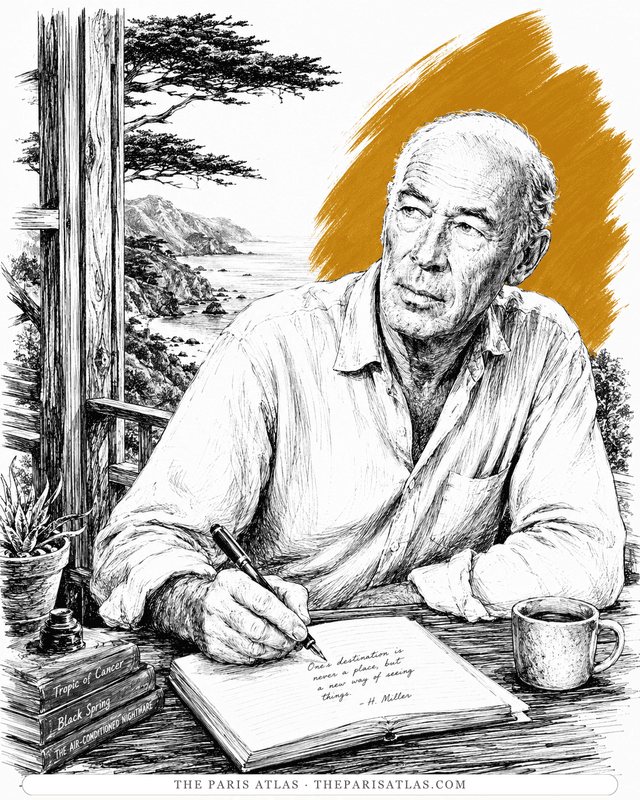
Henry Miller
The Brooklyn dropout who arrived in Paris broke at thirty-eight and wrote the exuberant, banned books that ended American censorship.
View author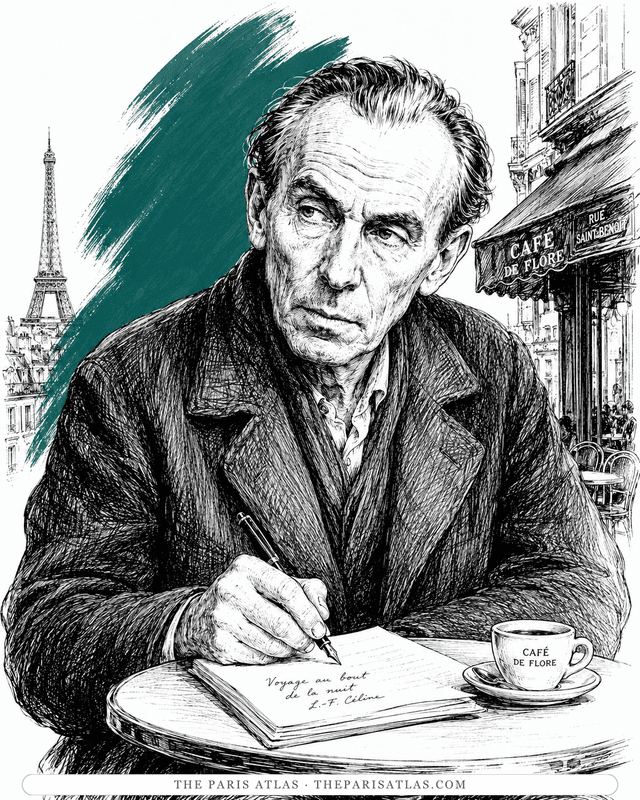
Louis-Ferdinand Céline
The doctor of the Paris slums who wrote the century's blackest, funniest novel — and changed the sound of French prose.
View author
Martha Gellhorn
War correspondent who covered the Spanish Civil War, D-Day, and conflicts across five more decades; Hemingway's third wife, 1940–1945.
View author