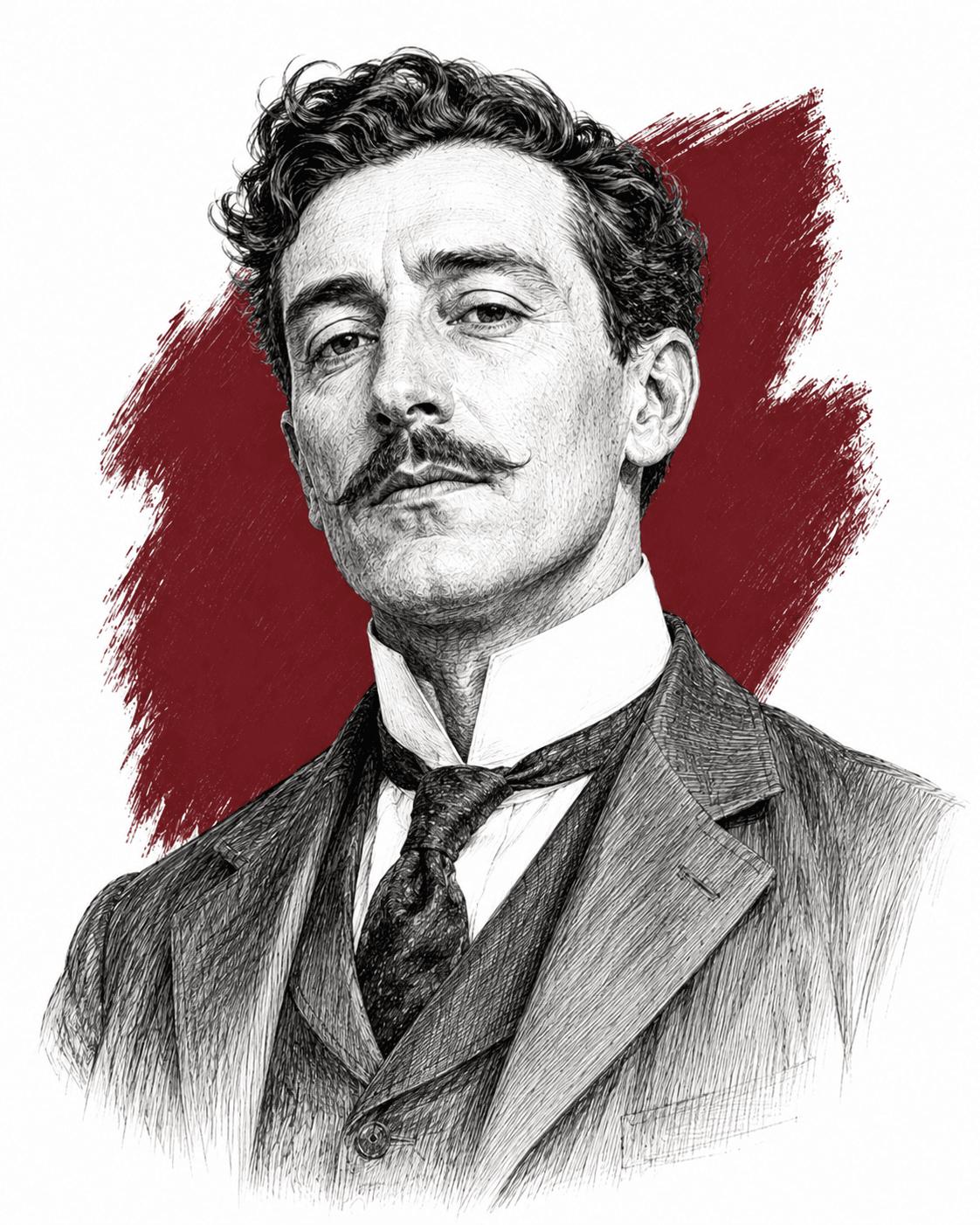
Minne
Older and married, and no closer to the fulfillment she was raised to want — a woman learning, badly then better, to read her own desire.
To feel what other women say they feel, and so to be, in her own repeated phrase, a woman like everybody else.
The book

At a glance
- Not stated. Five years have passed since the night she ran out of her mother's house at fifteen, and she has been married two years
- A flat on the avenue de Villiers near the place Pereire, in a new building where every floor has the same white bathroom and the same pearl-grey sitting room
- Antoine, her first cousin, who reconstructs ancient stringed instruments at the Pleyel piano works
- A hospital intern, an Italian composer called Diligenti whom Antoine had met at Pleyel, and Jacques Couderc, a baron of about twenty
- Irène Chaulieu, who trades on being the wickedest woman in Paris, and Henry Maugis, a critic in his forties who becomes the only friend she claims to have
- Her mother is dead. Her uncle Paul, who is also her father-in-law, is dying in a whitewashed room and holds her responsible for it; she wishes him dead and he curses her, and the two understand each other perfectly
- Lemon verbena, the same scent her mother used to put on her handkerchief for school. Three different men in the book notice it
Who they are in the book
Spoiler-freeThis is the same Minne as the 1904 novel, five years on. She is married to her cousin Antoine, lives in a new building on the avenue de Villiers in Paris, and orders the menus. Her mother is dead. The book opens with a twenty-year-old aristocrat walking down the avenue Gabriel saying out loud to himself that he is going to sleep with her that afternoon, and he does, in a rented ground-floor flat on the rue Christophe-Colomb, and it makes no difference to her whatsoever.
That is the subject. Minne feels nothing during sex and has never felt anything, and the whole novel is her methodical, private, increasingly humiliated attempt to fix it. She keeps count: two years married, three lovers besides her husband. She takes them the way a person tries remedies. She watches each man collapse on top of her and resents him for having what she was promised, and afterwards she puts her hairpins back in and goes home.
She tells nobody. Her friends discuss it constantly and she listens to them the way a patient listens to people describing a country she has not been to. She reads novels for technical information and finds them no help. She wonders, seriously and at length, why there is no such thing as a doctor for women who cannot feel, someone discreet who would ask what you feel here, and here, and whether there has been any improvement since last time.
What she does have is nerve. She is rude to people who cannot answer back, cool with people who can, and completely unembarrassed by her own body. She undresses in front of strangers without hurrying. She lets a private detective follow her across Paris for an afternoon and enjoys it. She is capable of real cruelty and knows it. The one thing that reaches her, when it comes, comes from an unglamorous forty-something man who declines to take her to bed.
How Minne Is Portrayed
- The afternoon she keeps countRiding home in a cab from a lover's flat, she does the arithmetic: that is the third, and no result. Her first lover had assured her that she was perfectly made for love, and she reasons that he must have known what he was talking about, since he was a hospital doctor. Then she decides that the fault is her husband's, and blames him a little more, the way she does after every failed adultery.
- How she undressesAt the flat on the rue Christophe-Colomb she takes her clothes off calmly and in order, and explains as she goes: she removes petticoat and skirt together so she can put both back on at once. She lines up her two rings and the ruby stud from her collar on the velvet of the mantelpiece. Then she says that when she was little her mother used to do her hair this way. Her lover, watching, finds all of this unbearable and asks her to swear she has never done it for anyone else.
- The doctor she wishes existedAlone one morning she thinks it through. If she is not a special case, if there are other women looking for what she is looking for, why is there no kind of doctor for women who feel nothing? They would be learned and discreet and would work by examination: what do you feel here, nothing, and there, describe what you experience, has there been any improvement since last time. She notes that nobody would laugh, because there is not much to laugh at.
- The novel she reads for instructionShe keeps a new novel by her and rereads the passage where the heroine sinks her nails into a man's shoulders and their eyes cross like daggers. Minne shuts the book and concludes that this settles the matter. Then she wonders what exactly her husband did with his bachelor years to have come out of them so uninformed.
- The advice she is givenHer friend Irène Chaulieu, a society hostess who has spent five years telling Paris that she is the wickedest woman in it, explains the practical solution: as long as you cry ah, ah, clench your fists and pretend to be suffocating, they are perfectly satisfied. Minne's private answer is that it may satisfy them, but it does not satisfy her.
- Eight days at the skating rinkIn March she starts skating at the Palais de Glace, going every afternoon with her skates rattling in a drawstring bag. The first days are bad, and she wakes up complaining of two new bones, very spiteful ones, planted along her shins. Then it comes. What she actually wants is to waltz on the ice the way an actress she watches does it, spinning until she goes pale and loses hold of everything, on the theory that the reward she is waiting for might arrive that way.
- The question round the tea tableAt a five o'clock with her friends, the women take turns describing what it is like. One says it is like a swing going too high, it cuts you in half, you come down and shout. When it is Minne's turn she pushes out her chin, plays the innocent and says «Vous comprenez, je n'ai jamais eu qu'Antoine…», meaning that she has never had anyone but her husband. The table laughs so loudly that two strangers turn round.
- The afternoon she loses the detectiveShe notices a shabby man behind her, decides he is following her out of lust, then sees him take out a notebook and understands that her husband is paying him. So she marches him across Paris for hours: the parc Monceau, the avenue de Messine, a long halt at a saddler's window counting studded dog collars, the faubourg Saint-Honoré, the dug-up rue du Quatre-Septembre with its planks and trenches. She loses him at the place de la Bourse by walking in one door of a building and out of another. That evening she recites the entire route back to her husband, street by street, so that he can check it against the report.
- The one man who is kind to herShe goes to the flat of Henry Maugis, a heavy, hard-drinking critic in his forties with a moustache and a light waistcoat, and undresses there as usual. When he picks her up to carry her to the bedroom she clings to him and begs him not to, then bursts into tears. He puts her back on the sofa, pulls her chemise straight, slides a cushion under her, dries her face and brings her a small glass of port. It is the first time in the book that anyone treats her as worth something other than desire, and she does not know what to call the feeling.
Jacques Couderc, the young lover she drops after two afternoons, will not go away. He follows her in the street and tells her he loves her, then that he will kill her, then that he will kill her and himself afterwards. Her face lights up. She tells him to do it now, himself first, hers is not urgent, and asks how he had not thought of it sooner. Then she makes him confirm, point by point, that love arrives without warning, that there are no other women once you love someone, and that it can strike anyone at any age. She is not consoling him. She is checking whether it could still happen to her.
Antoine takes her to Monte-Carlo on a work trip. On the second night, cold and unable to sleep, she tells him to get into her bed. She means it as payment for his patience and intends to fake the whole thing using Irène Chaulieu's method, crying ah, ah and thinking about something else. She manages it twice, is ashamed, and then stops having to. What her husband and three other men had failed to do for two years happens that night, and neither of them sees it coming.
Two days later Antoine comes back to the hotel room with the Paris papers. Jacques Couderc has been found at home with a bullet through his temple; the report rules out murder and says nobody can account for it. Antoine reads it out and asks, without any suspicion at all, whether the boy had been paying her some attention lately. Minne rubs her head against his sleeve and gives the last line of the novel: «Ça n'a pas d'importance, tout ça, mon chéri !», meaning that none of it matters now.
If you like Minne's Misadventures


If you like Colette
Explore authors with a similar voice, perspective, and influence.
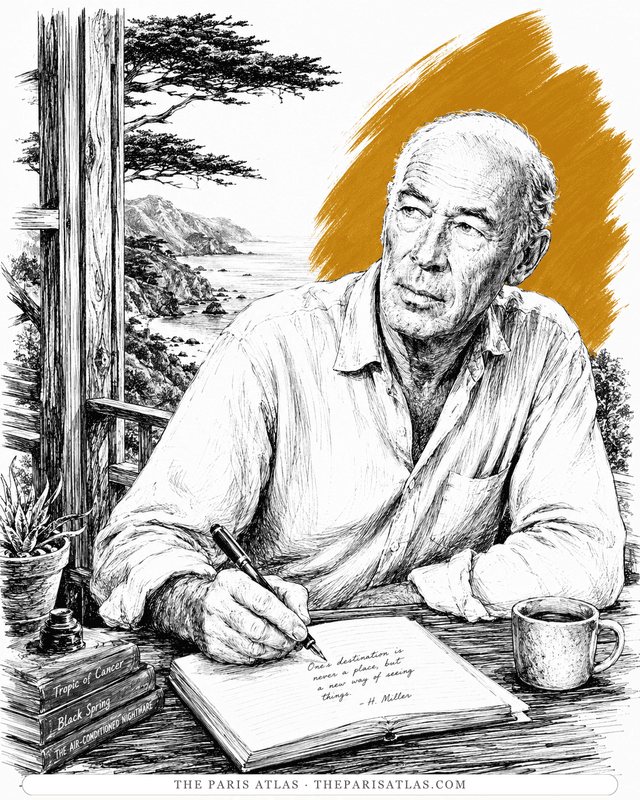
Henry Miller
The Brooklyn dropout who arrived in Paris broke at thirty-eight and wrote the exuberant, banned books that ended American censorship.
View author
Louis-Ferdinand Céline
The doctor of the Paris slums who wrote the century's blackest, funniest novel — and changed the sound of French prose.
View author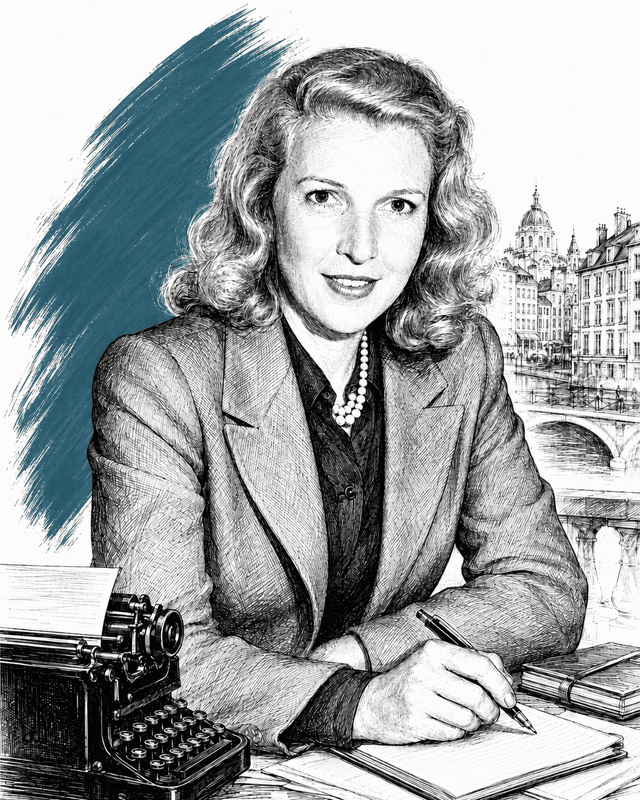
Martha Gellhorn
War correspondent who covered the Spanish Civil War, D-Day, and conflicts across five more decades; Hemingway's third wife, 1940–1945.
View author