Notes of a Native Son quotes about exile & expatriation
14 quotes on exile & expatriation from Notes of a Native Son by James Baldwin, each verified verbatim against the text and located in the book. Drawn from the 76 in the full collection.

About James Baldwin
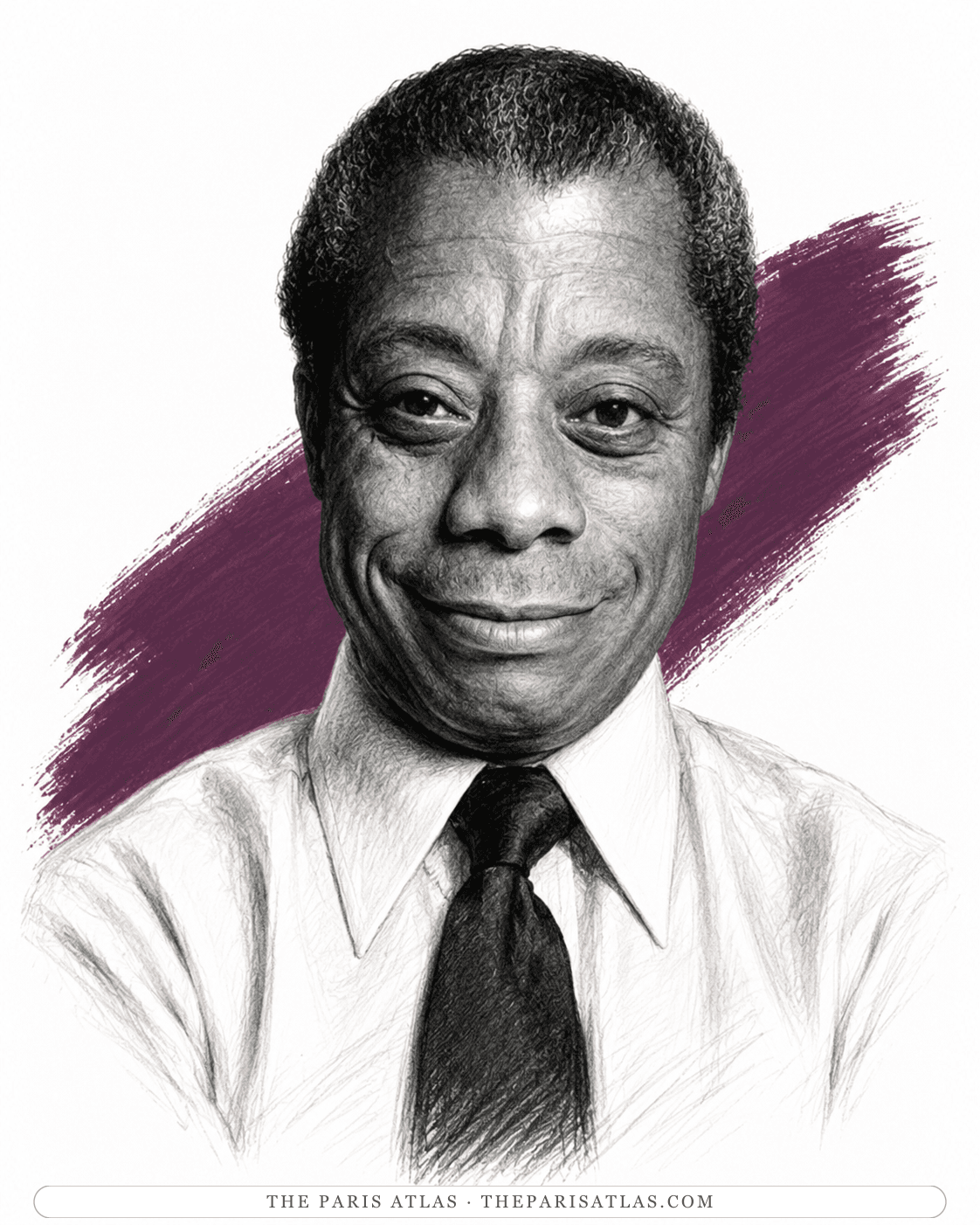
From the vantage point of Europe he discovers his own country.
Perhaps it now occurs to him that in this need to establish himself in relation to his past he is most American, that this depthless alienation from oneself and one’s people is, in sum, the American experience.
They are charmed by the reflection that Paris is more than two thousand years old, but it escapes them that the Parisian has been in the making just about that long, and that one does not, therefore, become Parisian by virtue of a Paris address.
They face each other, the Negro and the African, over a gulf of three hundred years—an alienation too vast to be conquered in an evening’s good-will, too heavy and too double-edged ever to be trapped in speech.
The American in Europe is everywhere confronted with the question of his identity, and this may be taken as the key to all the contradictions one encounters when attempting to discuss him.
The making of an American begins at that point where he himself rejects all other ties, any other history, and himself adopts the vesture of his adopted land.
He finds himself involved, in another language, in the same old battle: the battle for his own identity.
For Paris is, according to its legend, the city where everyone loses his head, and his morals, lives through at least one histoire d’amour, ceases, quite, to arrive anywhere on time, and thumbs his nose at the Puritans—the city, in brief, where all become drunken on the fine old air of freedom.
At this point, too, it may be suggested, the legend of Paris has done its deadly work, which is, perhaps, so to stun the traveler with freedom that he begins to long for the prison of home—home then becoming the place where questions are not asked.
That evening in the commissariat I was not a despised black man. They would simply have laughed at me if I had behaved like one. For them, I was an American.
From all available evidence no black man had ever set foot in this tiny Swiss village before I came.
Through this deliberate isolation, through lack of numbers, and above all through his own overwhelming need to be, as it were, forgotten, the American Negro in Paris is very nearly the invisible man.
Thus the sight of a face from home is not invariably a source of joy, but can also quite easily become a source of embarrassment or rage.
Later on I concluded that they were not being hypocritical or even trying to comfort us. They meant exactly what they said. It was only that they spoke another language.
Newsletter
Join our newsletter
New stories about art, literature and famous places around the world.