Notes of a Native Son quotes about identity
32 quotes on identity from Notes of a Native Son by James Baldwin, each verified verbatim against the text and located in the book. Drawn from the 76 in the full collection. Page 1 of 2.

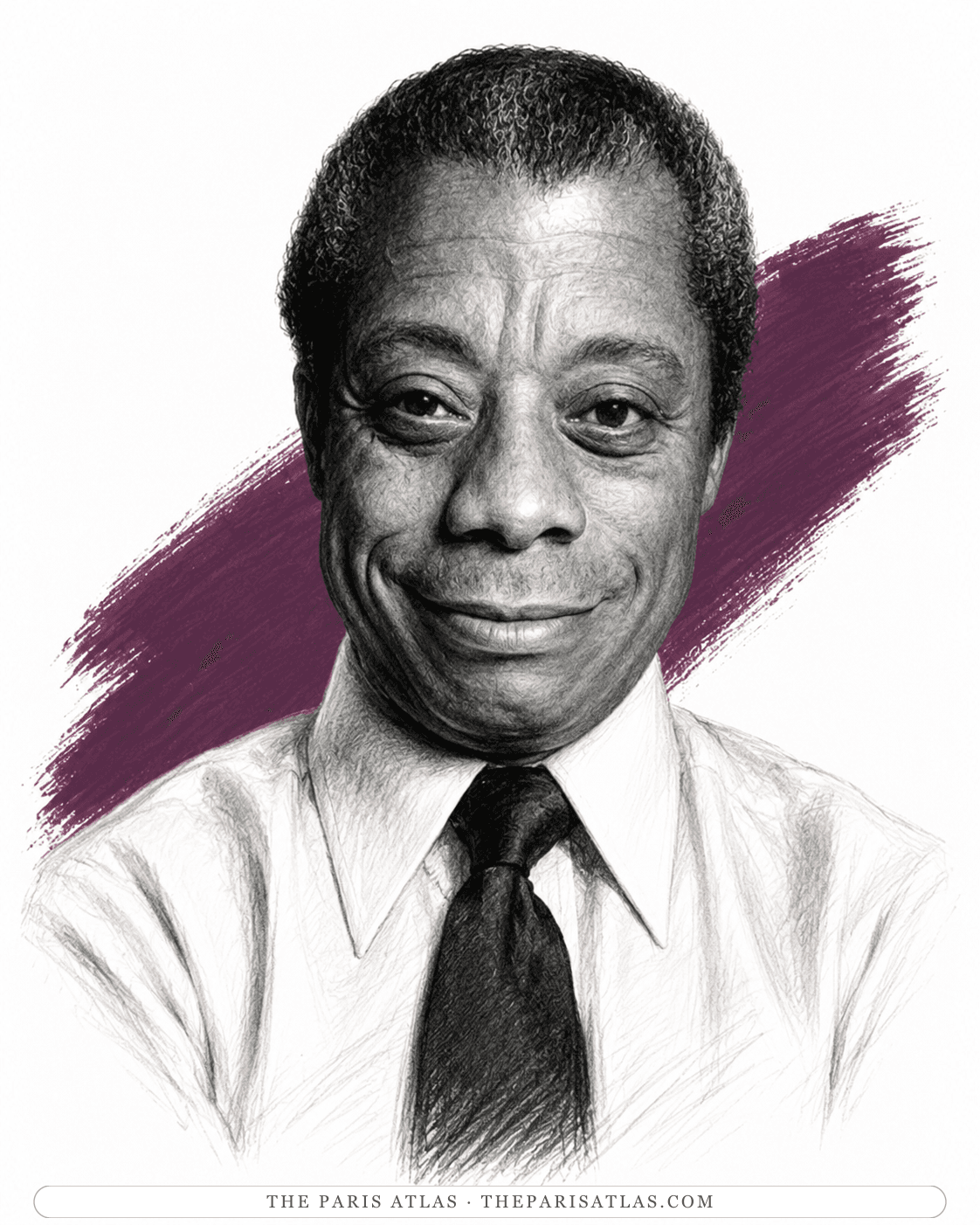
About James Baldwin
I love America more than any other country in the world, and, exactly for this reason, I insist on the right to criticize her perpetually.
Joyce is right about history being a nightmare—but it may be the nightmare from which no one can awaken. People are trapped in history and history is trapped in them.
People who shut their eyes to reality simply invite their own destruction, and anyone who insists on remaining in a state of innocence long after that innocence is dead turns himself into a monster.
One writes out of one thing only—one’s own experience. Everything depends on how relentlessly one forces from this experience the last drop, sweet or bitter, it can possibly give. This is the only real concern of the artist, to recreate out of the disorder of life that order which is art.
The story of the Negro in America is the story of America—or, more precisely, it is the story of Americans. It is not a very pretty story: the story of a people is never very pretty.
There is not a Negro alive who does not have this rage in his blood—one has the choice, merely, of living with it consciously or surrendering to it.
I want to be an honest man and a good writer.
From the vantage point of Europe he discovers his own country.
But our humanity is our burden, our life; we need not battle for it; we need only to do what is infinitely more difficult—that is, accept it.
Our passion for categorization, life neatly fitted into pegs, has led to an unforeseen, paradoxical distress; confusion, a breakdown of meaning. Those categories which were meant to define and control the world for us have boomeranged us into chaos; in which limbo we whirl, clutching the straws of our definitions.
It must be remembered that the oppressed and the oppressor are bound together within the same society; they accept the same criteria, they share the same beliefs, they both alike depend on the same reality.
Our dehumanization of the Negro then is indivisible from our dehumanization of ourselves: the loss of our own identity is the price we pay for our annulment of his.
Negroes are Americans and their destiny is the country’s destiny. They have no other experience besides their experience on this continent and it is an experience which cannot be rejected, which yet remains to be embraced.
The time has come to realize that the interracial drama acted out on the American continent has not only created a new black man, it has created a new white man, too.
Perhaps it now occurs to him that in this need to establish himself in relation to his past he is most American, that this depthless alienation from oneself and one’s people is, in sum, the American experience.
They are charmed by the reflection that Paris is more than two thousand years old, but it escapes them that the Parisian has been in the making just about that long, and that one does not, therefore, become Parisian by virtue of a Paris address.
I know, in any case, that the most crucial time in my own development came when I was forced to recognize that I was a kind of bastard of the West; when I followed the line of my past I did not find myself in Europe but in Africa.
In overlooking, denying, evading his complexity—which is nothing more than the disquieting complexity of ourselves—we are diminished and we perish; only within this web of ambiguity, paradox, this hunger, danger, darkness, can we find at once ourselves and the power that will free us from ourselves.
The failure of the protest novel lies in its rejection of life, the human being, the denial of his beauty, dread, power, in its insistence that it is his categorization alone which is real and which cannot be transcended.
They face each other, the Negro and the African, over a gulf of three hundred years—an alienation too vast to be conquered in an evening’s good-will, too heavy and too double-edged ever to be trapped in speech.
The most illiterate among them is related, in a way that I am not, to Dante, Shakespeare, Michelangelo, Aeschylus, Da Vinci, Rembrandt, and Racine; the cathedral at Chartres says something to them which it cannot say to me, as indeed would New York’s Empire State Building, should anyone here ever see it.
Go back a few centuries and they are in their full glory—but I am in Africa, watching the conquerors arrive.
The terrible thing about being a Negro leader lies in the term itself.
The American commonwealth chooses to overlook what Negroes are never able to forget: they are not really considered a part of it.
It is really quite impossible to be affirmative about anything which one refuses to question; one is doomed to remain inarticulate about anything which one hasn’t, by an act of the imagination, made one’s own.
Newsletter
Join our newsletter
New stories about art, literature and famous places around the world.