The Captain
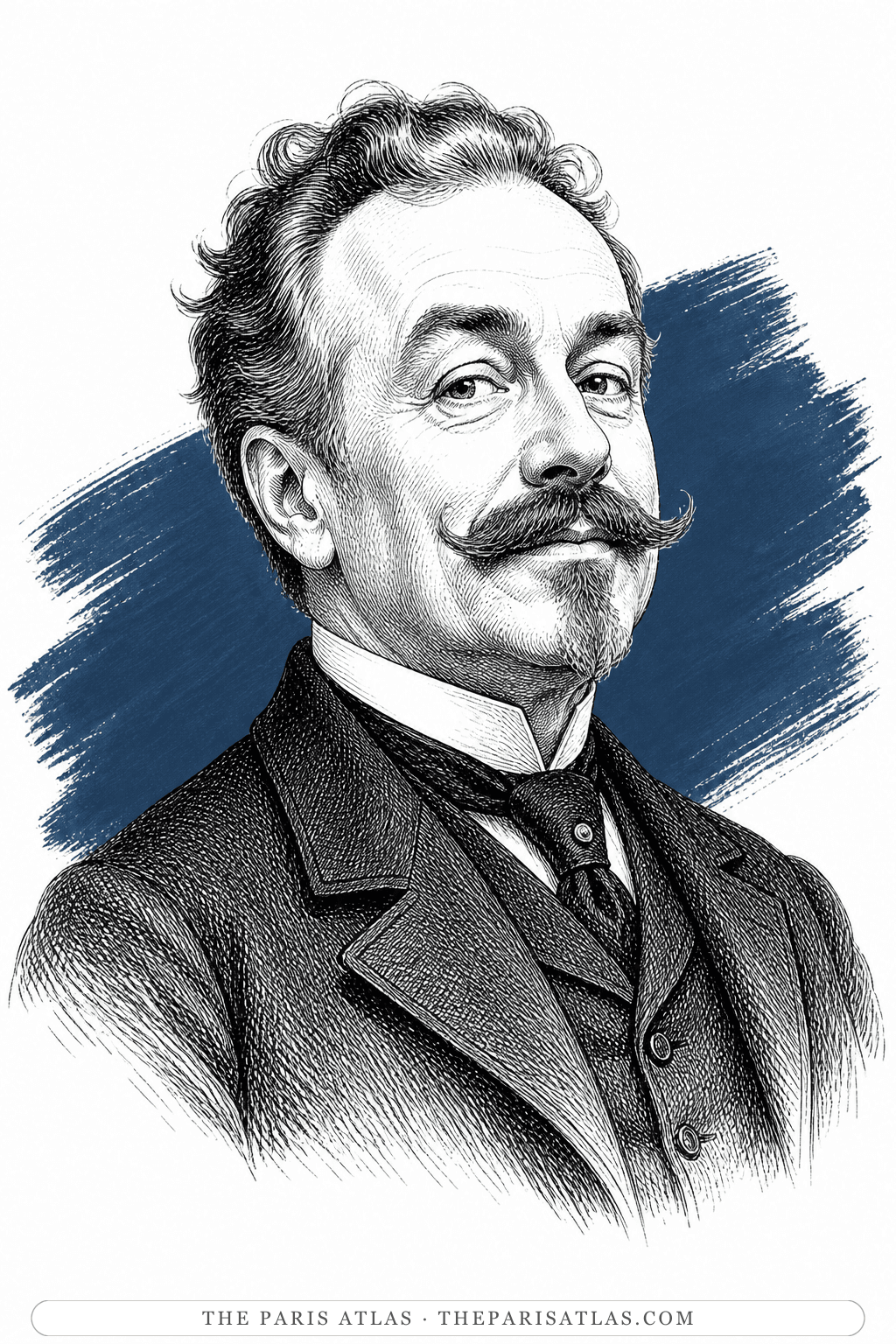
Colette's father, a one-legged former army officer whose quiet, deep devotion to Sido the book slowly uncovers.
To be alone with his wife. Colette writes that the four children spent his whole life interrupting the private conversation he wanted with their mother, and that he never learned how to talk to them.
The book

At a glance
- The subject of the second part, headed Le Capitaine, the Captain
- Jules-Joseph Colette
- Captain in the 1st Zouaves; wounded at Melegnano in Italy in 1859, aged twenty-nine, and lying near Marshal Mac-Mahon when it happened
- A dagger with a horn handle hiding a spring. He despised firearms, and Colette says he never killed anyone
- Bread, coffee, a great deal of sugar, half a glass of wine, tomatoes, aubergines. After seventy he took a little meat, as a medicine. He never put on weight
- His wife's land sold off in sequence: the Mées, the Choslins, the Lamberts, with the Forge next
- Village politics, municipal councils, regional committees, a candidacy for the departmental council
- Jules-Joseph Colette, the author's father · the south of France
Who they are in the book
Spoiler-freeThe Captain is Colette's father, a real man called Jules-Joseph Colette. He had been an officer in the French army, and in 1859, at twenty-nine, his left leg was torn off high on the thigh at Melegnano in northern Italy. He spent the rest of his life on a crutch and a cane in his wife's village in Burgundy. The second of the book's three parts is his, and it opens with his daughter admitting that she hardly knew him.
What the family took for granted about him fitted into three statements: he loved his wife beyond measure, he ruined her while meaning to make her rich, and she loved him steadily, ordered him about in daily life and never questioned a decision he made. The ruin was literal. Her farms went one after another to pay what he owed, and Colette remembers her mother's unspoken refrain about which property would have to be sold next.
He was a town man and a would-be poet marooned in the countryside, where his wife and children were happiest and he behaved like an exile. He liked the parts of village life that involved other people talking: municipal councils, committees, an attempt at a seat on the departmental council. He read his own verse aloud, sang in the street, told broad stories that stopped when his wife came in, and gave away almost nothing about the twenty-nine years he had lived before her.
How The Captain Is Portrayed
- The leg he lostHe was a captain in the 1st Zouaves, one of the French infantry regiments raised in North Africa, and he fell in front of Melegnano in 1859 with his left thigh torn away. Two men of the regiment ran out and carried him back, and asked him where they should put him. He told them to put him in the middle of the square, under the flag. He never told his family any of it. Colette learned the words decades later from one of his old comrades, a colonel who had kept his letters.
- What one leg did not stopHe swam faster and better than rivals with four limbs. In his sixties he could still swing himself up into the carriage in a single movement. In a rage he once kicked the marble surround of the fireplace to pieces with his one foot, and Colette says the damage is still there to be looked at in Saint-Sauveur.
- What he made for his daughterHe built her houses for may bugs, with glazed doors and windows, and boats. He was the keeper of the coloured pencils, the white paper, the rosewood rulers and the gold powder, handing them out and hiding them again, along with the large white sealing wafers for letters that she ate by the handful.
- Always too many adjectivesHe read his prose and his odes aloud to her and demanded a verdict, and at ten she gave him the same one twice: «Toujours trop d'adjectifs!» Always too many adjectives, she said, and reminded him that she had told him so the week before about his Ode to Paul Bert. He exploded and called her vermin. Colette thinks he went away and laughed.
- The evening he threatened a doctorHis stepdaughter Juliette, freshly and miserably married, swallowed a handful of pills, and a neighbour came to fetch her mother. He and Juliette had barely spoken in twenty years. He did not raise his voice. He said to tell the husband of his daughter, Doctor R., that if he did not save this child, by that evening he would have ceased to live. Colette was eleven, and what struck her was how beautiful it sounded.
- He sang his way down the streetA tenant refused to pay his rent, and a front man for the same tenant lent him what he needed at seven per cent for six months. He came home singing so that his wife would not ask whether he had managed to borrow a hundred louis, a large sum in gold coin, against the pension he drew as an amputated officer. Her own silent refrain ran through the list of properties going: after the Mées, the Choslins and the Lamberts, the Forge would have to go too.
- Pay, or you don't passHe listened for her quick step and stopped her as she went by, pointing at the bare cheekbone above his beard and ordering her to pay the toll. She paid with a kiss as quick as a pinprick and fled, annoyed, if any of the children had seen. One summer day, instead of asking, he bent his greying head over her hand and kissed it. Colette was thirteen and watching. Her mother turned red and left the room without a word.
- He stopped seeing herAs he got older he no longer saw his wife as she actually was. He would exclaim at yet another new dress. She would pinch the worn silk between two fingers and tell him it was three years old and had already been dyed navy blue. He had stopped listening, and had gone back to her as she looked when he first knew her.
- The rosetteHe came back from a trip to Paris with his eyes wet because the grand chancellor of the Legion of Honour had taken off his red ribbon and replaced it with the rosette of the next grade up, asking why he had never simply come and asked for it. He answered lightly that he had not asked for the ribbon either. Then he drove into the village with the rosette on his chest, sitting straight, his arm along the bar of his crutch, for the benefit of the first people he passed.
- No dog obeyed himColette never saw him touch a horse, and no dog ever did what he said. Told to get into the carriage, the dog Moffino stood by the step wagging its tail coldly and looking at her mother. When the little girl told it to jump, it jumped at once. He said this only proved the animal was stupid. Colette says he felt humiliated.
On the top shelf of the library stood a dozen volumes he had bound himself, with marbled boards and French titles handwritten in Gothic script, which mean My Campaigns, The Lessons of 1870, Elegant Algebra, Marshal Mac-Mahon Seen by One of His Comrades in Arms, From the Village to the Chamber, and Zouave Songs. The labels named no author. When he died and the library was turned into a bedroom, his eldest son took the books down and opened them. They were empty. Hundreds of pages of good laid paper, trimmed and bound, and nothing written on any of them. The family used the paper for prescriptions, for covering jam pots, for lining drawers, and never got to the end of it; Colette says her mother destroyed it with something like fever, out of pain rather than mockery. One page had been finished and signed, the dedication at the front: «A ma chère âme, son mari fidèle», signed Jules-Joseph Colette. To my dear soul, from her faithful husband.
Colette sets this beside an afternoon about twenty years after his death, when she visited a woman in Paris who claimed to speak with the dead. Without being told anything, the woman described an old man sitting behind her: an untrimmed, almost white beard, long grey hair pushed back, enormous eyebrows, and small eyes too bright to look at. She said he was much occupied with her at present, because his daughter was exactly what he had wished to be on earth and could not.
If you like Sido


If you like Colette
Explore authors with a similar voice, perspective, and influence.

Henry Miller
The Brooklyn dropout who arrived in Paris broke at thirty-eight and wrote the exuberant, banned books that ended American censorship.
View author
Louis-Ferdinand Céline
The doctor of the Paris slums who wrote the century's blackest, funniest novel — and changed the sound of French prose.
View author
Martha Gellhorn
War correspondent who covered the Spanish Civil War, D-Day, and conflicts across five more decades; Hemingway's third wife, 1940–1945.
View author