Billy Pilgrim
The awkward soldier and later optometrist who survives Dresden and experiences his life out of order.
To survive events he cannot control and find a view of time that makes death bearable.
The book

At a glance
- American soldier and POW
- Optometrist
- Unstuck in time
Who they are in the book
Spoiler-freeBilly is physically unprepared for combat and survives mainly through chance. After the war he builds a prosperous, conventional life while insisting that aliens taught him every moment exists forever.
His passivity can look like serenity, damage, or surrender. The book allows his time travel to be both a science-fiction event and a form for traumatic memory.
How Billy Pilgrim Is Portrayed
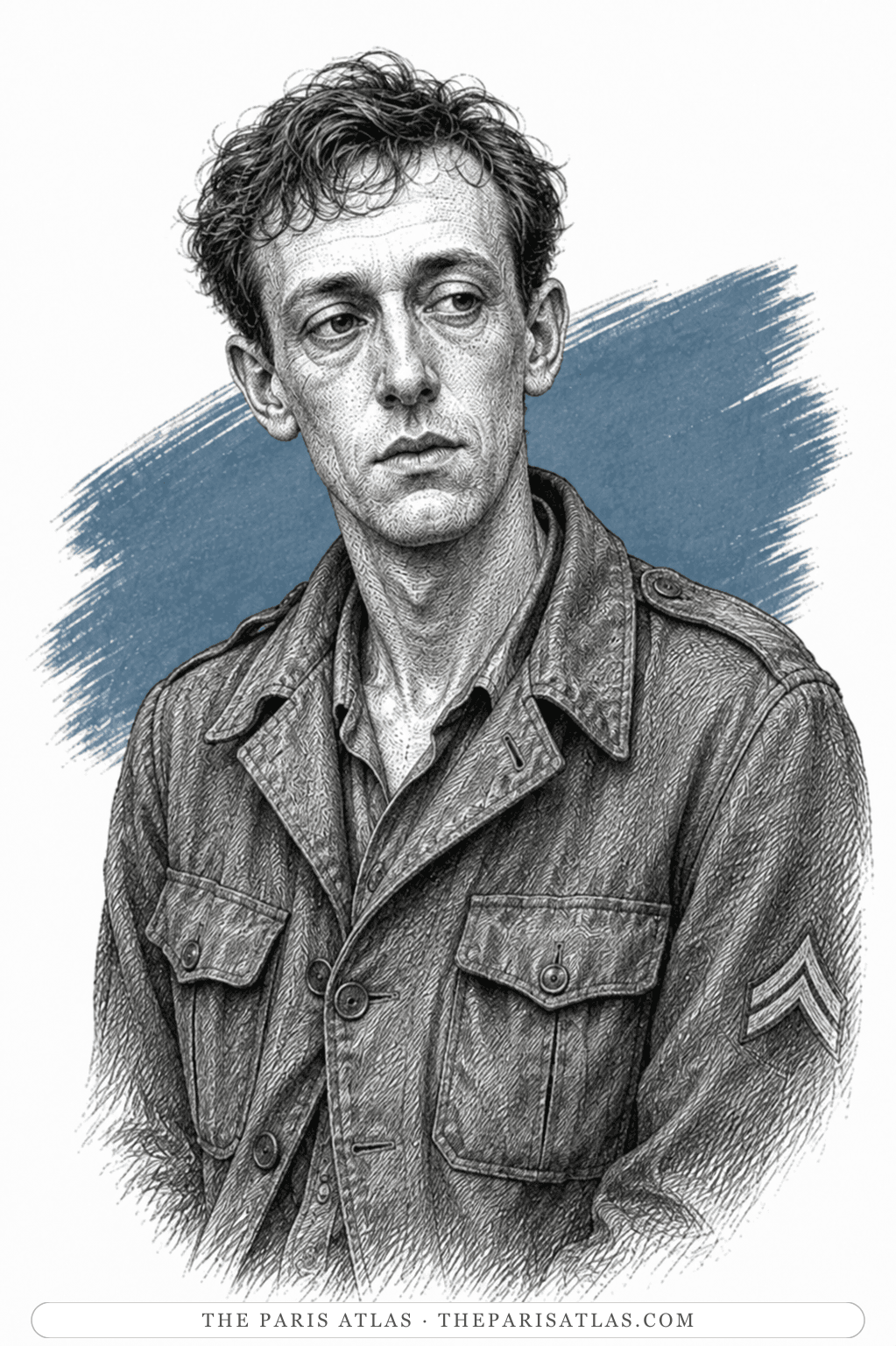
- Tall, thin manHis awkward build makes him an unlikely war hero.
- Oversized soldier’s clothingThe uniform appears borrowed rather than heroic.
- Mild distracted eyesHis attention seems fixed on another moment.
- Unglamorous postureNothing suggests martial confidence.
- Close engraved bustNo alien ship or battlefield appears.
- Dusty blue accentThe color varies the site portrait palette.
Billy survives Dresden and a later plane crash. Paul Lazzaro eventually has him assassinated, but the nonlinear structure presents his death as only one permanently existing moment.
If you like Slaughterhouse-Five


If you like Kurt Vonnegut
Explore authors with a similar voice, perspective, and influence.
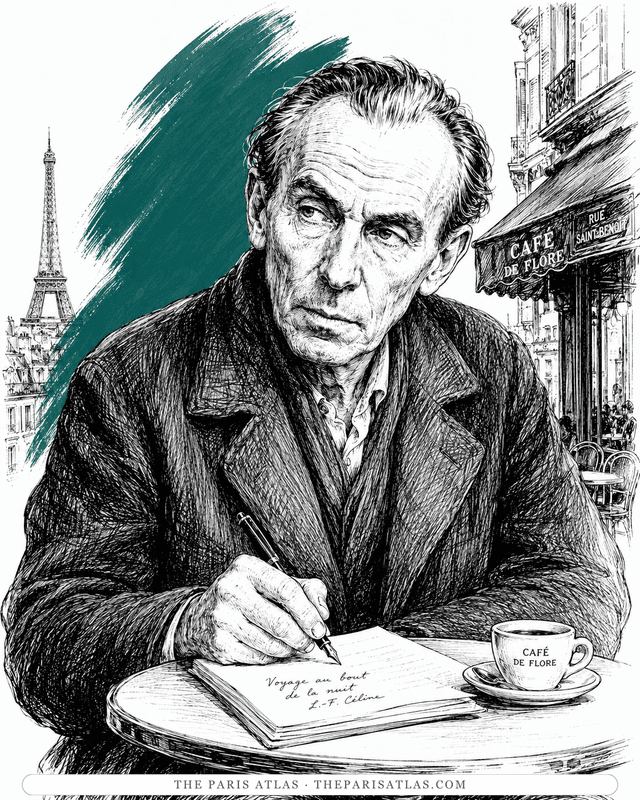
Louis-Ferdinand Céline
The doctor of the Paris slums who wrote the century's blackest, funniest novel — and changed the sound of French prose.
View author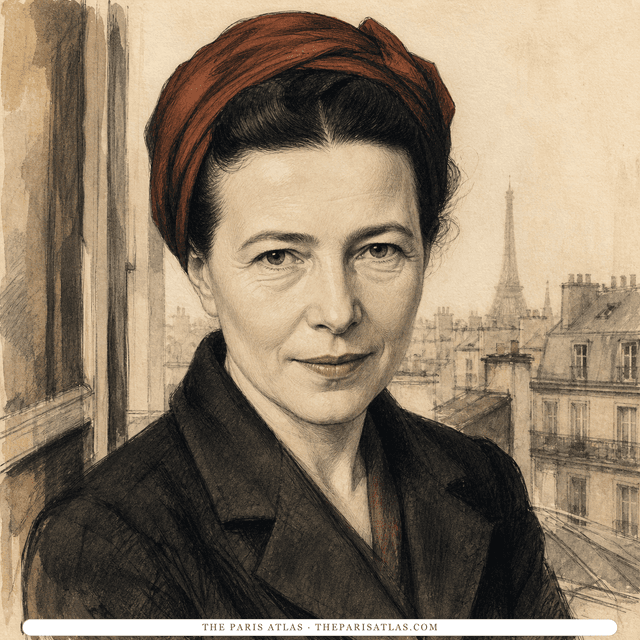
Simone de Beauvoir
French writer and philosopher whose novels, memoirs, and social analysis examined freedom, gender, responsibility, aging, and the material conditions that shape a life.
View author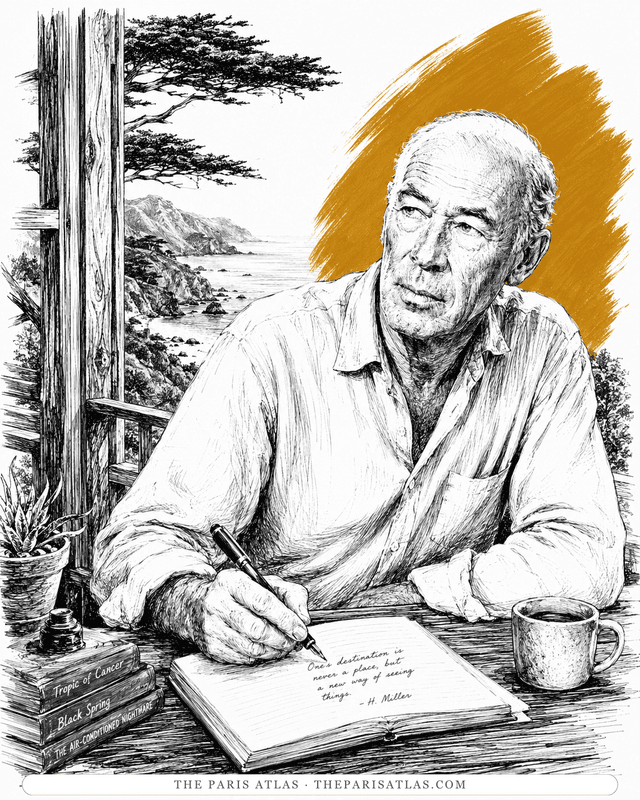
Henry Miller
The Brooklyn dropout who arrived in Paris broke at thirty-eight and wrote the exuberant, banned books that ended American censorship.
View author