
Winter of Artifice
Her permanent home: Stella opens the collection in its standard editions.
Read our take
by Anaïs Nin
The film actress whose screen self outgrew her: Nin's most portable novella, and the character who wandered her books looking for a home.
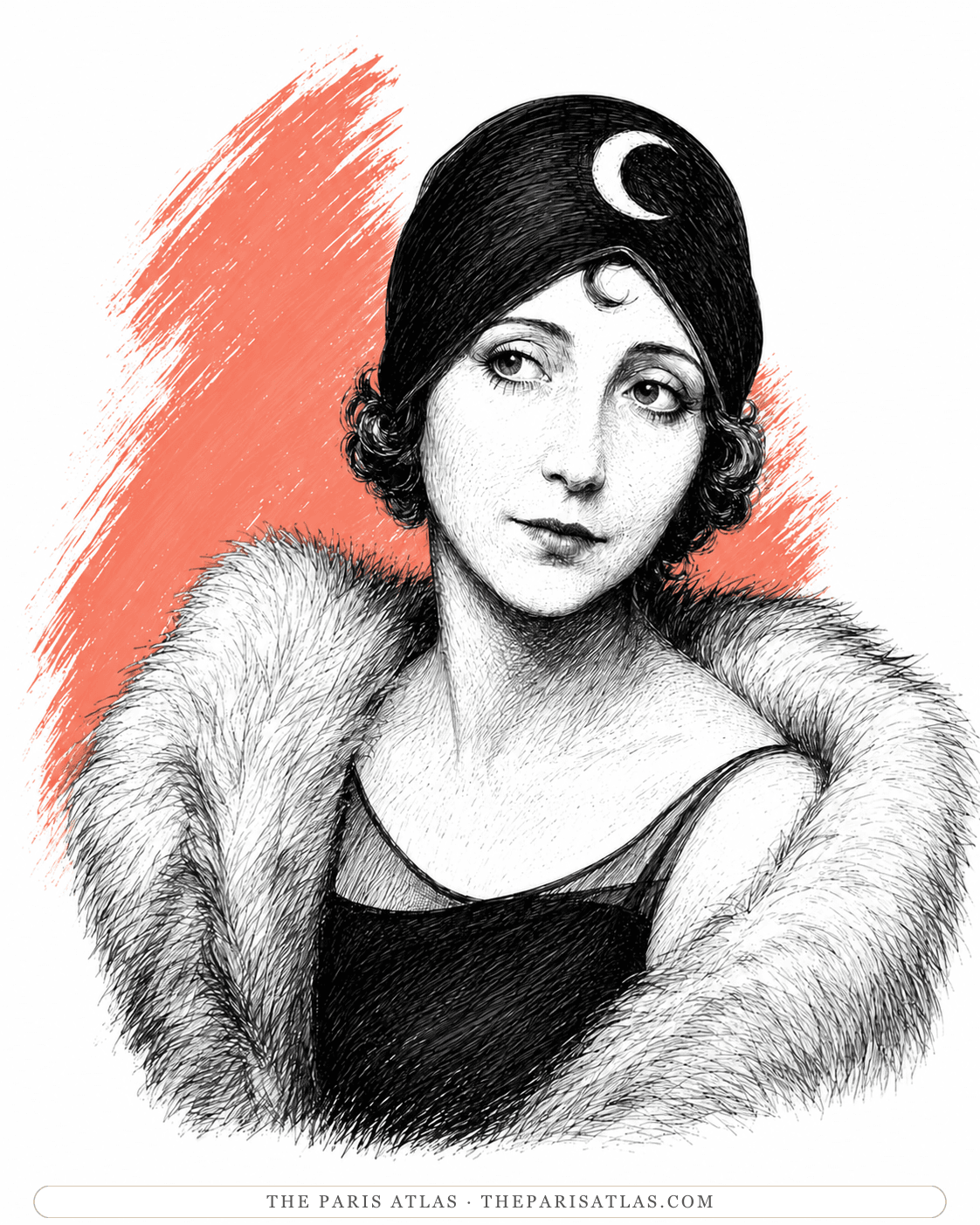
Stella is a film actress whose luminous screen presence keeps growing while the woman who produces it shrinks — from intimacy, from claims, from the love offered by the men drawn to the image. Nin's novella-length portrait is her most compact statement of the divided-woman theme, and its publishing history is a journey in itself: printed first in This Hunger (1945), carried into the first edition of Ladders to Fire, then settled permanently as the opening novelette of the Winter of Artifice volume. (A portrait, not a plot — little here to spoil.)
Stella's textual wanderings tell a story about Nin's whole method. The portrait first appeared in This Hunger, the 1945 book from her own Gemor Press; Dutton's Ladders to Fire opened with it in 1946; and when Nin reorganized the continuous novel for the Swallow editions, she moved Stella out — the sequence belonged to Lillian, Djuna, and Sabina — and gave her the lead position in the Winter of Artifice collection of novelettes, where readers find her today. A character too complete to cut, too separate to keep: the books kept adjusting around her.
The material is drawn, as always, from the life around the diary — the figure of the actress split from her image owes much to Nin's friendship with the film world's exiles and aspirants in the New York years. The novella distills the theme the novels kept elaborating: the public self as a performance that pays the bills and starves the performer.
A portrait in Nin's interior mode. Stella, a small dark actress with an enormous screen presence, watches her celluloid double grow confident and beloved while she herself retreats — double-locking doors, testing lovers, unable to believe the adoration aimed at the image includes the woman. Two men anchor the study: the possessive, married Bruno, and the polished Philip, each in love with a different fraction of her. The novella works through the divisions — child and star, image and woman, the deserted daughter still inside the famous face — toward Nin's characteristic destination: not an event, but a recognition.
Stella's screen image does not simply hide a ready-made private self. In the passages discussed by Emma Sterry, Stella calls it her double, yet her attempt to act only herself leads to another difficulty: no available play can contain the person she wants to reveal. That movement makes acting both a source of estrangement and a possible means of discovery. The question is not only whether the audience mistakes the role for the woman, but whether Stella can recognize herself without the roles through which she has learned to appear.
In The Novel of the Future, Nin explains that she retained Stella's clothing, stairway and telephone because they mattered to the emotional drama, while omitting much conventional description. Her selection makes objects work as cues rather than proof that a room has been completely furnished. A reader has to follow their relation to feeling, not assemble an exhaustive floor plan. The spareness can thus increase the pressure on a gesture or a pause: fewer surrounding details are available to distract attention from what the character cannot settle.
Everything the long sequence does — doubles, masks, the watched self — in eighty-odd pages.
The gap between image and person, written before the culture made an industry of it.
As the volume's opener, she leads readers into Nin's best collection of short fiction.
1945
The portrait appears in This Hunger, hand-printed at the Gemor Press.
1946
Dutton's first edition of Ladders to Fire opens with Stella.
1961
Reorganizing the sequence, Nin moves the novelette to the Winter of Artifice volume, where it now leads.
1996
The novella at last appears as a separate edition under its own cover.
Her permanent home: Stella opens the collection in its standard editions.
Read our take

The other full-length divided woman — Sabina's masks to Stella's screen.
Read our takeA novella-length portrait by Anaïs Nin of a film actress whose adored screen self keeps growing while the private woman shrinks from intimacy — her most concentrated treatment of the divided-woman theme.
The text first appeared in 1945 inside This Hunger from Nin's own Gemor Press, then opened the 1946 first edition of Ladders to Fire, settled in the Winter of Artifice volume — and finally received a separate edition under its own cover in 1996.
It briefly was — the first edition of Ladders to Fire opened with it — but Nin cut it when she reorganized the sequence around Lillian, Djuna, and Sabina, and moved Stella to Winter of Artifice instead.
In the Swallow Press Winter of Artifice volume, where it stands first among the three novelettes.
Nin drew on the actresses and film-world figures of her New York circle, but the portrait is a composite built around her lifelong theme of the self divided from its image.
Explore authors with a similar voice, perspective, and influence.

The entangled careers of the Villa Seurat: she financed and prefaced his scandal, he detonated her prose — and each wrote the other into the century's record.
View author
The doctor of the Paris slums who wrote the century's blackest, funniest novel — and changed the sound of French prose.
View author
War correspondent who covered the Spanish Civil War, D-Day, and conflicts across five more decades; Hemingway's third wife, 1940–1945.
View authorThe sources below include the primary text, editions, scholarship, archival materials, and other records that informed this page. They document Stella, its publication, and its place in literary history.


The primary text represented by this page, used for descriptions of the work’s contents and for any quoted passages shown here.
Used to verify Stella's bibliographic context and its place within Anaïs Nin's published work.

Used for independent archival, institutional, or historical context surrounding Anaïs Nin and Stella.
Used to cross-check chronology, publication history, and the circumstances in which Stella appeared.
Used for an additional scholarly or biographical perspective on Stella and Anaïs Nin's wider career.
Printed pp. 258 and 263–264: selected quotations from Stella in the Peter Owen 1991 Winter of Artifice; not a complete or original-edition reading.
Public Introduction: Nin's retrospective account of the objects selected for Stella's emotional drama.
The primary text is the baseline reference for every book page. Additional references document publication history, interpretation, and historical context where that evidence is available.
 Explore more resources