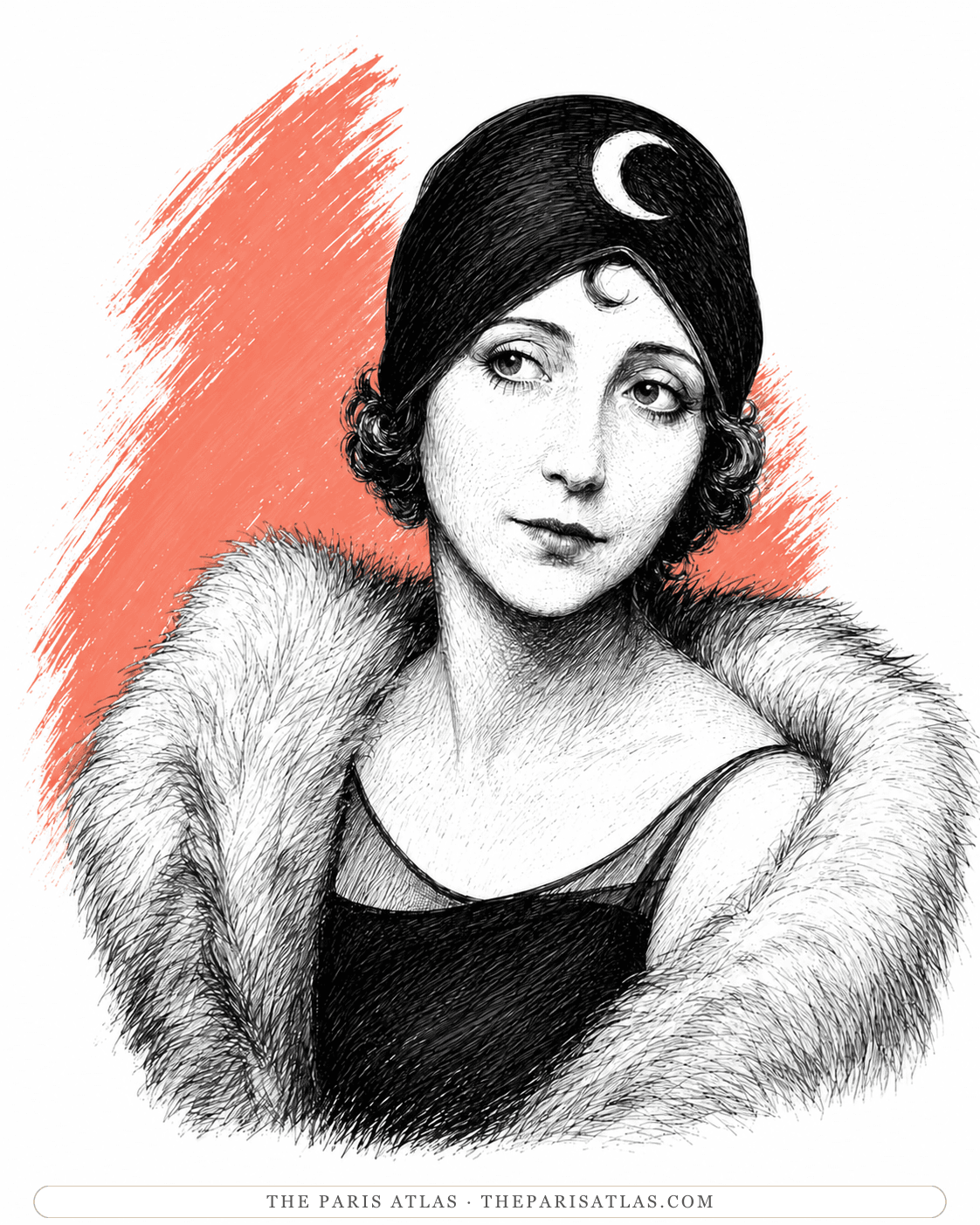


This Hunger
by Anaïs Nin
Hand-set on Nin's own Gemor Press in 1945: the portraits of women that grew into the continuous novel.
- 1945
About Anaïs Nin
The story, briefly
Spoiler-freeThree linked portraits — Hejda, Stella, and Lillian and Djuna — of women caught between what they want and what they allow themselves. Nin set the type herself at her Gemor Press in New York, with engravings by Ian Hugo, after commercial publishers had turned her fiction away. Within a year the material was absorbed into Ladders to Fire, and the little book became a collector's object. (Portraits, not a plot — nothing here to spoil.)
The story, in more detail
By 1944 Nin had stopped waiting for publishers. With Gonzalo Moré she ran a hand press in Greenwich Village — the Gemor Press — and printed her own books, setting type page by page. Under a Glass Bell had come off the press the year before and caught Edmund Wilson's attention; This Hunger followed in 1945, the press's most ambitious project, illustrated with engravings by Ian Hugo, the name her husband Hugh Guiler used as an artist.
The portraits were not an end in themselves. Nin was assembling the cast of what she would come to call the continuous novel: Lillian, Djuna, and Stella all carry forward into the novels that began appearing with Ladders to Fire in 1946, which absorbed most of this book's text. This Hunger is the seam between Nin the private printer and Nin the published novelist.
What's inside
Three character studies of women. Hejda, a painter out of the Middle East, sheds one confinement — the veil — for subtler ones inside a marriage to another artist. Stella, a film actress, watches her screen self grow confident while the woman offscreen shrinks from the love offered her. Lillian, a pianist whose force masks anxiety, is set against Djuna, the observer who understands more than she can use. The prose works the way Nin's diary works: interior weather first, events second.
Themes and analysis
Lillian’s forceful kitchen
In the version collected in Ladders to Fire, Lillian's cooking turns ordinary preparation into an assault. Verbs of conquest and destruction animate ingredients and utensils before the description transfers that force to her relationships. The kitchen is therefore more than a colorful demonstration of temperament: it makes the difficulty of directing her energy visible. Activity can produce a meal while still carrying aggression, just as emotional intensity can seek contact and damage it. The passage's movement from food to people prevents vitality from being mistaken for uncomplicated freedom.
Djuna’s impossible voyage
Djuna's childhood recollection in that collected text complicates the idea of dreams as simple escape. Her imagined voyages enlarge the world available to her, yet waking makes deprivation feel sharper. She even wonders whether dreaming exhausts her more than household labor. The impossible ship belongs to this costly abundance: pleasure is vivid, but she has learned to expect punishment after it. Her account turns hunger into a conflict between wanting an experience and fearing its price. Imagination supplies possibilities without automatically releasing her from that fearful accounting.
Why we recommend it
The continuous novel's seed
Lillian, Djuna, and Stella make their first appearances here before the novel sequence gives them rooms of their own.
A private-press artifact
Hand-set type and original engravings, made by the author and her circle — publishing as a craft object.
The hinge year
After this book, Dutton signed her; This Hunger marks the line between self-printed Nin and published Nin.
What this book explores
Timeline
1944
Nin and Gonzalo Moré's Gemor Press publishes Under a Glass Bell; its notice from Edmund Wilson raises her profile.
1945
This Hunger is hand-set and printed at the press, with engravings by Ian Hugo.
1946
E. P. Dutton publishes Ladders to Fire, absorbing most of This Hunger's text into the opening of the continuous novel.
Book editions
Hardcover
- Hardcover
- Gemor Press
- 1945
Paperback
- Paperback
Reader reviews
Readers may also like

Under a Glass Bell
The Gemor Press book before this one — the one Edmund Wilson noticed.
Read our take
Winter of Artifice
Her other self-printed fiction; the Stella material later joined its contents.
Read our takeThis Hunger: frequently asked questions
Who wrote This Hunger?
Anaïs Nin. She published it herself in 1945 at her Gemor Press in New York.
What is This Hunger?
Three linked portraits of women — Hejda, Stella, and Lillian and Djuna — written in the interior style of Nin's diary and printed by her own hand press.
Why did Nin publish it herself?
Commercial publishers had declined her fiction, so she and Gonzalo Moré ran a hand press — Gemor Press — and printed her books themselves.
Can I read it today?
Not easily as a standalone book — it was never separately reprinted. Most of its text was folded into Ladders to Fire, which is in print.
Who made the engravings?
Ian Hugo — the artist's name of Hugh Guiler, Nin's husband, who illustrated several Gemor Press books.
If you like Anaïs Nin
Explore authors with a similar voice, perspective, and influence.

Henry Miller
The entangled careers of the Villa Seurat: she financed and prefaced his scandal, he detonated her prose — and each wrote the other into the century's record.
View author
Louis-Ferdinand Céline
The doctor of the Paris slums who wrote the century's blackest, funniest novel — and changed the sound of French prose.
View author
Martha Gellhorn
War correspondent who covered the Spanish Civil War, D-Day, and conflicts across five more decades; Hemingway's third wife, 1940–1945.
View author
References
References
The sources below include the primary text, editions, scholarship, archival materials, and other records that informed this page. They document This Hunger, its publication, and its place in literary history.


1This Hunger
NovelAnaïs Nin, 1945Used forThe primary text represented by this page, used for descriptions of the work’s contents and for any quoted passages shown here.
2Anaïs Nin — biography
WebsiteThe Anaïs Nin FoundationUsed forUsed to verify This Hunger's bibliographic context and its place within Anaïs Nin's published work.

3Anaïs Nin Papers — diary, March–September 1938
ArchiveUCLA Library Special CollectionsUsed forUsed for independent archival, institutional, or historical context surrounding Anaïs Nin and This Hunger.
4Anaïs Nin: A Biography
BiographyG. P. Putnam's Sons, 1995Used forUsed to cross-check chronology, publication history, and the circumstances in which This Hunger appeared.
5Anaïs: The Erotic Life of Anaïs Nin
BiographyLittle, Brown, 1993Used forUsed for an additional scholarly or biographical perspective on This Hunger and Anaïs Nin's wider career.
6Cities of the Interior — Sky Blue Press public ebook preview
WebsiteSky Blue Press; preview hosted by Everand, 2014Used forUsed for the added close readings in the later collected This Hunger; the 1945 standalone edition was not collated.
i
Why these sources are here
The primary text is the baseline reference for every book page. Additional references document publication history, interpretation, and historical context where that evidence is available.
 Explore more resources