The Agnew Clinic
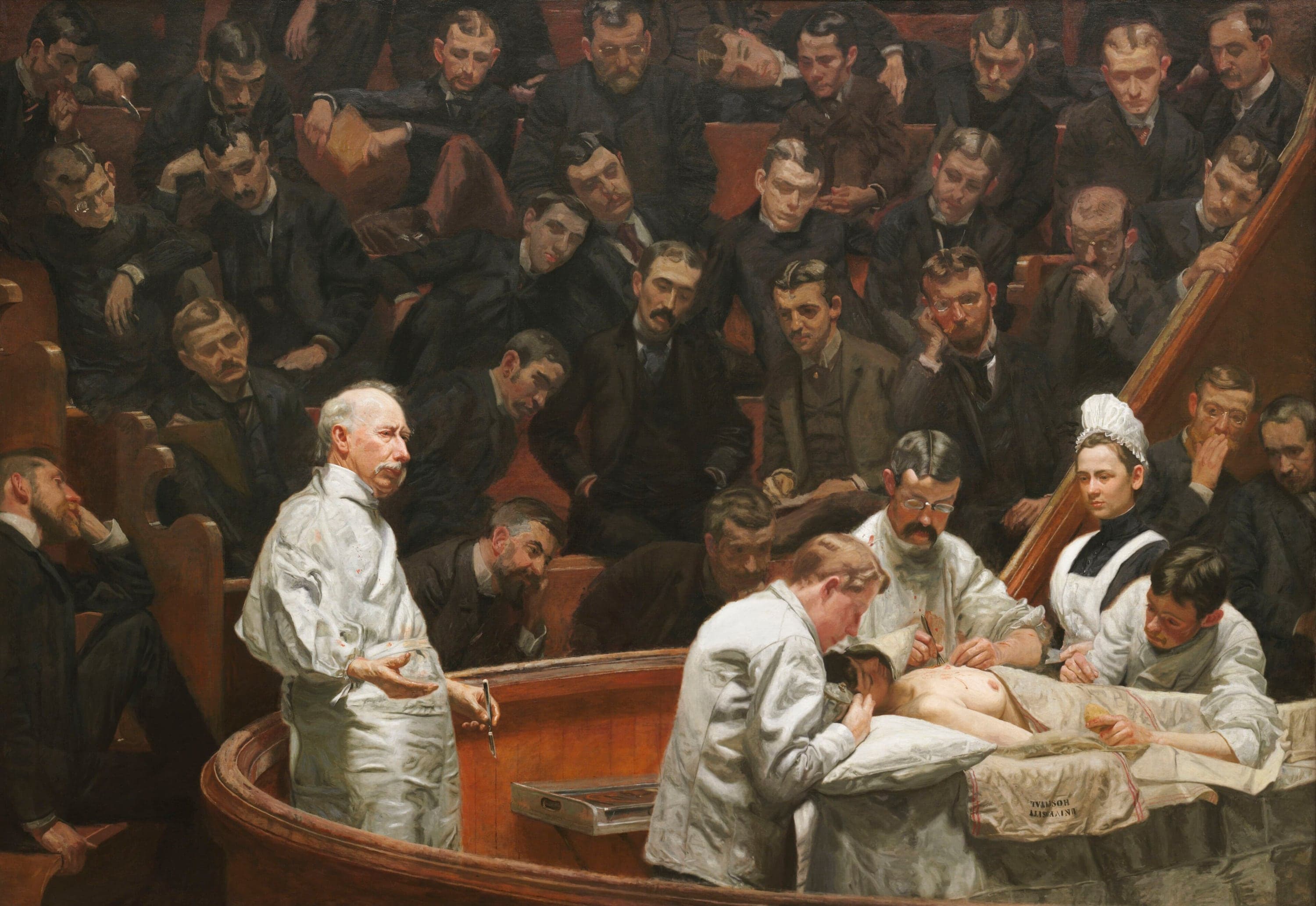
David Hayes Agnew, in a white gown, steps back from an operating table to lecture, a scalpel held loosely in his right hand. Three doctors in white continue a mastectomy behind him while a nurse in a white cap looks on. Students of the University of Pennsylvania commissioned the picture from Thomas Eakins in 1889 for Agnew's retirement. The university still owns it and has lent it to the Philadelphia Museum of Art since 2000.
- 1889
- Oil on canvas
- University of PennsylvaniaPhiladelphia, United States
About Thomas Eakins
What the painting shows
David Hayes Agnew stands at the left of a wooden operating pit in a white gown, white-haired and moustached, his right hand holding a scalpel loosely by his side and his left hand open in mid-explanation. He has stepped back from the table. Kathleen A. Foster of the Philadelphia Museum of Art reads the moment as the end of the operation: Agnew leaves the other doctors to finish and lectures on what has happened.
The patient lies on the table at the right, her chest bare, her head under a cloth held by a doctor in white who bends over her. A second doctor in spectacles and a moustache works at the incision with an instrument, and a third at the far right holds her arm. A nurse in a white cap and apron stands behind them, watching. The sheet under the patient is stamped UNIVERSITY HOSPITAL, and a metal case of instruments sits on the rail in front of Agnew.
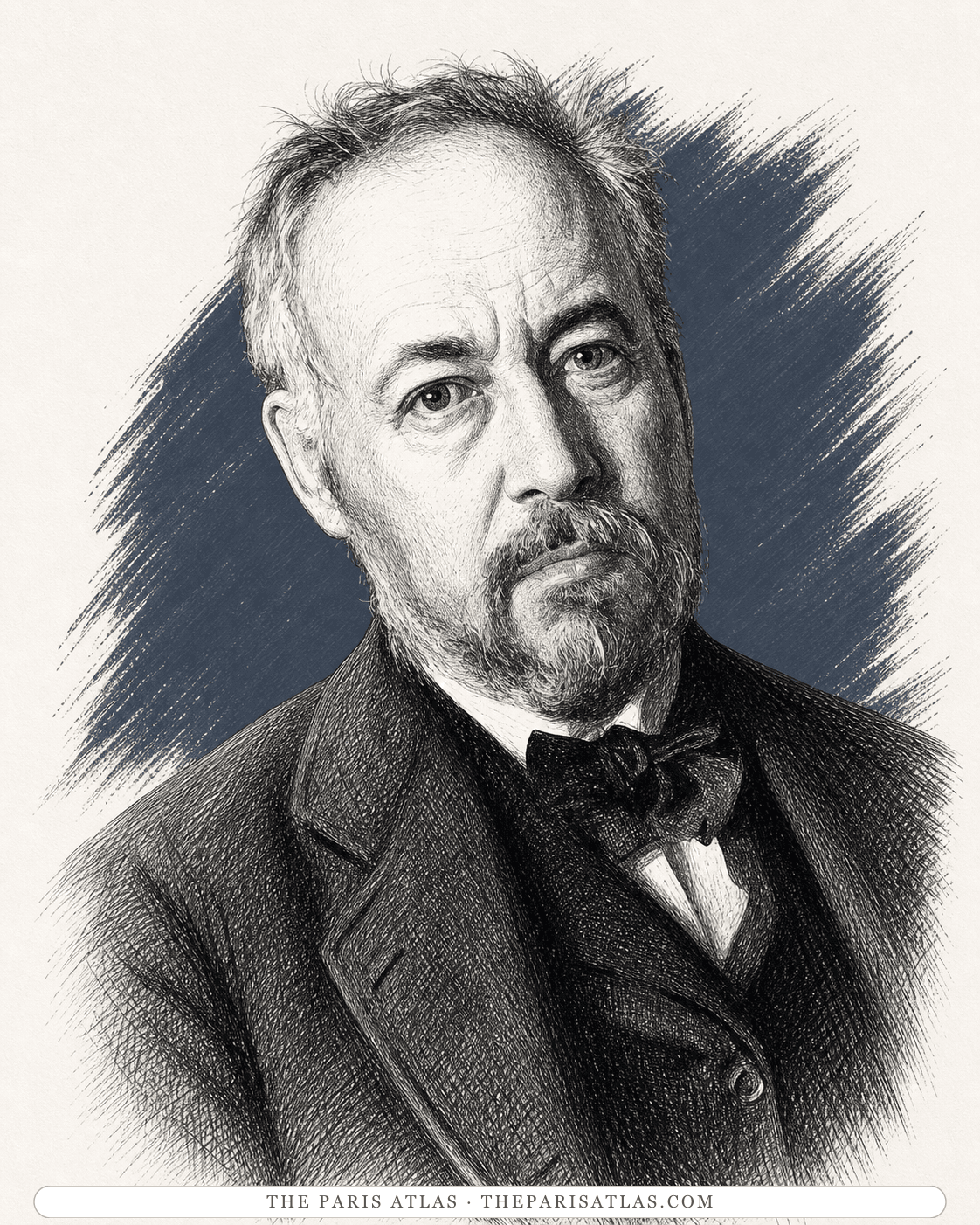
Rows of students fill the wooden benches above, resting on their elbows, chins on hands, one at the top with his head tipped sideways on the rail. A bearded man at the far left sits in profile with a hand to his mouth. At the far right, behind the nurse, a man in spectacles holds his hand to his mouth while a bearded man at the very edge of the canvas leans in beside him. The University of Pennsylvania's archives identify the two as Frederick H. Milliken, a physician at the university hospital, in conversation with Thomas Eakins himself, whose likeness was painted by his wife, Susan Macdowell Eakins.
The university's archives call it a seven-by-eleven-foot painting, and in reproduction the canvas is about one and a half times as wide as it is high. Eakins inscribed the back in Latin, according to the catalogue of the Metropolitan Museum of Art's 1917 memorial exhibition: AGNEW. CHIRURGI. EAKINS. PHILADELPHIENSIS. EFFIGIEM. PINXIT, which says that Eakins of Philadelphia painted the likeness of Agnew the surgeon.
The commission of 1889
In the spring of 1889 the University of Pennsylvania's Medical Class of 1889 commissioned Eakins to paint a portrait of Agnew, who was retiring as professor of surgery that year. Eakins chose not to make a conventional portrait. He set Agnew in his clinic, as he had set Samuel D. Gross fourteen years earlier for the alumni of Jefferson Medical College. The fee was $750, according to a 1993 article in the American Journal of Roentgenology.
The painting was ready for the commencement of the Medical Class of 1889 at the Academy of Music in Philadelphia on 1 May 1889. After the valedictory address, three classes of the Medical Department presented it to the university, Joseph Allison Scott spoke at the unveiling, and S. Weir Mitchell accepted it for the trustees. The archives record a loud call for Agnew, who spoke briefly and was so warmly applauded that he became emotional before wishing the students success.
The archives name the doctors assisting Agnew as J. William White and Joseph Leidy, both Penn professors, and Ellwood R. Kirby of the Hospital of the University of Pennsylvania. The 1917 catalogue, prepared with the university as lender, identifies White as the surgeon operating. The nurse is Mary U. Clymer, a student in the hospital's training school from 1887 to 1889. The students on the benches include eighteen members of the class of 1889, four from 1890, two from 1891 and one doctor on the postgraduate course.
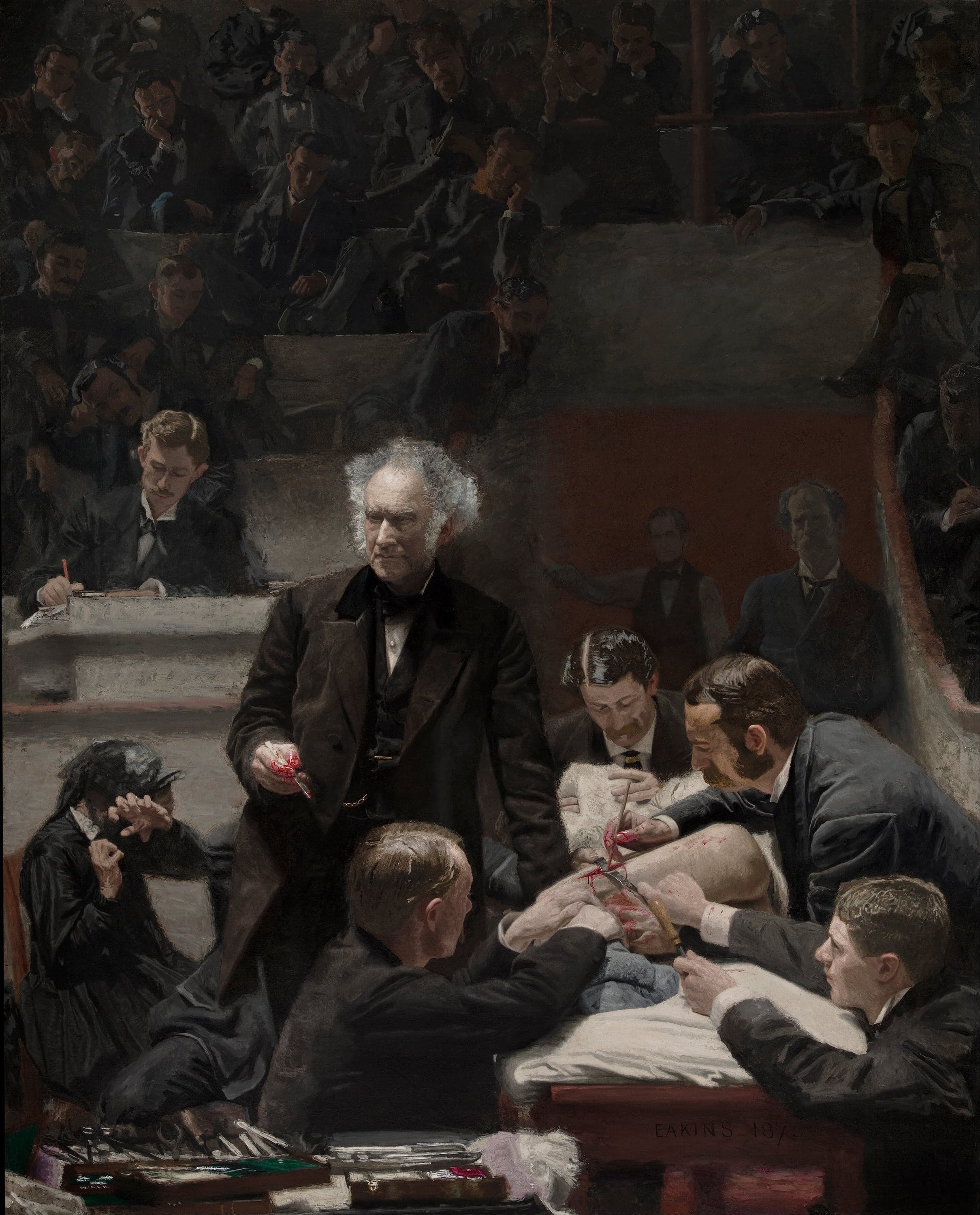
Fourteen years after The Gross Clinic
The two clinic pictures show the same kind of scene and record a change in surgery. In 1875 Gross operated in his street clothes with little help from his assistants. By 1889, the archives note, Joseph Lister's discoveries had led Agnew and others to promote antiseptic surgery. Eakins shows Agnew and his team in clean white gowns, with sterilised instruments in a covered case and a trained nurse in the room.
Foster adds two details. The instruments sit in a bath that sterilises them, so the scalpel in Agnew's hand drips water rather than blood, and Agnew asked to be shown with less blood because Gross's portrait had upset so many people. There is artificial light in the amphitheatre now, where the Gross Clinic depended on a skylight.
The operation is a mastectomy. Foster calls it a darker story than the Gross Clinic: surgery on cancer was still mysterious, and Agnew was trying to make the woman more comfortable, knowing the operation would not cure her. The students all came to Eakins's studio and posed, so every face on the benches is a portrait.
Exhibitions, a replica in black and white, and the loan to the museum
Eakins published a reproduction of the painting in 1889, the year it was finished. The Philadelphia Museum of Art, which holds a photogravure, explains that the photographic processes of the day made warm colours too dark and cold ones too light, so Eakins painted a separate black-and-white version to be photographed. The museum calls the print extremely rare.
Sidney Kirkpatrick's biography records two refusals. The Pennsylvania Academy of the Fine Arts declined to exhibit the painting in 1891, and the Society of American Artists in New York declined it in 1892. Its showing at the World's Columbian Exposition in Chicago in 1893 drew criticism. The picture hung in the Metropolitan Museum of Art's memorial loan exhibition in 1917 as number 33. That winter it was number 130 in the Pennsylvania Academy's memorial exhibition. The university lent it both times.
The University of Pennsylvania still owns the painting. Its archives state that the public can see it at the Philadelphia Museum of Art, where it is housed under a renewable loan, and The Philadelphia Inquirer put the start of that loan at 2000. In 2026 it hangs in the museum's part of A Nation of Artists, which runs there from 12 April 2026 to 5 July 2027.
Close reading
Reading the work, detail by detail
Follow the operation from the surgeon who has stepped back to the three doctors still at the table, then the nurse, the instrument case, the stamped sheet, the students on the benches and the painter at the right edge.
1.Agnew
David Hayes Agnew has stepped back from the table. Kathleen A. Foster of the Philadelphia Museum of Art reads him as having finished the surgery and begun to lecture, leaving the other doctors to close.
2.The scalpel
The scalpel hangs from Agnew's hand while he talks. Foster says the instruments sat in a sterilising bath, so the blade drips water rather than blood, and that Agnew asked to be shown with less blood than Samuel D. Gross had been.
3.The surgeon at the incision
A second doctor continues the operation. The Metropolitan Museum of Art's 1917 catalogue, prepared with the University of Pennsylvania as lender, names J. William White as the surgeon operating; the university's archives name White, Joseph Leidy and Ellwood R. Kirby as the assisting doctors.
4.The doctor bending over her head
The patient's face is turned away under the doctor's hands. Foster notes that being able to see the patient's face at all, unlike in The Gross Clinic, increases the viewer's sense of compassion.
5.The doctor holding her arm
A third doctor holds the patient's arm at the far end of the table. The three assisting doctors are named by the university's archives, but the archives do not say which man is which, so he is not named here.
6.Nurse Clymer
The University of Pennsylvania's archives identify the nurse as Mary U. Clymer, a student in the hospital's training school from 1887 to 1889. Foster contrasts her composure with the distress of the mother in The Gross Clinic.
7.Eakins and Milliken at the edge
The university's archives place Frederick H. Milliken, a hospital physician, in conversation with Thomas Eakins at the far right, and record that Eakins's likeness was painted by his wife, Susan Macdowell Eakins. The 1917 catalogue gives the same identification: the right-hand figure of the two behind the nurse is the painter.
8.The instrument case
The instruments sit in a covered case on the rail. The university's archives count it among the signs of antiseptic surgery in the picture, with the white gowns, and Foster describes it as a bath that sterilised the instruments.
9.The stamped sheet
The linen is stamped with the name of the Hospital of the University of Pennsylvania, whose training school produced the nurse. The lettering reads upside down because the sheet is turned towards the doctors.
10.The student with his head on the rail
The students on the benches all posed for Eakins in his studio, according to Foster, who suspects some joking in the characteristic poses. One at the top has laid his head on the rail.
Timeline
1889
Commissioned in the spring by the University of Pennsylvania's Medical Class of 1889 and presented to the university at the commencement of 1 May. A photogravure after a black-and-white replica is published the same year.
1891
Declined for exhibition by the Pennsylvania Academy of the Fine Arts, according to Sidney Kirkpatrick.
1892
Declined by the Society of American Artists in New York.
1893
Shown at the World's Columbian Exposition in Chicago, where it draws criticism.
1917
Number 33 in the Metropolitan Museum of Art's memorial loan exhibition and number 130 in the Pennsylvania Academy's memorial exhibition, lent by the University of Pennsylvania.
2000
Lent by the university to the Philadelphia Museum of Art under a renewable loan, according to The Philadelphia Inquirer.
2026
Shown at the Philadelphia Museum of Art in A Nation of Artists, 12 April 2026 to 5 July 2027.
Where to see it
University of Pennsylvania
Philadelphia, United States
A public viewing address has not yet been confirmed for this holding.
Owned by the University of Pennsylvania and on renewable loan to the Philadelphia Museum of Art, 2600 Benjamin Franklin Parkway, since 2000, where it hangs in A Nation of Artists until 5 July 2027.
Frequently asked questions
Where is The Agnew Clinic?
The University of Pennsylvania owns it, and its archives say the public can see it at the Philadelphia Museum of Art, 2600 Benjamin Franklin Parkway, under a renewable loan that The Philadelphia Inquirer dates to 2000. In 2026 it hangs there in A Nation of Artists, which runs at the museum until 5 July 2027.
Who commissioned The Agnew Clinic?
The University of Pennsylvania's Medical Class of 1889, in the spring of that year, to honour David Hayes Agnew on his retirement as professor of surgery. Three classes of the Medical Department presented it to the university at the commencement on 1 May 1889. The fee was $750, according to a 1993 article in the American Journal of Roentgenology.
What operation is shown in The Agnew Clinic?
A mastectomy, according to the University of Pennsylvania's archives. Kathleen A. Foster of the Philadelphia Museum of Art calls it a darker story than The Gross Clinic: surgery on cancer was still mysterious, and Agnew was trying to make the patient more comfortable rather than to cure her.
Who is the nurse in The Agnew Clinic?
Mary U. Clymer, a student in the training school of the Hospital of the University of Pennsylvania from 1887 to 1889, according to the university's archives. She stands behind the operating table in a white cap and apron, and Foster contrasts her composure with the distress of the mother in The Gross Clinic.
Where is Thomas Eakins in The Agnew Clinic?
At the far right edge, the bearded man leaning in behind the nurse beside Frederick H. Milliken, a physician at the university hospital who holds his hand to his mouth. The university's archives record that Eakins's likeness was painted by his wife, Susan Macdowell Eakins.
How does The Agnew Clinic differ from The Gross Clinic?
It is wider than it is high, where The Gross Clinic is upright. The doctors wear white gowns rather than street clothes, the instruments are sterilised in a covered case, a trained nurse is present, and the room has artificial light. Foster adds that Agnew asked to be shown with less blood, so his scalpel drips water.
How big is The Agnew Clinic?
The University of Pennsylvania's archives describe it as a seven-by-eleven-foot painting, and call it Eakins's largest. In reproduction the canvas is about one and a half times as wide as it is high.
More by Thomas Eakins
If you like Thomas Eakins
Explore painters from the same movements and circles.
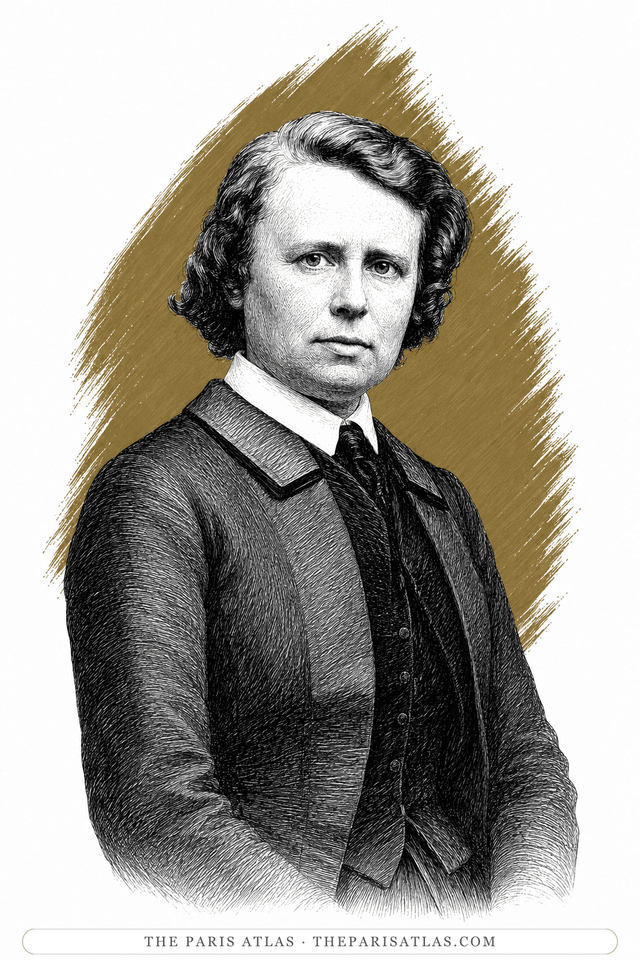
Rosa Bonheur
At the horse markets of Paris and in her studio beside the forest of Fontainebleau, Rosa Bonheur gave animals the presence of great portrait subjects. The success of The Horse Fair helped her build a life shaped by her work, financial independence, and the women she loved.
View artist
Henri Cartier-Bresson
French photographer who turned a pocket-sized 35mm camera into an instrument of split-second composition — the idea the world knows as 'the decisive moment'. He trained as a painter, was taken prisoner in 1940 and escaped on his third try, photographed the Liberation of Paris in August 1944, co-founded the photographer-owned agency Magnum Photos in 1947, gave up reporting for drawing in the 1970s, and left Paris a foundation in the Marais that deliberately hangs no permanent display of his own pictures.
View artist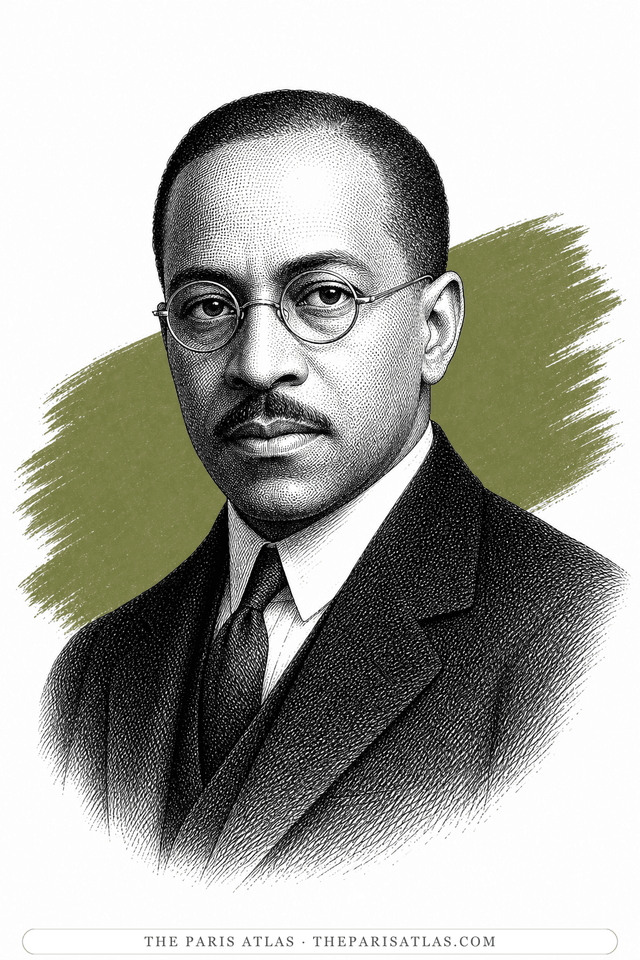
Aaron Douglas
The painter who gave the Harlem Renaissance — the flowering of Black American writing, music and art between the world wars — its look, in flat purple silhouettes in profile, ringed by bands of light. He moved to Harlem in 1925 with Paris as the eventual destination, got there in 1931, spent a year at the Académie Scandinave, a private art school in the city, and came home to paint the four murals that are still the centrepiece of the Schomburg Center, the New York Public Library's Harlem research library on Black history.
View artist
References
The sources below include collection records, catalogues, scholarly research, and primary materials that informed this page. They document The Agnew Clinic, its making, and its place in cultural history.


1Medical Class of 1889: Commissioning of Thomas Eakins to Paint The Agnew Clinic
WebsiteUniversity of Pennsylvania University Archives and Records CenterUsed forWeb source consulted for documented facts and historical context presented on the The Agnew Clinic page.

2Loan Exhibition of the Works of Thomas Eakins, November 5 to December 3, 1917
Exhibition catalogueThe Metropolitan Museum of Art, 1917Used forCatalogue scholarship used to verify attribution, provenance, chronology, and interpretive context for The Agnew Clinic.
3Memorial Exhibition of the Works of the Late Thomas Eakins, December 23, 1917 to January 13, 1918
Exhibition cataloguePennsylvania Academy of the Fine Arts, 1917Used forCatalogue scholarship used to verify attribution, provenance, chronology, and interpretive context for The Agnew Clinic.
4The Agnew Clinic (photogravure after Thomas Eakins, 1893)
WebsitePhiladelphia Museum of ArtUsed forWeb source consulted for documented facts and historical context presented on the The Agnew Clinic page.
5Thomas Eakins, The Gross Clinic and The Agnew Clinic
WebsiteSmarthistoryUsed forWeb source consulted for documented facts and historical context presented on the The Agnew Clinic page.
6Thomas Eakins' The Agnew Clinic and The Gross Clinic are on view at the expansive A Nation of Artists
PeriodicalThe Philadelphia Inquirer, 2026Used forContemporary reporting or criticism used to document the historical reception and context of The Agnew Clinic.
7A Nation of Artists
WebsitePennsylvania Academy of the Fine Arts, 2026Used forWeb source consulted for documented facts and historical context presented on the The Agnew Clinic page.
8Medicine in American Art: The Agnew Clinic
PeriodicalAmerican Journal of Roentgenology, vol. 160, no. 5, p. 936, 1993Used forContemporary reporting or criticism used to document the historical reception and context of The Agnew Clinic.
9The Revenge of Thomas Eakins
BiographyYale University Press, 2006Used forBiographical evidence used to verify chronology, relationships, and historical context connected to The Agnew Clinic.
These references provide the documented foundation for this work's history and interpretation. Claim-level citations remain attached to the specific claims they support.
 Explore more resources