The Judgment Day
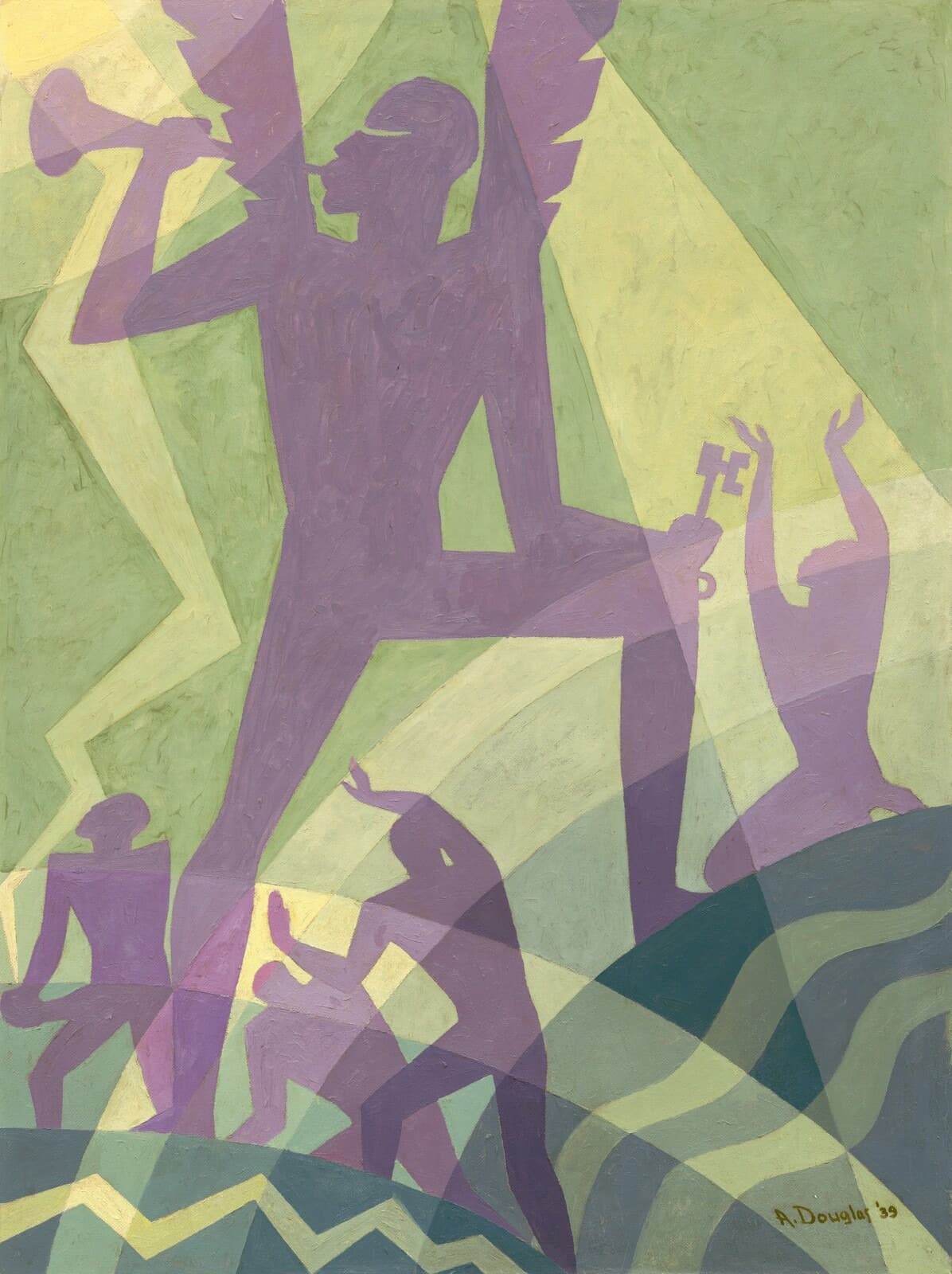
A winged figure in lilac purple stands with one foot on each of two green hills, a horn at his lips and a key in his lowered hand. Aaron Douglas painted it in 1939 from a drawing he had made twelve years earlier for James Weldon Johnson's book of verse sermons, God's Trombones. The National Gallery of Art in Washington calls it the last painting in that series and has owned it since 2014.
- 1939
- Oil on tempered hardboard
- National Gallery of ArtWashington, United States
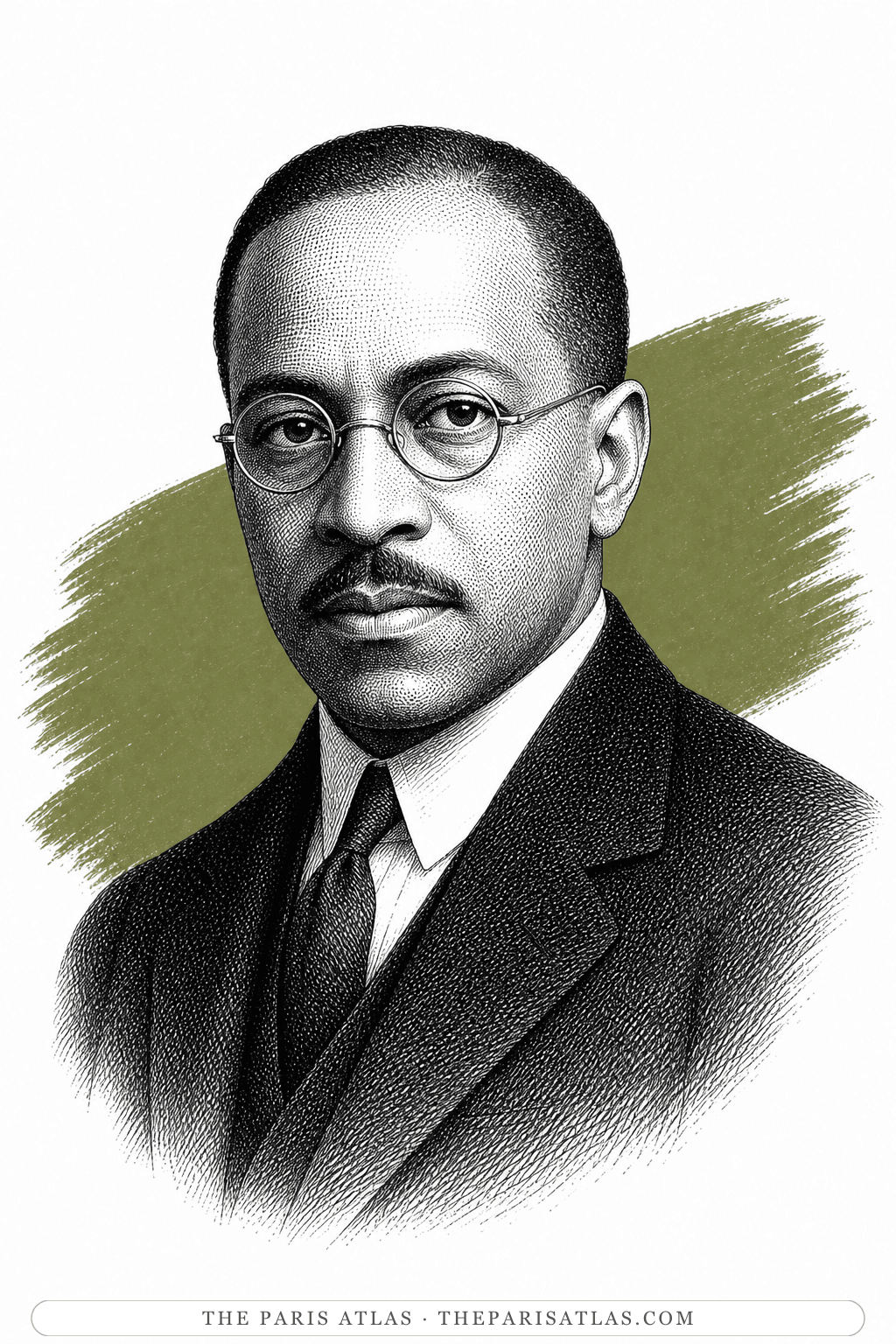
About Aaron Douglas
What the painting shows
A tall figure in flat lilac purple fills the upper half of the board. His body faces the viewer, his head turns to the viewer's left in profile, and his eye is a shallow curved slit. He raises a horn to his lips with both hands, and the bell of the horn reaches into the top left corner. Two jagged wings rise from his shoulders and run off the top edge.
He stands astride two rounded green mounds, the right one higher, so that knee is bent. A skeleton key hangs from the hand propped on that knee. The National Gallery of Art identifies the figure as Gabriel, the archangel summoning the living and the dead, and says the key is the key to heaven.
Four smaller figures, drawn as amethyst-purple silhouettes, stand further back. One kneels to the right of the horn player with both hands raised and the face turned up. Two more stand on or behind the left mound, framed between his legs. The fourth stands with hands clasped, also looking up.
The ground behind everything is a field of alternating celery and lime-green bands, with concentric arcs of lemon yellow and pale green in the upper left corner standing for a sun. The right-hand hill carries wavy bands of pine and sage; the left-hand one carries a sage zigzag across darker green. The board measures 121.92 by 91.44 centimetres, four feet by three.
From a book illustration of 1927
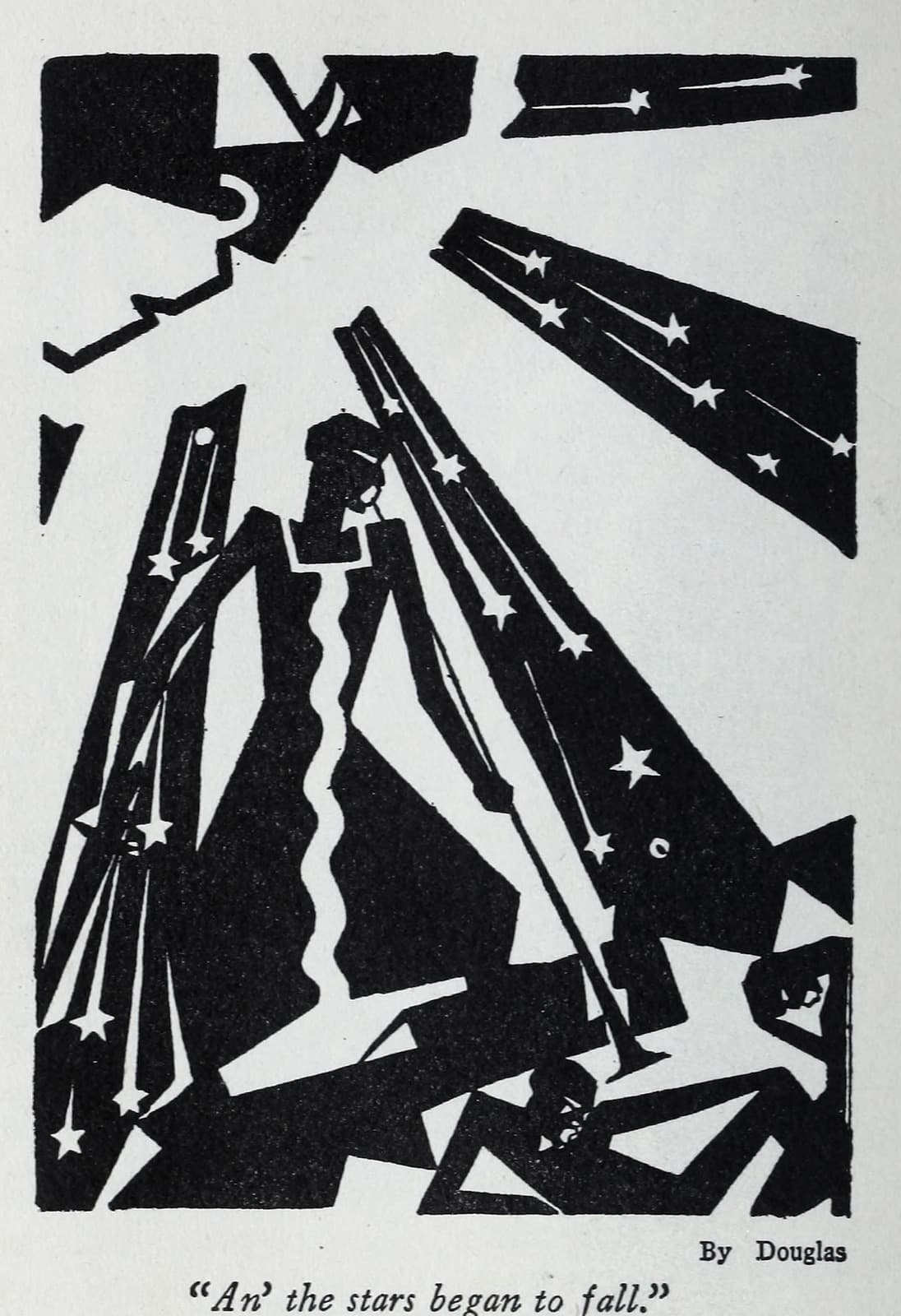
In 1927 the Viking Press published God's Trombones: Seven Negro Sermons in Verse by James Weldon Johnson, a sequence of Black folk sermons written as poetry. Aaron Douglas supplied eight full-page drawings for it, and the National Gallery of Art calls them strikingly original and dates his mature style from them. The one behind this painting is the last of the eight, placed after page 52 and numbered 52b in the book's own list of illustrations.
The painting is that drawing, made large and in colour, twelve years later. The museum records the sequence plainly: over several years Aaron Douglas translated his own book illustrations into large oil paintings, and The Judgment Day is the final painting in the series. Another of them, Go Down Death of 1934, is at the Cleveland Museum of Art.
The museum names two influences on the 1927 drawings. One is Winold Reiss, the German-born illustrator who taught Aaron Douglas in New York from 1925. The other is the painter's own study of African art and European modernism.
Flat shapes, bands and arcs
There is no modelling anywhere in the picture. Each figure is a single flat colour, and depth is produced only by scale and by overlapping: the four small silhouettes are smaller and paler, so they read as further off.
Light is drawn rather than cast. The arcs in the upper left corner widen out like ripples, and the pale green wedges that cut across the green ground behave the same way, so the whole surface is banded by shapes that stand for radiance. Nancy Anderson, the National Gallery of Art's head of American and British paintings, lists the flattened shapes, the slit eye, the waves, the concentric circles and the shafts of light as art deco and Cubist in origin.
The signature is written in dark green paint in the lower right corner and reads A. Douglas '39.
Where Paris does and does not come in
The drawing behind the painting was made in 1927, four years before Aaron Douglas got to Paris. The painting was made in 1939, seven years after he came home. He had spent about a year in the city from 1931, studying at the Académie Scandinave, and the trip left no mark on the subject of either version.
What the year abroad changed was scale. He went over as an illustrator of books and magazines and came back to paint walls, and the series of large oils that produced The Judgment Day belongs to that later working life.
Nashville, Providence, Washington
Aaron Douglas kept the painting himself. By 1976 it belonged to Grace Jones of Nashville, who is listed as its lender in the catalogue of Two Centuries of Black American Art, the exhibition organised by the painter David C. Driskell that travelled to Los Angeles, Atlanta, Dallas and Brooklyn. The painting was number 99.
Grace Jones sold it in 1978 to Leonard and Paula Granoff of Providence, Rhode Island. The National Gallery of Art bought it from them on 6 November 2014 with the Patrons' Permanent Fund and the Avalon Fund.
The museum lists the painting as not on view.
Close reading
Reading the work, detail by detail
The painting is built around one large figure and four small ones. Take the head first, then the horn in the top left corner, then the key in the lowered hand, then the kneeling figure at the right, then the pair at the lower left, and end on the signature in the water.
1.Gabriel's head
One head, turned back over the shoulder to the viewer's left while the body faces forward. The eye is a shallow curved slit of the background colour showing through, the same device Aaron Douglas used in the 1925 drawings. Green wedges cut into the silhouette at the brow and behind the jaw.
2.The horn
One instrument, held in both hands and pointed up into the corner. The bell is a plain flared trumpet shape with no valves or keys drawn on it. The pale yellow wedge behind it is one of the bands of light that cross the picture; it passes straight under the horn without breaking.
3.The key in the hand
One key, one hand. The shaft runs from the fist up to a squared ward at the top and down to a small round bow below, which is why it reads as a door key rather than a sceptre. The National Gallery of Art identifies it as the key to heaven. The hand rests on the bent right knee.
4.The kneeling figure at the right
One figure, kneeling, both arms lifted straight up and the palms open. It is painted a lighter purple than Gabriel and drawn at about half his height, which is how the picture puts it further away. The pale yellow band of light runs behind both arms and does not change where it crosses them.
5.The pair at the lower left
Two of the four smaller figures. The one at the left is seen almost frontally with the head rounded and featureless and one arm lifted; the second shows only a raised hand and forearm. Both stand on or behind the left-hand mound, framed between Gabriel's legs.
6.The signature in the water
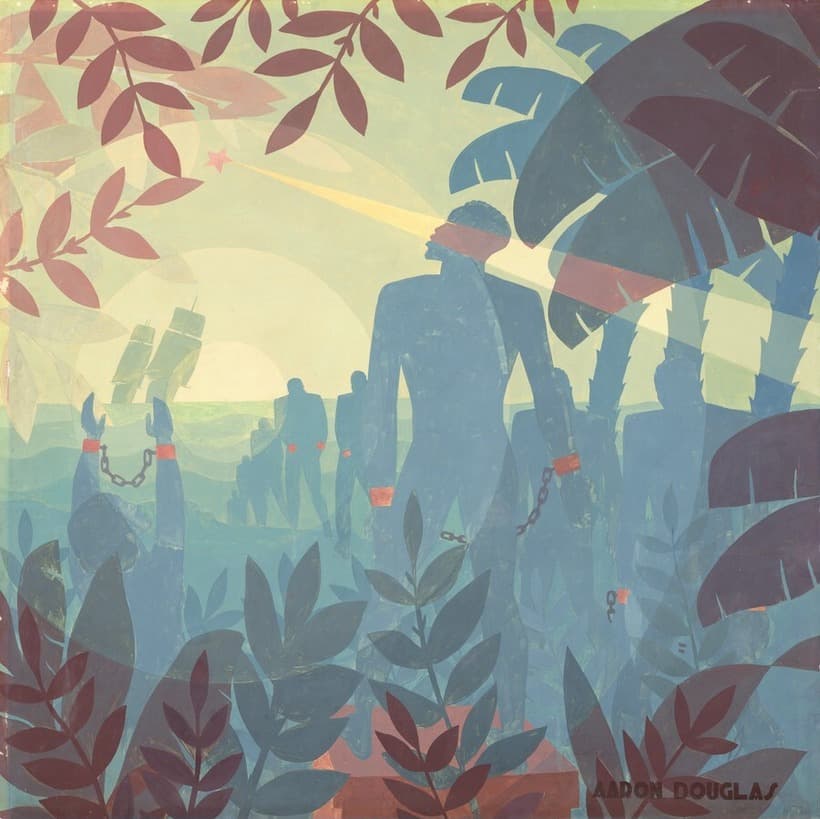
Thirteen characters in a loose script, unlike the block capitals on Into Bondage three years earlier. It sits on the wavy bands that stand for water, and the paint is a dark olive green rather than black. The National Gallery of Art records the inscription as A. Douglas '39, lower right.
Timeline
1927
Draws eight full-page illustrations for James Weldon Johnson's God's Trombones: Seven Negro Sermons in Verse, published by the Viking Press. The Judgment Day is the last of the eight, numbered 52b.
1931
Reaches Paris and spends about a year studying at the Académie Scandinave.
1934
Paints Go Down Death from another of the 1927 illustrations; the Cleveland Museum of Art acquires it in 2005.
1939
Paints The Judgment Day in oil on tempered hardboard, the last of the paintings made from the book illustrations, and signs it A. Douglas '39.
1976
Lent by Grace Jones of Nashville to Two Centuries of Black American Art as number 99; the show travels to Los Angeles, Atlanta, Dallas and Brooklyn through 1977.
1978
Sold by Grace Jones to Leonard and Paula Granoff of Providence, Rhode Island.
2014
Bought by the National Gallery of Art on 6 November with the Patrons' Permanent Fund and the Avalon Fund, as 2014.135.1.
Where to see it
National Gallery of Art
Washington, United States
A public viewing address has not yet been confirmed for this holding.
The National Gallery of Art lists the painting as not on view, and states that the object's media is not available for download.
Frequently asked questions
Where is The Judgment Day by Aaron Douglas?
The National Gallery of Art in Washington, accession number 2014.135.1, bought on 6 November 2014 with the Patrons' Permanent Fund and the Avalon Fund. The museum lists it as not on view, so check the object record before travelling.
Who is the winged figure in The Judgment Day?
Gabriel. The National Gallery of Art identifies the figure as the archangel, standing astride earth and sea and summoning the living and the dead to judgment with a trumpet call. He holds the key to heaven in the hand propped on his bent knee.
Is The Judgment Day based on a book illustration?
Yes. Aaron Douglas drew it in 1927 as one of eight illustrations for God's Trombones: Seven Negro Sermons in Verse by James Weldon Johnson, published by the Viking Press. He turned several of those drawings into large oil paintings over the following years, and the National Gallery of Art calls the 1939 canvas the final painting in that series.
How big is The Judgment Day?
121.92 by 91.44 centimetres, exactly four feet by three, in oil on tempered hardboard. Framed it measures 137.48 by 106.68 by 6.35 centimetres. It is signed and dated in dark green at the lower right: A. Douglas '39.
What is God's Trombones?
A book of seven Black folk sermons written as verse by James Weldon Johnson, published in New York by the Viking Press in 1927. Aaron Douglas made eight full-page drawings for it, and the National Gallery of Art dates his mature style from them. Documenting the American South, which has digitised the first edition, credits the illustrations to Aaron Douglas and to Charles Buckles Falls together.
What did W. E. B. Du Bois say about Aaron Douglas?
That his images were daring and unconventional, and "wild with beauty". The National Gallery of Art quotes the phrase in its audio commentary on The Judgment Day, and notes that W. E. B. Du Bois was among the Harlem Renaissance figures who encouraged the painter.
More by Aaron Douglas
If you like Aaron Douglas
Explore painters from the same movements and circles.
Loïs Mailou Jones
Boston-born painter and Howard University professor for forty-seven years, whose 1937–38 year at the Académie Julian in Paris produced Les Fétiches and opened a seven-decade career spanning French landscape, African design and Haitian colour.
View artist
Tarsila do Amaral
Brazilian painter who spent the 1920s moving between São Paulo and Paris, studied Cubism under André Lhote, Albert Gleizes and Fernand Léger, and used what she learned to paint Brazilian towns, railways, plants and bodies. Her 1928 painting Abaporu prompted the manifesto that gave the Anthropophagic movement its name.
View artist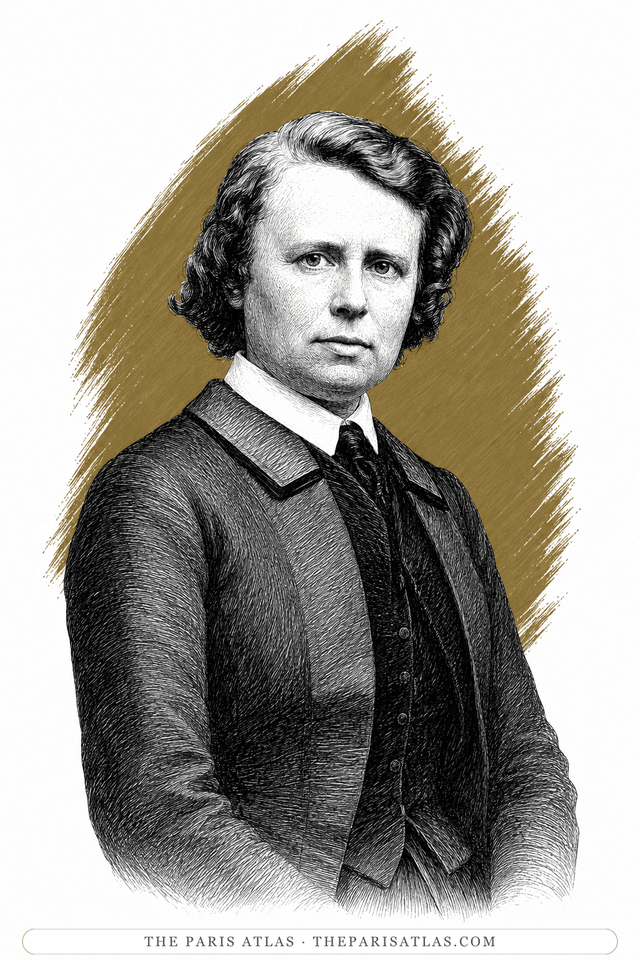
Rosa Bonheur
At the horse markets of Paris and in her studio beside the forest of Fontainebleau, Rosa Bonheur gave animals the presence of great portrait subjects. The success of The Horse Fair helped her build a life shaped by her work, financial independence, and the women she loved.
View artist
References
The sources below include collection records, catalogues, scholarly research, and primary materials that informed this page. They document The Judgment Day, its making, and its place in cultural history.


1Aaron Douglas, The Judgment Day (1939) — object record, 2014.135.1
WebsiteNational Gallery of Art, WashingtonUsed forThe museum's object record: title, date, medium, dimensions, inscription, credit line, visual description, the Gabriel reading, the account of the 1927 illustrations, provenance and exhibition history.

2Open access collection data — objects.csv and published_images.csv
Official recordNational Gallery of Art, WashingtonUsed forThe National Gallery of Art's published collection data, which carries the same fields as structured values.

3God's Trombones: Seven Negro Sermons in Verse
PoetryThe Viking Press, New York, 1927Used forThe 1927 first edition, digitised in full by Documenting the American South, including the eight Aaron Douglas plates.
4Aaron Douglas, Go Down Death (1934) — object record, 2005.181
WebsiteCleveland Museum of ArtUsed forAnother painting made from the same 1927 book, and the record that prints the credit line naming the heirs of Aaron Douglas and VAGA.
5Douglas, Aaron
WebsiteKansas Historical Society, KansapediaUsed forThe Kansas Historical Society's life of him, for the Paris year of 1931 and the Winold Reiss scholarship.
These references provide the documented foundation for this work's history and interpretation. Claim-level citations remain attached to the specific claims they support.
 Explore more resources