Into Bondage
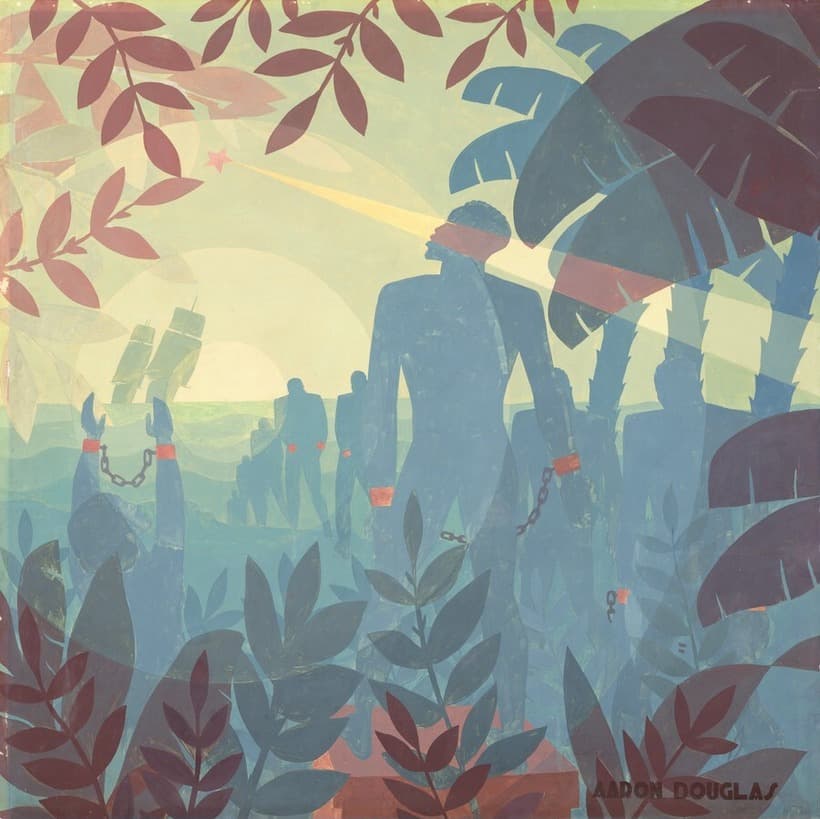
A line of shackled men and women walks down a shore towards two ships waiting on the horizon. Aaron Douglas painted the canvas in 1936 for the Hall of Negro Life at the Texas Centennial Exposition in Dallas, and the National Gallery of Art in Washington has owned it since 2014. The museum's own account of the subject is plain: the outcome of the journey is enslavement in a distant country.
- 1936
- Oil on canvas
- National Gallery of ArtWashington, United States
About Aaron Douglas
What the painting shows
A broad-shouldered man stands near the centre of a square canvas with his back to the viewer, his head turned in profile to the left. His eye is a narrow slit. He is barefoot on a brick-red box shaped like a coffin, his arms hang at his sides, and terracotta-orange shackles ring both wrists with a black chain between them.
A woman kneels to his left with her shackled hands raised above her head. Behind them a line of smaller figures, heads bowed, walks away towards water that shifts from pine green at the shore to a paler green at the horizon. Two tall green sailing ships stand close together on that horizon, both tilted to the right, against a large pale disc rising behind them.
A small red star sits high in the left of the sky, and a buttercup-yellow beam runs from it across the canvas and over the standing man's face. Concentric rings spread out from the horizon beside the ships and cross every figure they meet, changing the colour of each silhouette as they pass. Palm fronds and leaves in plum, slate and blood red frame the scene at the top and down both edges.
The National Gallery of Art describes the arrangement as a view through a gap in tropical foliage, and says the shackles are more prominent than the faces. The canvas is 153.4 by 153.7 centimetres, about five feet square.
Painted for the Hall of Negro Life, Dallas, 1936
The Texas Centennial Exposition opened in Dallas in June 1936 to mark a hundred years of Texan independence, and it included a Hall of Negro Life. Aaron Douglas was commissioned to paint murals for it, and the National Gallery of Art's provenance begins there: commissioned 1936 for the Hall of Negro Life, Texas Centennial Exposition, Dallas. The canvas hung in the building's lobby from 6 June to 29 November 1936.
It was one of a set of four. The Amistad Research Center at Tulane University, which keeps an artist file on him, records a four-panel mural for the exposition.
Who paid is less clear than what was painted. A letter of 5 July 1936 from Jesse O. Thomas and Alonzo J. Aden — the Hall of Negro Life's general manager and its curator of exhibitions — to Aaron Douglas hints that the Harmon Foundation gave financial support for the commission. The National Gallery of Art keeps a copy in its curatorial files and calls the evidence a hint, not a fact.
Flat silhouettes, hard profile, rings of light
Every person in the picture is a flat shape filled with a single colour, seen from the side, the eye left as a slit. The National Gallery of Art traces the device to ancient Egyptian wall painting, and points out that the foreground man's back is turned to the viewer while his face is still in profile.
Over that the painter laid a system of hard-edged geometry: overlapping wedges, a straight beam of light, and rings that widen out from a point on the horizon. The museum names the sources as Cubism and art deco, and says Aaron Douglas combined elements of several movements into a style of his own.
One thing in the painting is not blue, green or plum. The shackles are bright terracotta orange, and the National Gallery of Art reads the contrast as the point: the irons are foreign objects imposed on the bodies wearing them.
The signature belongs to the same design. AARON DOUGLAS is painted at the lower right in careful black block capitals that match the flat geometry of everything above them.
The Paris connection, and its limits
Aaron Douglas reached Paris in 1931 and spent about a year there, enrolled at the Académie Scandinave, a private art school in the city. He was back in New York by 1932, and the murals that made his reputation all come after the trip. Into Bondage was painted five years later, in a different country, for a state fair in Texas, and nothing in its subject touches France.
The painting did reach Paris eventually. The National Gallery of Art's exhibition history records it in The Color Line: African-American Artists and Segregation at the musée du quai Branly in Paris, which ran across 2016 and 2017 with an unnumbered catalogue.
From Dallas to Washington
After the exposition closed the painting's trail goes cold for decades. The National Gallery of Art's provenance suggests it may have gone to Wiley College in Marshall, Texas, on the strength of a 1951 newspaper clipping, then names Joseph Mack as an owner, then Thurlow Evans Tibbs, Jr. of Washington, who had it by 1987.
Thurlow Evans Tibbs, Jr. passed it to the Corcoran Gallery of Art in 1996 by gift and partial purchase, as part of the Evans-Tibbs Collection. When the Corcoran was dissolved, the National Gallery of Art acquired the painting in 2014 and kept the Corcoran credit line.
The museum lists it as not on view. Anyone travelling to see it should check the object record first.
Close reading
Reading the work, detail by detail
Read the painting from the horizon inward. Start with the two ships and the pale disc behind them, then the red star and the beam it throws, then the standing man the beam crosses, then the shackles on three sets of wrists, and finally the block capitals in the bottom corner.
1.The red star and the beam
One star, and it is the only five-pointed shape in the painting. The beam leaves it at the lower right point and runs in a straight taper across the canvas; nothing else in the sky is drawn as a ray. Two plum leaves overlap the star's upper edge.
2.The two ships on the horizon
Two ships, both under sail, both leaning the same way. They are drawn flat and pale, the same green as the water, so they read as distance rather than as objects. Behind them a broad pale disc stands on the horizon; the concentric bands that cross the rest of the canvas widen out from it.
3.The raised hands at the left
One figure, kneeling, with both hands lifted above the head. The shackles are the brightest colour in that part of the canvas and the chain hangs in a slack loop, so the two wrists are held a hand's width apart. Four smaller figures walk away behind her towards the water.
4.The standing man's head
One figure, his back to the viewer and his head turned to the left in profile. The beam from the star reaches him here: where it crosses the silhouette the blue lightens by a step, and a plum-red band crosses lower down at the jaw. A navy palm frond overlaps his hair at the right.
5.The shackled wrists
Two sets of irons in one view, on two different people. Each cuff is painted a hard terracotta orange against blue skin, and each chain hangs free rather than joining the figures together. The National Gallery of Art reads the colour contrast as the point: the irons are foreign objects imposed on these bodies.
6.The signature
Thirteen letters, drawn rather than written. The two A's are solid triangles with no crossbar, which is why the name reads at a glance as AADON, and every letter is squared off to match the flat geometry above it. The National Gallery of Art records the inscription as AARON DOUGLAS, lower right, in black.
Timeline
1931
Aaron Douglas reaches Paris and spends about a year studying at the Académie Scandinave.
1936
Commissioned for the Hall of Negro Life at the Texas Centennial Exposition in Dallas, one of four panels.
1936
Hangs in the lobby of the Hall of Negro Life from 6 June to 29 November.
1987
Owned by Thurlow Evans Tibbs, Jr. of Washington, named in a Corcoran conservation report of 3 April.
1996
Enters the Corcoran Gallery of Art by gift and partial purchase from Thurlow Evans Tibbs, Jr., as part of the Evans-Tibbs Collection.
1997–99
Shown as number 19 in Rhapsodies in Black: Art of the Harlem Renaissance, which travelled from the Hayward Gallery in London to six further venues.
2014
Acquired by the National Gallery of Art as 2014.79.17, keeping the Corcoran credit line.
2016–17
Shown in The Color Line: African-American Artists and Segregation at the musée du quai Branly in Paris.
2022–24
Travels with Afro-Atlantic Histories to Houston, Washington, Los Angeles and Dallas.
Where to see it
National Gallery of Art
Washington, United States
A public viewing address has not yet been confirmed for this holding.
The National Gallery of Art lists the painting as not on view, and states that the object's media is not available for download.
Frequently asked questions
Where is Into Bondage by Aaron Douglas?
The National Gallery of Art in Washington, accession number 2014.79.17. The museum lists it as not on view, so check the object record before travelling. It came to the National Gallery in 2014 from the Corcoran Gallery of Art, which had received it in 1996 from Thurlow Evans Tibbs, Jr.
What does Into Bondage show?
A line of shackled men and women walking down a shore towards two ships on the horizon. The National Gallery of Art states the subject directly: the figures slouch towards waiting ships, and the outcome of the journey is enslavement in a distant country. A red star in the sky casts a yellow beam across the face of the standing man at the centre.
Why was Into Bondage painted?
It was commissioned in 1936 for the Hall of Negro Life at the Texas Centennial Exposition in Dallas, the fair marking a hundred years of Texan independence. It hung in the building's lobby from 6 June to 29 November 1936, as one of four panels. A letter of 5 July 1936 from the hall's general manager and curator hints that the Harmon Foundation helped pay for the commission.
How big is Into Bondage?
153.4 by 153.7 centimetres, about five feet square, in oil on canvas. Framed it measures 165.1 by 164.47 by 8.26 centimetres. Aaron Douglas signed it at the lower right in black block capitals.
Why are the figures in Into Bondage flat silhouettes?
Because Aaron Douglas drew bodies as flat shapes seen from the side, with the eye left as a slit, a way of picturing people he took from ancient Egyptian wall painting. The National Gallery of Art notes that the foreground man has his back to the viewer while his face stays in profile. Over the silhouettes the painter laid overlapping geometric planes and concentric rings, which the museum attributes to Cubism and art deco.
Has Into Bondage ever been shown in Paris?
Yes, once. The National Gallery of Art's exhibition history records the painting in The Color Line: African-American Artists and Segregation at the musée du quai Branly in Paris across 2016 and 2017. Aaron Douglas himself had studied in the city for about a year from 1931, five years before he painted the canvas.
More by Aaron Douglas
If you like Aaron Douglas
Explore painters from the same movements and circles.

Loïs Mailou Jones
Boston-born painter and Howard University professor for forty-seven years, whose 1937–38 year at the Académie Julian in Paris produced Les Fétiches and opened a seven-decade career spanning French landscape, African design and Haitian colour.
View artist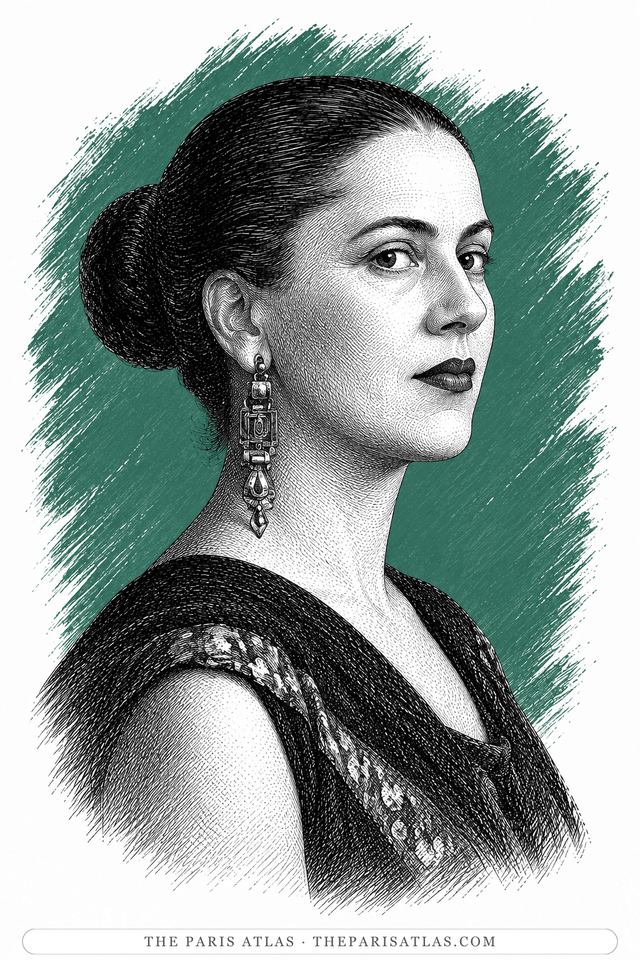
Tarsila do Amaral
Brazilian painter who spent the 1920s moving between São Paulo and Paris, studied Cubism under André Lhote, Albert Gleizes and Fernand Léger, and used what she learned to paint Brazilian towns, railways, plants and bodies. Her 1928 painting Abaporu prompted the manifesto that gave the Anthropophagic movement its name.
View artist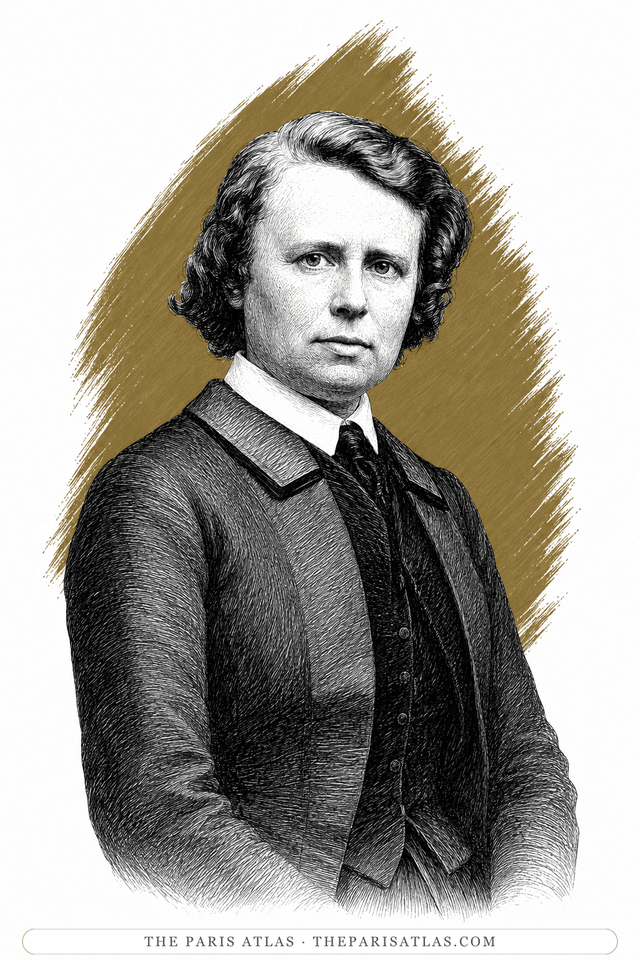
Rosa Bonheur
At the horse markets of Paris and in her studio beside the forest of Fontainebleau, Rosa Bonheur gave animals the presence of great portrait subjects. The success of The Horse Fair helped her build a life shaped by her work, financial independence, and the women she loved.
View artist
References
The sources below include collection records, catalogues, scholarly research, and primary materials that informed this page. They document Into Bondage, its making, and its place in cultural history.


1Aaron Douglas, Into Bondage (1936) — object record, 2014.79.17
WebsiteNational Gallery of Art, WashingtonUsed forThe museum's object record: title, date, medium, dimensions, inscription, credit line, accession number, visual description, provenance, exhibition history and bibliography.

2Open access collection data — objects.csv and published_images.csv
Official recordNational Gallery of Art, WashingtonUsed forThe National Gallery of Art's published collection data, which carries the same fields as structured values and marks the image as not open access.
3Aaron Douglas, Go Down Death (1934) — object record, 2005.181
WebsiteCleveland Museum of ArtUsed forThe Cleveland Museum of Art's own Aaron Douglas record, which prints the credit line naming the heirs of Aaron Douglas and VAGA as the licensing agent.
4Aaron Douglas
WebsiteAmistad Research Center, Tulane UniversityUsed forThe archive that records the four-panel mural for the Texas Centennial Exposition and the Académie Scandinave enrolment.
5Douglas, Aaron
WebsiteKansas Historical Society, KansapediaUsed forThe Kansas Historical Society's life of him, for the Paris year of 1931.
These references provide the documented foundation for this work's history and interpretation. Claim-level citations remain attached to the specific claims they support.
 Explore more resources