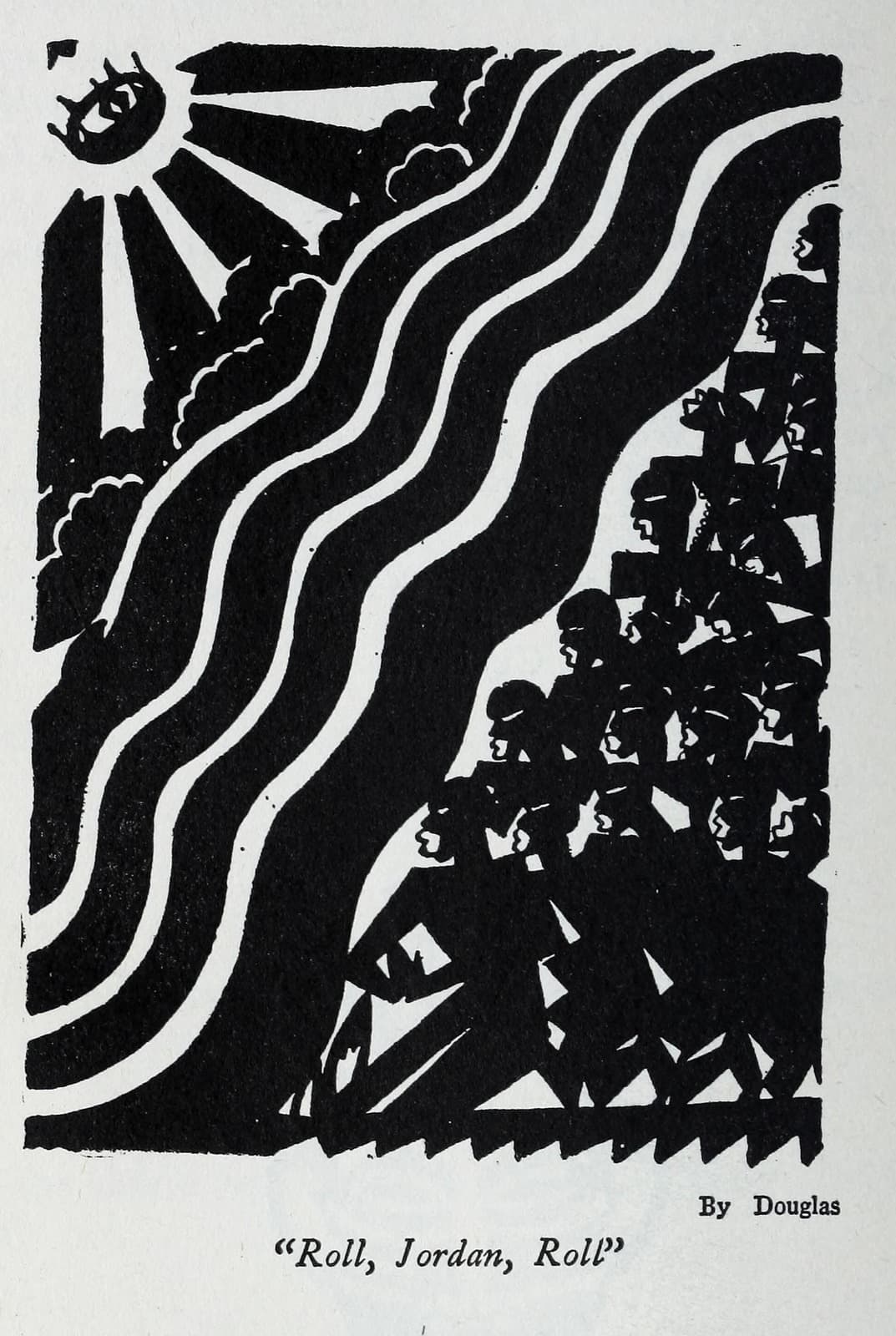
Roll, Jordan, Roll
A crowd of figures in profile presses up the right-hand side of the page while a river runs across it in thick black waves. Aaron Douglas drew it for The New Negro, the anthology Alain Locke edited in 1925, where it is printed at page 196 and captioned with the name of the spiritual. It is one of the earliest published pictures in the style he is now known for.
- 1925
- Drawing printed as a full-page plate in a book; no physical original is catalogued
About Aaron Douglas
What the drawing shows
Black ink on white paper, and nothing between the two. A sun sits in the upper left corner as a heavy black ring with a spiked form inside it, and straight tapering rays fan out from it down and to the right.
Five broad black waves run diagonally from the upper right to the lower left, separated by thin white channels of the same shape. They fill the left two thirds of the plate and stand for the river.
Against them, on the right, a column of people climbs from the bottom of the page to the top right corner. Every head is drawn in profile facing left, towards the water, with the eye left as a narrow white slit and the nose, lips and chin cut out of the black. Hands with splayed fingers are raised among them, some in front of faces, some above heads. Two heads at the top of the column, one above the other, have reached the highest point.
The lower edge of the crowd breaks into striding legs, and white triangles open between them. A row of small black sawteeth runs along the bottom of the plate and closes the design. Scalloped cloud shapes bank down the left margin under the rays.
Where it sits in the book
The New Negro: An Interpretation was published in New York by Albert and Charles Boni in 1925 and edited by Alain Locke, a philosopher teaching at Howard University. The volume gathers essays, fiction, poetry and drama by more than thirty contributors, and is usually treated as the book that announced the Harlem Renaissance.
The drawing is printed at page 196, on the leaf facing the half-title page that opens the book's music section. Alain Locke's essay The Negro Spirituals begins two pages later, at 199, under a band of Aaron Douglas's own ornament. The caption on the plate is the title of a spiritual, and the Jordan in it is the river.
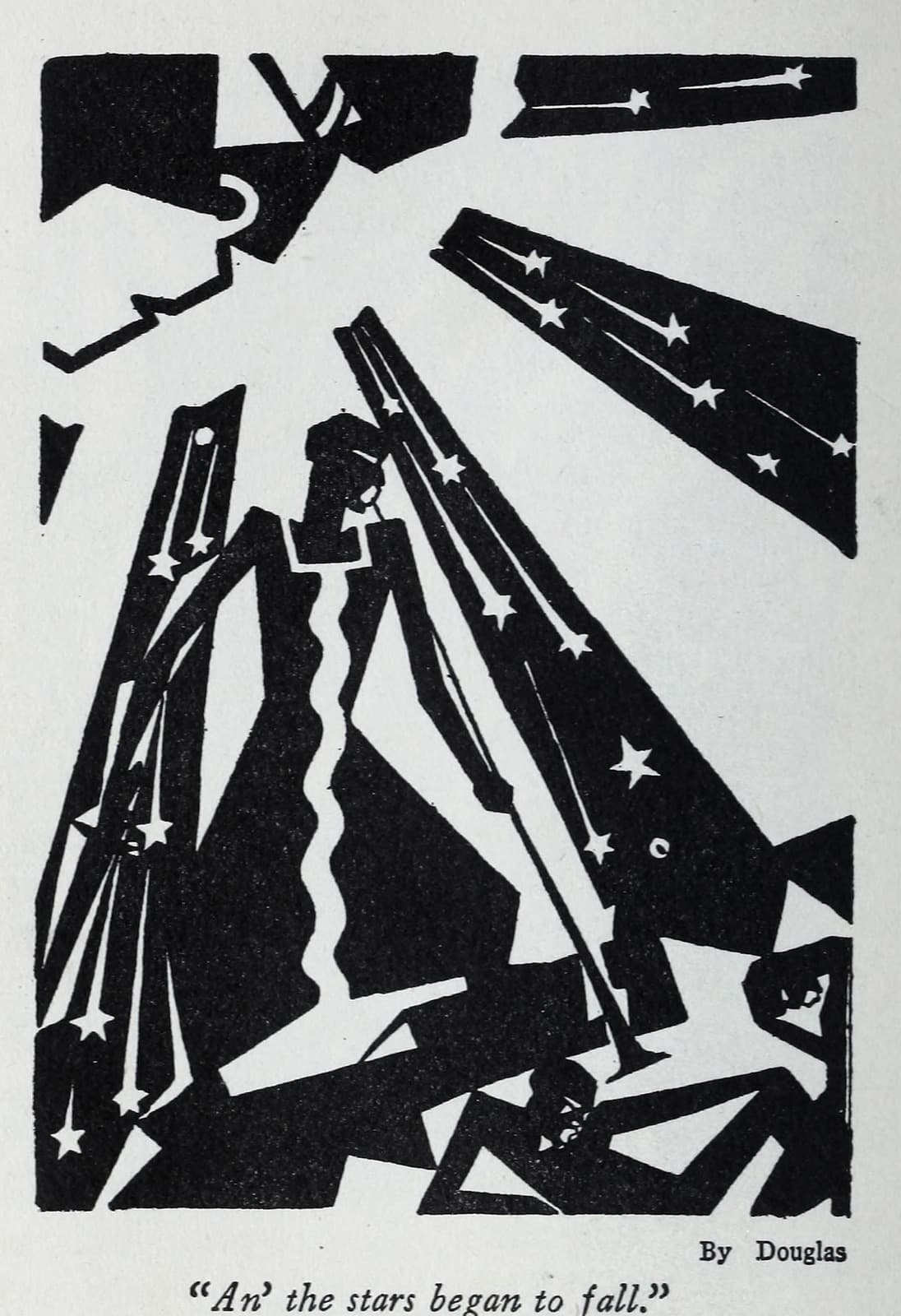
The book's list of illustrations gives eight titled plates under the heading Drawings and Decorative Designs by Aaron Douglas. They are Meditation at 54, Rebirth at 56, Sahdji at 112, The Poet at 128 and The Sun-God at 138. Then come "Emperor Jones" at 152, "Roll, Jordan, Roll" at 196, and "And the Stars began to Fall" at 198. The note on contributors credits him with ten decorative designs in all.
The book's other artist
Aaron Douglas was not the volume's principal illustrator. The list of illustrations opens by crediting the cover design and the book decorations to Winold Reiss, the German-born artist who had begun teaching him in New York that year. Winold Reiss also supplied the portraits and type sketches that run through the book.
Alain Locke says so himself, in his essay The Legacy of the Ancestral Arts, and in the same breath names the younger man twice over.
“But the work of young artists like Archibald Motley, Otto Farrill, Albert Smith, John Urquhart, Samuel Blount, and especially that of Charles Keene and Aaron Douglas shows the promising beginning of an art movement instead of just the cropping out of isolated talent.”
Aaron Douglas was twenty-six and had been in Harlem for a few months. The book's own note on contributors gets his birth year wrong, giving 1898; the Kansas Historical Society records 26 May 1899. It also records that he had already published drawings in Opportunity, Vanity Fair and the Theatre Arts Monthly.
Paris was still six years away
The Kansas Historical Society records that Aaron Douglas moved to Harlem in June 1925 intending to pursue an art career ultimately in Paris. The New Negro came out that same year, so the drawing belongs to the very start of the delay: he did not reach the city until 1931, and then stayed about a year, enrolled at the Académie Scandinave.
Nothing in the drawing is French, and nothing about it depends on Paris. What it does establish is that the flat profiles, the slit eye and the bands of drawn light were all in place six years before he got there.
Close reading
Reading the work, detail by detail
The plate divides on a diagonal: light and water on the left, people on the right. Start with the sun in the corner, follow the bands of the river down, then cross to the head of the column, the raised hands, the packed rows below them, and the sawtooth edge that closes the design.
1.The sun in the corner
One sun, drawn as a closed ring rather than a disc, with a jagged shape caught inside it. Six rays leave it as solid black wedges that narrow as they travel. They are the light in the picture: there is no shading anywhere on the plate, only black shape and white paper.
2.The bands of the river
Five black bands and four white channels, all cut to the same slow curve and all running the same way. Nothing else happens in this part of the plate, which is what makes the crowd on the other side read as pressure. The white channels narrow as they approach the bottom left corner.
3.The head of the column
Two figures, the highest in the picture, both facing left towards the water. Each eye is a single white slit and each mouth a notch; no other feature is drawn. The white band of the top wave runs directly behind them, so the two heads are the only shapes on the plate with light on both sides.
4.The raised hands
One head and at least four hands, the fingers drawn as short separate points rather than as a mitten shape. The hands are lifted above head height and overlap each other, which is the only place on the plate where the crowd breaks its own outline. The white wave curves past on the left.
5.The rows at the front
Eight or nine faces are legible in this crop and every one of them faces left. They are stacked in staggered rows so that the heads of the row behind appear in the gaps, and white is used only to separate one body from the next. Several near hands are raised to chest height.
6.The legs and the sawtooth edge
The crowd's lower edge is all legs, cut so that the white paper shows through as long triangles between them. Under that runs a border of small even sawteeth, about twenty of them, which stops the design rather than describing anything. It is the only regular repeating shape on the plate.
Timeline
1925
Aaron Douglas moves to Harlem in June, intending an art career ultimately in Paris, and wins a scholarship to study with Winold Reiss.
1925
The New Negro: An Interpretation is published in New York by Albert and Charles Boni, with eight titled plates by Aaron Douglas. Roll, Jordan, Roll is printed at page 196.
1931
Reaches Paris at last and spends about a year at the Académie Scandinave.
2021
The drawing enters the public domain in the United States on 1 January, ninety-five years after publication. It stays in copyright in France until the end of 2049.
Where to see it
A viewing location has not yet been listed for this work.
Frequently asked questions
What is Roll, Jordan, Roll by Aaron Douglas?
A full-page black-and-white drawing printed at page 196 of The New Negro, the anthology Alain Locke edited in 1925. It shows a column of figures in profile climbing the right side of the page beside a river drawn as five broad black waves. The caption is the title of a spiritual.
Where can you see Roll, Jordan, Roll?
In the book. The New Negro was published in New York by Albert and Charles Boni in 1925, and the Internet Archive's scan of the first edition carries the plate at page 196. No museum holds an original drawing under that title, and none of the institutional records consulted names one.
How many drawings did Aaron Douglas make for The New Negro?
The book's list of illustrations names eight titled plates by him — Meditation, Rebirth, Sahdji, The Poet, The Sun-God, "Emperor Jones", "Roll, Jordan, Roll" and "And the Stars began to Fall". The note on contributors credits him with ten decorative designs altogether. The cover design, the book decorations and the portraits are by Winold Reiss.
Is Roll, Jordan, Roll in the public domain?
In the United States, yes. It was published in 1925, and works published that year entered the American public domain on 1 January 2021 when the ninety-five-year term ran out. It remains in copyright in France and the rest of the European Union, where Aaron Douglas died in 1979 and the term runs to the end of 2049.
What is the spiritual Roll, Jordan, Roll?
A Black American spiritual, and the river in the title is the Jordan. Aaron Douglas's plate is printed two pages before Alain Locke's essay The Negro Spirituals, which begins at page 199 of the same book under a band of Aaron Douglas's ornament.
Had Aaron Douglas been to Paris when he drew it?
No. He moved to Harlem in June 1925 intending to pursue an art career ultimately in Paris, according to the Kansas Historical Society, and did not reach the city until 1931, when he spent about a year at the Académie Scandinave. The style in the drawing was fully formed six years before the trip.
More by Aaron Douglas
If you like Aaron Douglas
Explore painters from the same movements and circles.

Loïs Mailou Jones
Boston-born painter and Howard University professor for forty-seven years, whose 1937–38 year at the Académie Julian in Paris produced Les Fétiches and opened a seven-decade career spanning French landscape, African design and Haitian colour.
View artist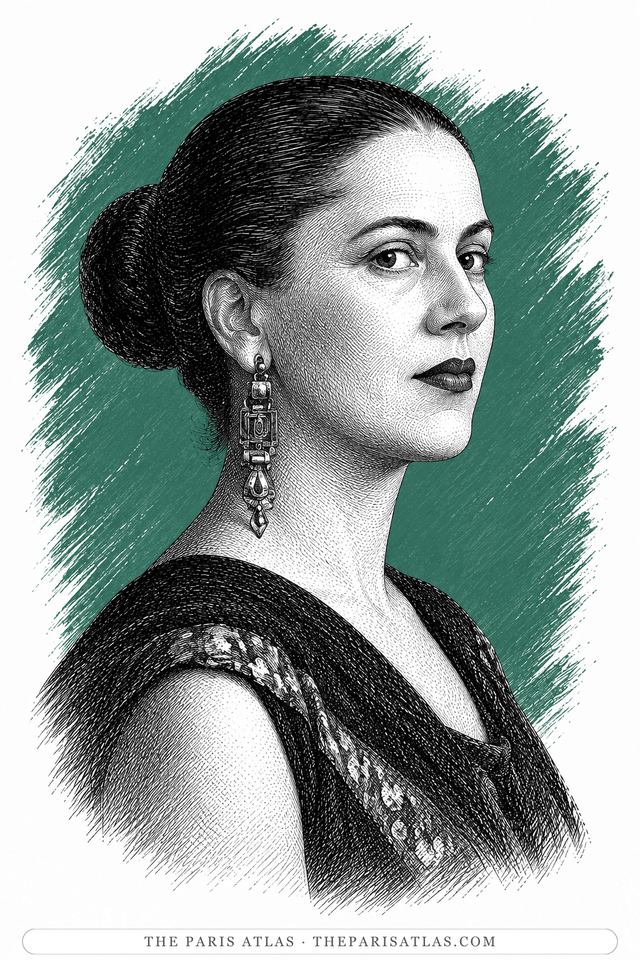
Tarsila do Amaral
Brazilian painter who spent the 1920s moving between São Paulo and Paris, studied Cubism under André Lhote, Albert Gleizes and Fernand Léger, and used what she learned to paint Brazilian towns, railways, plants and bodies. Her 1928 painting Abaporu prompted the manifesto that gave the Anthropophagic movement its name.
View artist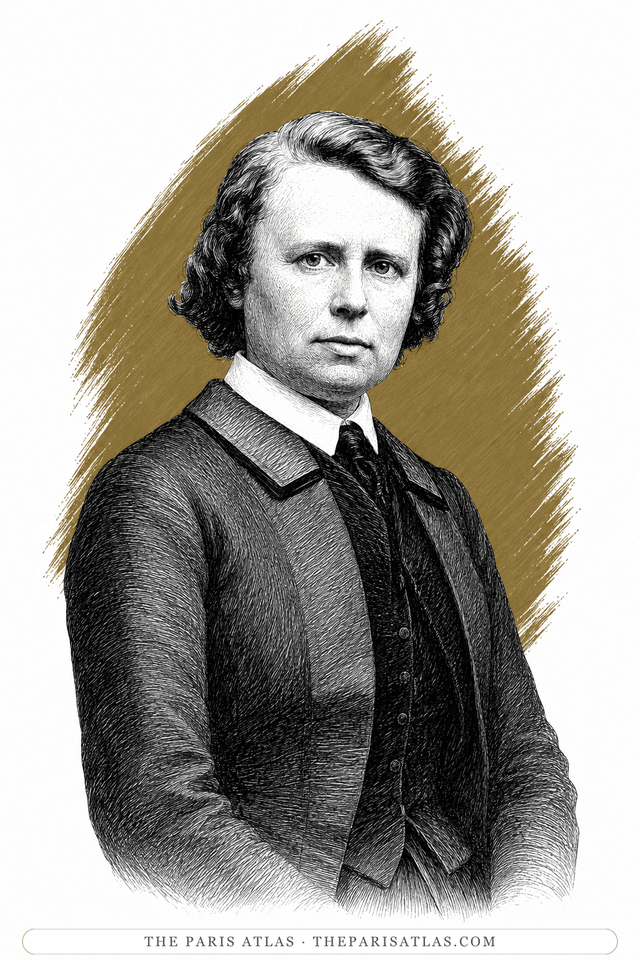
Rosa Bonheur
At the horse markets of Paris and in her studio beside the forest of Fontainebleau, Rosa Bonheur gave animals the presence of great portrait subjects. The success of The Horse Fair helped her build a life shaped by her work, financial independence, and the women she loved.
View artist
References
The sources below include collection records, catalogues, scholarly research, and primary materials that informed this page. They document Roll, Jordan, Roll, its making, and its place in cultural history.


1The New Negro: An Interpretation
EssaysAlbert and Charles Boni, New York, 1925Used forThe first edition, scanned by the Internet Archive: the plate itself, the book's own list of the eight Aaron Douglas plates, the note on contributors, and Alain Locke's sentence naming him.

2Douglas, Aaron
WebsiteKansas Historical Society, KansapediaUsed forThe Kansas Historical Society, for the birth date of 26 May 1899, the move to Harlem in June 1925 with Paris as the goal, and the Paris year of 1931.
3Aaron Douglas
WebsiteAmistad Research Center, Tulane UniversityUsed forThe archive that records the Académie Scandinave enrolment.
4World Changing Faculty: Alain LeRoy Locke
WebsiteHoward UniversityUsed forHoward University on Alain Locke, its philosophy professor and the anthology's editor.
5The New Negro Movement — NAACP: A Century in the Fight for Freedom
WebsiteLibrary of CongressUsed forThe Library of Congress on the New Negro movement the anthology named.
These references provide the documented foundation for this work's history and interpretation. Claim-level citations remain attached to the specific claims they support.
 Explore more resources