Jean
Farou's adolescent son, who is in love with his father's secretary and turns hostile to his stepmother because of it.
Jane, who is about thirty, works for his father and treats him as a child. When that becomes unbearable he asks his father to send him abroad instead: to friends of the family in Argentina, for three years of South America and commercial life before his military service.
The book

At a glance
- Farou's son, and the only child in the house
- Sixteen when the novel opens, seventeen by December
- Le petit Farou, small Farou, by the household. He calls his stepmother Mamie
- Absent from the book. His father kept no photograph and says he knew her very little; the boy was legitimised
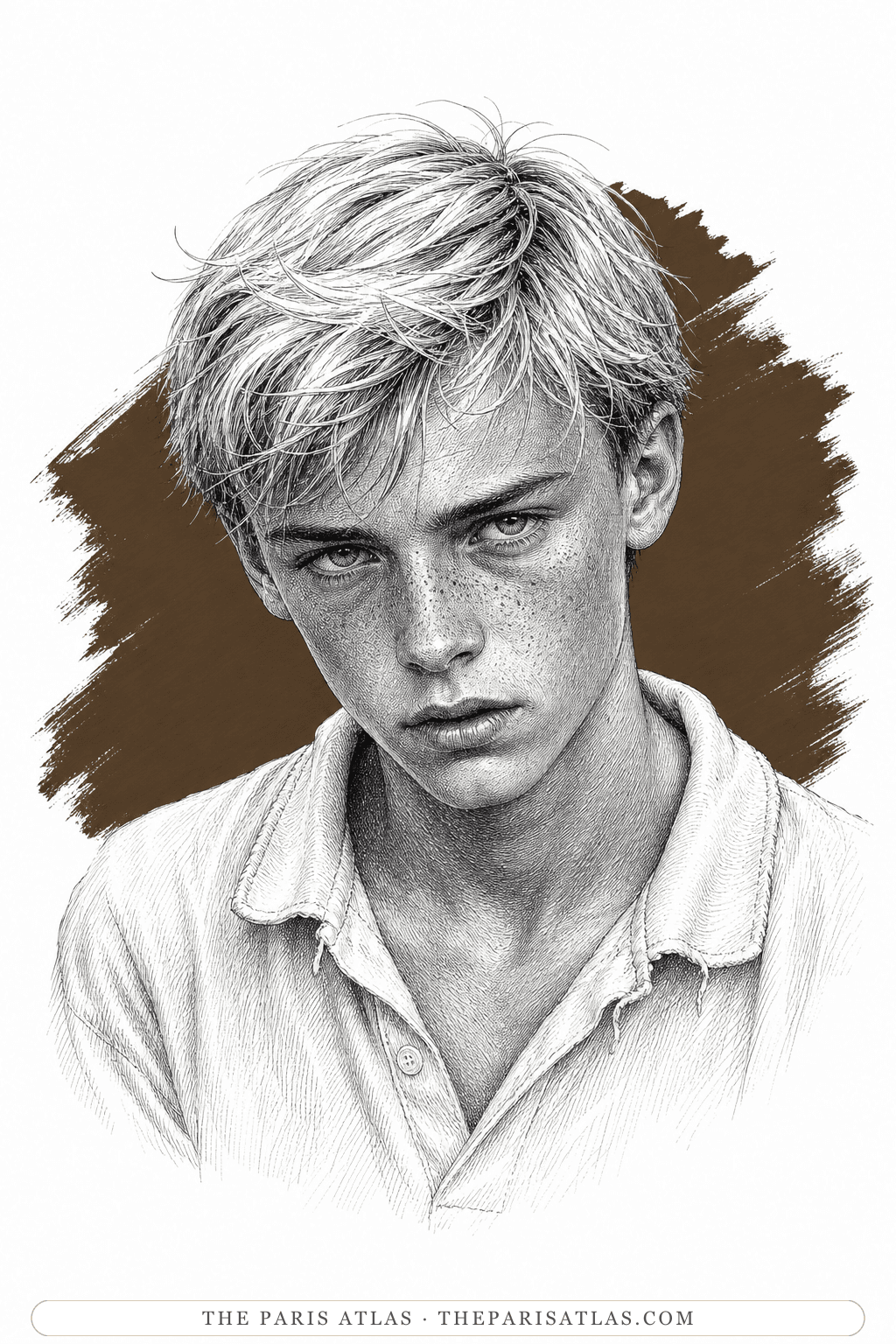
- In summer, a worn tennis shirt, white trousers greened at the knee and too short, a belt and rope-soled shoes the caretaker's son would turn down
- A young men's group called the Jeunesse Agissante, with a committee, dinners and a great deal of shouting
Who they are in the book
Spoiler-freeJean is the son of the playwright Farou, and the only child in the household of Colette's 1929 novel The Other One. He is sixteen when the book opens and seventeen by the end of it. His mother is nowhere in the story: his father kept no photograph of her and says he knew her very little. The boy has been brought up for more than ten years by his father's wife, Fanny, whom he calls Mamie, and the household calls him le petit Farou, small Farou. He is blond, blue-eyed, sunburnt and freckled across the cheekbones, and he spends the summer in a frayed tennis shirt and white trousers gone green at the knee.
He is in love with Jane, his father's secretary, who is about thirty, lives in the same house and treats him as a boy to be teased. Everyone can see it. Fanny works it out within the first few pages and asks Jane to be gentler with him, on the grounds that sixteen is a hard age.
What he does about it is watch. He establishes that an old flowering shrub on the terrace parapet will hide a head, and that a lime tree will take his weight. Behind the closed door of his airless bedroom he tracks Jane's movements around the house by the creak of the floorboards. He is the first person in the household to know what his father and Jane are doing, and he brings his stepmother in on it by pulling her under the shrub beside him.
Colette is not sentimental about him. Once he is unhappy he becomes difficult to be in a room with, and Fanny — who nursed him through a fever when he was small and used to play cards with him — watches him turn into someone with no pity for anybody, including the woman he is in love with and the woman who raised him.
How Jean Is Portrayed
- SixteenColette gives his age at the end of his first paragraph, after describing a boy who has gone blank at the lunch table, dropped his eyebrows, let his mouth fall half open and hidden his hunger and his thin skin behind his usual stillness. He was sixteen, she says.
- The fruit bowlAt lunch Jane asks him to pass the redcurrants. His hand meets hers under the basket; he snatches his fingers back with a small convulsion like disgust and blushes so violently that his stepmother bursts out laughing.
- He listens through the floorSent up early, he stands behind the closed door of his hot bedroom and follows Jane about the house by the sound of the boards giving under her.
- The lime tree and the shrubHe climbs a lime tree at night to watch Jane on the lower terrace, and drops out of it when she reappears. Later he works out that an old shrub straddling the parapet will hide a head, counts the two or three noisy steps of gravel in his way, shouts something loud and childish about holding his stepmother's wool, and slides under the leaves. When the pair below start up the steps, it is he who pushes Fanny back into her chair, so that his father arrives to find her holding a skein of thick red cord that the boy is tangling at her feet like a cat.
- He faints on the roadFanny finds him lying across the bank of the path, head and feet hanging, green under his tan, with sand and lumps of earth in his hair. He says only that yes, she can call it a fall. He is still short of breath climbing the path home, and she makes him go and wash before his father sees him.
- He asks to be sent to ArgentinaHe tries the request on his father carefully, the way you would try a weapon: could something be found for him with the Secrestats, three years of South America and commercial life before his military service. His father, watching the two women go off down the path, agrees without enthusiasm and lays an arm across the boy's shoulders. Jean carries the weight, badly wants to kiss the hand hanging by his cheek, and does not, having already worked out that what a child is allowed does not outlast childhood.
- How he talks at the tableJane says the mountains have a monotonous face and he mutters, Maeterlinck. When the two women laugh at him he tells them he has had enough of their amputees' cheerfulness and walks away from the table.
- The one true thing he says about his fatherHe tells Fanny that Farou is timid, and that this is why he hides his work at the theatre the way a cat hides its business in sand. Fanny has been married to the man for twelve years and has never thought of it. She decides the boy is right.
- At his stepmother's bedsideFanny is in bed after her collapse and the boy she raised sits down beside her with one question, which he asks three times in different words: where were they, were they in the house, where were they when you came in. There is no pity in it anywhere. She turns her head on the pillow so he cannot see her crying, and tells him he will never be her and should not hope for it.
He gets himself a woman. He comes home one evening smelling so strongly of a scent that is not his that both women look up at once: bruised eyelids, a thickened, glossy mouth, his hair combed a new way, a thin gold chain on his wrist and a jewelled stud in his shirt that nobody has seen before. He carries it straight to Jane, laughing hard, and offers it to her as an insult. Fanny tells him to go and change, that he is making them ill, and he leaves proud of being understood and blamed.
The last time he appears he looks in to say goodnight, kisses Fanny's fingertips, tells her he is glad to be leaving her in good hands and goes out on what Jane calls a poisoned allusion. Sitting by the fire afterwards, Fanny works out what she has lost. Before Jane there was a nice little blond boy in this house who played cards with her, who was twelve years old for a long time, and whose voice and delicacy put something female into a household that will now hold nobody but Farou.
If you like The Other One


If you like Colette
Explore authors with a similar voice, perspective, and influence.
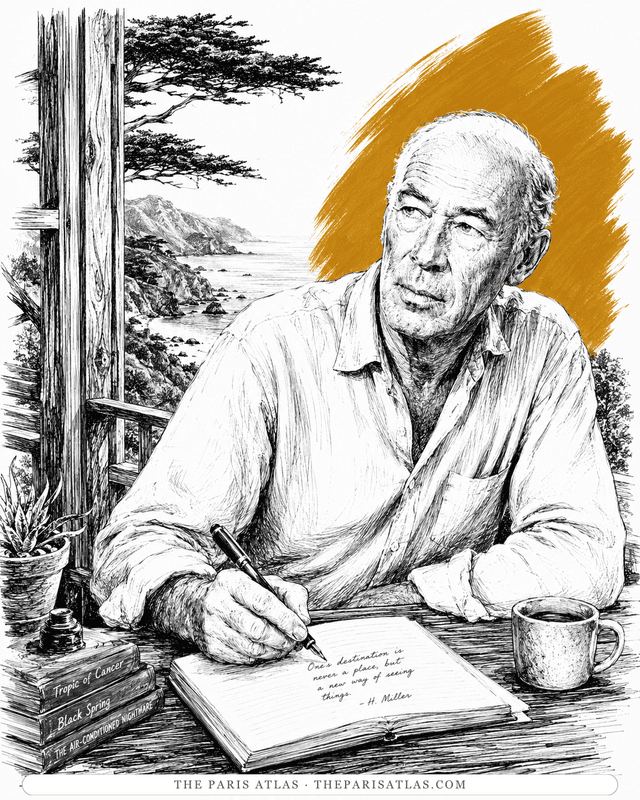
Henry Miller
The Brooklyn dropout who arrived in Paris broke at thirty-eight and wrote the exuberant, banned books that ended American censorship.
View author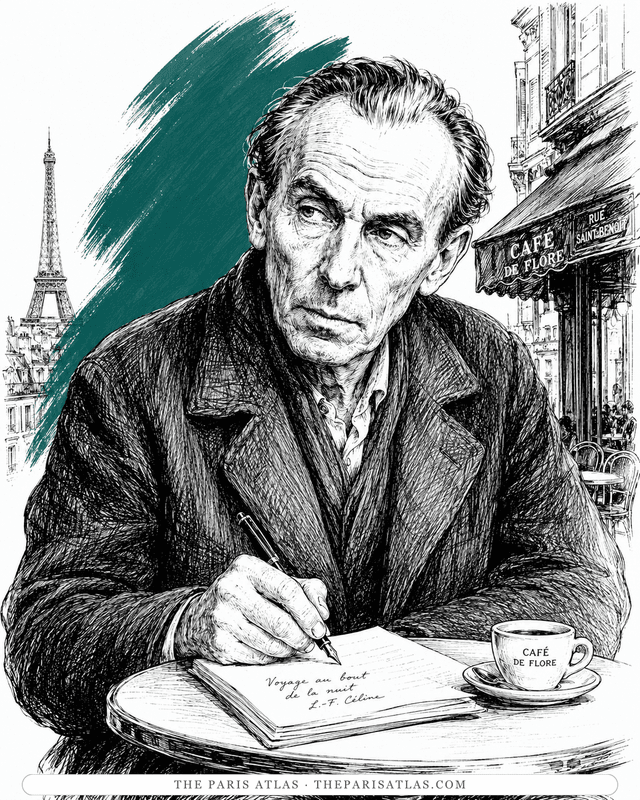
Louis-Ferdinand Céline
The doctor of the Paris slums who wrote the century's blackest, funniest novel — and changed the sound of French prose.
View author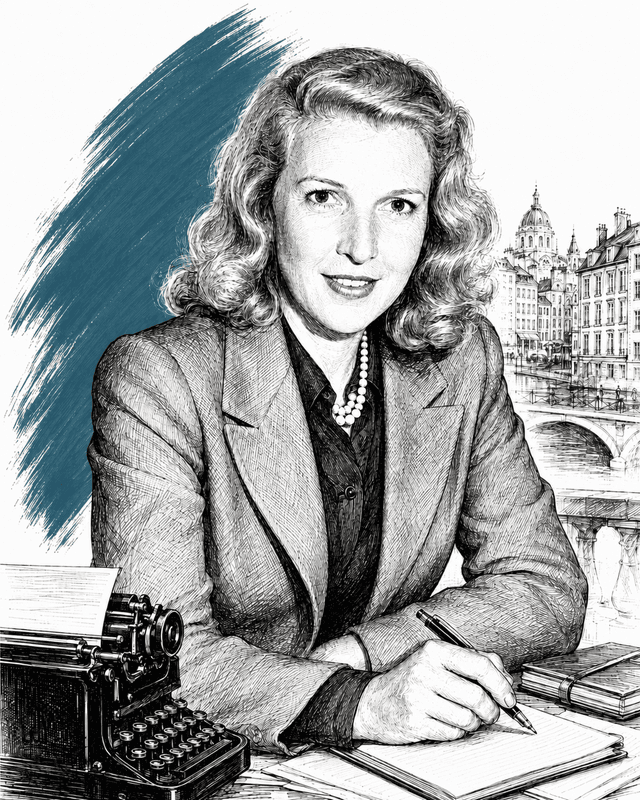
Martha Gellhorn
War correspondent who covered the Spanish Civil War, D-Day, and conflicts across five more decades; Hemingway's third wife, 1940–1945.
View author