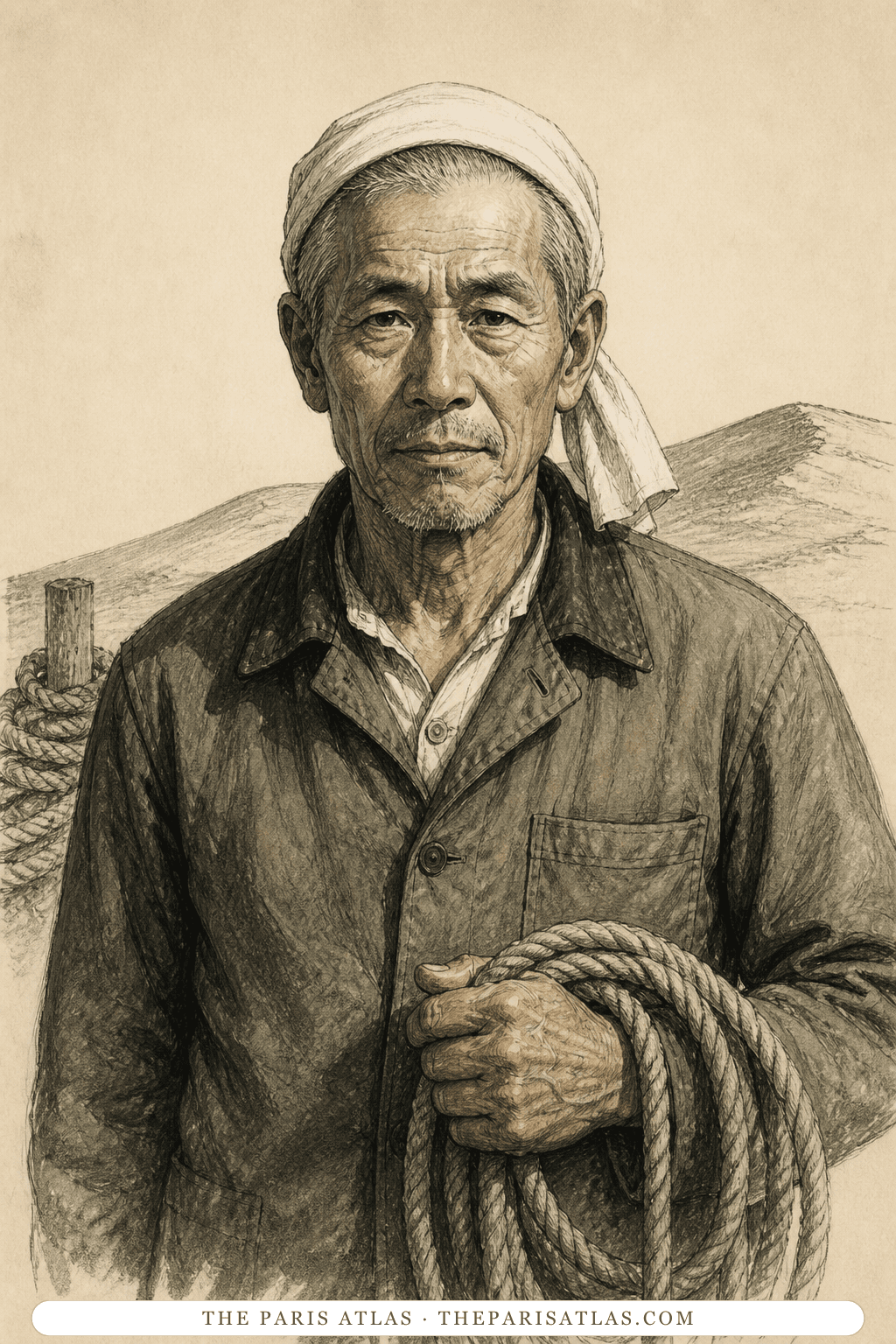
The village elder
The old man who speaks for the settlement and presents communal coercion as a practical arrangement.
To keep Jumpei working without allowing one captive's objections to weaken the village's labor system.
The book

At a glance
- Not given
- Village representative and negotiator
- Helps direct Jumpei into the trap
- Speaks for the settlement from the pit's rim
Who they are in the book
Spoiler-freeThe village elder is the old man who first helps direct Jumpei toward the house in the pit. What sounds like hospitality is part of the trap. Once Jumpei understands his captivity, the elder becomes one of the people who speaks for the community from above.
He does not explain the arrangement as personal revenge. He treats the need for labor, the rationing of supplies, and the rules of the village as settled practical matters. That ordinary tone makes the coercion harder to isolate in one dramatic villain.
Jumpei bargains with the elder because he hopes an individual representative can change the system. The negotiations produce conditions rather than freedom, most brutally when a request to see the sea becomes an offer of public humiliation.
How The village elder Is Portrayed
- An old local spokesmanAge and position allow him to present decisions as the village's established judgment rather than his private demand.
- Calm about shocking factsHe discusses captivity, labor, and supply as practical problems, refusing the moral language Jumpei wants him to acknowledge.
- Always above the pitHis position at the rim reflects his authority: he can speak, withhold, bargain, and leave while Jumpei remains below.
- A negotiator with no equal exchangeThe elder can offer small privileges, but Jumpei has no comparable power and cannot make the village recognize his right to go home.
Jumpei eventually asks for the chance to leave the pit briefly and see the sea. The village's answer, communicated through its leaders, is that he and the woman must have sex while the community watches.
The bargain exposes the limit of negotiation inside captivity. A small privilege can be offered only if the captives accept another act of control. The woman refuses, and Jumpei's attempt to force her fails.
If you like The Woman in the Dunes


If you like Kōbō Abe
Explore authors with a similar voice, perspective, and influence.

Albert Camus
French Algerian novelist, essayist, journalist and playwright who used the absurd and revolt to ask how people should live without false consolation.
View author
Simone de Beauvoir
French writer and philosopher whose novels, memoirs, and social analysis examined freedom, gender, responsibility, aging, and the material conditions that shape a life.
View author
Sylvia Plath
American poet who came to Paris in the spring of 1956, in the middle of her Fulbright year at Cambridge, to find the man she had been in love with for three years — and found he had gone. She had met Ted Hughes weeks before; she married him that June, and the honeymoon came back through Paris.
View author