
The woman
The unnamed widow who keeps the house from being buried and becomes Jumpei's work partner, opponent, and companion.
To keep the house livable, preserve a place in the village, and hold on to the companionship that develops with Jumpei.
The book

At a glance
- About thirty
- Never given
- Widow; her husband and daughter died in the dunes
- A wooden house at the bottom of a sand pit
- Nightly sand removal
Who they are in the book
Spoiler-freeThe woman is an unnamed widow of about thirty who lives alone in the house at the bottom of the pit. Her husband and young daughter died when sand buried them during a storm. She continues shoveling every night because the same dunes can destroy the house and threaten the settlement.
Jumpei first sees her as passive and ignorant. In practice, she knows far more than he does about sand, water, food, tools, the village's delivery system, and the work required to survive. She often answers his theories with a fact he has overlooked.
Her cooperation with the village makes her part of Jumpei's captivity, but she is not free herself. She depends on the villagers for water and supplies, has nowhere secure to go, and cannot raise the ladder. Her growing attachment to Jumpei exists inside those limits rather than removing them.
How The woman Is Portrayed
- About thirty and small in buildThe novel presents her as a young widow whose slight body is nevertheless adapted to hard nightly labor.
- Works while the village sleepsShe shovels after dark, fills containers for the hauling crews, and rests during the hotter part of the day.
- Practical with scarce resourcesShe protects water, handles food in a house full of sand, repairs what she can, and knows which routines cannot safely be skipped.
- Patient but not powerlessShe tolerates many of Jumpei's complaints, yet resists him physically when he crosses a limit and does not accept every demand.
- Keeps grief closeHer husband and daughter remain buried somewhere in the dunes. The loss helps explain her bond to the house without turning her into a symbol of passive suffering.
- More direct than JumpeiWhere he produces long explanations, she answers with immediate needs: water, work, damage to the house, or what the villagers will actually do.
The relationship becomes sexual, but the woman refuses to perform sex for the villagers when Jumpei is promised a view of the sea. He tries to force her and she fights him off. The scene proves that her adaptation to the village has not erased her ability to refuse.
She later becomes pregnant and suffers a medical emergency described as an ectopic pregnancy. Villagers carry her up the ladder for treatment. The novel ends before she returns, so readers do not learn the final outcome of her health, the pregnancy, or her relationship with Jumpei.
If you like The Woman in the Dunes


If you like Kōbō Abe
Explore authors with a similar voice, perspective, and influence.
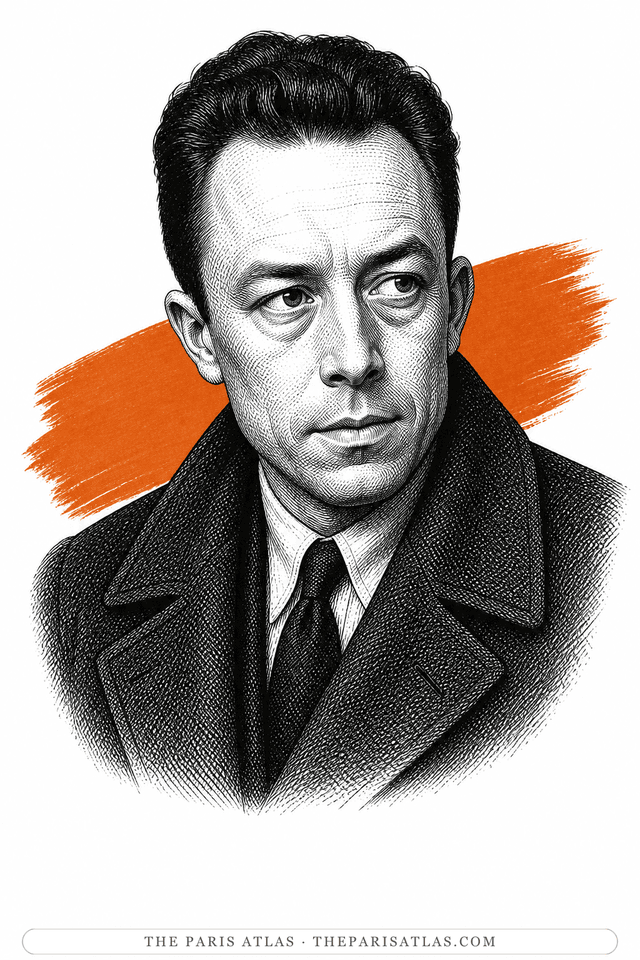
Albert Camus
French Algerian novelist, essayist, journalist and playwright who used the absurd and revolt to ask how people should live without false consolation.
View author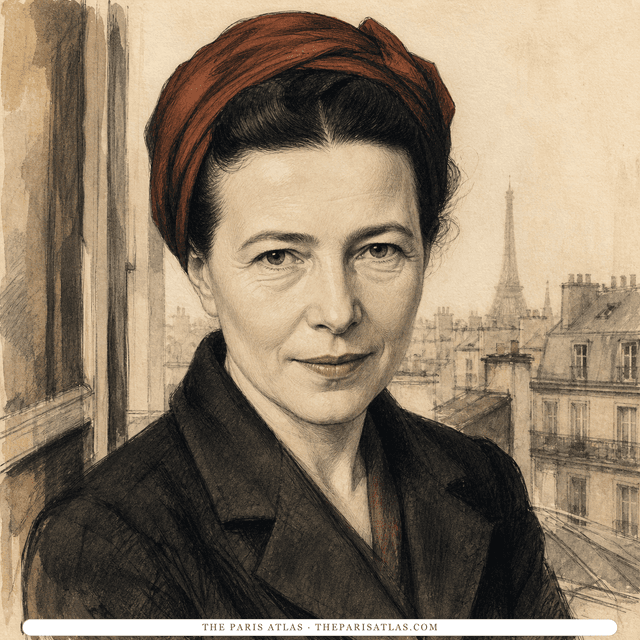
Simone de Beauvoir
French writer and philosopher whose novels, memoirs, and social analysis examined freedom, gender, responsibility, aging, and the material conditions that shape a life.
View author
Sylvia Plath
American poet who came to Paris in the spring of 1956, in the middle of her Fulbright year at Cambridge, to find the man she had been in love with for three years — and found he had gone. She had met Ted Hughes weeks before; she married him that June, and the honeymoon came back through Paris.
View author