Euthanasia dei Adimari
Countess of Valperga, a Guelph brought up in Florence, who loves Castruccio and loves Florence's freedom more.
She wants peace between the two parties and freedom for Florence.
The book
Valperga
Mary Shelley
Who they are in the book
Spoiler-freeEuthanasia is educated, generous and firm. She rules her own castle and makes her own choices, and the heaviest one is to turn down the man she loves.
How Euthanasia dei Adimari Is Portrayed
- Rome, Dante and libertyIn Volume I, Chapter X, she tells how she read the Roman writers with her father, then heard a minstrel sing Dante at a court in Lombardy. She learned to link wisdom with liberty, and Florence with both.
- Holding courtIn Volume I, Chapter XIII, she hosts a festival at Valperga for nobles of both parties. She had hoped it would bring the two sides together, but few Ghibellines come.
- Saying noIn Volume II, Chapter VII, after Castruccio exiles three hundred families from Lucca, she tells him that as the enemy of Florence he will never be hers.
- The castle takenIn Volume II, Chapter XI, Castruccio's soldiers get into Valperga through a back gate and attack its defenders from behind. Her first words to her frightened friend are that they are betrayed, but she need not fear.
- Saving BeatriceIn Volume III, Chapter II, she visits Beatrice in the Inquisition's prison and wins her release. In Chapter VII she nurses her until she dies.
- Joining the plotIn Volume III, Chapter IX, she reads a note from a young Florentine tortured for ransom. She joins the conspiracy against Castruccio, on condition that his life is spared.
Euthanasia dei Adimari quotes
Florence was free, and Dante was a Florentine; none but a freeman could have poured forth the poetry and eloquence to which I listened
I had rather woo the lion in his den to be my husband, than become the bride of a conqueror.
As the enemy of Florence I will never be yours
In Volume III, Chapter XII, she refuses to be freed alone while her fellow plotters die. Castruccio sends her by ship to Sicily. The ship is never seen again, and a handkerchief with a few golden hairs washes up on the shore.
If you like Valperga


If you like Mary Shelley
Explore authors with a similar voice, perspective, and influence.

Louis-Ferdinand Céline
The doctor of the Paris slums who wrote the century's blackest, funniest novel — and changed the sound of French prose.
View author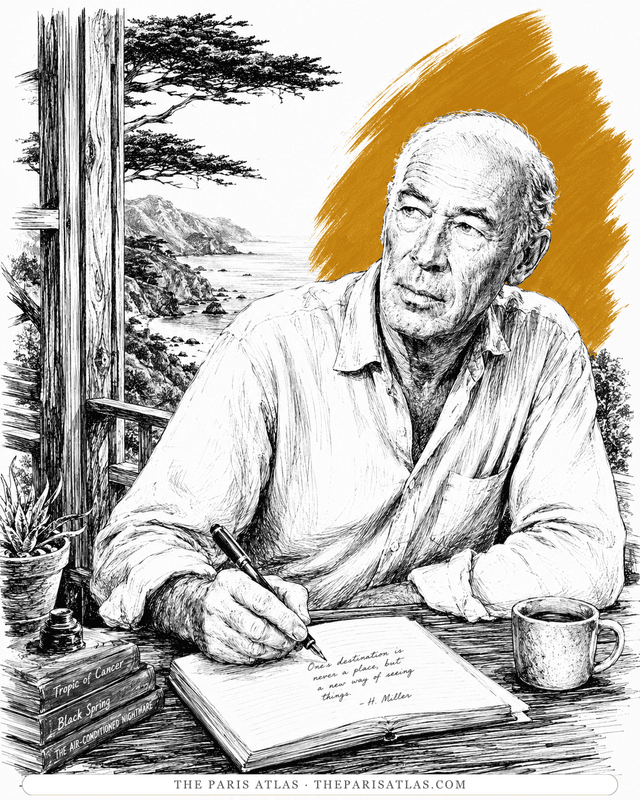
Henry Miller
The Brooklyn dropout who arrived in Paris broke at thirty-eight and wrote the exuberant, banned books that ended American censorship.
View author
Mark Twain
The Missouri newspaperman who became America's most famous writer, and whose first book made its reputation partly out of Paris: in 1867 he arrived with a shipload of American tourists, renamed his guide Ferguson, watched the high-kicking can-can through his fingers and wrote it all down. He kept coming back — and was living in Paris in the mid-1890s, broke, while finishing the novel he considered his best, Personal Recollections of Joan of Arc.
View author