Operated at · 1977
Centre Pompidou
The centre opened in the Beaubourg building on 31 January 1977 and has occupied it since. The building is closed for renovation from September 2025 until 2030; the institution continues through partner venues.
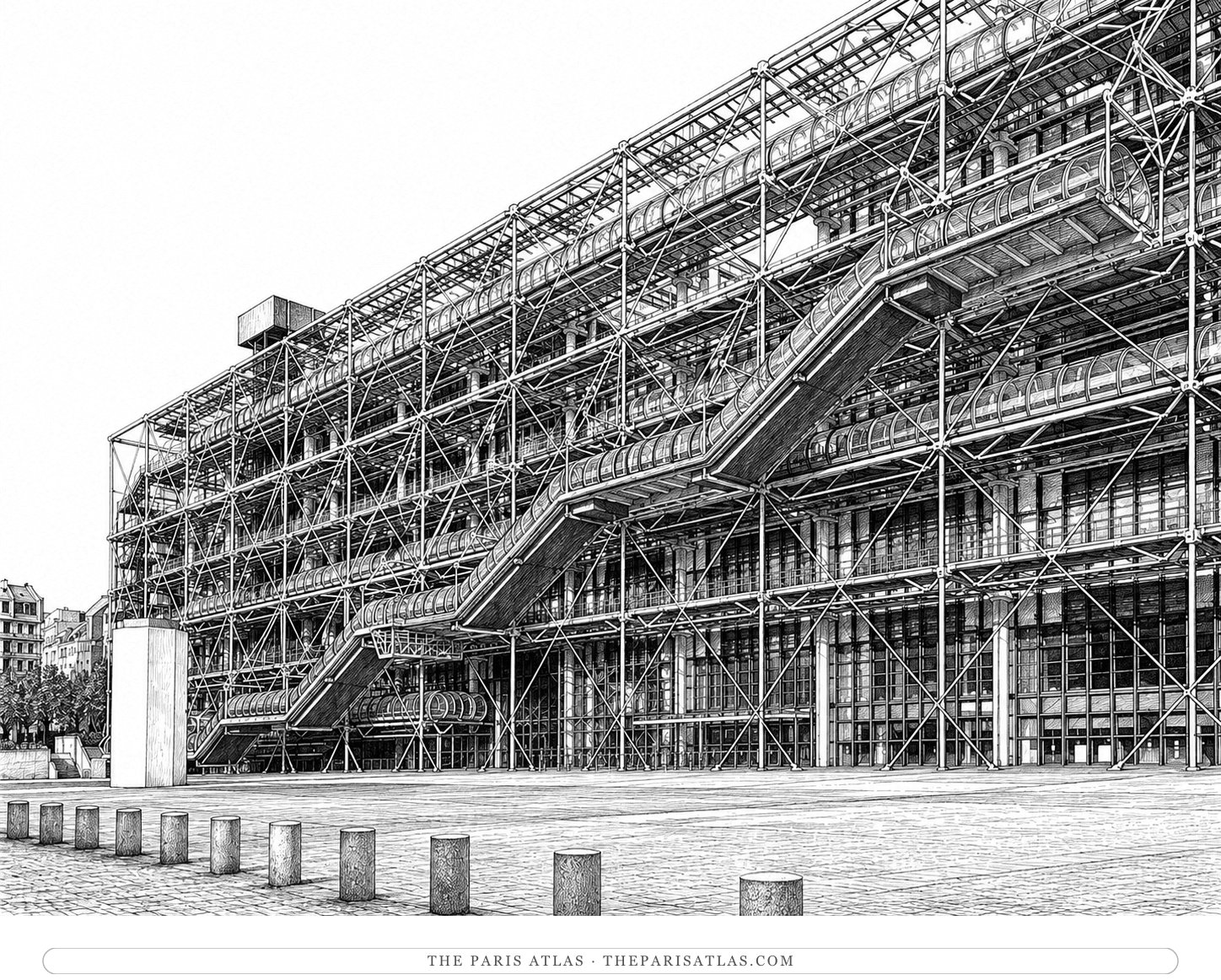
A building with its structure on the outside, holding Europe's largest collection of modern art.
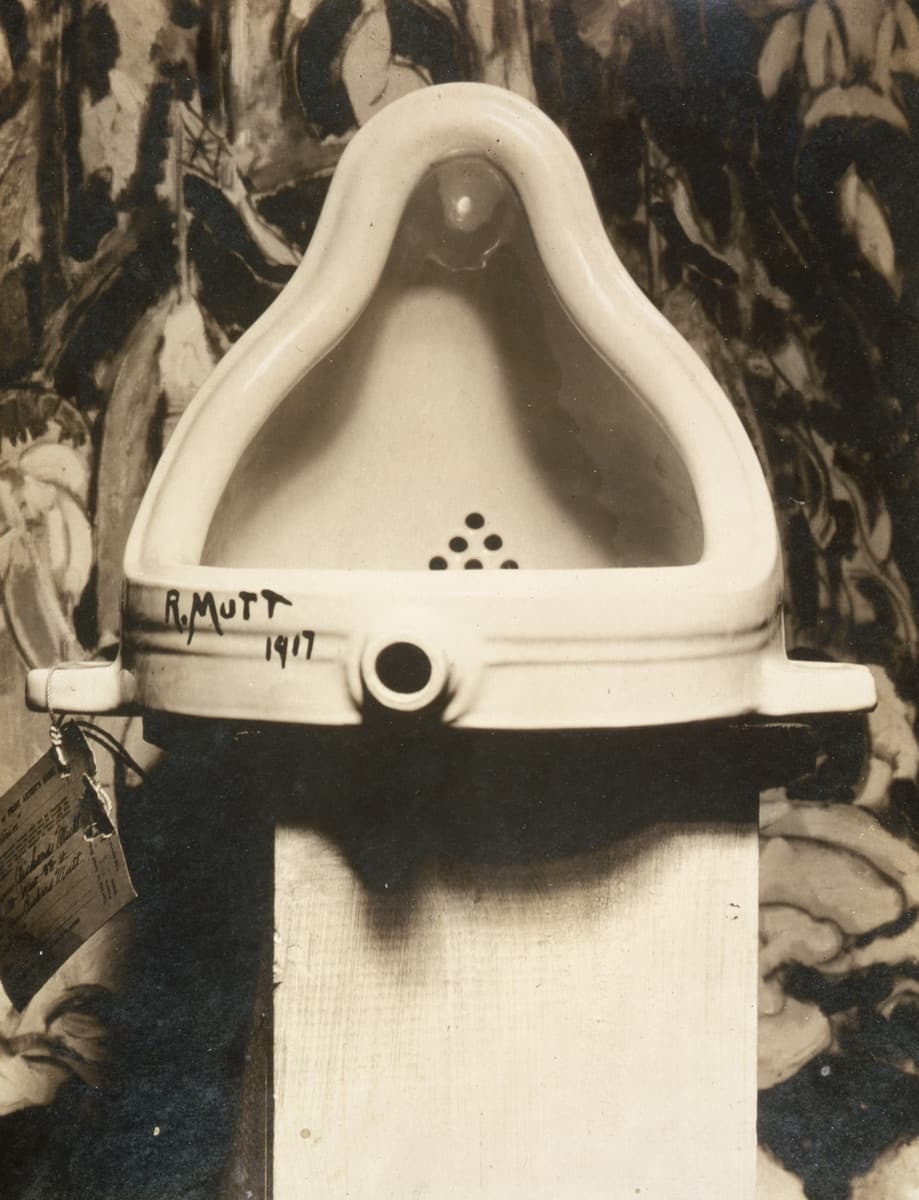
One of the 1964 Schwarz-edition replicas of the lost 1917 original.
The wall behind Breton's desk at 42 rue Fontaine, about 255 objects from paintings to found stones, acquired by dation in 2003.
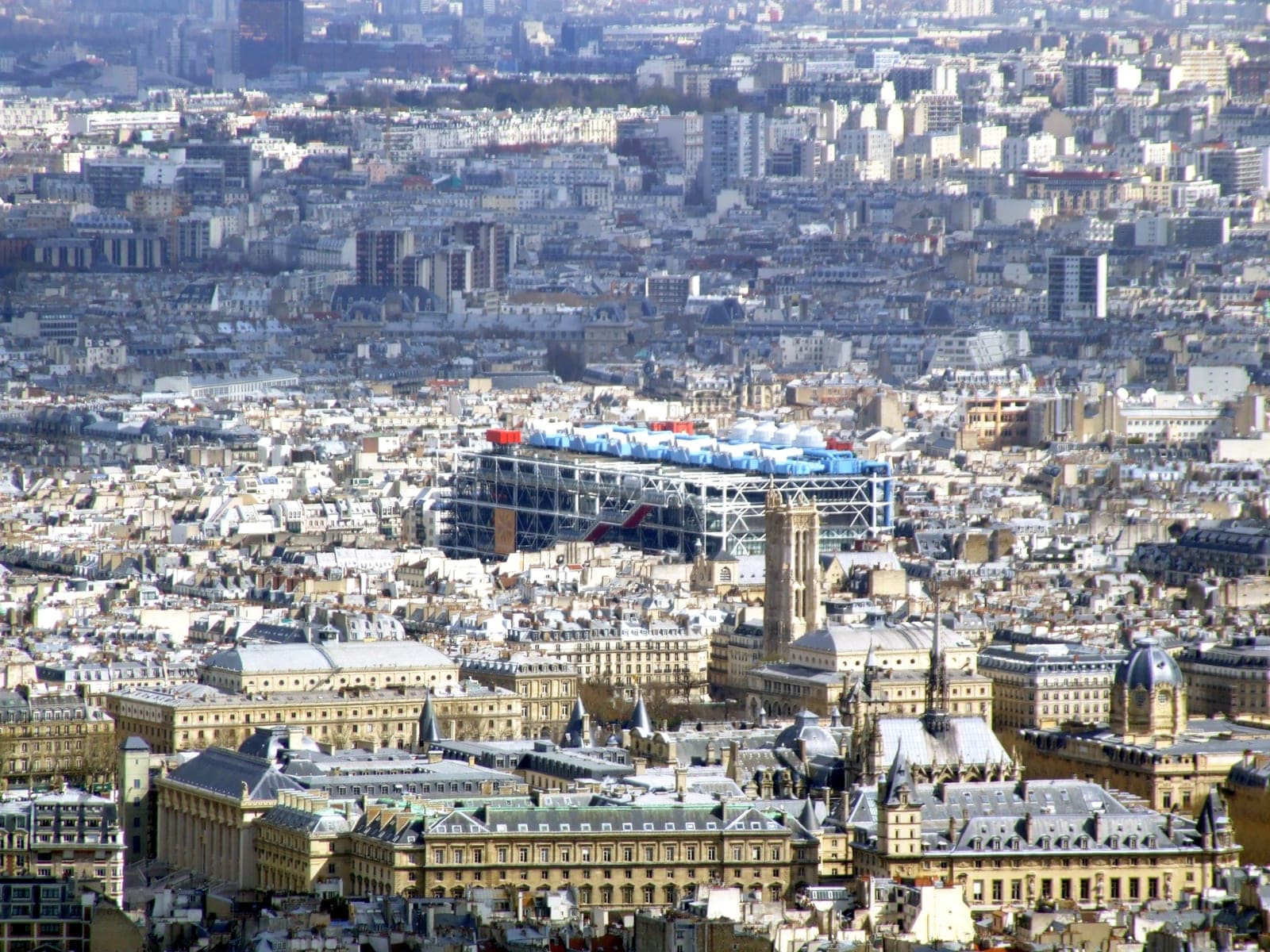
The Centre Pompidou is the home of the Musée national d'art moderne, whose collection of more than 140,000 works the institution describes as the richest in Europe and the second-largest in the world. The building, on the Beaubourg plateau of the 4th arrondissement, closed on 22 September 2025 for a five-year renovation and is scheduled to reopen in 2030. The institution has not stopped: its collection is touring partner venues while the building is closed.
The centre was Georges Pompidou's project. In 1969, newly elected president, he decided that Paris should have a cultural centre where painting and sculpture would sit beside music, cinema, books, and audiovisual research. The design went to an international competition, judged in July 1971 by a jury under Jean Prouvé that included Oscar Niemeyer and Philip Johnson. From 681 entries it chose two architects in their thirties, Renzo Piano and Richard Rogers, working with Gianfranco Franchini and the engineers of Ove Arup & Partners. Pompidou died in office in 1974; the centre opened under his name on 31 January 1977.
The building made the institution famous before the collection could. Piano and Rogers put the structure and services on the outside — blue ducts for air, green for water, yellow for electricity, red for lifts and escalators — and left the floors as open plates that curators could divide at will. Half the site became a sloping piazza, and the main escalator climbs the west façade in a glazed tube.
Four institutions share the building: the Musée national d'art moderne with the Centre de création industrielle; the Bibliothèque publique d'information, a free public library with its own entrance and its own queues; and IRCAM, the music-research institute founded under Pierre Boulez, housed beside the piazza. The mix of museum, library, and music laboratory was Pompidou's founding idea.
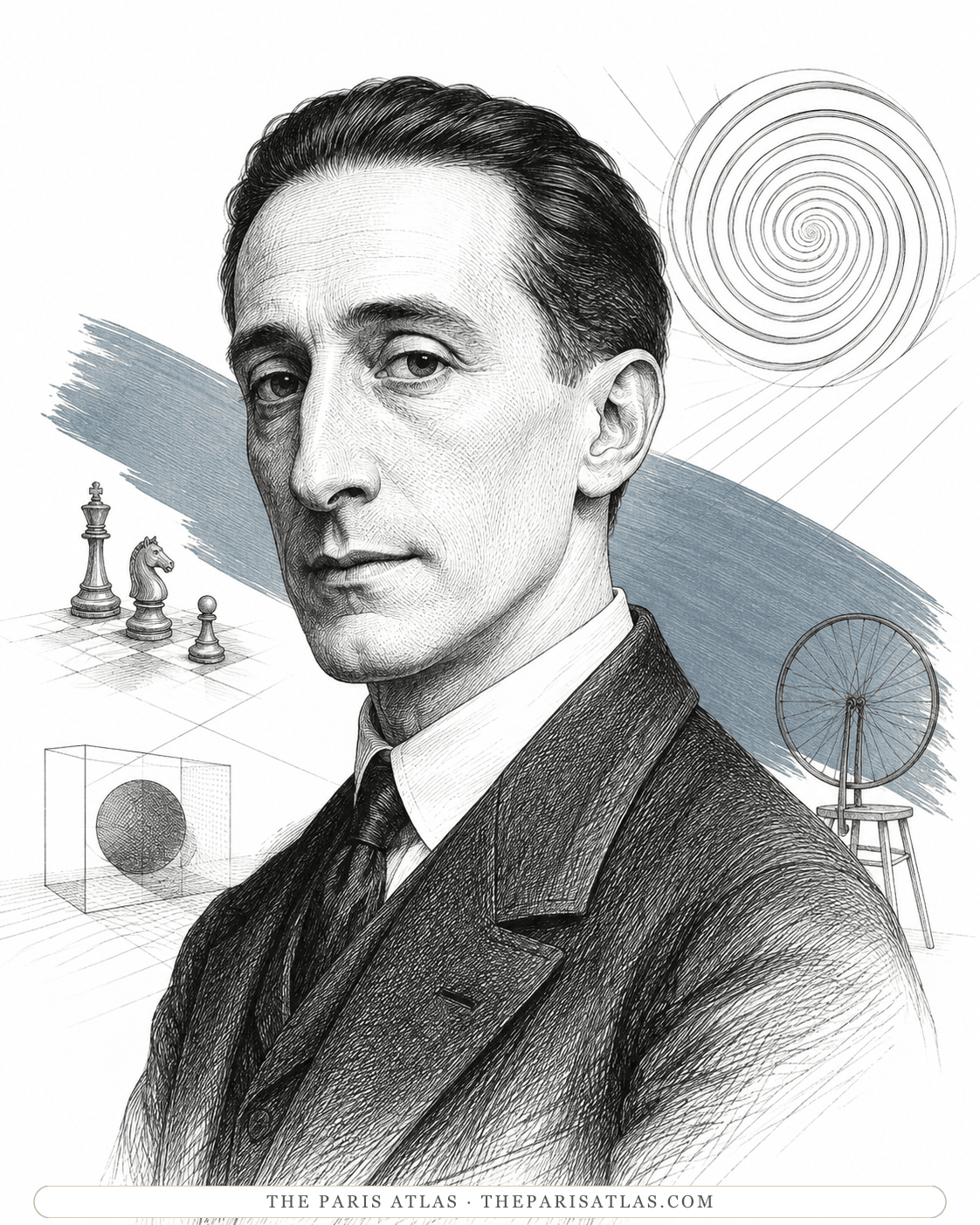
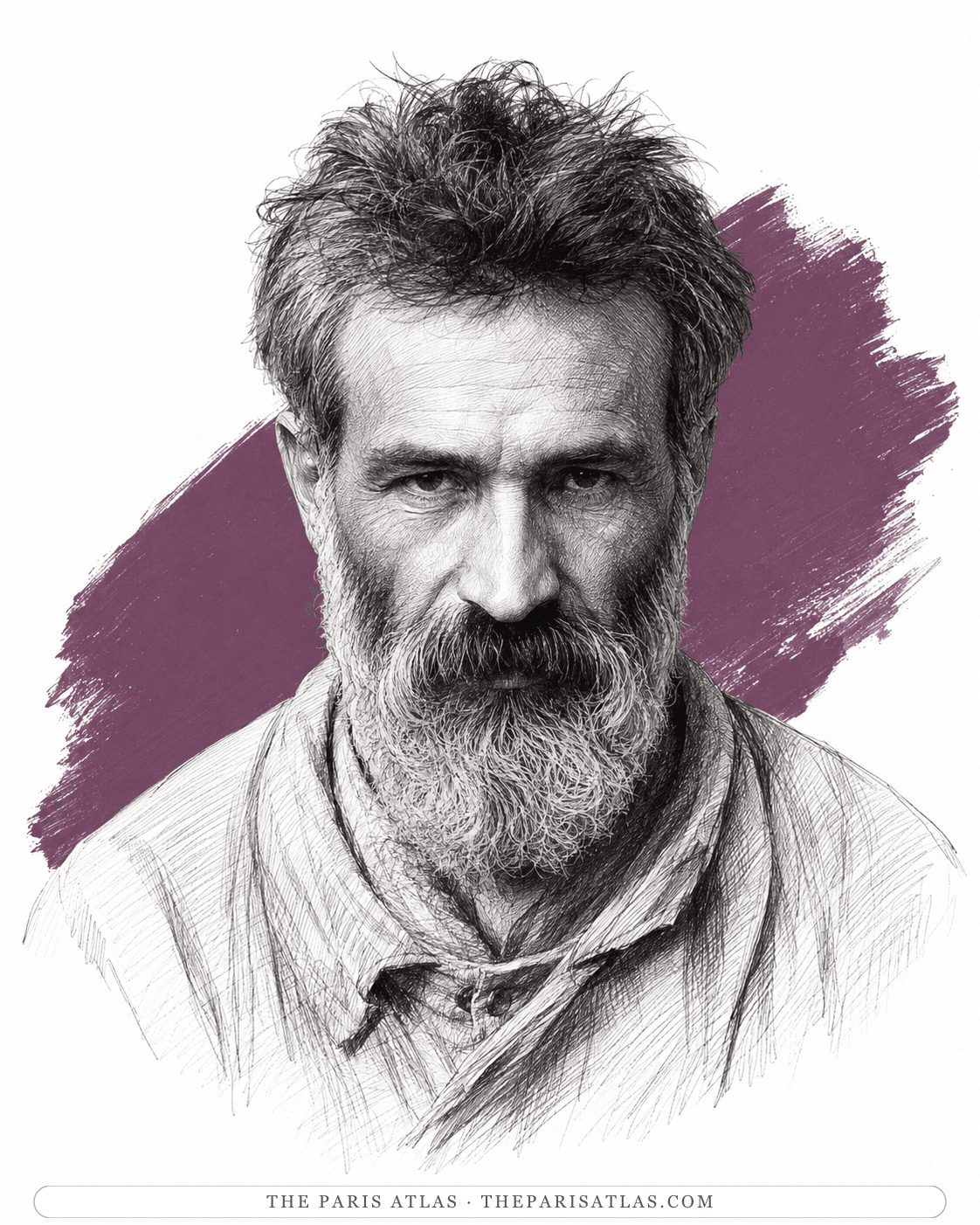
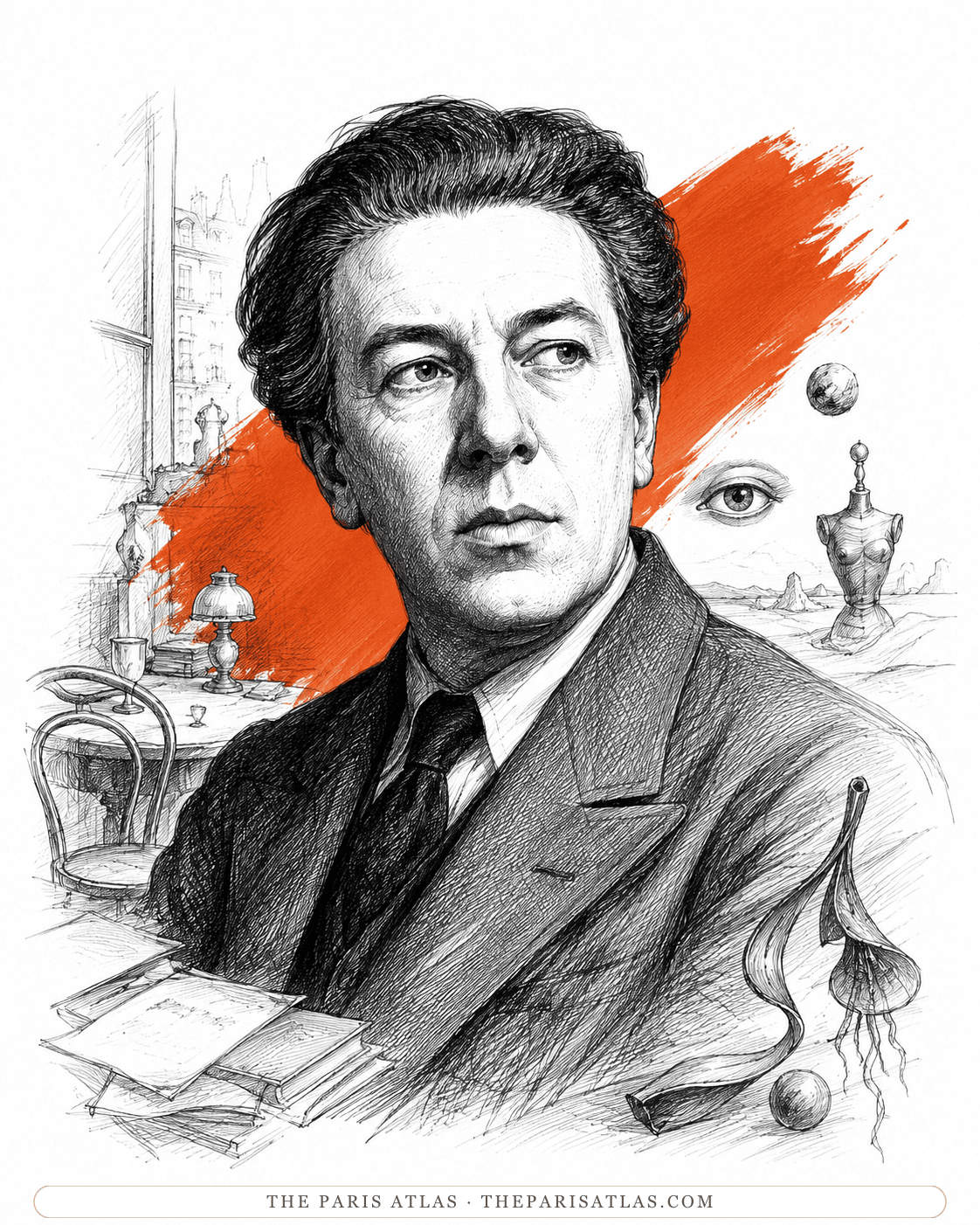
The collection crosses these pages at several points. The museum holds a 1964 replica of Marcel Duchamp's Fountain, the lost urinal readymade of 1917. The wall of André Breton's studio at 42 rue Fontaine — about 255 objects, from paintings to found stones — entered the collection by dation in 2003 and is displayed as he arranged it. And Constantin Brancusi left his entire studio to the French state on condition that it be reconstructed; the Atelier Brancusi has stood on the piazza, in a pavilion designed by Renzo Piano, since 1997.
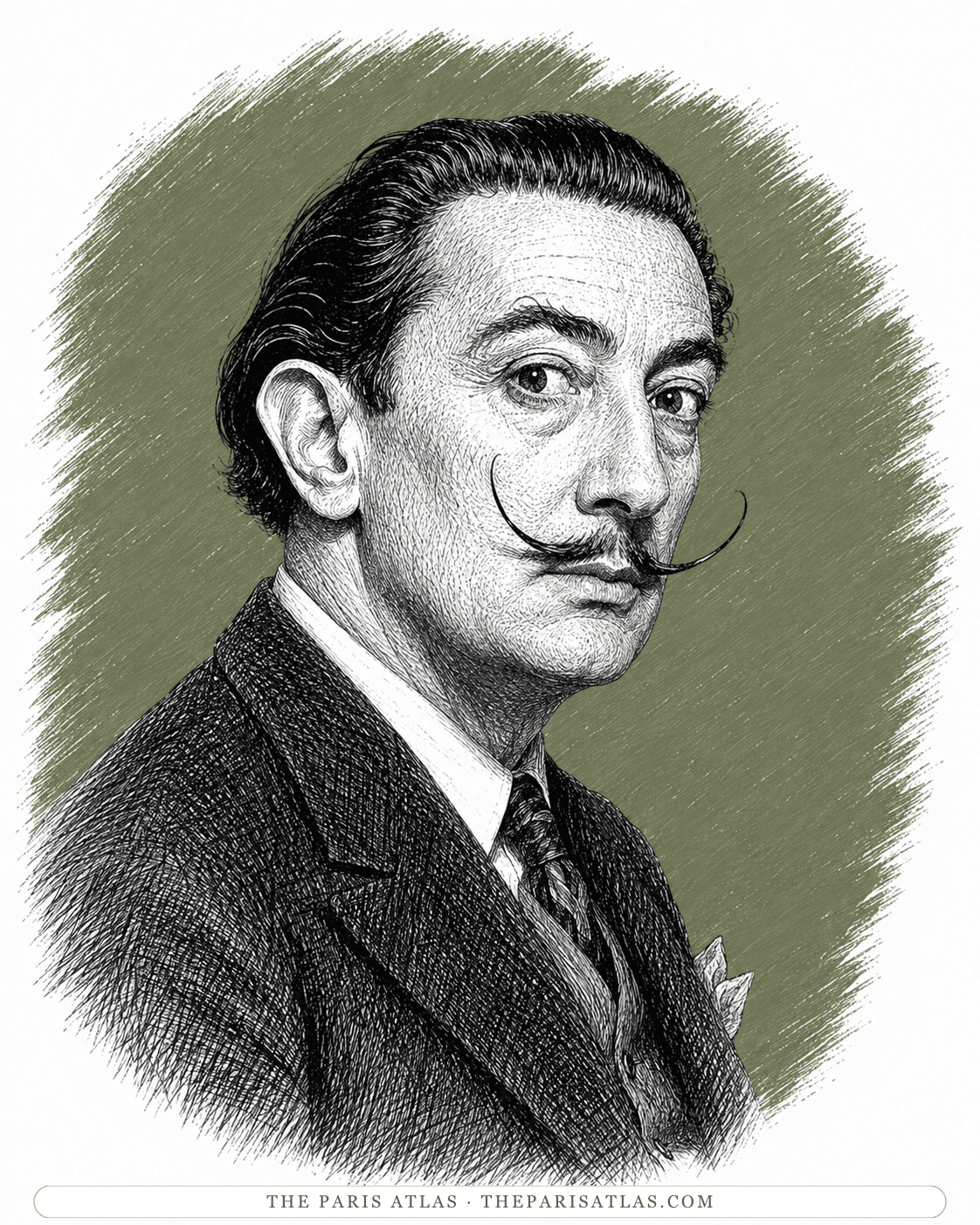
The exhibition history crosses it too. In December 1979 the centre opened Salvador Dalí: Retrospective 1920–1980 in its Grande Galerie, the show that turned the former Surrealist scandal into a national museum spectacle. A second Dalí retrospective in 2012–13 was among the best attended in the centre's history.
The current closure is the building's second. The first renovation ran from late 1996 to January 2000. The present one is larger: asbestos removal from the façades, corrosion treatment on the steel frame, and accessibility and energy upgrades, with Moreau Kusunoki and Frida Escobedo Studio designing the renewed interior and AIA Life Designers handling the technical work.
Until 2030, the collection travels under the Constellation programme — partner venues in France and abroad, including the Centre Pompidou-Metz — and a new conservation and exhibition hub, the Centre Pompidou francilien in Massy, is scheduled to open in spring 2027. The official site lists current venues and dates.
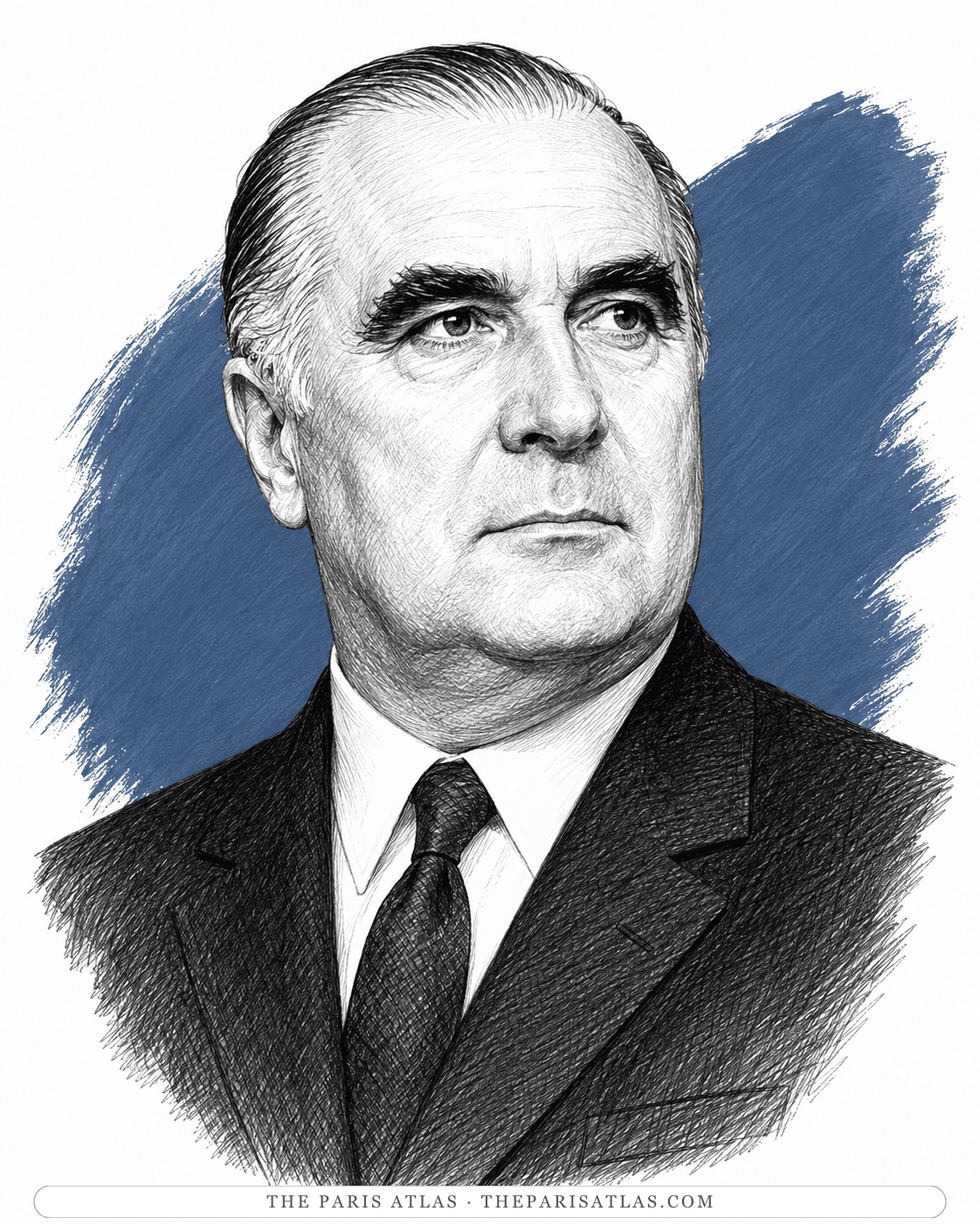
President of France
Decided in 1969 to build the centre; died in 1974, three years before it opened carrying his name.
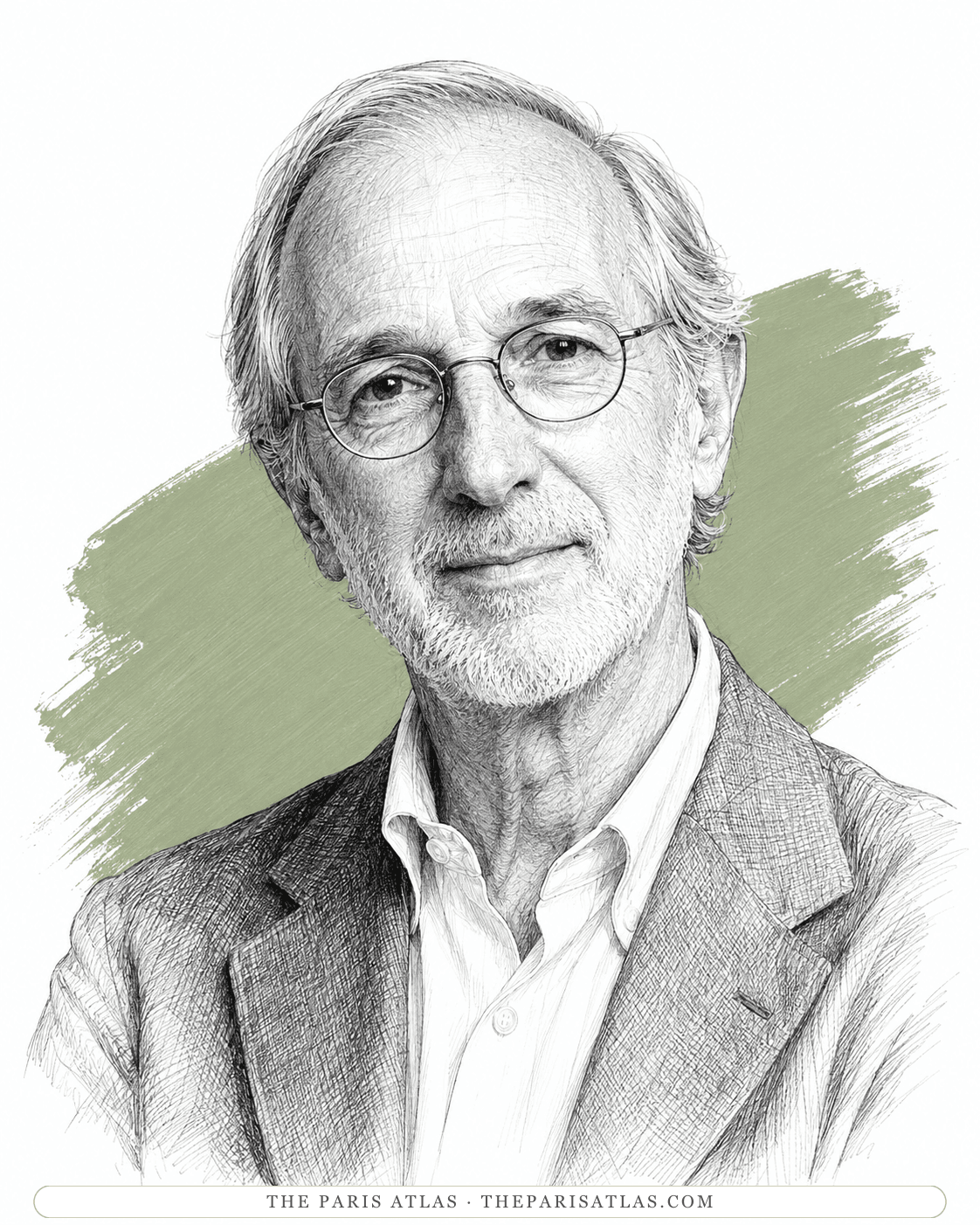
Architect
Won the 1971 competition with Rogers at thirty-three; returned in 1997 to build the pavilion holding Brancusi's reconstructed studio.
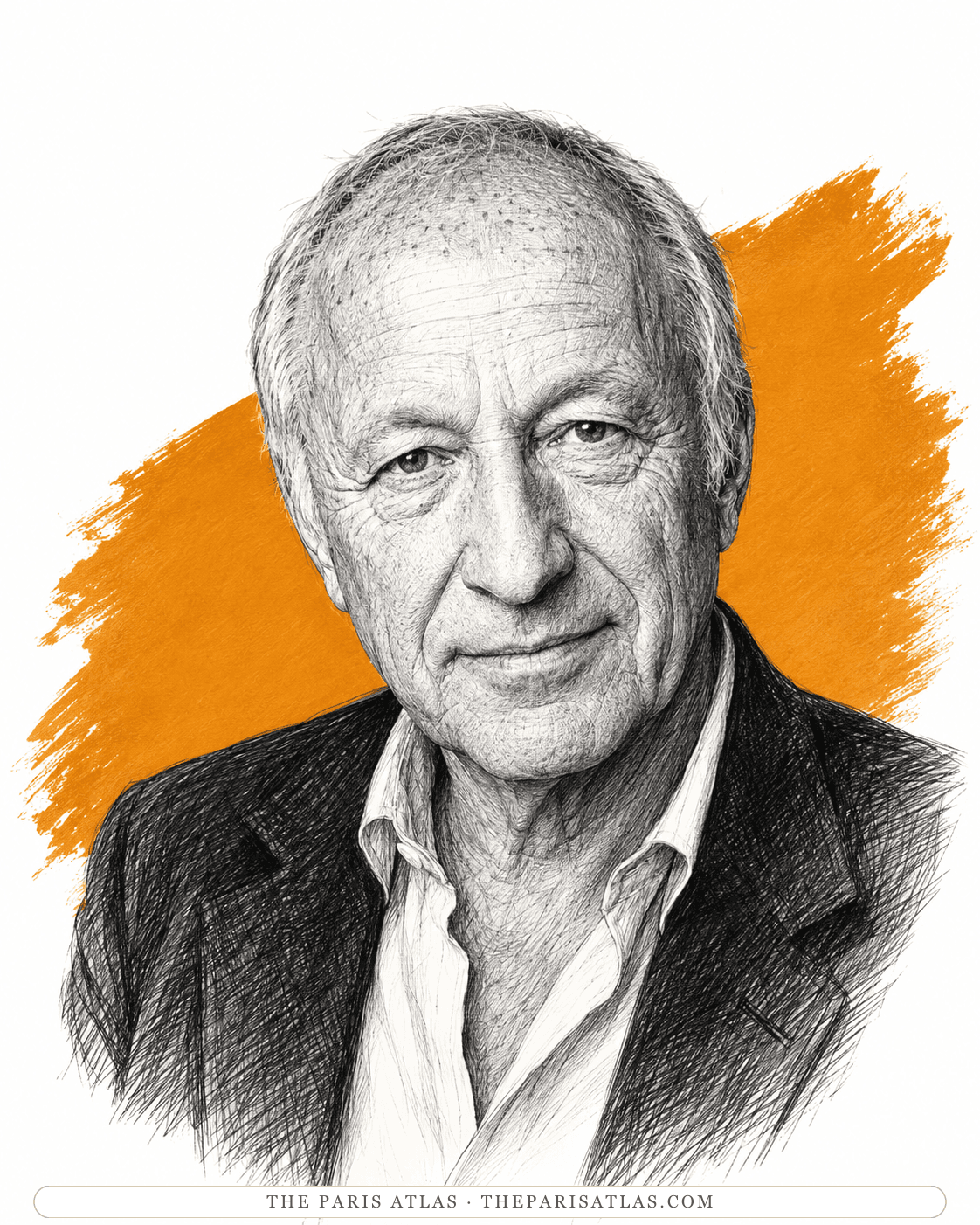
Architect
Co-designer of the inside-out building; the competition win made his name and Piano's.
Artist
The museum holds a 1964 replica of Fountain, the lost readymade of 1917, among its Duchamp holdings.
Visit their pageSculptor
Left his studio to the state on condition it be reconstructed; the Atelier Brancusi stands on the piazza.
Visit their pageWriter
The wall of his studio at 42 rue Fontaine entered the museum by dation in 2003, displayed as he arranged it.
Visit their pagePainter
Subject of the December 1979 retrospective in the Grande Galerie, and of a second in 2012–13.
Visit their pageGeorges Pompidou decides to build the centre on the Beaubourg plateau.
Piano and Rogers win the international competition from 681 entries.
The centre opens on 31 January.
The Dalí retrospective opens in the Grande Galerie in December.
First major renovation; the building reopens on 1 January 2000.
The reconstructed Atelier Brancusi opens on the piazza.
The wall of André Breton's studio enters the collection by dation.
A second Dalí retrospective becomes one of the best attended in the centre's history.
The building closes on 22 September for a five-year renovation.
The Centre Pompidou francilien in Massy is scheduled to open in spring.
Scheduled reopening of the Beaubourg building.
Operated at · 1977
The centre opened in the Beaubourg building on 31 January 1977 and has occupied it since. The building is closed for renovation from September 2025 until 2030; the institution continues through partner venues.
Founded by · 1969–1974
As president he decided in 1969 to build a centre joining modern art, music, cinema, and books on the Beaubourg plateau. He died in office in 1974, three years before it opened under his name.
The Friday Letter
The connection between them — one letter from the Paris Atlas every Friday.