The Paris AtlasCharting the artists, works, and places worth returning to.
  • Painter
· American · 1958–1990

Keith Haring

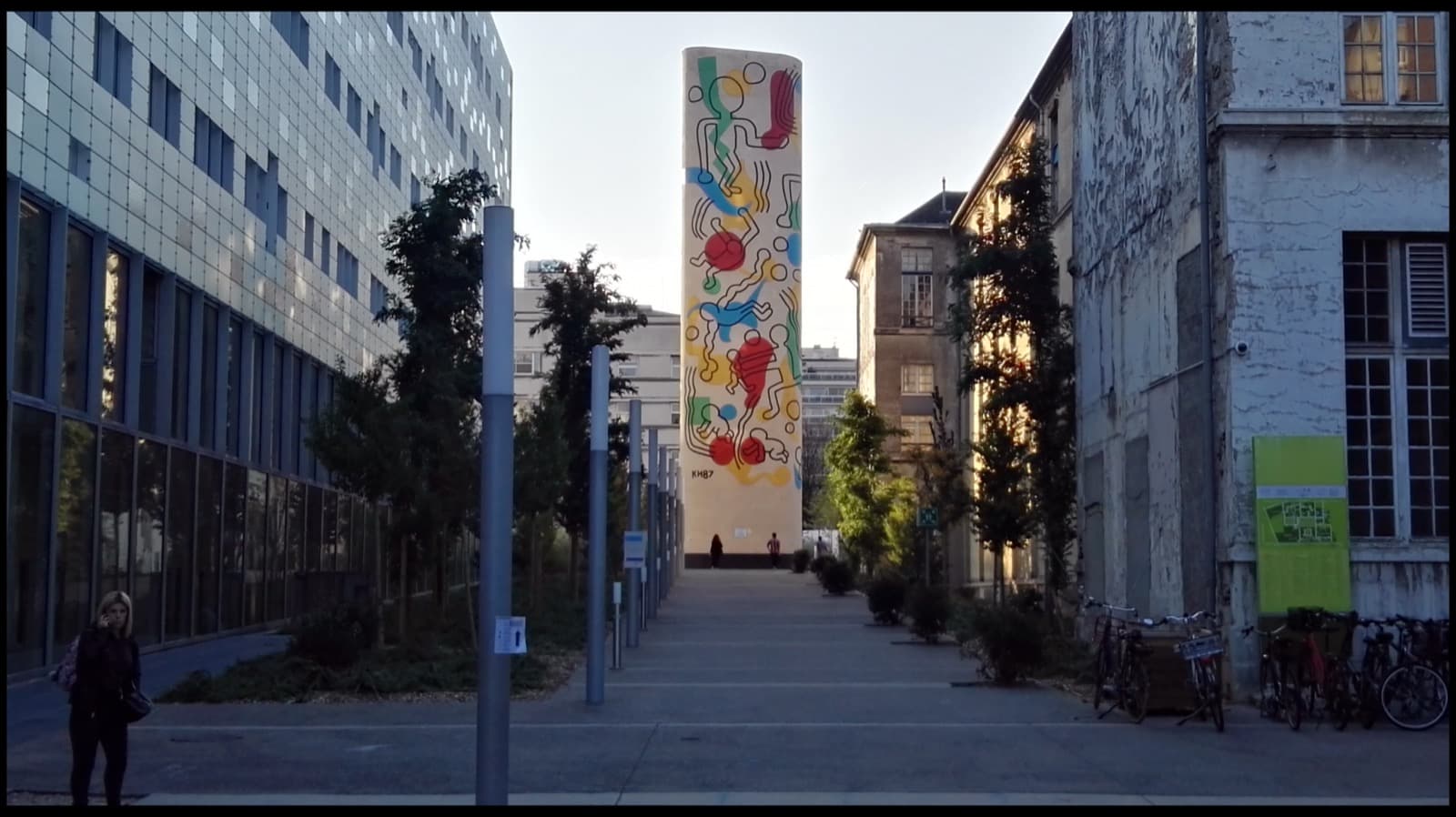
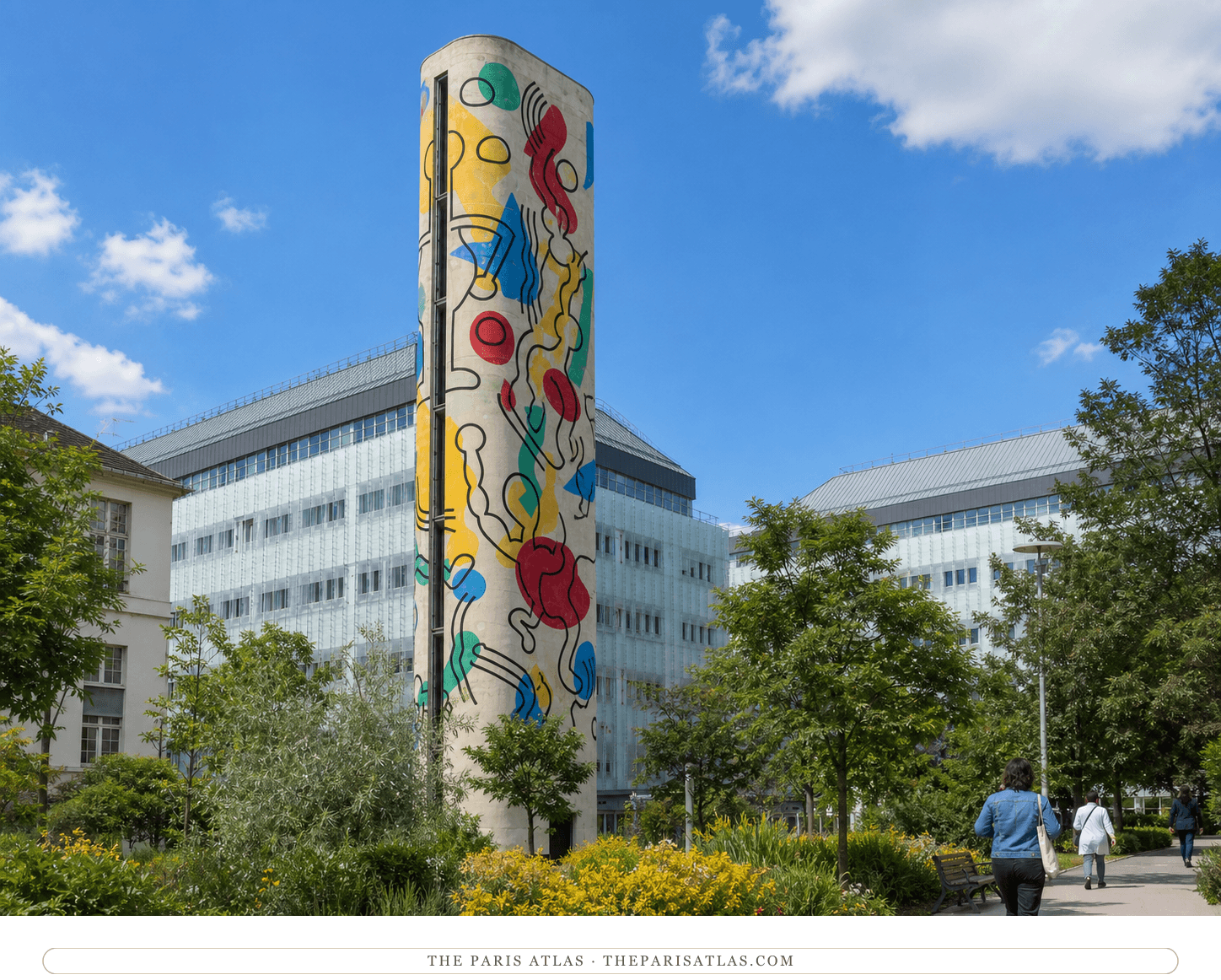
American artist of the barking dogs, radiant babies and outlined dancing figures, who drew them first in chalk on unsold advertising panels in the New York subway. Paris got him in short bursts — a gallery show in 1986, a place in a Pompidou group exhibition in 1987 — and kept one thing: the mural he painted on a children's hospital in the 15th arrondissement in 1987, three years before he died at thirty-one.

Details

Lived
1958–1990
Born
4 May 1958
Birthplace
Reading, Pennsylvania
Died
16 February 1990 · aged 31
Place of death
New York City
Nationality
American
Profession
Painter and draughtsman
Major works
The subway drawings, Crack is Wack, the Necker hospital mural
Roles
Painter

About Keith Haring

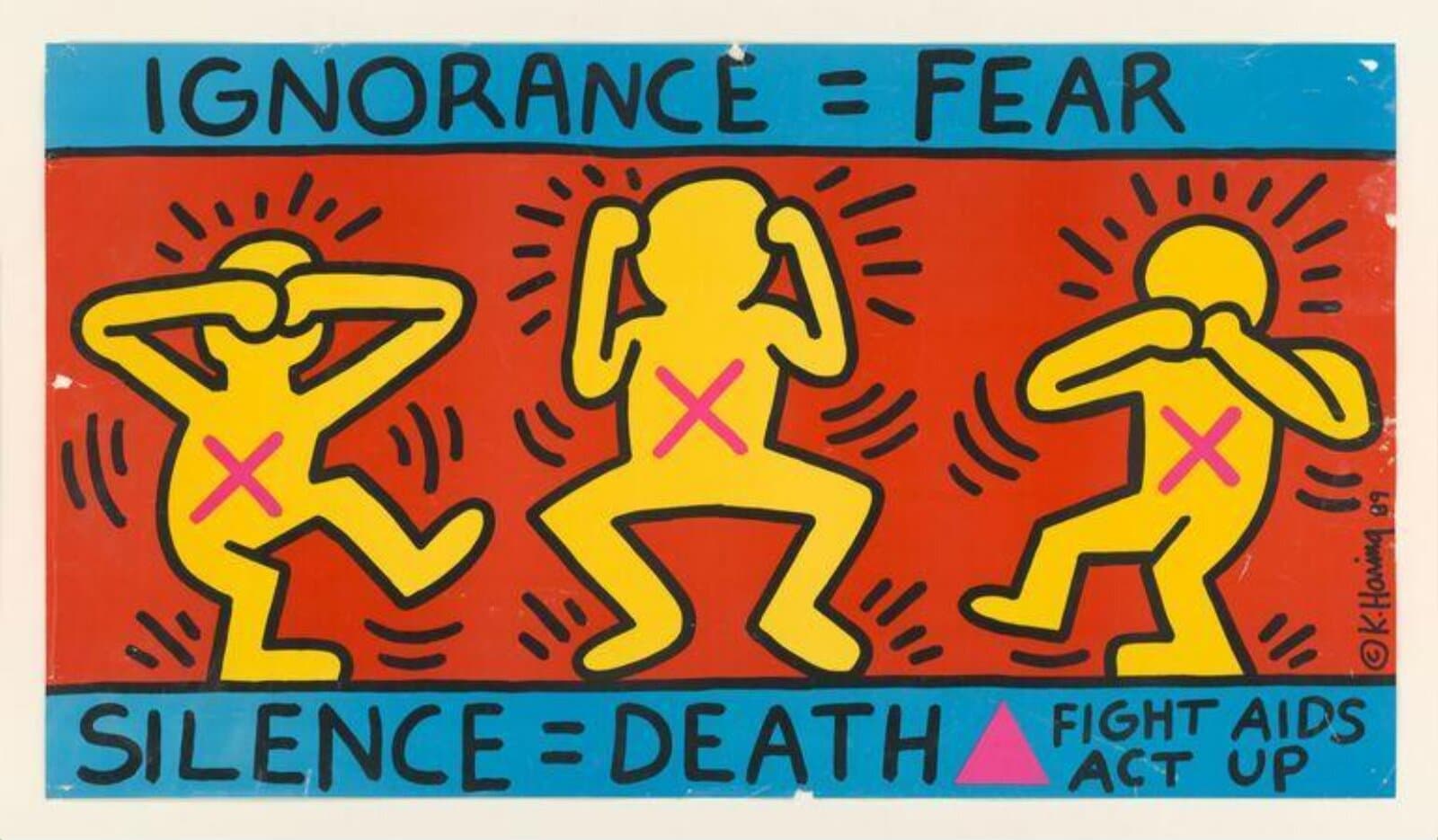
Keith Haring drew a small repertoire of figures — a crawling baby with lines coming off it, a barking dog, blank-faced people dancing, holding, hitting, lifting each other — in a heavy black outline that anyone could recognize and nobody could mistake for someone else's. He started putting them where the public actually was: between 1980 and 1985 he made hundreds of chalk drawings on the black paper panels that covered unsold advertising space in the New York subway.

New York holds the life: the School of Visual Arts from 1978, the first solo show in 1981, the Soho gallery debut in 1982, the Pop Shop in 1986, an AIDS diagnosis in 1988, the foundation he set up in 1989, and his death from AIDS-related illness on 16 February 1990, aged thirty-one. Paris holds episodes and one permanent object. In 1986 he had a one-man show at the Galerie Daniel Templon; in 1987 his work hung in a group exhibition at the Centre Pompidou; and in 1987 he painted a mural on the outside of the Necker children's hospital in the 15th arrondissement, on a wall rather than on anything that could be taken down at the end of a run.

Kutztown, Pittsburgh, New York

Haring was born on 4 May 1958 in Reading, Pennsylvania, and grew up in the small town of Kutztown, drawing from a very early age. He enrolled at the Ivy School of Professional Art, a commercial-art school in Pittsburgh, in 1976. In 1978 he moved to New York and enrolled at the School of Visual Arts.

Between 1980 and 1985 he made hundreds of public drawings in the subway — white chalk on the matte black paper that the transit authority pasted over expired advertisements. The panels were free, the audience was everybody, and the work was gone whenever the next advertiser bought the space. His first New York solo exhibition was at the Westbeth Painters Space in 1981; in 1982 he made his Soho gallery debut with a one-man show at the Tony Shafrazi Gallery that made him famous.

What Paris actually saw

Haring's Paris was a run of short visits and shows rather than a period of residence, and the record from his own foundation is specific about it. In 1985 he was in the Biennale de Paris — the city's big recurring exhibition of new art — at the Grand Palais, the glass-roofed exhibition hall in the 8th arrondissement, and in a group show at the Galerie Beau Lezard. In 1986 he had a one-man exhibition at the Galerie Daniel Templon. In 1987 his work was included in a large group exhibition at the Centre Pompidou, L'Époque, la Mode, la Morale, la Passion ('The Era, Fashion, Morals, Passion') — his one appearance in a Paris museum while he was alive.

There was one more Paris show, at the Galerie La Poche, in 1990, the year he died. The museum recognition came afterwards: the Musée d'Art Moderne de la Ville de Paris included him in a group exhibition in 1996, six years after his death, and the Fondation Cartier, the contemporary-art foundation in Paris, put him in its graffiti survey Born in the Street in 2009.

The hospital wall

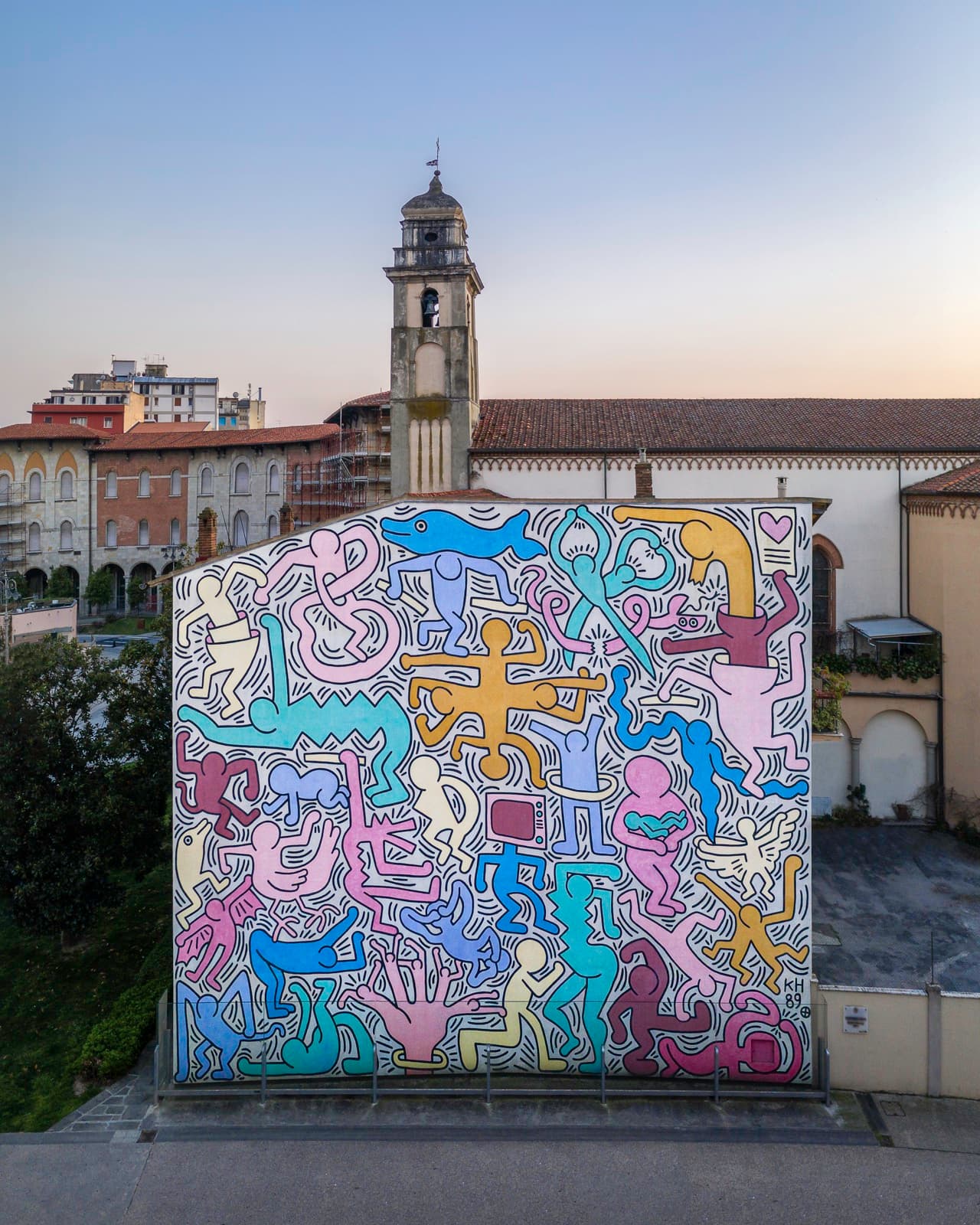
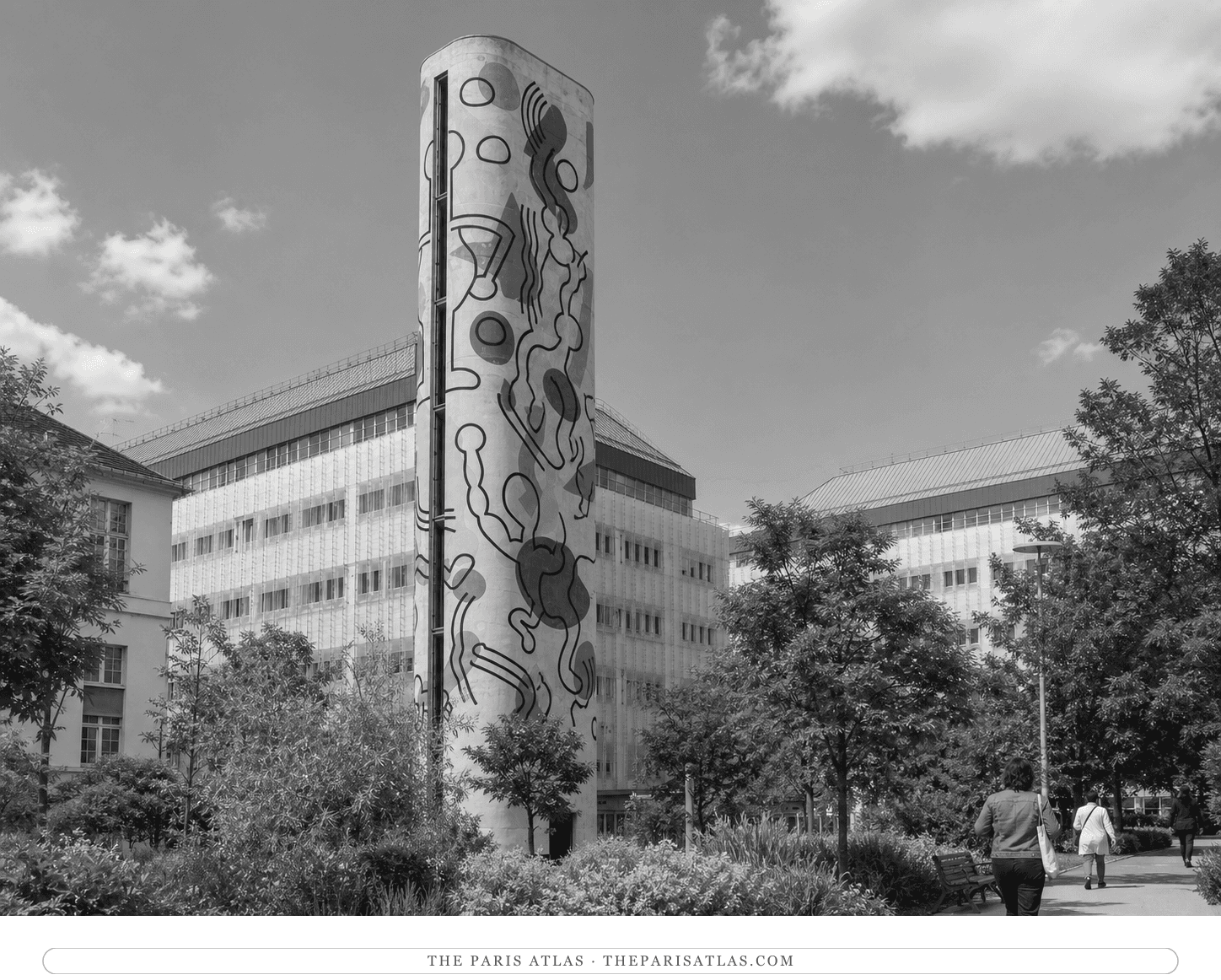
In 1987 Haring painted a mural on the exterior of the Hôpital Necker-Enfants Malades, the children's hospital in the 15th arrondissement. Everything else he did in Paris had an end date. The subway drawings were erased whenever the advertising space sold, the gallery shows came down after a few weeks, and the Pompidou exhibition closed. The hospital mural was painted on the building, for the children who use it.

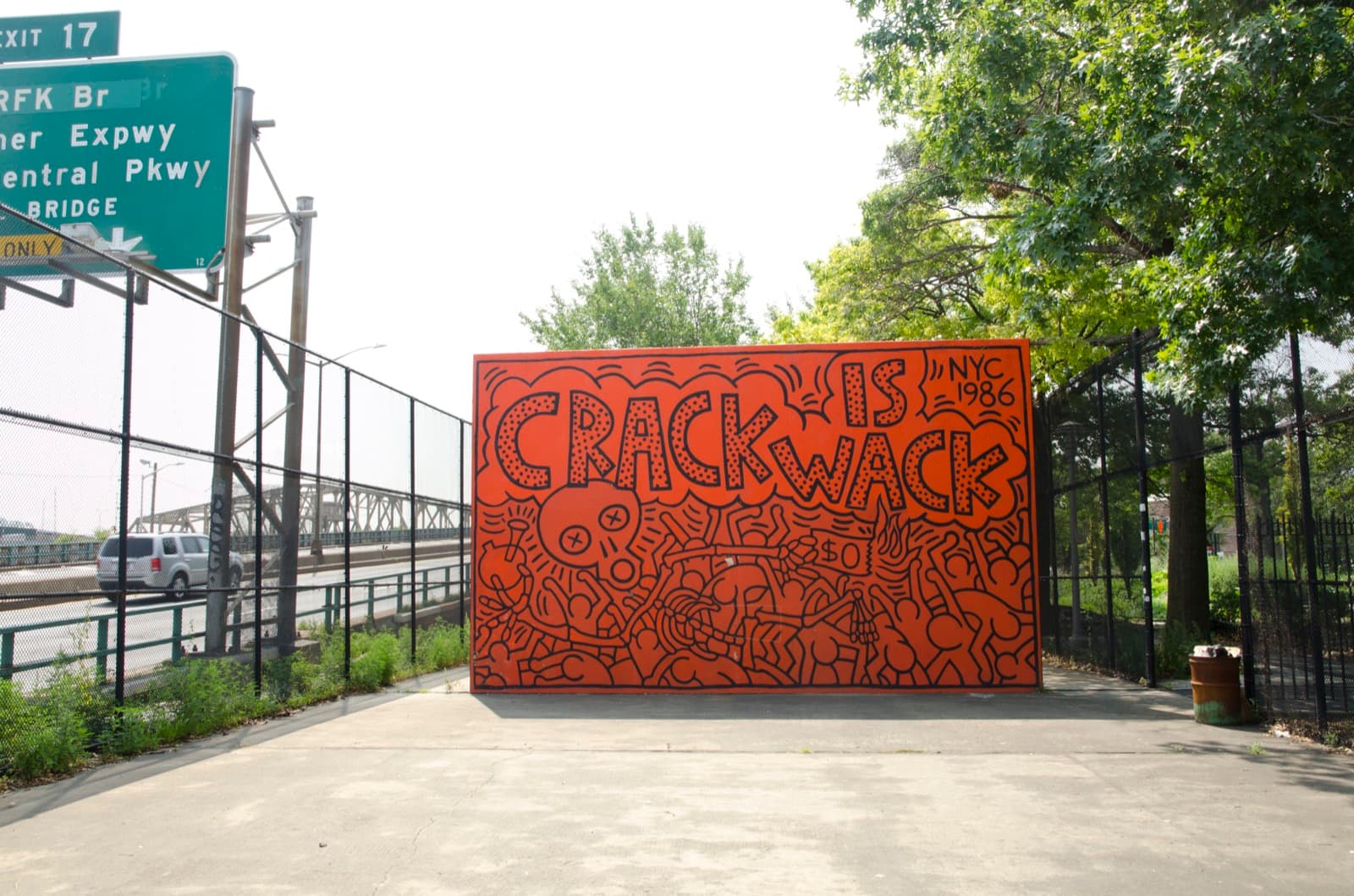
Public walls were not a sideline to the studio work. Haring painted murals in public places through the decade he had, among them the anti-drug Crack is Wack wall in Harlem in 1986, on the same principle that had put him in the subway with a box of chalk.

Pop Shop, AIDS, and the foundation

In April 1986 he opened the Pop Shop in Soho, a store selling T-shirts, toys, posters, buttons and magnets carrying his images. It put the same figures the galleries were selling as paintings within reach of anyone who walked in off the street.

He was diagnosed with AIDS in 1988. In 1989 he established the Keith Haring Foundation, which funds AIDS organizations and children's charities and still manages his work and image. He died of AIDS-related complications on 16 February 1990, at thirty-one.

Life events

  1. 1958

    Born on 4 May in Reading, Pennsylvania; raised in Kutztown.

    Keith Haring — official biography

  2. 1976

    Enrols at the Ivy School of Professional Art in Pittsburgh.

    Keith Haring — official biography

  3. 1978

    Moves to New York and enrols at the School of Visual Arts.

    Keith Haring — official biography

  4. 1980

    Begins the subway drawings — hundreds of chalk drawings on the black paper panels covering unsold advertising space, made until 1985.

    Keith Haring — official biography

  5. 1981

    First New York solo exhibition, at the Westbeth Painters Space.

    Keith Haring — official biography

  6. 1982

    Soho gallery debut with a one-man show at the Tony Shafrazi Gallery.

    Keith Haring — official biography

  7. 1985

    Shows at the Biennale de Paris in the Grand Palais, and has a one-man exhibition at the museum of contemporary art in Bordeaux.

    Keith Haring — group exhibitions, year by year; Keith Haring — one-person exhibitions, year by year

  8. 1986

    One-man exhibition at the Galerie Daniel Templon, Paris. Opens the Pop Shop in Soho in April, and paints Crack is Wack in Harlem.

    Keith Haring — one-person exhibitions, year by year; Keith Haring — official biography

  9. 1987

    Paints a mural on the exterior of the Necker children's hospital in Paris, his only permanent work in the city.

    Keith Haring — official biography

  10. 1987

    Included in L'Époque, la Mode, la Morale, la Passion at the Centre Pompidou, his only Paris museum exhibition during his lifetime.

    Keith Haring — group exhibitions, year by year

  11. 1988

    Diagnosed with AIDS.

    Keith Haring — official biography

  12. 1989

    Establishes the Keith Haring Foundation to fund AIDS organizations and children's charities.

    Keith Haring — official biography

  13. 1990

    Dies of AIDS-related complications on 16 February, aged 31. A one-man show at the Galerie La Poche in Paris is held the same year.

    Keith Haring — official biography; Keith Haring — one-person exhibitions, year by year

  14. 1996

    Included posthumously in a group exhibition at the Musée d'Art Moderne de la Ville de Paris.

    Keith Haring — group exhibitions, year by year

Who they drew from

Influence running inward — the writers and artists whose work fed theirs. Admiration is not acquaintance; these edges claim neither a meeting nor a friendship.

Andy Warhol

The Keith Haring Foundation's own biography names Warhol twice: his "unique fusion of art and life" as a model for Haring's decision to make truly public art, and Warhol himself among the "friends, fans and mentors" who backed the Pop Shop when much of the art world sneered.

Keith Haring — official biography

Questions about Keith Haring

Is there a Keith Haring mural in Paris?

Yes — on the outside of the Necker children's hospital, the Hôpital Necker-Enfants Malades in the 15th arrondissement, painted in 1987. It is the permanent Haring in Paris. His foundation's biography lists it among the public murals he made in the last years of his life.

Did Keith Haring exhibit in Paris during his lifetime?

Several times, mostly in galleries. He was in the Biennale de Paris at the Grand Palais and a group show at the Galerie Beau Lezard in 1985; he had a one-man exhibition at the Galerie Daniel Templon in 1986; his work was in the Centre Pompidou group exhibition L'Époque, la Mode, la Morale, la Passion in 1987; and a show at the Galerie La Poche opened in 1990, the year he died. The Musée d'Art Moderne de la Ville de Paris showed him in 1996, after his death.

Why did Keith Haring draw in the subway?

Because the space was empty, free and public. Between 1980 and 1985 he drew in white chalk on the matte black paper panels the New York transit authority used to cover expired advertisements, making hundreds of drawings for an audience of commuters rather than collectors. The drawings were temporary by design — they lasted until the space was sold again — and they are what made his figures recognizable before any gallery showed them.

What are the figures in Keith Haring's work?

A small, repeated cast drawn in thick black outline: a crawling baby with rays coming off it, a barking dog, and blank-faced human figures dancing, embracing, carrying and fighting one another. He used the same vocabulary in subway chalk, on canvas, on hospital walls and on the T-shirts sold at his Pop Shop, which is why the work reads instantly whatever it is painted on.

What was the Pop Shop?

A store Haring opened in Soho, New York, in April 1986, selling T-shirts, posters, toys, buttons and magnets printed with his images — the same figures collectors were buying as paintings, at prices anyone could pay.

How did Keith Haring die?

Of AIDS-related complications, on 16 February 1990, at the age of thirty-one. He had been diagnosed in 1988, and in 1989 he set up the Keith Haring Foundation, which funds AIDS organizations and children's charities and continues to manage his work.

Sourced claims

Every connection the graph holds for Keith, with the evidence behind it.

Influenced by

Andy Warhol

The Keith Haring Foundation's own biography names Warhol twice: his "unique fusion of art and life" as a model for Haring's decision to make truly public art, and Warhol himself among the "friends, fans and mentors" who backed the Pop Shop when much of the art world sneered.

Keith Haring — official biography

References

References

The sources below include biographies, scholarly essays, interviews, and primary materials that informed this page. They reflect both the historical record and ongoing critical conversations about Keith Haring and their work.

  1. 1Keith Haring — official biography

    The Keith Haring Foundation

    The estate's official biography — birth, the subway drawings, the Pop Shop, the 1987 Necker hospital mural, the diagnosis, the foundation, and his death.

    View source
  2. 2Keith Haring — one-person exhibitions, year by year

    The Keith Haring Foundation

    The estate's year-by-year list of solo shows, including Bordeaux 1985, Galerie Daniel Templon 1986 and Galerie La Poche 1990.

    View source
  1. 3Keith Haring — group exhibitions, year by year

    The Keith Haring Foundation

    The estate's year-by-year list of group shows, including the 1985 Biennale de Paris and the Centre Pompidou in 1987.

    View source
i
Why these sources are here

These references anchor the page in the documented record and in the scholarly conversations around Keith Haring. Every claim on this page traces back to one or more of the works listed here.

Explore more resources