Ignorance = Fear
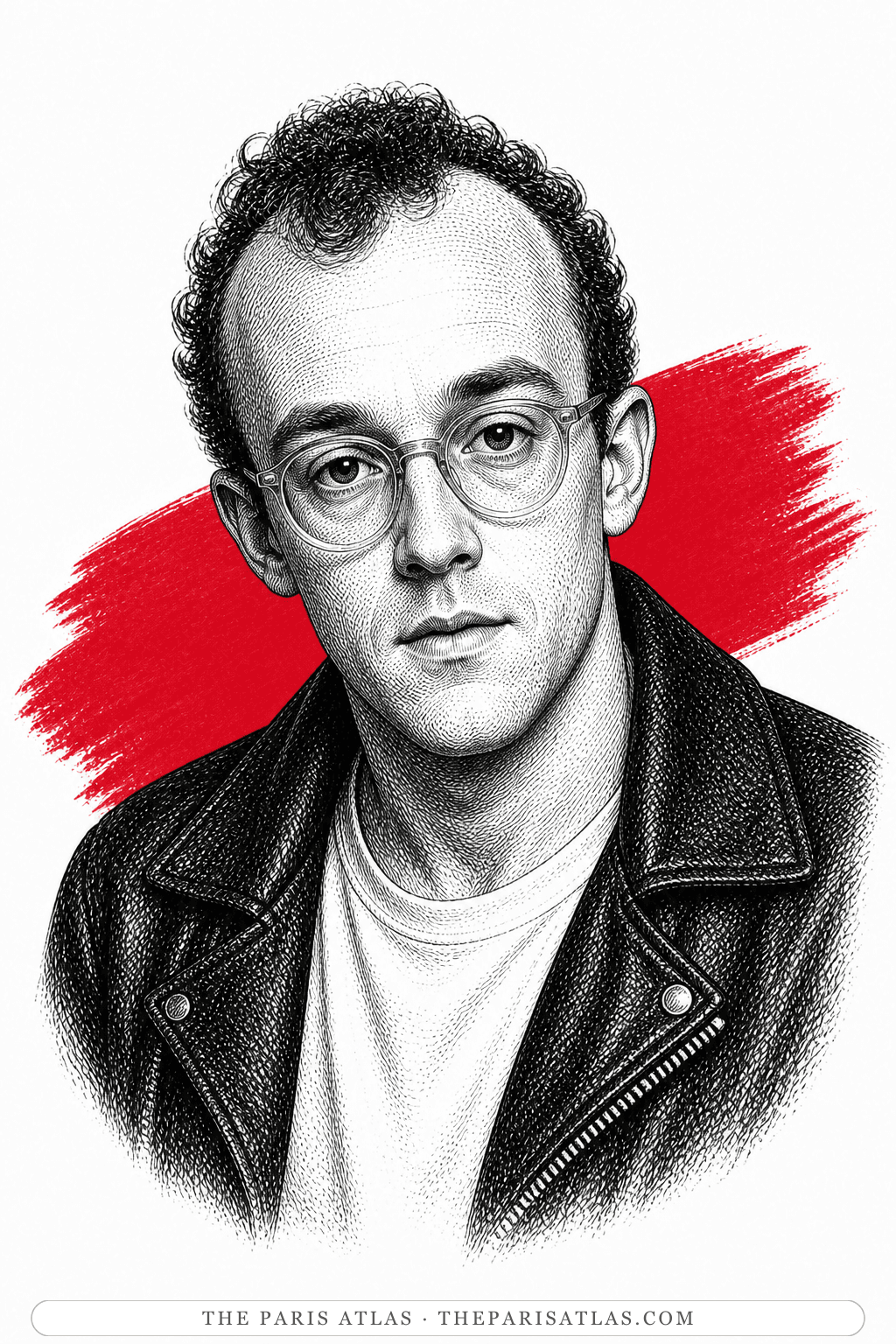
by Keith Haring
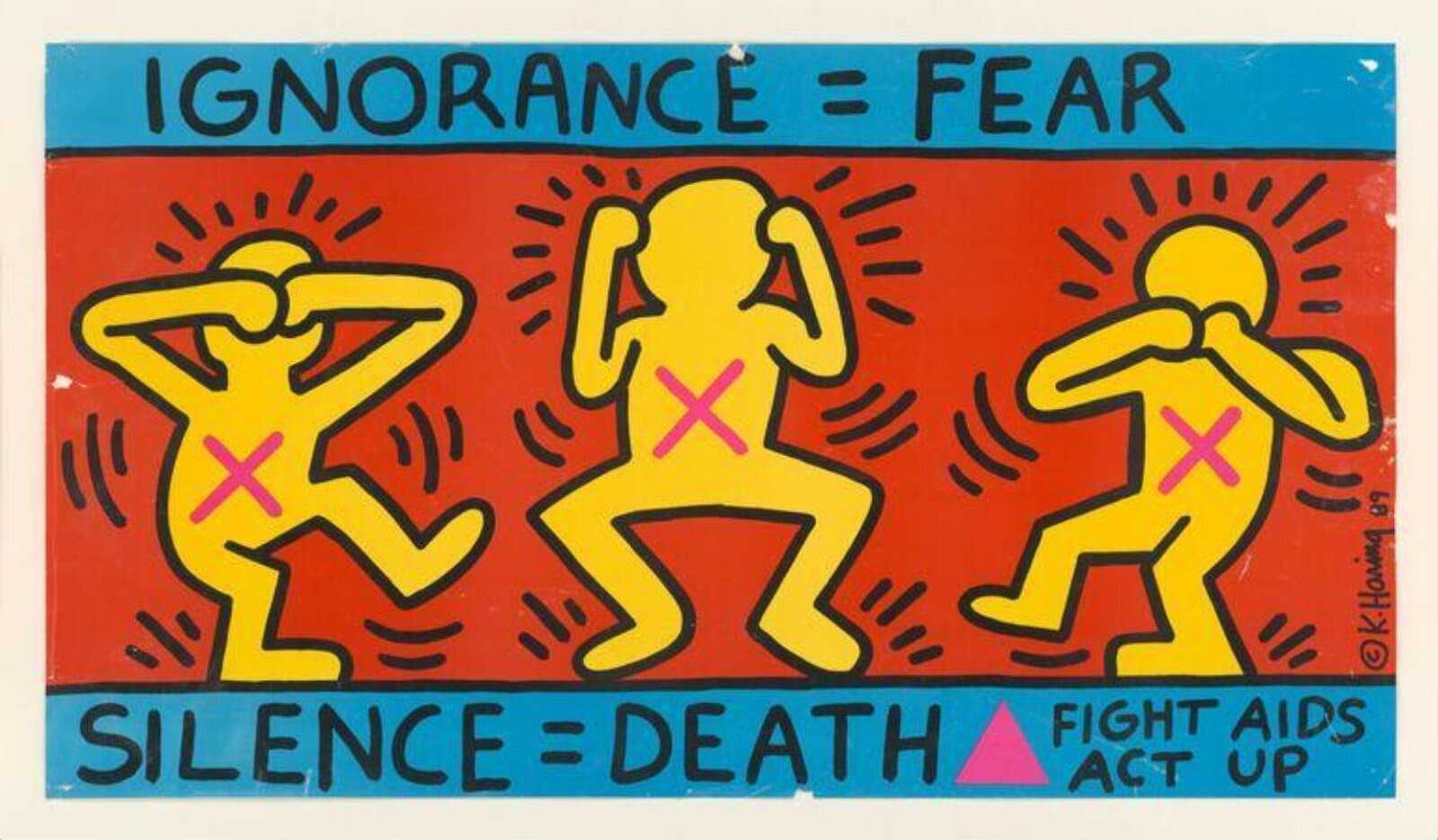
Three yellow figures stand in a line on a red ground, one covering its eyes, one its ears and one its mouth, each with a magenta cross on the torso. A blue band across the top reads IGNORANCE = FEAR and a blue band across the bottom reads SILENCE = DEATH, followed by a pink triangle and the words FIGHT AIDS ACT UP. Keith Haring made it in 1989, the year after he was diagnosed with AIDS. The Victoria and Albert Museum holds an impression given by Robert D Farber, who had it from Keith Haring himself.
- 1989
- Screenprint
- Victoria and Albert MuseumLondon, United Kingdom
About Keith Haring
What the poster shows
The sheet is divided into three horizontal bands. The top band is blue and carries IGNORANCE = FEAR in black hand-drawn capitals across the full width. The bottom band is blue and carries SILENCE = DEATH in the same capitals, then a magenta triangle pointing upwards, then FIGHT AIDS and ACT UP on two shorter lines.
The middle band is red and holds the three figures. The Victoria and Albert Museum describes them in order: the figure to the left covers their eyes, the middle their ears and the right their mouth. Each is a solid yellow body in heavy black outline with no face, and each carries a magenta cross across the belly.
The poses are not identical. The figure on the left crosses both forearms over the face and swings one leg forward. The centre figure clamps both hands to the sides of its head with the elbows out and the knees wide. The figure on the right is crouched, its arms crossed over the mouth, one leg drawn back.
Short black strokes radiate from each head and curve along each side, the same motion marks Keith Haring used on his walls. He signed the sheet at the right edge of the red field, written upwards, © K.Haring 89.
An old image turned into an argument
The three poses are the see-no-evil, hear-no-evil, speak-no-evil group, and Keith Haring used them against their usual meaning. The traditional trio counsels avoidance. The banners above and below say what avoidance costs.
The crosses do the rest. Every one of the three bodies is already marked, whichever sense it has shut down, so the covering fails in all three cases.
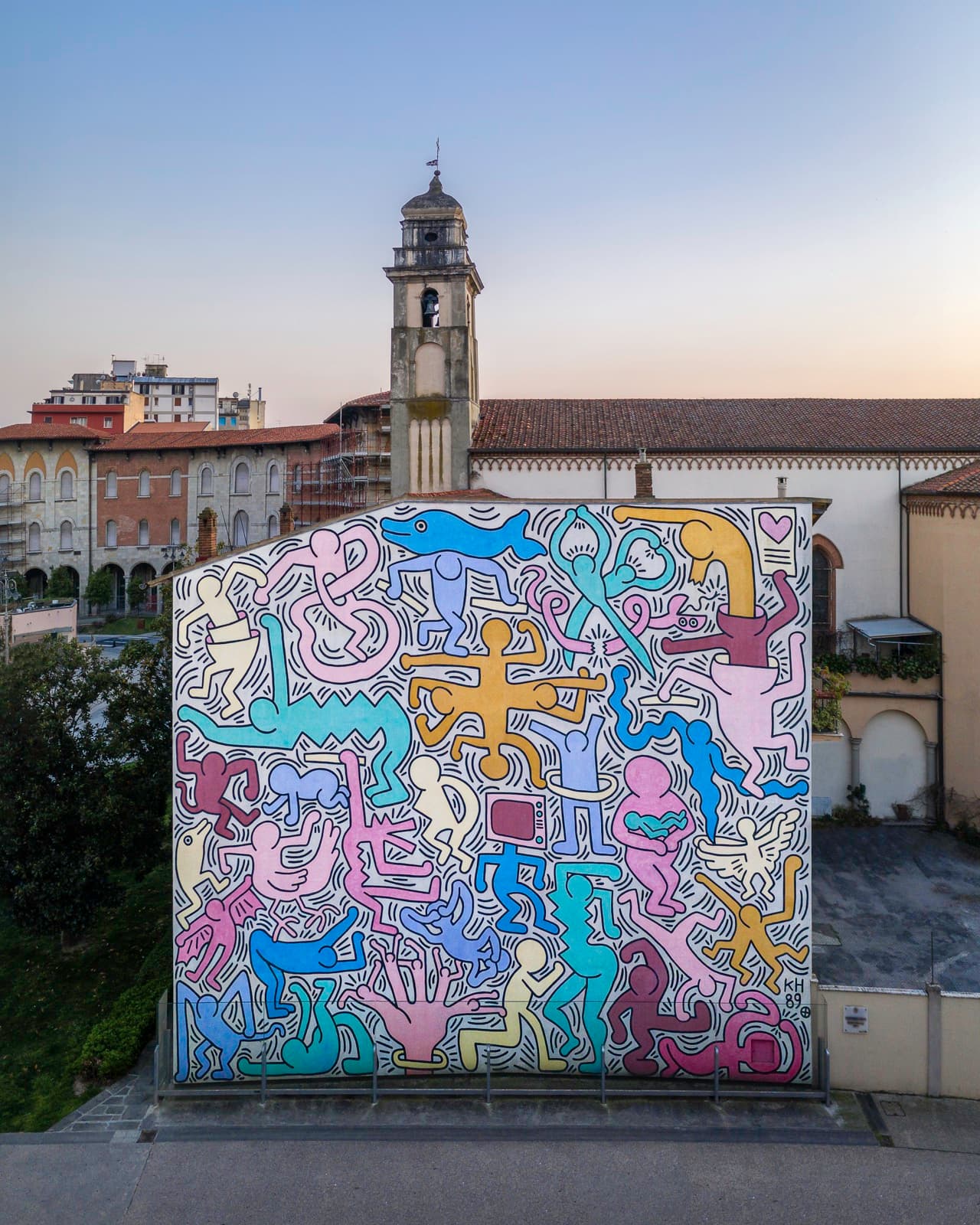
He used the same trio in the mural he painted in Barcelona in the same year. Three figures there cover their eyes, ears and mouth, with a cross on each torso.
Made for ACT UP
The poster carries the name of ACT UP, the direct-action AIDS campaign, and the Silence = Death slogan and pink triangle the campaign used.
The Victoria and Albert Museum sets the date against his own. Keith Haring produced the poster in 1989, a year after his own diagnosis with AIDS. He established the Keith Haring Foundation in the same year, to fund AIDS organizations and children's charities.
He died of AIDS-related illness on 16 February 1990, at thirty-one.
It came off a studio wall in New York
The museum records the chain plainly. Robert D Farber, an artist, photographer and AIDS activist, was given the poster by Keith Haring and had it pinned to the wall of his studio in New York.
It was taken from that wall for a Victoria and Albert Museum display called Graphic Responses to Aids, and Robert D Farber then gave it to the museum. The credit line reads Given by Robert D Farber, and the museum number is E.82-1996.
The sheet is a screenprint, 61 by 109 centimetres. The impression photographed by the museum has small chips and nicks along its edges and a crease at the bottom, the marks of a poster that was used rather than stored.
Two museums describe the same sheet differently
The Wellcome Collection in London holds an impression too, catalogued under reference 653159i as See-no-evil, Hear-no-evil, and Speak-no-evil: three human figures representing silence about AIDS. It credits Keith Haring and ACT UP together and gives the imprint as New York, ACT UP, 1989.
The two records disagree about the printing. The Victoria and Albert Museum calls it a screenprint. The Wellcome Collection calls it a colour lithograph. Neither gives the other's reading, and the atlas reports both rather than choosing.
They also disagree about which way up it is. The Victoria and Albert Museum gives 610 millimetres high by 1090 wide, which is landscape. The Wellcome Collection's 109 by 61 centimetres, in the order library cataloguing uses, is portrait. The photograph settles that one: the banners run the long way, so the sheet is landscape.
Close reading
Reading the work, detail by detail
The Victoria and Albert Museum photographs its impression flat, with the sheet's cream margins and its knocks and chips left in the frame. The poster is a wide, shallow rectangle in three bands, so the close views take each figure in turn and then the lettering above and below them.
1.The argument is stated across the top
A blue band runs the full width of the sheet with IGNORANCE = FEAR lettered across it. The capitals are hand-drawn and uneven in width. The equals sign is as tall as the letters on either side of it.
2.The first figure covers its eyes
The figure at the left crosses both forearms over its face and swings one leg forward, as if still walking. The Victoria and Albert Museum records the order plainly: this one covers their eyes. Short black strokes radiate from the head.
3.The second figure covers its ears
The centre figure clamps both hands to the sides of its head with the elbows pushed out, and squats with the knees wide. It is the only one of the three facing straight out. The strokes above the head are longer than on the others.
4.The third figure covers its mouth
The figure at the right crouches low with its arms crossed over the mouth and one leg drawn back. Its head is a plain circle. Between the three of them, sight, hearing and speech are all shut down.
5.Each body already carries a cross
A magenta cross is drawn in two broad diagonal strokes across the belly of each figure. It sits on the yellow inside the black outline. Covering a sense has not kept any of the three unmarked.
6.The second half of the argument
A second blue band runs across the bottom with SILENCE = DEATH in the same hand-drawn capitals. Read with the band at the top, the two lines close the loop from not knowing to not speaking.
7.The triangle points upwards
A solid magenta triangle sits between the slogan and the campaign's name, and its point is uppermost. FIGHT AIDS and ACT UP follow it on two shorter lines in smaller capitals.
8.He signed it up the right edge
The signature is written small in black at the right edge of the red field, turned ninety degrees so that it reads upwards. It gives the copyright mark, the name and the year. The museum's own description of the sheet does not mention it.
9.The sheet has been handled
A chip is missing from the blue band at the upper right, and the cream margin beyond it is slightly curled. More nicks run along the left edge and a crease crosses the bottom. The museum records that the poster spent years pinned to a studio wall.
Timeline
1980
Begins the subway drawings, in white chalk on the blank advertising panels of the New York subway, and works on them until 1985.
1988
Diagnosed with AIDS.
1989
Makes Ignorance = Fear for ACT UP, and establishes the Keith Haring Foundation.
1989
Gives an impression to Robert D Farber, who pins it to his studio wall in New York.
1990
Dies of AIDS-related illness on 16 February, aged 31.
1996
Robert D Farber gives the poster to the Victoria and Albert Museum, where it is accessioned as E.82-1996, after it was borrowed from his wall for the display Graphic Responses to Aids.
Where to see it
Victoria and Albert Museum
London, United Kingdom
A public viewing address has not yet been confirmed for this holding.
A work on paper, so not on permanent display. The museum's online record is the place to check before travelling.
Frequently asked questions
What does Keith Haring's Ignorance = Fear show?
Three yellow figures in a line on a red ground, each with a magenta cross on the torso. The Victoria and Albert Museum describes them in order: the left figure covers their eyes, the middle their ears and the right their mouth. Blue banners read IGNORANCE = FEAR across the top and SILENCE = DEATH across the bottom, with a pink triangle and the words FIGHT AIDS ACT UP.
Where can you see Ignorance = Fear?
The Victoria and Albert Museum in London holds an impression, museum number E.82-1996, given by Robert D Farber. It is a poster printed in an edition rather than a unique object, so other impressions are held elsewhere. Check the museum's record before travelling, since works on paper are not on permanent display.
When did Keith Haring make Ignorance = Fear?
In 1989, the year after he was diagnosed with AIDS and the year he established the Keith Haring Foundation. He died of AIDS-related illness on 16 February 1990, at thirty-one.
What is Ignorance = Fear printed as, and how big is it?
A screenprint, 61 by 109 centimetres, in landscape format. The Victoria and Albert Museum gives the dimensions as 610 millimetres high by 1090 millimetres wide.
What is ACT UP?
The direct-action AIDS campaign whose name appears on the poster, alongside the Silence = Death slogan and the pink triangle it used. Keith Haring made the design for the campaign in 1989.
How did the Victoria and Albert Museum get the poster?
Keith Haring gave it to Robert D Farber, an artist, photographer and AIDS activist, who pinned it to his studio wall in New York. The museum borrowed it from that wall for a display called Graphic Responses to Aids, and Robert D Farber then gave it to the collection.
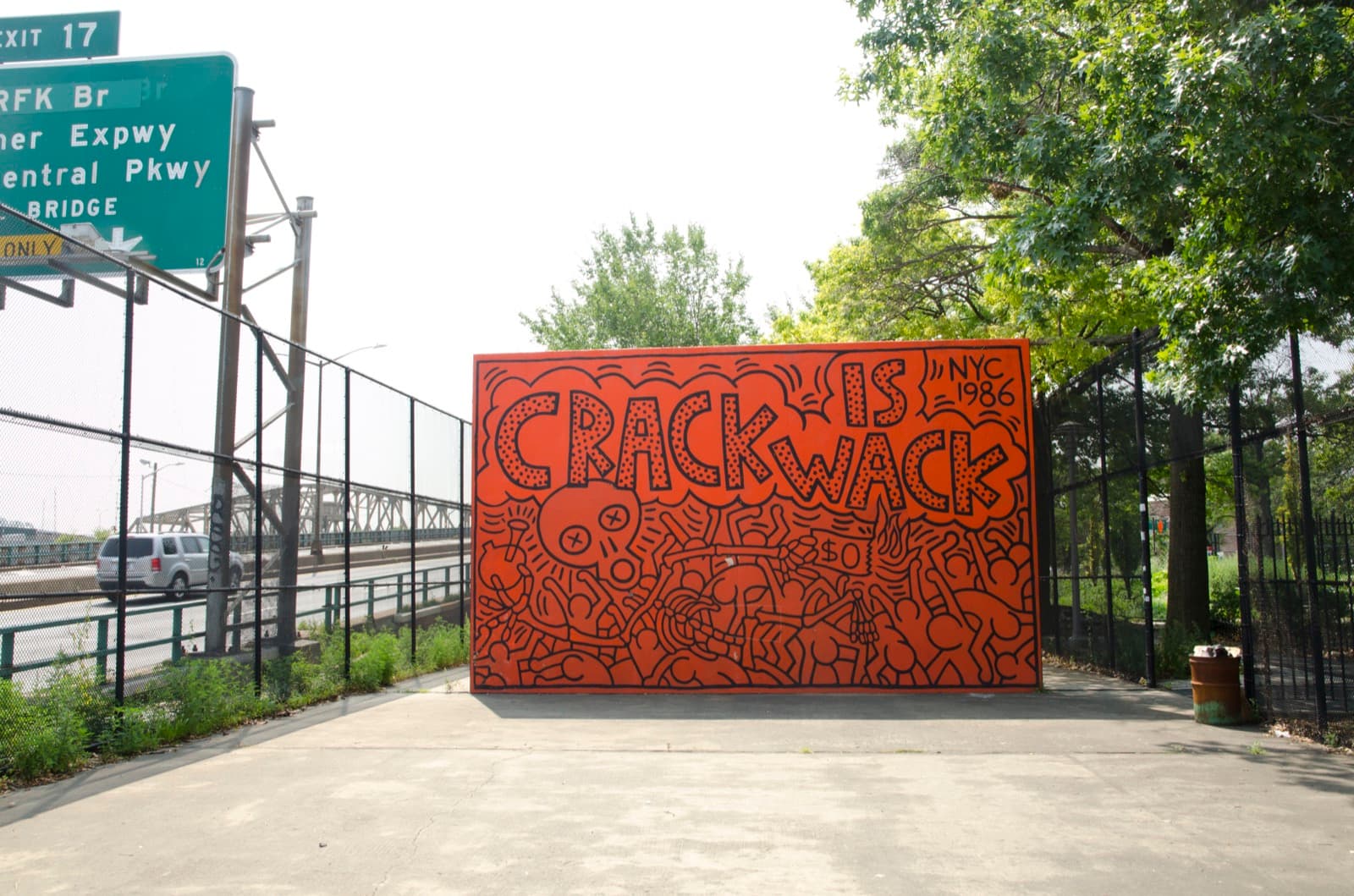
More by Keith Haring

If you like Keith Haring
Explore painters from the same movements and circles.
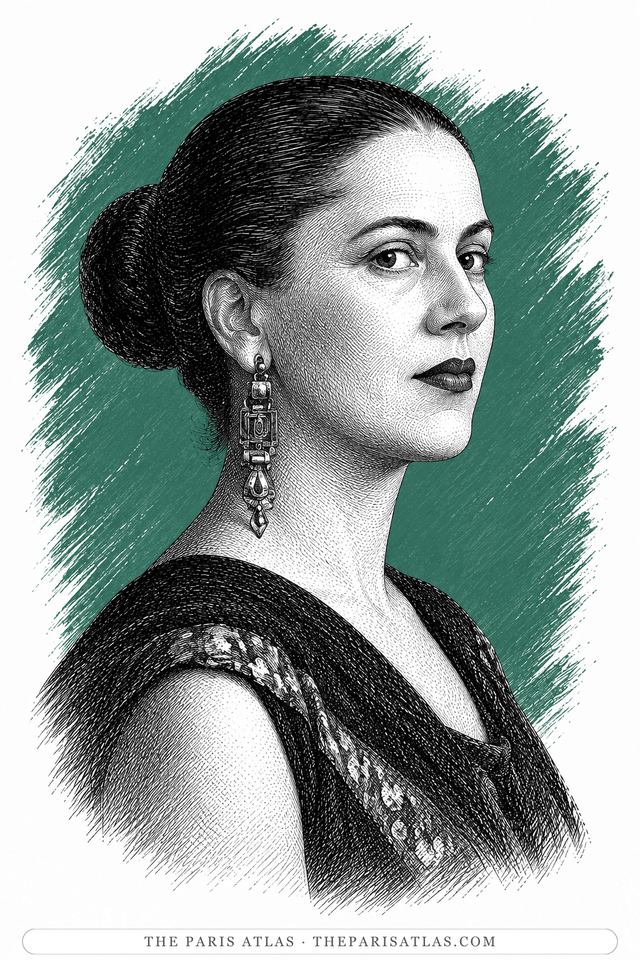
Tarsila do Amaral
Brazilian painter who spent the 1920s moving between São Paulo and Paris, studied Cubism under André Lhote, Albert Gleizes and Fernand Léger, and used what she learned to paint Brazilian towns, railways, plants and bodies. Her 1928 painting Abaporu prompted the manifesto that gave the Anthropophagic movement its name.
View artist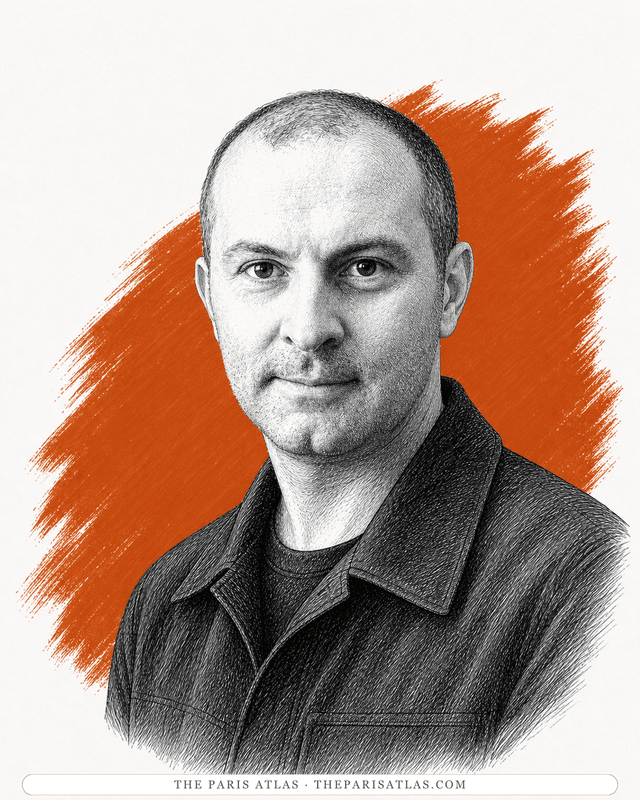
Arman
French-American artist, lifelong friend of Yves Klein, and a founder of New Realism.
View artist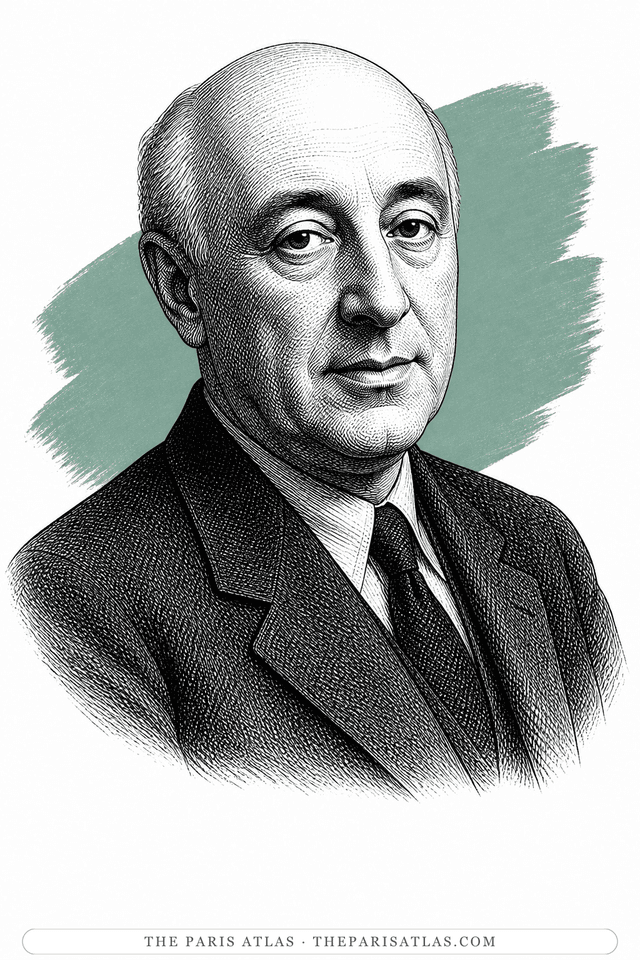
Jean Arp
Strasbourg-born sculptor and poet — Hans in German, Jean in French, both all his life — who co-founded Dada at the Cabaret Voltaire in 1916, composed collages by dropping torn paper 'according to the laws of chance', and settled at Meudon outside Paris in a house his wife Sophie Taeuber-Arp designed.
View artist
References
The sources below include collection records, catalogues, scholarly research, and primary materials that informed this page. They document Ignorance = Fear, its making, and its place in cultural history.


1Poster, 'Ignorance = Fear, Silence = Death', museum number E.82-1996
Official recordVictoria and Albert Museum, LondonUsed forThe museum's object record: the screenprint medium, the dimensions, the physical description of the three figures, the credit line and the poster's history on Robert D Farber's studio wall.

2Keith Haring — official biography
WebsiteThe Keith Haring FoundationUsed forThe subway drawings, the AIDS diagnosis, the founding of the Keith Haring Foundation and his death.
3Todos juntos podemos parar el sida, registration number R.1465
Official recordMuseu d'Art Contemporani de BarcelonaUsed forThe Barcelona mural of 1989, which carries the same three covering figures.
4See-no-evil, Hear-no-evil, and Speak-no-evil: three human figures representing silence about AIDS, reference 653159i
Official recordWellcome Collection, London, 1989Used forA second institutional record of the same poster, crediting Keith Haring with ACT UP and disagreeing with the Victoria and Albert Museum on both the printing process and the orientation.
These references provide the documented foundation for this work's history and interpretation. Claim-level citations remain attached to the specific claims they support.
 Explore more resources