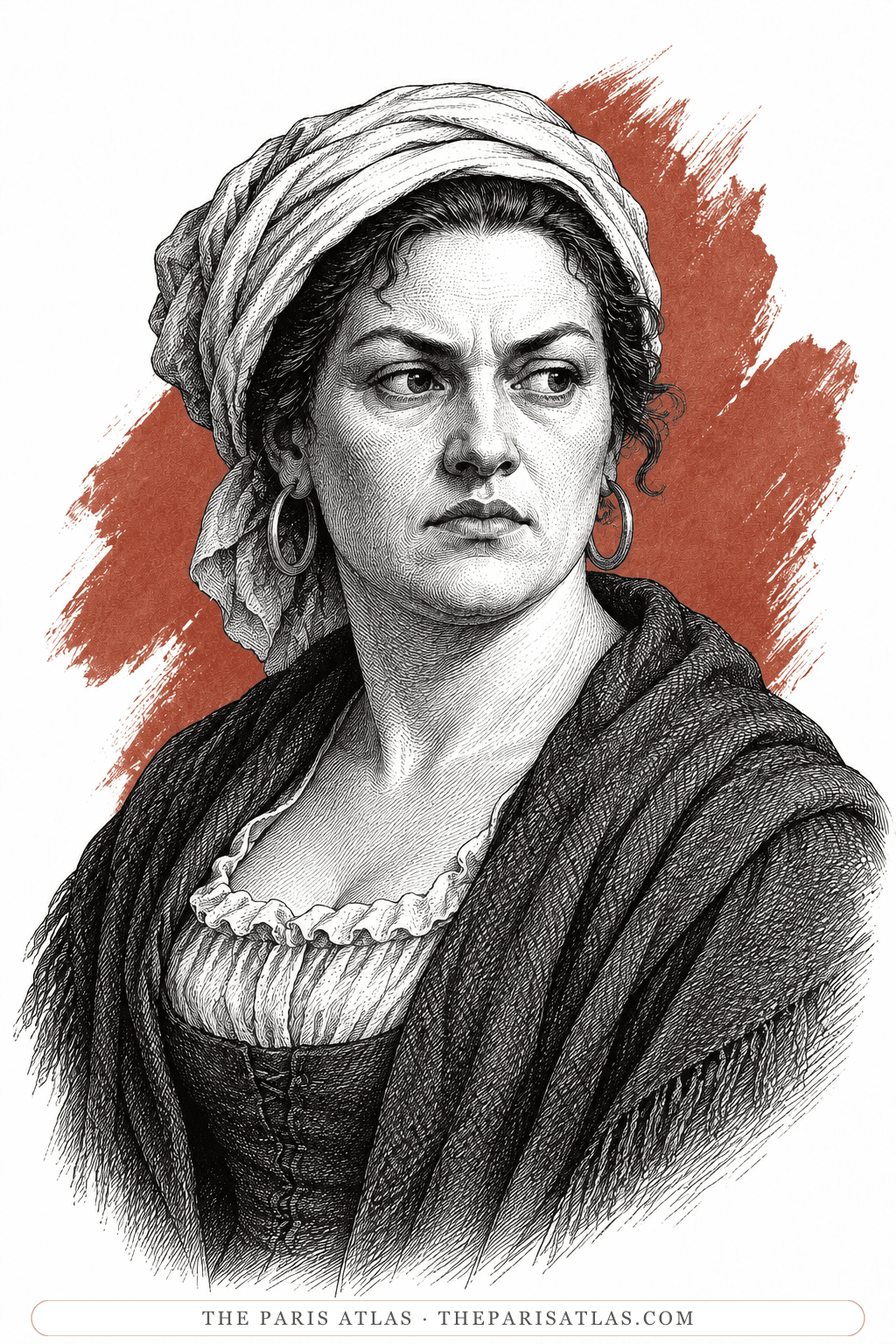
Madame Defarge
Thérèse Defarge, a wine-shop keeper whose memory of aristocratic violence becomes a demand for an entire family's destruction.
She wants the Evrémonde family erased in retaliation for the destruction of her own family.
The book

Who they are in the book
Spoiler-freeMadame Defarge brings discipline, observation and personal grief to revolutionary organization. Dickens makes the injury behind her purpose intelligible while showing how that purpose abolishes distinctions between the guilty and the innocent.
How Madame Defarge Is Portrayed
- Directing attention without a speechIn Book I, Chapter V, her glances and small signals manage who notices the wine shop's visitors. Apparent stillness gives her control over a room full of movement and conversation.
- Making a domestic record dangerousIn Book II, Chapter XVI, she uses a rose to signal the spy's presence and knits names into her register. Familiar objects allow political organization to remain legible only to those who know the code.
- Leading women into the attackIn Book II, Chapter XXI, she exchanges knitting for weapons and leads women at the Bastille. Her later mutilation of the governor's corpse shows that her role extends beyond observation into violence.
- Refusing a mother's appealIn Book III, Chapter III, Lucie appeals to shared womanhood and family feeling. Madame answers with the suffering of poor wives and mothers, using collective injury to refuse an individual plea.
- Naming the injury behind the pursuitIn Book III, Chapter XII, she identifies herself as the youngest sister hidden from the Evrémonde brothers. The revelation explains her personal stake without making Lucie or her child responsible for the crime.
- Pursuing the family into its roomsIn Book III, Chapter XIV, she goes to the lodging to obtain evidence against Lucie and meets Miss Pross's resistance. Her concealed pistol fires in the struggle. She dies there, while the person defending the family loses her hearing.
If you like A Tale of Two Cities


If you like Charles Dickens
Explore authors with a similar voice, perspective, and influence.
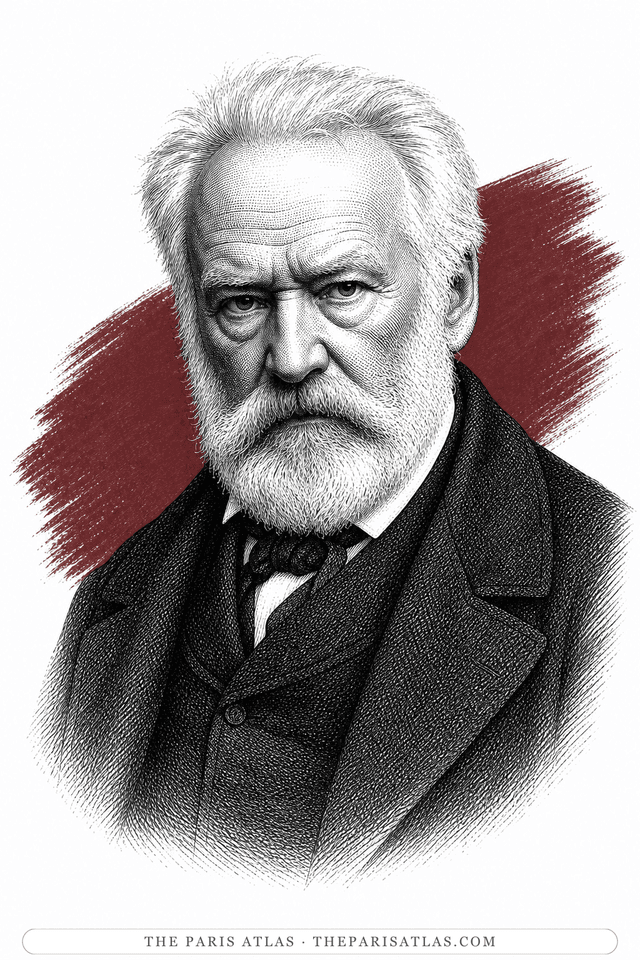
Victor Hugo
Poet, novelist and playwright who spent sixteen years in an apartment on the Place des Vosges that is now his museum, wrote a novel about Notre-Dame that shamed France into repairing the cathedral, spent nineteen years in exile for opposing the emperor Napoleon III, and was buried in the Panthéon — the Paris monument where France buries its most honoured dead — in 1885 after a funeral that brought roughly two million people into the streets of Paris.
View author
Mark Twain
The Missouri newspaperman who became America's most famous writer, and whose first book made its reputation partly out of Paris: in 1867 he arrived with a shipload of American tourists, renamed his guide Ferguson, watched the high-kicking can-can through his fingers and wrote it all down. He kept coming back — and was living in Paris in the mid-1890s, broke, while finishing the novel he considered his best, Personal Recollections of Joan of Arc.
View author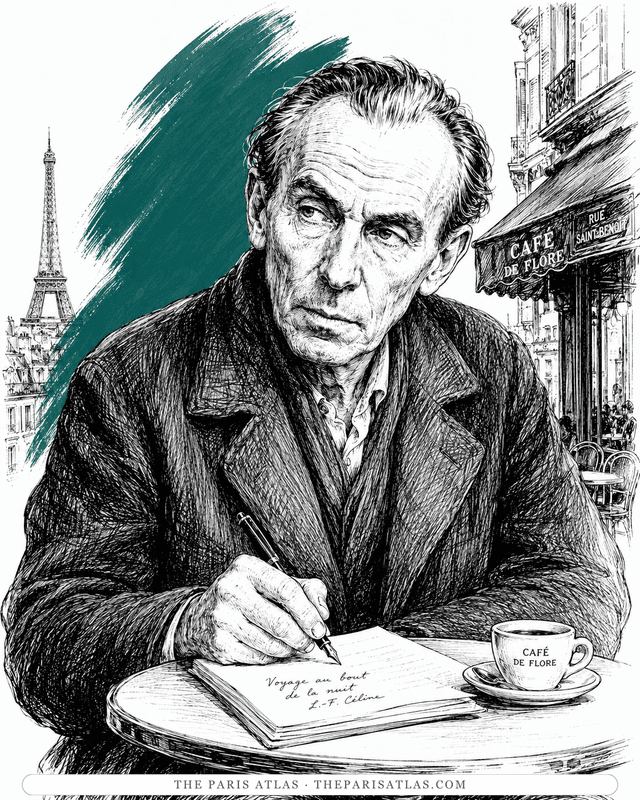
Louis-Ferdinand Céline
The doctor of the Paris slums who wrote the century's blackest, funniest novel — and changed the sound of French prose.
View author