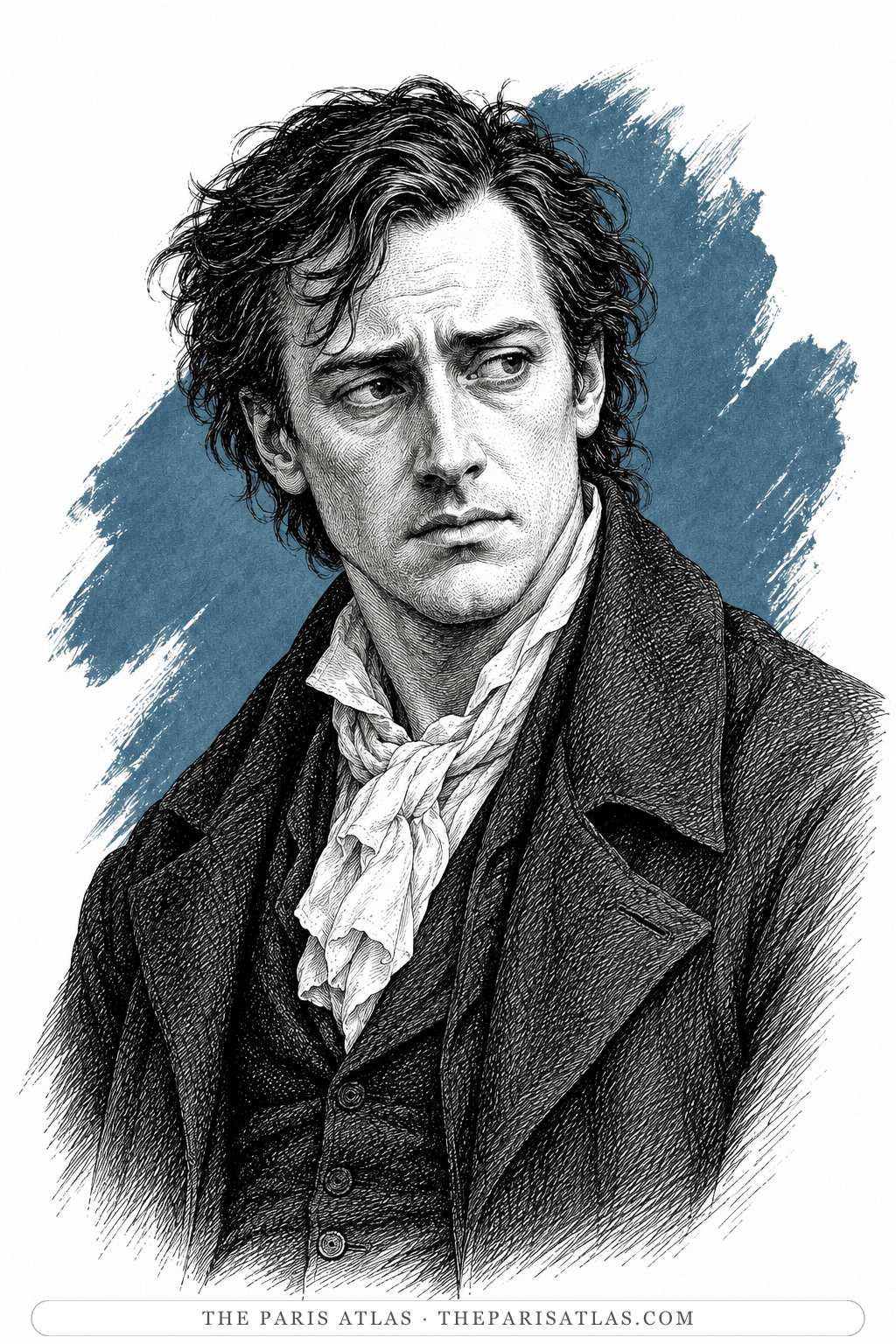
Sydney Carton
An able but self-neglecting English lawyer whose resemblance to Darnay makes a final exchange possible.
He wants his life to have value for Lucie and those she loves, even though he expects no romantic future with her.
The book

Who they are in the book
Spoiler-freeCarton's careless manner hides sustained attention and legal skill. The novel first shows that ability serving another man's career, then gives it a purpose he chooses for himself.
How Sydney Carton Is Portrayed
- Seeing the weakness in a witnessIn Book II, Chapter III, Carton points out his resemblance to the accused Darnay. His intervention undermines an identification that appears certain, showing close attention beneath his apparent indifference.
- Doing another man's workIn Book II, Chapter V, he analyzes legal papers through the night while Stryver receives the public rewards. The arrangement reveals both his ability and his willingness to let it sustain a life he despises.
- A declaration without a demandIn Book II, Chapter XIII, he tells Lucie he loves her but does not ask her to return that love. His promise concerns what he could do for her family, leaving her free of an obligation to rescue him.
- Turning recognition into accessIn Book III, Chapter VIII, he identifies Barsad as Solomon Pross and uses the spy's dangerous secrets to bargain. The plan depends on observation and pressure rather than a sudden feat of physical strength.
- Making the exchange possibleIn Book III, Chapters XII–XIII, he prepares the family's departure and substitutes himself for Darnay in prison. Clothes, papers and an unnamed drug make the resemblance useful; the sacrifice requires practical coordination.
- Sharing the last journeyIn Book III, Chapter XV, he keeps the seamstress's hand and answers her fears before execution. The final kindness is directed toward a stranger, widening the reach of an act begun for Lucie's family.
If you like A Tale of Two Cities


If you like Charles Dickens
Explore authors with a similar voice, perspective, and influence.
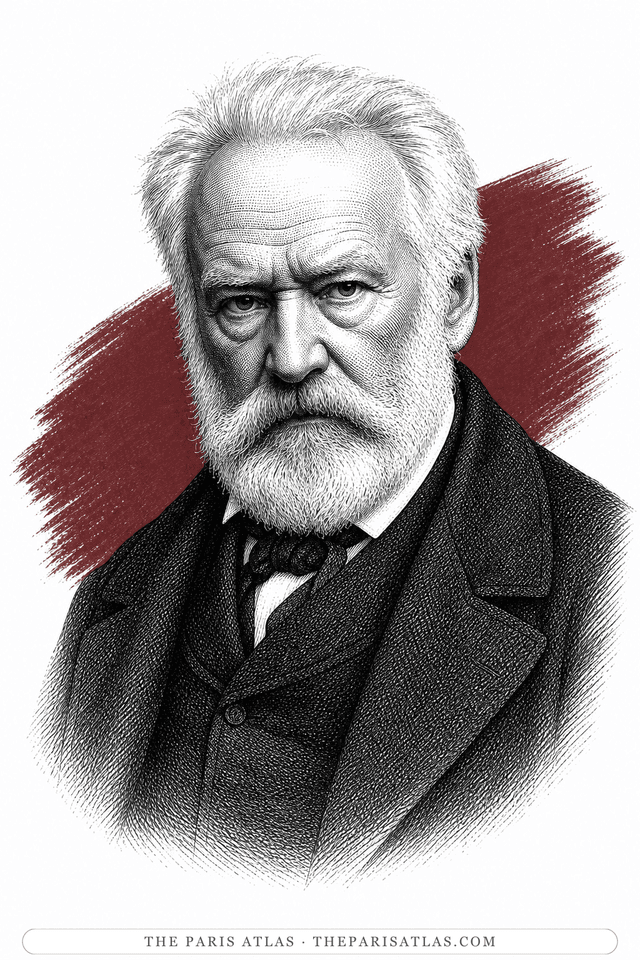
Victor Hugo
Poet, novelist and playwright who spent sixteen years in an apartment on the Place des Vosges that is now his museum, wrote a novel about Notre-Dame that shamed France into repairing the cathedral, spent nineteen years in exile for opposing the emperor Napoleon III, and was buried in the Panthéon — the Paris monument where France buries its most honoured dead — in 1885 after a funeral that brought roughly two million people into the streets of Paris.
View author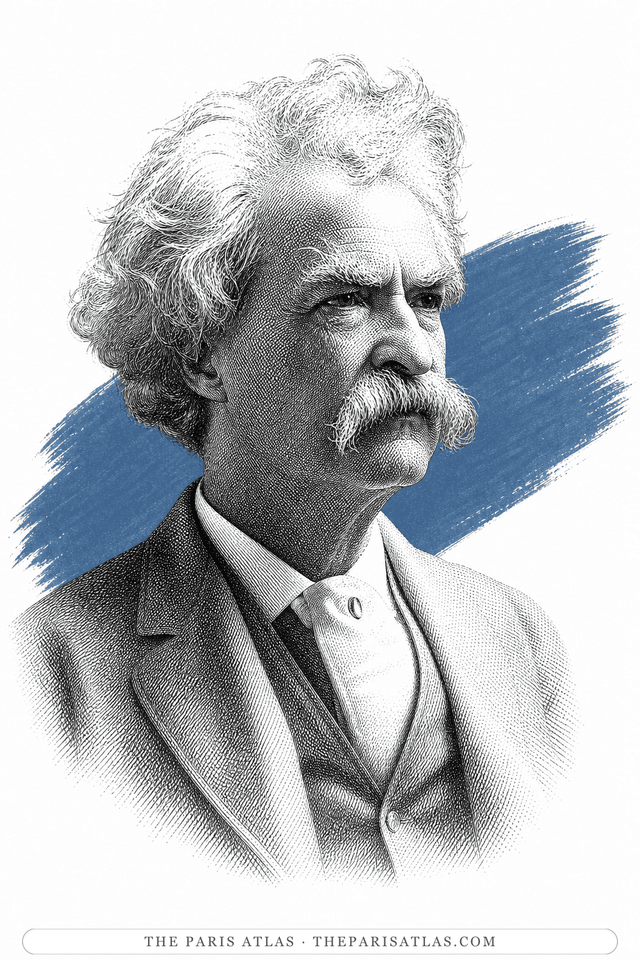
Mark Twain
The Missouri newspaperman who became America's most famous writer, and whose first book made its reputation partly out of Paris: in 1867 he arrived with a shipload of American tourists, renamed his guide Ferguson, watched the high-kicking can-can through his fingers and wrote it all down. He kept coming back — and was living in Paris in the mid-1890s, broke, while finishing the novel he considered his best, Personal Recollections of Joan of Arc.
View author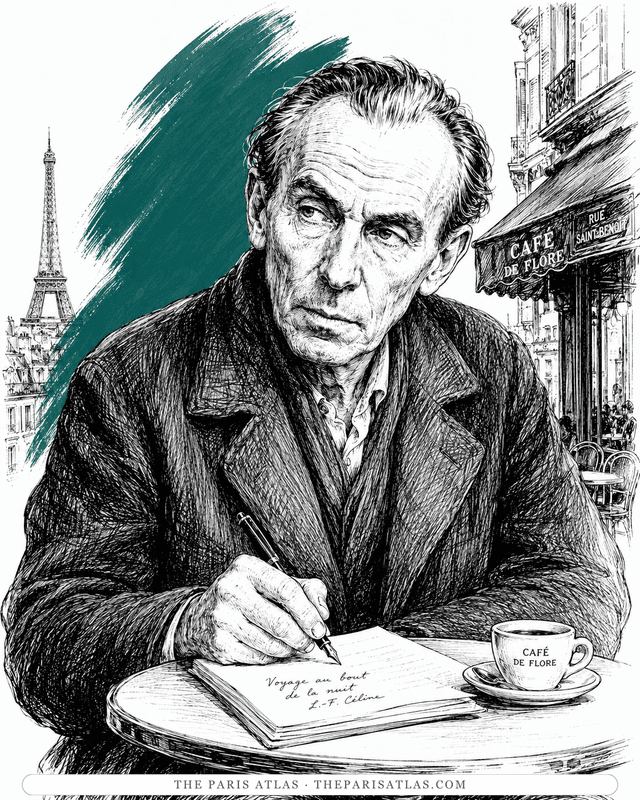
Louis-Ferdinand Céline
The doctor of the Paris slums who wrote the century's blackest, funniest novel — and changed the sound of French prose.
View author