
Letters to a Friend in Australia
The companion fan-correspondence volume — same habit, another hemisphere.
Read our take
by Anaïs Nin
The mail habit, preserved: a small edited collection of Nin's letters to a young admirer, Moira Collins.
One of the smallest entries on the shelf, and a characteristic one: a 2018 edited collection of the letters Nin wrote to Moira Collins, a young admirer who reached her through the fame-years mail and was answered — repeatedly, seriously, and warmly. Like Letters to a Friend in Australia, the book documents the habit the legend rests on: Nin treated her unknown correspondents as real, and the correspondence that resulted is its own small portrait of the late years. (Letters — nothing to spoil.)
The Diary's readers wrote to Nin in extraordinary numbers, and the young women among them got her fullest attention: the questions they brought — how to write, how to live, how to become — were the questions her books existed to answer. The Collins correspondence is one such exchange carried to book length: encouragement, reading advice, and the working philosophy of the lectures delivered person-to-person, without a stage.
Published in 2018 among the small-press wave of Nin recovery, it belongs with the minor-but-telling documents of Nin's career. This is not a major correspondence like the Miller or Pollak volumes. It is a faithful sample of the thousands of letters that made her, in her last decade, one of literature's great answerers of mail.
A short edited run of Nin's letters to Moira Collins: first replies to a fan letter, growing into a correspondence of encouragement and counsel — writing practice, reading lists, the diary habit, and the personal register of the same advice her lecture audiences heard from rows back.
In the letter of March 30, 1974, attention travels through objects: Moira's calligraphy, a handmade notebook, photographs and a sheet from Nin's treasured stationery collection. Nin has already used the notebook for her Mexico diary; answering the gift means giving up paper she had reserved for herself. The exchange makes encouragement tangible. An established writer receives creative work as well as sending advice, and her concern about Moira's silence gives the correspondence a personal urgency that a general statement about answering fan mail cannot convey.
The July 15 letter admits Moira into the unfinished business of authorship: revised lectures, another diary volume, travel writing and invitations Nin must decline. Its movement between tasks makes success look crowded and provisional. She also sets the discouragement recorded in the fifth Diary against the honors arriving in the present, offering Moira two pictures of the same career. The private letter can hold both without resolving them into an exemplary life. Encouragement comes from seeing that a published account of failure need not be the last word.
The counsel of A Woman Speaks delivered to an audience of one.
A faithful sample of the correspondence culture around the late Nin.
An hour's reading in her most generous register.
March 1974
Nin writes to Moira about her calligraphy and the handmade notebook she has used for her Mexico diary.
July 1974
Another letter discusses Nin’s travel assignment, diary volumes, and revisions to her collected lectures.
2018
The correspondence is published as Anaïs Nin Letters: Her Correspondence with a Young Fan.
The companion fan-correspondence volume — same habit, another hemisphere.
Read our take

A small 2018 edited collection of the letters Nin wrote to Moira Collins, a young admirer whose fan mail she answered and kept answering.
A young reader who wrote to Nin during the fame years and became a regular correspondent — the collection preserves Nin's side of the exchange.
Encouragement and practical counsel — on writing, reading, and the diary habit — in the personal register of the advice her lectures gave publicly.
No, and it doesn't pretend to be — it is a minor, telling document of her celebrated habit of answering unknown correspondents seriously.
Beside Letters to a Friend in Australia, as the second of the fan-correspondence volumes from the late years.
Explore authors with a similar voice, perspective, and influence.

The entangled careers of the Villa Seurat: she financed and prefaced his scandal, he detonated her prose — and each wrote the other into the century's record.
View author
The doctor of the Paris slums who wrote the century's blackest, funniest novel — and changed the sound of French prose.
View author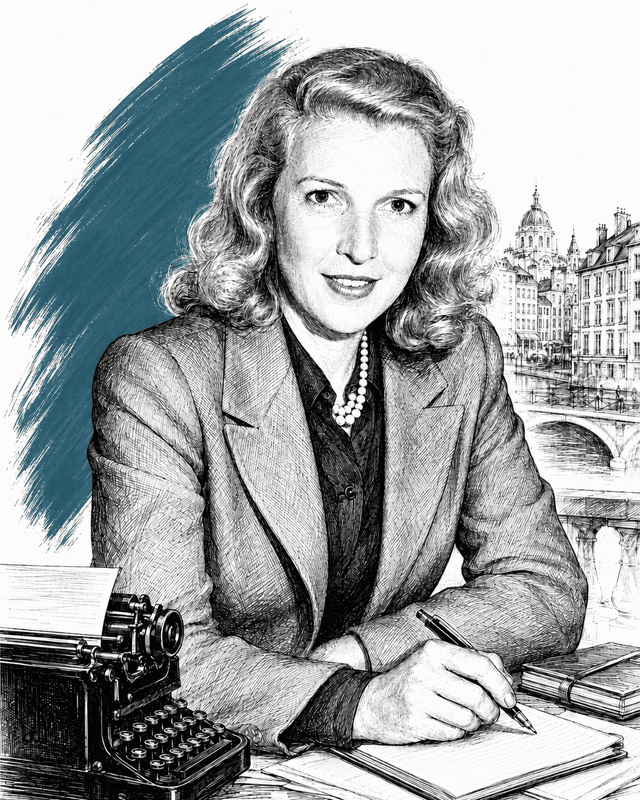
War correspondent who covered the Spanish Civil War, D-Day, and conflicts across five more decades; Hemingway's third wife, 1940–1945.
View authorThe sources below include the primary text, editions, scholarship, archival materials, and other records that informed this page. They document Anaïs Nin Letters, its publication, and its place in literary history.


The primary text represented by this page, used for descriptions of the work’s contents and for any quoted passages shown here.
Used to verify Anaïs Nin Letters's bibliographic context and its place within Anaïs Nin's published work.
Used for independent archival, institutional, or historical context surrounding Anaïs Nin and Anaïs Nin Letters.
Used to cross-check chronology, publication history, and the circumstances in which Anaïs Nin Letters appeared.
Used for an additional scholarly or biographical perspective on Anaïs Nin Letters and Anaïs Nin's wider career.
Web source consulted for documented facts and historical context presented on the Anaïs Nin Letters page.
The primary text is the baseline reference for every book page. Additional references document publication history, interpretation, and historical context where that evidence is available.
 Explore more resources